Industrial Robotics Future: Top 3 Applications Dominating by 2032
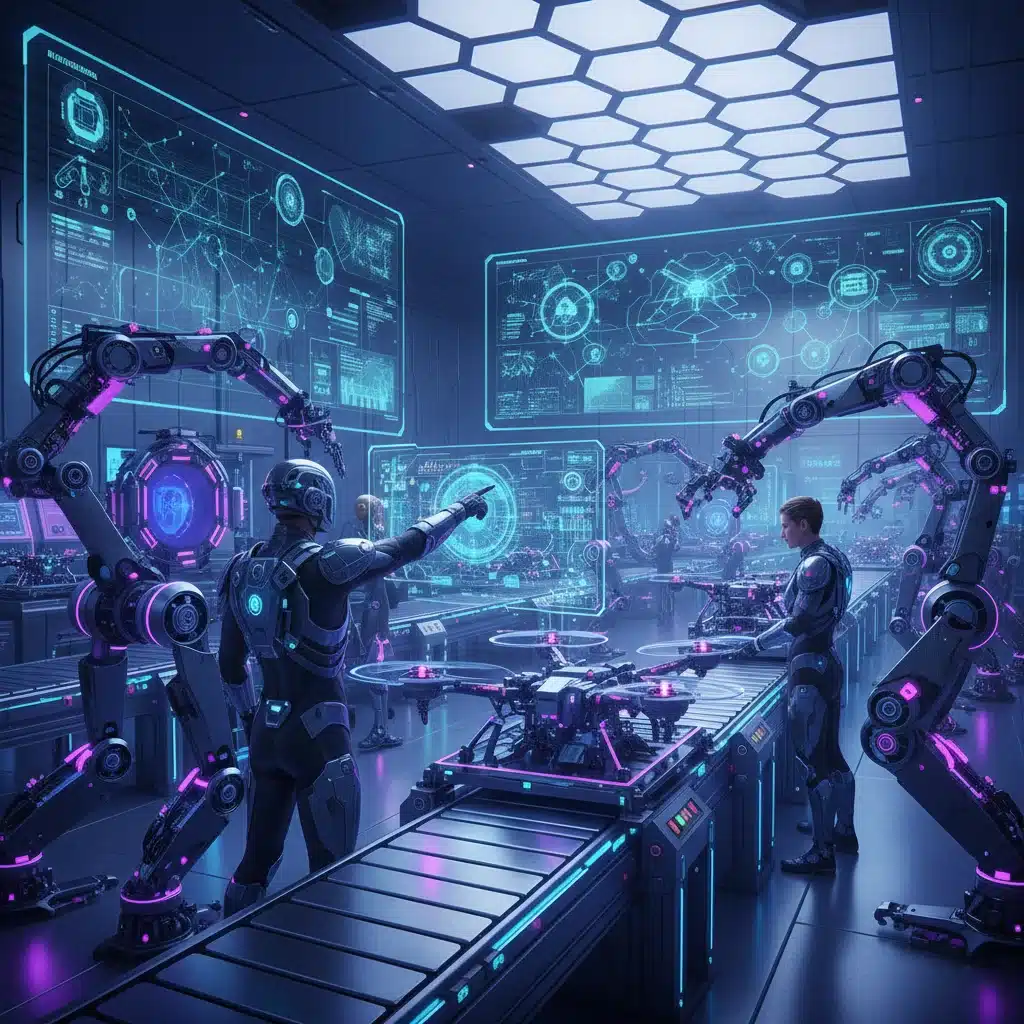
The Next Frontier of Robotics: 3 Industrial Applications Set to Dominate by 2032
The industrial landscape is on the cusp of an unprecedented transformation, driven by the relentless march of technological innovation. At the heart of this revolution lies industrial robotics, a field that continues to push the boundaries of what’s possible in manufacturing, logistics, and beyond. As we look towards 2032, certain industrial robotics applications are poised to not only dominate but fundamentally redefine how industries operate. This article delves into the top three industrial robotics applications that are set to become indispensable by the next decade, exploring their current impact, future potential, and the challenges they aim to overcome.
For decades, industrial robots have been synonymous with repetitive, heavy-duty tasks on assembly lines. However, the modern industrial robotics future is far more nuanced and intelligent. Advances in artificial intelligence (AI), machine learning (ML), sensor technology, and collaborative robotics (cobots) are enabling robots to perform tasks with greater precision, adaptability, and autonomy than ever before. This evolution is not just about replacing human labor but augmenting it, creating more efficient, safer, and productive environments. The implications for global economies, job markets, and societal development are profound, making it crucial to understand where this transformative technology is headed.
The global industrial robotics market is projected to grow substantially, with analysts predicting a compound annual growth rate (CAGR) that underscores its critical role in future industrial strategies. This growth is fueled by increasing demand for automation across various sectors, the need for enhanced productivity, and the ongoing pursuit of cost reduction. Companies are investing heavily in research and development to create robots that are not only faster and stronger but also smarter and more versatile. This strategic investment is paving the way for the industrial robotics future to be characterized by sophisticated, integrated systems that can adapt to dynamic production requirements and complex operational challenges.
From precision manufacturing to advanced logistics and groundbreaking applications in new sectors, the next ten years will see industrial robotics solidify its position as a cornerstone of modern industry. Understanding these emerging trends and dominant applications is essential for businesses, policymakers, and anyone interested in the trajectory of technological progress. Let’s explore the key areas where industrial robotics is set to make its most significant impact.
1. Hyper-Flexible Advanced Manufacturing and Assembly
The manufacturing sector has always been at the forefront of industrial robotics adoption. However, the industrial robotics future in manufacturing is moving beyond rigid, mass-production lines towards hyper-flexible, customized, and agile production systems. By 2032, advanced manufacturing and assembly will be dominated by robots capable of rapid reconfiguration, handling diverse product variants, and performing intricate tasks with unprecedented precision. This shift is driven by consumer demand for personalized products and the need for manufacturers to quickly adapt to changing market conditions.
The Rise of Collaborative Robots (Cobots) in Assembly
Collaborative robots, or cobots, are a cornerstone of this hyper-flexible manufacturing revolution. Unlike traditional industrial robots that operate in cages, cobots are designed to work safely alongside human employees, sharing workspaces and tasks. Their intuitive programming interfaces, built-in safety features, and adaptability make them ideal for tasks requiring both robotic precision and human dexterity. In the industrial robotics future, cobots will be commonplace in assembly lines, performing delicate component placement, quality inspection, and intricate fastening operations. They will significantly reduce setup times for new product lines, enabling manufacturers to switch between different products with minimal downtime.
The integration of cobots in assembly processes allows for a hybrid approach where humans handle complex problem-solving and creative tasks, while robots manage repetitive or ergonomically challenging operations. This synergy not only boosts productivity but also improves worker safety and job satisfaction. By 2032, advanced sensor technology and AI will allow cobots to anticipate human movements and intentions, making their collaboration even more seamless and efficient. This level of human-robot interaction is critical for achieving the flexibility required in modern manufacturing.
AI-Powered Vision Systems for Quality Control and Inspection
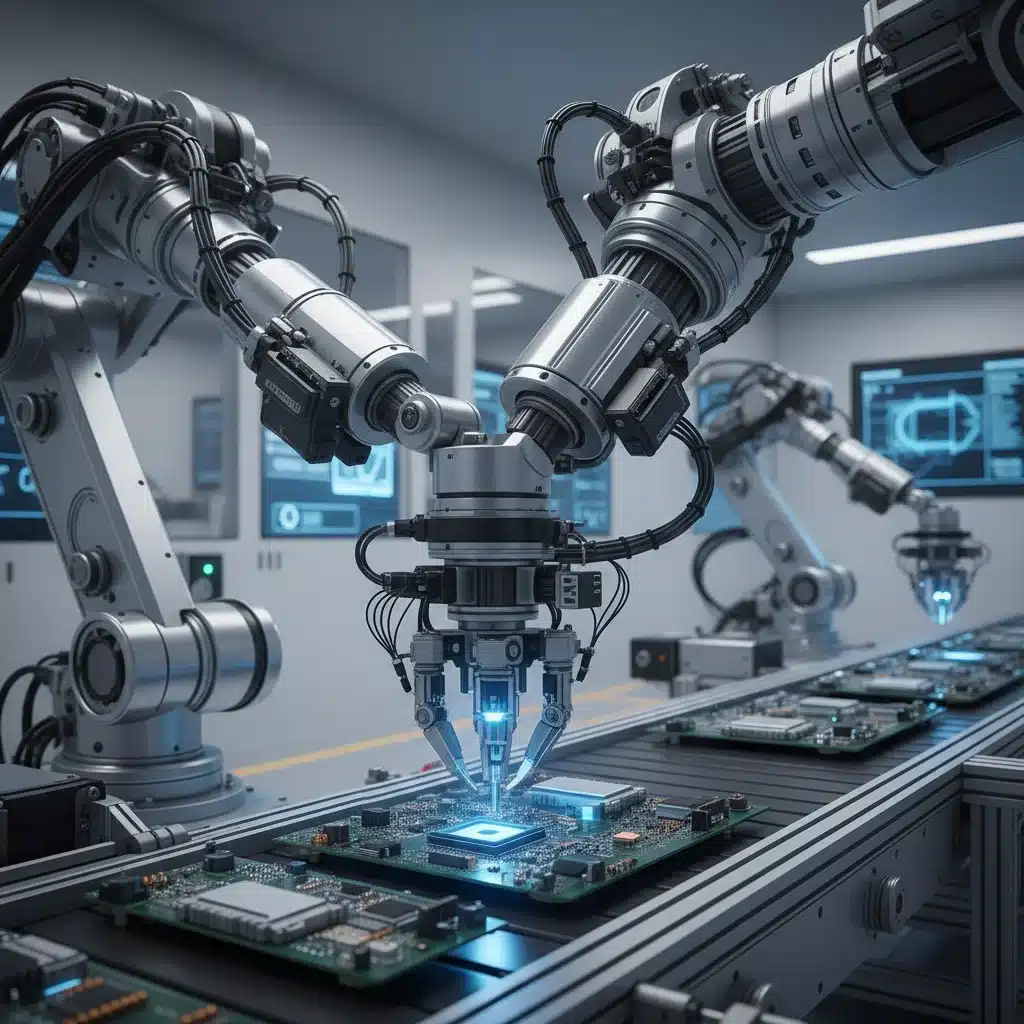
Another critical aspect of advanced manufacturing is impeccable quality control. The industrial robotics future will see widespread adoption of AI-powered vision systems integrated with robotic arms for real-time inspection and defect detection. These systems, far more sophisticated than current machine vision, will be capable of identifying microscopic flaws, verifying complex assemblies, and even predicting potential failures based on subtle deviations. Leveraging deep learning algorithms, these robots can learn from vast datasets of product images, continuously improving their accuracy and efficiency.
These robotic inspection systems will operate at speeds and levels of detail impossible for human inspectors, ensuring consistent product quality across entire production runs. They will not only identify defects but also provide immediate feedback to the manufacturing process, allowing for on-the-fly adjustments to prevent further errors. This proactive approach to quality management will significantly reduce waste, rework, and warranty claims, leading to substantial cost savings and improved brand reputation. The ability of these systems to adapt to new product designs and specifications with minimal reprogramming will further enhance manufacturing flexibility.
Additive Manufacturing (3D Printing) with Robotics
Additive manufacturing, commonly known as 3D printing, is revolutionizing how products are designed and produced. When combined with industrial robotics, its potential expands exponentially. By 2032, robotic systems will be at the core of advanced additive manufacturing processes, enabling the production of large-scale, complex geometries with diverse materials. Imagine robotic arms precisely depositing materials layer by layer to create intricate components for aerospace, automotive, or medical industries, all within a single automated cell.
These robotic 3D printing systems will offer unparalleled design freedom, allowing for the creation of lightweight structures, customized parts, and on-demand production. They will overcome the limitations of traditional manufacturing techniques, reducing material waste and enabling faster prototyping and production cycles. The integration of AI will allow these robots to optimize printing parameters in real-time, ensuring optimal material properties and structural integrity. This convergence of industrial robotics and additive manufacturing will usher in an era of truly personalized and highly efficient production, making it a cornerstone of the industrial robotics future.
2. Autonomous Logistics and Warehouse Automation
The global supply chain and logistics sector is under immense pressure to deliver goods faster, more efficiently, and at lower costs. The industrial robotics future in this domain is characterized by fully autonomous systems that manage everything from inventory storage and retrieval to last-mile delivery. By 2032, warehouses and distribution centers will be bustling hubs of robotic activity, operating with minimal human intervention and maximizing throughput.
Autonomous Mobile Robots (AMRs) and Automated Guided Vehicles (AGVs)
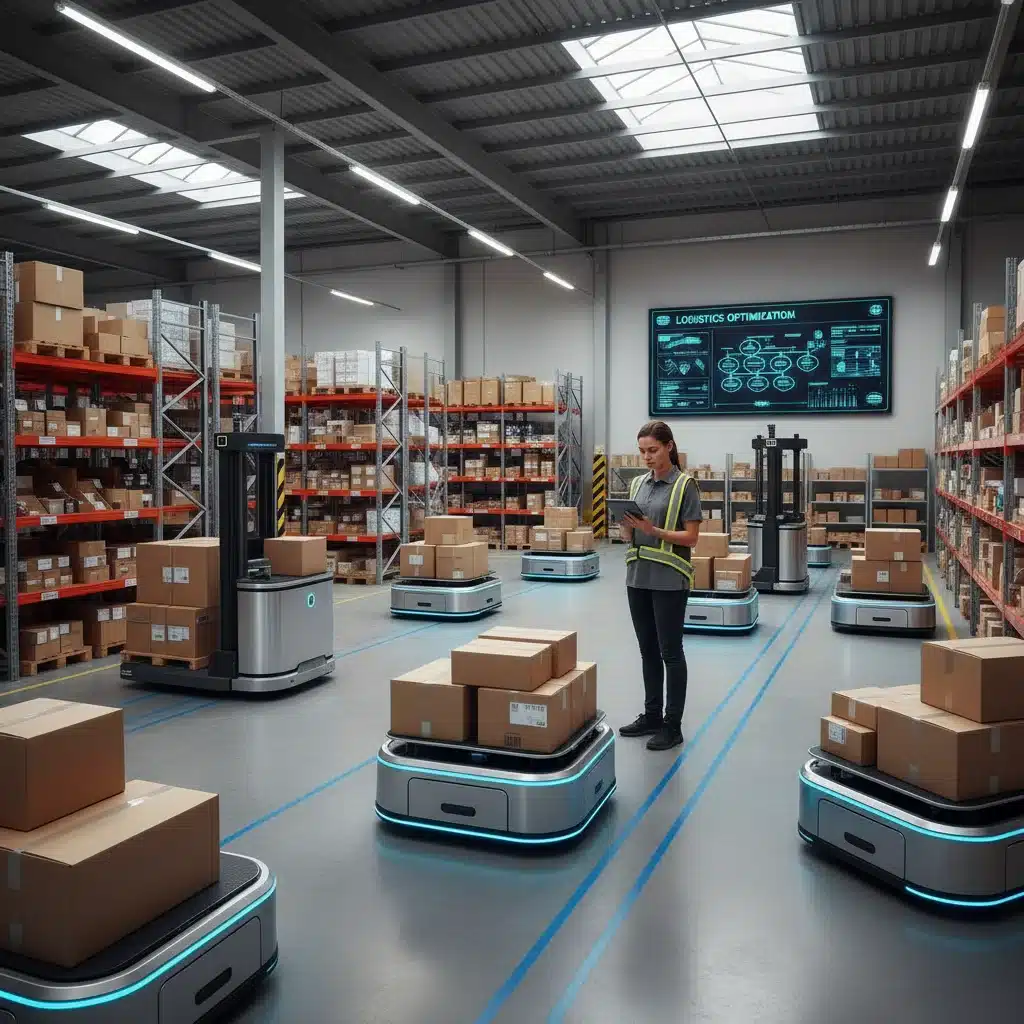
Autonomous Mobile Robots (AMRs) and Automated Guided Vehicles (AGVs) are already transforming logistics, but by 2032, their capabilities will be vastly expanded. AMRs, in particular, will become even more intelligent, capable of navigating complex warehouse environments dynamically, avoiding obstacles, and optimizing their routes in real-time. They will work in fleets, coordinating seamlessly to transport goods, pick orders, and manage inventory. AI-driven algorithms will enable these robots to learn from their environment, predict demand patterns, and adapt to changing operational requirements.
The deployment of AMRs and AGVs will lead to significant improvements in warehouse efficiency, reducing labor costs, speeding up order fulfillment, and minimizing errors. Their ability to operate 24/7 will ensure continuous operations, especially during peak seasons. Furthermore, these robots will be integrated with warehouse management systems (WMS) and enterprise resource planning (ERP) systems, creating a fully synchronized and optimized logistics ecosystem. This advanced level of automation is crucial for meeting the demands of e-commerce and global supply chains, solidifying the role of industrial robotics in the logistics future.
Robotic Picking and Packaging Systems
Order picking and packaging are labor-intensive tasks that are ripe for advanced automation. By 2032, highly dexterous robotic picking systems, equipped with advanced grippers and AI-powered vision, will be able to handle a vast array of products, from delicate items to irregularly shaped objects. These robots will utilize machine learning to recognize and grasp items efficiently, adapting to variations in product size, shape, and fragility. Their speed and accuracy will far surpass human capabilities, especially for high-volume operations.
Integrated with autonomous transport systems, these robotic pickers will form a seamless chain from storage to dispatch. Robotic packaging systems will further automate the process, custom-fitting packaging materials, sealing boxes, and applying labels with precision. This end-to-end automation will not only reduce operational costs but also improve the consistency and quality of packaging, minimizing damage during transit. The ability to handle diverse product mixes efficiently will be a key differentiator for businesses leveraging this industrial robotics future application.
Automated Last-Mile Delivery
The final frontier of logistics automation is last-mile delivery. While still in nascent stages, by 2032, the industrial robotics future will undoubtedly include widespread deployment of autonomous delivery robots and drones. These robots will navigate urban and suburban environments, delivering packages directly to consumers’ doorsteps. Equipped with sophisticated sensors, GPS, and AI for route optimization and obstacle avoidance, they will offer a fast, cost-effective, and environmentally friendly alternative to traditional delivery methods.
Challenges such as regulatory hurdles, public acceptance, and robust security measures are being addressed, paving the way for scalable deployment. Imagine a future where your online orders are delivered by a small, friendly autonomous robot, ensuring timely and secure receipt. This innovation will not only transform e-commerce but also create new opportunities for local businesses and redefine urban logistics. The impact of these autonomous delivery systems on traffic congestion and carbon emissions will also be significant, contributing to more sustainable urban living.
3. Smart Robotics in Hazardous and Extreme Environments
Many industries involve tasks that are dangerous, dirty, or dull for human workers. The industrial robotics future will increasingly see smart robots deployed in hazardous and extreme environments, protecting human lives and enabling operations in places previously inaccessible or too risky. This includes applications in nuclear decommissioning, deep-sea exploration, disaster response, and even space manufacturing.
Nuclear Decommissioning and Waste Management
The decommissioning of old nuclear power plants and the management of radioactive waste are incredibly complex and dangerous tasks. By 2032, highly specialized industrial robotics will be indispensable in these fields. Robots equipped with radiation-hardened electronics, advanced manipulators, and AI-driven decision-making capabilities will be used for dismantling reactors, handling radioactive materials, and monitoring contaminated sites. These robots will operate autonomously or via teleoperation, minimizing human exposure to hazardous radiation.
The precision and endurance of these robots will allow for tasks to be performed safely and efficiently over extended periods, which would be impossible for human workers. Furthermore, their ability to gather and analyze data in real-time will provide critical insights for risk assessment and operational planning. The industrial robotics future in nuclear environments is about ensuring safety, reducing costs, and accelerating the cleanup of legacy sites, making these critical tasks manageable and less risky.
Deep-Sea Exploration and Maintenance
The depths of our oceans are vast and largely unexplored, holding immense scientific and economic potential. However, the extreme pressures, low temperatures, and darkness make human exploration incredibly challenging. By 2032, advanced industrial robotics will be key to deep-sea exploration, resource extraction, and infrastructure maintenance. Autonomous underwater vehicles (AUVs) and remotely operated vehicles (ROVs) will be more intelligent and robust, capable of navigating complex underwater terrains, conducting scientific research, and performing intricate repairs on subsea pipelines and communication cables.
These robots will be equipped with advanced sonar, high-definition cameras, and sophisticated manipulators, allowing them to collect data, retrieve samples, and perform construction tasks with unprecedented accuracy. AI will enable them to process vast amounts of environmental data, identify anomalies, and make autonomous decisions in real-time. This application of industrial robotics will unlock new frontiers in oceanography, marine biology, and sustainable resource management, extending human reach into the deepest parts of our planet.
Disaster Response and Search & Rescue
When disasters strike, whether natural or man-made, rapid and safe response is critical. The industrial robotics future will see widespread deployment of specialized robots for disaster response and search and rescue operations. These robots, ranging from agile drones to robust ground vehicles, will be able to navigate hazardous environments, locate survivors, assess damage, and deliver critical supplies without endangering human rescuers.
Equipped with thermal imaging, gas sensors, and communication arrays, these robots will provide real-time intelligence from unstable structures, contaminated areas, or collapsed buildings. AI will allow them to quickly map disaster zones, identify patterns of damage, and prioritize search areas. Their ability to operate in conditions too dangerous for humans will significantly improve the effectiveness and safety of disaster response efforts, saving lives and providing crucial information during emergencies. This humanitarian application of industrial robotics highlights its profound societal impact.
Challenges and Opportunities in the Industrial Robotics Future
While the trajectory for industrial robotics is overwhelmingly positive, several challenges must be addressed to fully realize its potential. These include the high initial investment costs, the need for skilled labor to operate and maintain these complex systems, ethical considerations surrounding automation and job displacement, and the development of robust cybersecurity measures to protect interconnected robotic networks.
However, the opportunities far outweigh these challenges. Industrial robotics promises unprecedented levels of productivity, efficiency, and safety across various sectors. It will enable the creation of new industries, foster economic growth, and free human workers from dangerous and monotonous tasks, allowing them to focus on more creative and intellectually stimulating roles. Education and training programs will be crucial in preparing the workforce for this new era, ensuring that humans and robots can collaborate effectively.
Furthermore, advancements in cloud robotics, edge computing, and 5G connectivity will further enhance the capabilities of industrial robots, allowing for real-time data processing, remote operation, and seamless integration into smart factory ecosystems. The standardization of communication protocols and robotic interfaces will also play a key role in accelerating adoption and interoperability.
Conclusion
The industrial robotics future is bright, characterized by intelligence, adaptability, and collaboration. By 2032, hyper-flexible advanced manufacturing, autonomous logistics, and smart robotics in hazardous environments will not just be niche applications but mainstream pillars of global industry. These advancements will drive efficiency, create safer workplaces, and enable innovations that were once confined to the realm of science fiction. Businesses and governments that embrace these transformative technologies will be best positioned to thrive in the decades to come.
As industrial robotics continues its rapid evolution, its impact will reverberate across every facet of our lives, from the products we consume to the way our cities function. The journey towards a more automated, intelligent, and productive industrial future is well underway, and the next ten years promise to be the most exciting chapter yet in the story of industrial robotics.