US Government’s 2026 Supply Chain Resilience Plan: Insider Insights

US Government’s 2026 Supply Chain Resilience Plan: Insider Insights
Navigating the Future: How Washington is Fortifying Critical Supply Chains Against Tomorrow’s Shocks
The global landscape is in constant flux, marked by geopolitical tensions, climate change impacts, and unforeseen disruptions like pandemics. These factors have repeatedly exposed vulnerabilities within complex supply chains, leading to shortages, inflation, and significant economic instability. Recognizing these challenges, the United States government has embarked on an ambitious journey to proactively strengthen its supply chains. By 2026, a series of strategic initiatives are set to transform the nation’s economic backbone, ensuring greater resilience and security. This article offers an exclusive, insider look into these critical efforts, focusing on the core strategies and anticipated outcomes of the US Supply Chain Resilience plan.
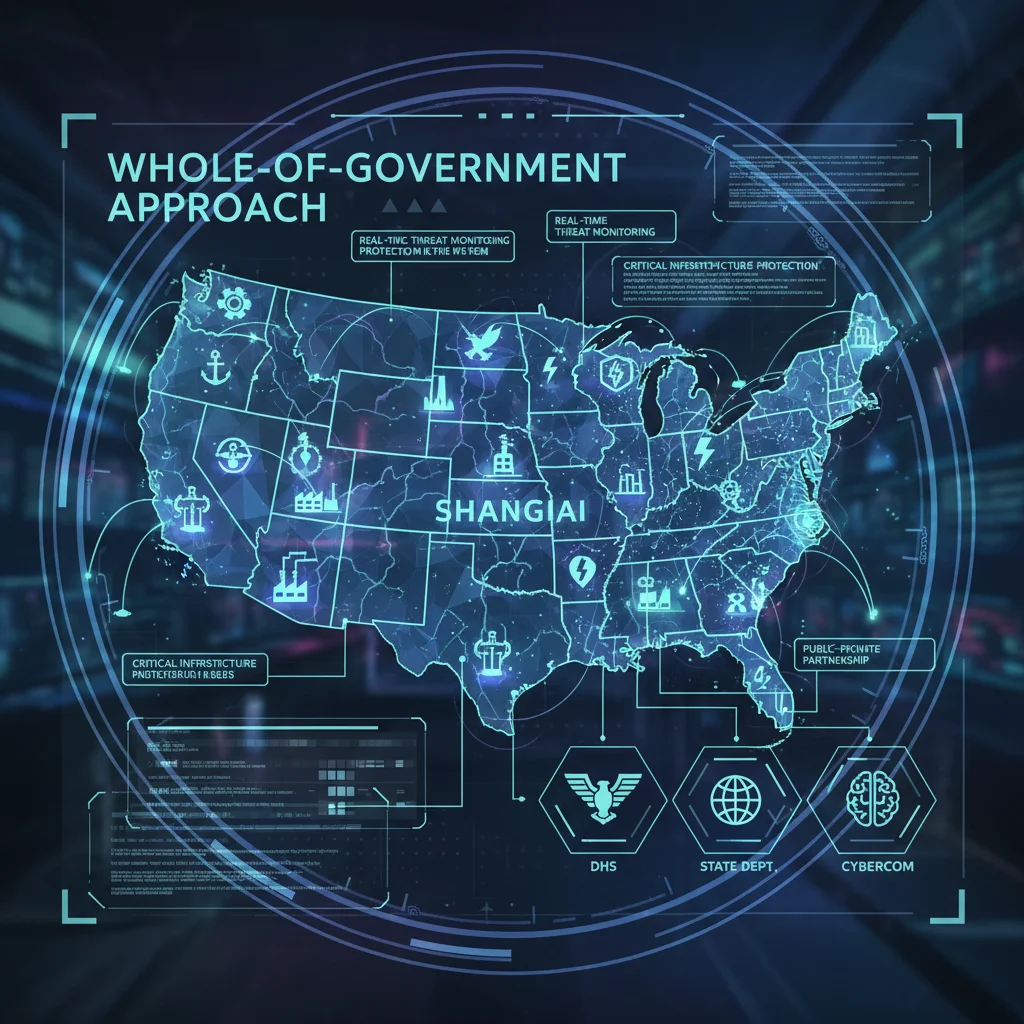
The imperative for enhanced supply chain resilience is no longer a theoretical exercise but a tangible national security and economic priority. Past disruptions, from the early days of the COVID-19 pandemic stifling medical supplies to recent semiconductor shortages crippling auto production, have underscored the urgent need for a robust and adaptable system. The Biden administration, building on lessons learned, has prioritized a ‘whole-of-government’ approach, orchestrating efforts across various agencies to create a cohesive strategy. This strategy isn’t merely about reacting to crises; it’s about fundamentally reshaping how goods move, are produced, and are secured, both domestically and internationally. The vision for 2026 is one where the US is less susceptible to external shocks and better equipped to maintain essential services and economic stability, regardless of global turbulence.
Understanding the intricacies of the US Supply Chain Resilience strategy requires delving into its multi-faceted approach. It encompasses legislative actions, executive orders, substantial investments in critical sectors, and a renewed focus on international collaboration. The goal is to create a dynamic ecosystem that can anticipate, absorb, and recover from disruptions with minimal impact. This involves not only shoring up existing weak points but also fostering innovation and developing new capabilities that will serve the nation well into the future. For businesses, policymakers, and citizens alike, grasping the scope and direction of these initiatives is crucial for adapting to the evolving economic landscape.
The Genesis of a National Imperative: Why Resilience Now?
The concept of supply chain resilience has moved from niche academic discussion to a central tenet of national policy. Several pivotal events have catalyzed this shift. The most prominent, of course, was the COVID-19 pandemic, which exposed stark vulnerabilities in the global just-in-time manufacturing model. Factories shut down, borders closed, and transportation networks seized, leading to critical shortages of everything from personal protective equipment (PPE) to basic consumer goods. This crisis illuminated the dangers of over-reliance on single-source suppliers and distant manufacturing hubs.
Beyond the pandemic, escalating geopolitical tensions, particularly with major manufacturing nations, have highlighted the strategic risks associated with economic dependencies. The weaponization of trade, tariffs, and export controls has demonstrated how vital goods can become leverage in international relations. Furthermore, the increasing frequency and intensity of climate-related disasters – hurricanes, floods, wildfires – have consistently disrupted logistics and production facilities, underscoring the need for geographically diversified and climate-proof infrastructure.
The confluence of these factors created an undeniable consensus that a reactive approach to supply chain management was unsustainable. The economic and social costs of disruptions were simply too high. This realization spurred a series of executive orders and legislative proposals aimed at systematically identifying and mitigating risks. The Bipartisan Infrastructure Law, for example, includes significant provisions for improving port infrastructure, freight rail, and digital connectivity, all of which are foundational to a resilient supply chain. The CHIPS and Science Act represents another monumental step, channeling billions into domestic semiconductor manufacturing to reduce reliance on foreign production, a direct response to the crippling chip shortages experienced across industries.
The administration’s 2021 100-Day Supply Chain Review provided a comprehensive assessment of vulnerabilities in critical sectors, including semiconductors, large capacity batteries, critical minerals and materials, and pharmaceuticals. This review served as a blueprint for the subsequent policy actions, laying out specific recommendations for strengthening each sector. The ongoing efforts are a direct continuation of this foundational work, translating recommendations into actionable programs and investments. This proactive stance, moving beyond crisis management to strategic foresight, defines the current focus on US Supply Chain Resilience.
Key Pillars of the 2026 US Supply Chain Resilience Strategy
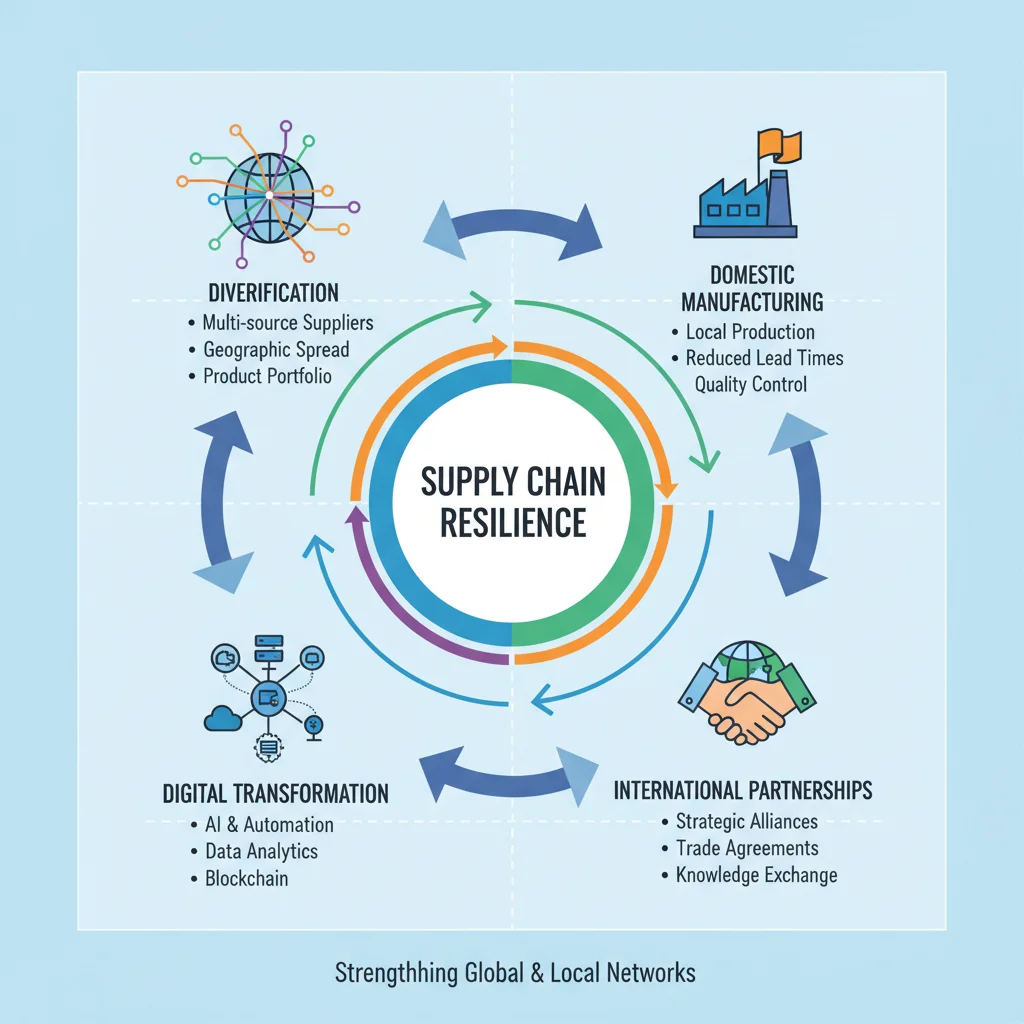
The US government’s 2026 strategy for supply chain resilience is built upon several interconnected pillars, each designed to address specific vulnerabilities and enhance overall systemic strength. These pillars represent a comprehensive and integrated approach, moving beyond piecemeal solutions to create a truly robust framework.
1. Domestic Manufacturing and Industrial Base Reinforcement
A cornerstone of the strategy is the revitalization of domestic manufacturing. The rationale is clear: reducing reliance on foreign production for critical goods lessens exposure to geopolitical risks, transportation disruptions, and foreign industrial policies. Initiatives such as the CHIPS and Science Act are prime examples, aiming to bring semiconductor fabrication back to American soil. Similar efforts are underway in strategic sectors like pharmaceuticals, advanced batteries, and critical minerals processing. This involves substantial federal incentives, tax credits, and partnerships with private industry to encourage investment in US-based production facilities. The goal is not necessarily to achieve complete self-sufficiency, but to establish a sufficient domestic capacity to buffer against global shocks and ensure access to essential goods.
2. Diversification of Sourcing and International Partnerships
While domestic production is crucial, complete isolation is neither feasible nor desirable. The strategy also heavily emphasizes diversification of sourcing. This means actively encouraging companies to move away from single-country dependencies towards a broader array of international suppliers, particularly from trusted allies and partners. The Indo-Pacific Economic Framework for Prosperity (IPEF) is a key diplomatic tool in this regard, fostering deeper economic ties and cooperation on supply chain resilience with countries like Japan, South Korea, and India. These partnerships aim to create ‘friend-shoring’ or ‘ally-shoring’ networks, where supply chains are built among countries with shared values and strategic interests, thereby reducing risks associated with adversarial nations.
3. Data Sharing, Transparency, and Digital Transformation
A lack of visibility is a critical weakness in many supply chains. The 2026 strategy places significant emphasis on improving data sharing and transparency across the entire supply chain ecosystem. This involves leveraging advanced digital technologies, including AI, blockchain, and IoT, to track goods, anticipate disruptions, and manage inventory more effectively. Government agencies are working to develop common data standards and platforms that can facilitate secure and efficient information exchange between businesses, logistics providers, and regulatory bodies. Enhanced transparency allows for earlier detection of potential issues, enabling proactive mitigation rather than reactive crisis management. Digital twins and predictive analytics are also being explored to model supply chain behavior and stress-test resilience strategies.
4. Workforce Development and Talent Pipeline
A resilient supply chain is only as strong as its workforce. The strategy recognizes the critical need for a skilled labor force capable of supporting advanced manufacturing, logistics, and digital technologies. This pillar includes significant investments in vocational training programs, apprenticeships, and STEM education. Partnerships between government, industry, and academia are being forged to align educational curricula with the evolving demands of modern supply chain operations. The aim is to build a robust talent pipeline that can sustain and innovate within the strengthened industrial base.
5. Strategic Stockpiling and Emergency Preparedness
For truly critical goods, such as medical supplies or strategic minerals, the government is expanding and modernizing its strategic stockpiles. This involves not just increasing quantities but also ensuring rapid deployment mechanisms and regular rotation of inventory to prevent obsolescence. Furthermore, the strategy includes enhanced emergency preparedness protocols, with clearer communication channels and coordinated response plans across federal, state, and local levels. Exercises and simulations are being conducted to test the efficacy of these plans and identify areas for improvement, ensuring that the nation can respond swiftly and effectively to future crises.
6. Infrastructure Investment
The Bipartisan Infrastructure Law is a crucial component, channeling billions into upgrading ports, railways, roads, and broadband internet. Efficient and modern infrastructure is the backbone of any robust supply chain. Congested ports, crumbling bridges, and unreliable internet connections are significant bottlenecks that exacerbate disruptions. These investments aim to improve the physical flow of goods and the digital flow of information, making the entire system more efficient and less prone to breakdowns.
These six pillars collectively form the comprehensive framework for building US Supply Chain Resilience by 2026. They represent a deliberate and strategic shift towards a more secure, adaptable, and self-reliant economic future.
Legislative and Executive Actions Driving Change
The ambitious goals for US Supply Chain Resilience are not merely aspirational; they are backed by significant legislative and executive actions. These governmental mandates provide the necessary funding, regulatory frameworks, and strategic direction to implement the resilience agenda.
The CHIPS and Science Act
Perhaps the most prominent piece of legislation directly impacting supply chain resilience is the CHIPS and Science Act of 2022. This landmark bill earmarks over $52 billion for domestic semiconductor research, development, and manufacturing. The aim is to reverse decades of offshoring chip production, which left the US vulnerable to disruptions in a critical technology sector. By incentivizing companies like Intel and TSMC to build or expand fabrication plants within the US, the act seeks to create a more secure and reliable supply of semiconductors, essential for everything from consumer electronics to defense systems. This directly addresses the vulnerabilities exposed during the recent global chip shortage, which severely impacted industries like automotive manufacturing.
The Bipartisan Infrastructure Law
Signed into law in 2021, the Bipartisan Infrastructure Law allocates hundreds of billions of dollars to modernize America’s infrastructure. This includes significant investments in ports, waterways, freight rail, roads, and bridges, all of which are vital components of the nation’s supply chain. For instance, funding for port improvements aims to reduce congestion and increase cargo handling capacity, streamlining the movement of goods. Similarly, upgrades to freight rail and highways will improve efficiency and reduce transit times, mitigating bottlenecks that can quickly cascade into widespread disruptions. Furthermore, investments in broadband internet expansion will support the digital transformation aspects of supply chain management, enabling better data flow and coordination.
Defense Production Act (DPA) Utilization
The Defense Production Act (DPA) has been increasingly utilized to bolster critical supply chains. Originally designed for wartime mobilization, the DPA allows the President to direct private companies to prioritize production for national defense. In the context of supply chain resilience, it has been invoked to accelerate the production of essential goods like N95 masks during the pandemic, and more recently, to boost domestic production of critical minerals and large-capacity batteries. This strategic use of the DPA demonstrates the government’s willingness to use all available tools to secure essential resources and manufacturing capabilities.
Executive Orders and Task Forces
Beyond legislation, executive orders have played a crucial role in shaping the US Supply Chain Resilience strategy. For example, President Biden’s Executive Order 14017, “America’s Supply Chains,” initiated the comprehensive 100-day reviews of critical sectors and established a whole-of-government approach to addressing supply chain vulnerabilities. This order mandated agencies to assess risks, identify policy recommendations, and develop long-term strategies. Subsequent executive actions have focused on specific areas, such as promoting competition in various industries to prevent monopolies that could create single points of failure in supply chains. Interagency task forces, often led by the Department of Commerce, Department of Defense, and the National Security Council, are continually working to coordinate efforts, share intelligence, and implement these directives effectively.
Trade Policy and International Engagement
US trade policy is also being recalibrated to support resilience. While traditional trade agreements focused primarily on market access, new frameworks like the Indo-Pacific Economic Framework for Prosperity (IPEF) include explicit pillars dedicated to supply chain cooperation. These agreements aim to establish early warning systems for disruptions, coordinate responses, and facilitate mutual assistance among partner nations. The emphasis is on building resilient supply chain partnerships with trusted allies, thereby reducing strategic dependencies on potential adversaries. This proactive diplomatic engagement is a critical, often understated, aspect of the overall resilience strategy.
Through this combination of legislative backing, executive mandates, and strategic international engagement, the US government is systematically dismantling vulnerabilities and constructing a more secure and resilient economic future by 2026.
Challenges and Opportunities in Implementation
While the vision for enhanced US Supply Chain Resilience by 2026 is clear, its implementation is not without significant challenges. However, these challenges also present unique opportunities for innovation and long-term strategic advantage.
Challenges:
- Cost and Competitiveness: Reshoring manufacturing and diversifying supply chains often comes with higher initial costs compared to relying on established, low-cost foreign production. Balancing the desire for resilience with the need for economic competitiveness is a delicate act. Government incentives help, but companies still face pressures from shareholders to maintain profitability.
- Workforce Shortages: The push for domestic manufacturing requires a skilled workforce, but the US faces ongoing labor shortages in many critical sectors, including manufacturing, logistics, and specialized technical fields. Attracting, training, and retaining talent is a substantial hurdle that requires sustained investment in education and vocational programs.
- Regulatory Complexity: Navigating the myriad of federal, state, and local regulations can be daunting for businesses looking to reshore or expand operations. Streamlining permitting processes and providing clear regulatory guidance are essential for facilitating investment.
- Global Coordination: While ‘friend-shoring’ is a key strategy, effective international cooperation on supply chain resilience requires significant diplomatic effort and alignment of interests among diverse nations. Geopolitical shifts and differing national priorities can complicate efforts to build unified resilience networks.
- Data Integration and Cybersecurity: The drive for greater supply chain transparency and digital transformation introduces new challenges related to data security and privacy. Protecting sensitive supply chain data from cyber threats is paramount, and integrating disparate data systems across numerous entities is technically complex.
- Private Sector Buy-in: Government initiatives are most effective when they have strong buy-in from the private sector. Convincing companies to invest in resilience measures that may not offer immediate financial returns requires effective communication, clear incentives, and a shared understanding of long-term risks.
Opportunities:
- Technological Innovation: The focus on resilience is spurring innovation in automation, AI, advanced robotics, and sustainable manufacturing practices. These technologies can not only enhance efficiency and reduce labor costs but also make supply chains more agile and less prone to human error or labor disruptions.
- Job Creation and Economic Growth: Reshoring and expanding domestic manufacturing creates new jobs and stimulates economic growth in communities across the US, particularly in regions that have experienced industrial decline. This has positive ripple effects on local economies.
- Environmental Sustainability: By optimizing logistics, reducing transportation distances, and investing in green manufacturing technologies, the drive for resilience can align with environmental sustainability goals, leading to reduced carbon footprints and more eco-friendly supply chains.
- Enhanced National Security: A more resilient supply chain directly contributes to national security by ensuring access to critical components for defense, healthcare, and infrastructure, even in times of crisis or conflict. This reduces strategic vulnerabilities and strengthens the nation’s overall defensive posture.
- Leadership in Global Standards: By actively engaging in international partnerships and developing advanced supply chain management practices, the US has an opportunity to set global standards for resilience, influencing future trade norms and technological adoption worldwide.
- Increased Agility and Adaptability: The investments in data analytics, digital twins, and diversified sourcing are building more agile supply chains that can quickly adapt to changing market conditions, consumer demands, and unforeseen events, providing a competitive advantage.
Navigating these challenges while capitalizing on the opportunities will determine the ultimate success of the US Supply Chain Resilience strategy by 2026. It requires continuous collaboration between government, industry, and academia, along with a long-term commitment to strategic investment and policy coherence.
Industry Impact and Future Outlook
The comprehensive strategies for US Supply Chain Resilience are already having, and will continue to have, profound impacts across various industries. Businesses are being compelled to re-evaluate their operational models, investment priorities, and strategic partnerships. Understanding these shifts is crucial for any enterprise operating within or interacting with the US economy.
Impact on Key Sectors:
- Manufacturing: This sector is experiencing a significant push towards reshoring and automation. Companies are investing in advanced manufacturing technologies to reduce labor costs and increase efficiency, making domestic production more competitive. Industries like semiconductors, pharmaceuticals, and automotive are at the forefront of this transformation.
- Logistics and Transportation: The infrastructure investments are directly benefiting logistics and transportation companies. Modernized ports, improved roads, and expanded digital infrastructure will lead to more efficient freight movement. However, these companies also face pressure to adopt more resilient practices, such as diversifying routes and modes of transport, and investing in real-time tracking technologies.
- Technology: The tech sector is both a beneficiary and a driver of resilience efforts. Demand for AI, IoT, blockchain, and data analytics solutions for supply chain visibility and optimization is surging. Companies providing these technologies are finding new markets, while tech manufacturers are grappling with the complexities of securing their own supply chains, particularly for critical components like rare earth minerals and advanced chips.
- Healthcare: The pandemic highlighted acute vulnerabilities in medical supply chains. The 2026 strategy emphasizes greater domestic production of essential medicines, PPE, and medical devices. This involves not only manufacturing but also securing raw materials and active pharmaceutical ingredients (APIs).
- Energy: As the world transitions to cleaner energy, securing the supply chains for critical minerals (e.g., lithium, cobalt for batteries) and renewable energy components (e.g., solar panels, wind turbine components) becomes paramount. The government’s focus on domestic processing and diversified sourcing for these materials will heavily impact the energy sector.
Future Outlook and Long-Term Implications:
By 2026, the US aims to have a supply chain ecosystem that is not only more robust but also more transparent and adaptable. This means:
- Increased Regionalization: While globalization won’t disappear, there will likely be a trend towards more regionalized supply chains, with clusters of production and sourcing located closer to end markets, particularly for critical goods.
- Enhanced Risk Management: Companies will integrate sophisticated risk management frameworks into their daily operations, moving beyond reactive measures to predictive analytics and scenario planning.
- Stronger Public-Private Partnerships: Collaboration between government and industry will deepen, with shared intelligence on supply chain threats and coordinated efforts to develop solutions.
- Sustainability as a Core Tenet: Resilience and sustainability are increasingly intertwined. Future supply chains will not only be robust but also environmentally conscious, driven by consumer demand and regulatory pressures.
- Geopolitical Realignment: The emphasis on ‘friend-shoring’ and diversification will lead to a realignment of global trade patterns, strengthening economic ties with allies and potentially reducing dependencies on adversarial nations.
The journey towards greater US Supply Chain Resilience is a continuous one, requiring ongoing adaptation and investment. However, the initiatives set in motion by the US government by 2026 are laying a formidable foundation for a more secure, stable, and prosperous economic future.
Conclusion: A Resilient Future for the American Economy
The US government’s initiatives to bolster US Supply Chain Resilience by 2026 represent a monumental and necessary undertaking. The lessons learned from recent global disruptions have forged a collective understanding that a strong economy and national security are inextricably linked to robust and adaptable supply chains. From the strategic reinvestment in domestic manufacturing and the diversification of international sourcing to the transformative power of digital technologies and critical infrastructure upgrades, every facet of the strategy is designed to fortify the nation against future shocks.
This journey is not without its complexities. Overcoming challenges related to cost, workforce development, and global coordination will require sustained effort, innovative solutions, and unwavering collaboration between the public and private sectors. However, the opportunities presented – including job creation, technological advancement, and enhanced national security – far outweigh these hurdles. The proactive stance taken by Washington signals a long-term commitment to safeguarding the flow of essential goods and services, ensuring that the American economy can weather any storm.
As we approach 2026, the fruits of these initiatives will become increasingly evident. A more transparent, diversified, and technologically advanced supply chain ecosystem will emerge, capable of anticipating, absorbing, and rapidly recovering from disruptions. This will not only protect businesses and consumers from volatility but also solidify the US position as a leader in global economic stability and innovation. The vision of a truly resilient American economy is not just a dream; it is becoming a well-engineered reality, driven by a strategic, whole-of-government approach to US Supply Chain Resilience.