Next-Gen Cybersecurity: Protecting US Infrastructure from 2026’s Evolving Threat Landscape with Zero Trust Models
The digital age, while offering unparalleled convenience and connectivity, has simultaneously ushered in an era of unprecedented cyber threats. As we rapidly approach 2026, the landscape of these threats is not just evolving; it’s transforming at an exponential rate, posing significant challenges to the security of critical infrastructure, particularly within the United States. From energy grids and water treatment plants to financial systems and transportation networks, the backbone of the nation is increasingly digital and, consequently, increasingly vulnerable. Traditional perimeter-based security models, once considered robust, are proving inadequate against sophisticated, persistent, and highly adaptive adversaries. This necessitates a fundamental shift in our approach to cybersecurity, moving towards more dynamic, resilient, and proactive defense mechanisms. At the forefront of this paradigm shift is the concept of Zero Trust Cybersecurity 2026, a model that challenges the very foundation of conventional security by assuming no implicit trust, regardless of whether a user or device is inside or outside the network perimeter.
The urgency to adopt such advanced security frameworks is underscored by the escalating geopolitical tensions, the proliferation of state-sponsored cyber warfare, and the increasing sophistication of ransomware gangs and other malicious actors. These groups are not merely seeking financial gain; they are often driven by espionage, sabotage, and destabilization, targeting the very systems that underpin societal function. The implications of a successful attack on critical US infrastructure could be catastrophic, leading to widespread service disruptions, economic turmoil, and even loss of life. Therefore, understanding and implementing robust next-generation cybersecurity strategies, with Zero Trust at its core, is not just an IT concern but a matter of national security and public safety.
This comprehensive article will delve into the critical aspects of protecting US infrastructure in the face of 2026’s evolving threat landscape. We will explore the limitations of traditional security, elucidate the principles and benefits of the Zero Trust model, and discuss how its implementation can fortify defenses. Furthermore, we will examine the emerging threats, the role of advanced technologies like AI and machine learning in bolstering security, and the essential policy and regulatory frameworks required to support this transition. Our goal is to provide a detailed roadmap for securing the nation’s most vital assets against the cyber challenges of tomorrow, ensuring resilience and continuity in an increasingly interconnected and perilous world.
The Evolving Threat Landscape: What to Expect by 2026
The cyber threat landscape is a constantly shifting battleground, and by 2026, several key trends are expected to intensify, posing amplified risks to US infrastructure. Understanding these threats is the first step toward effective defense. One of the most significant concerns is the increasing sophistication of ransomware attacks. These are no longer just opportunistic infections; they are highly targeted campaigns, often employing advanced persistent threat (APT) tactics, exfiltrating data before encryption, and leveraging double extortion schemes. The focus has shifted from individual users to critical organizations, where the potential for disruption and higher payouts is greater. The impact on infrastructure, from hospitals to pipelines, has already been demonstrated, and this trend is only set to grow.
Another alarming development is the rise of supply chain attacks. As organizations become more interconnected and rely on third-party vendors for software, hardware, and services, attackers are increasingly targeting these weaker links to gain access to a multitude of downstream victims. The SolarWinds attack served as a stark reminder of how a single compromise in the supply chain can have far-reaching implications, affecting government agencies and major corporations alike. By 2026, adversaries will have further refined these techniques, making it imperative for organizations to scrutinize the security posture of their entire supply chain, not just their immediate perimeter. This is a critical component of building robust Zero Trust Cybersecurity 2026 strategies.
State-sponsored cyber warfare continues to be a major concern. Nations with advanced offensive cyber capabilities are increasingly engaging in espionage, intellectual property theft, and disruptive attacks against critical infrastructure. These actors often possess significant resources, highly skilled personnel, and a willingness to operate with a long-term perspective, making them particularly difficult to detect and defend against. Their motives extend beyond financial gain, encompassing geopolitical leverage, intelligence gathering, and even the preparation of the battlefield for future conflicts. The targets are often strategic, aiming to degrade a nation’s capabilities or sow discord. The development of sophisticated custom malware, zero-day exploits, and advanced evasion techniques by these state-backed groups will continue to challenge conventional defenses.
Furthermore, the convergence of Information Technology (IT) and Operational Technology (OT) networks in critical infrastructure sectors presents a unique set of vulnerabilities. OT systems, which control industrial processes, were traditionally isolated from the internet and often designed with reliability and uptime as primary concerns, not security. However, as these systems become more integrated with IT networks for efficiency and remote management, they become exposed to the same cyber threats. Attacks on OT systems can have severe physical consequences, leading to equipment damage, environmental incidents, and widespread service outages. Protecting these environments requires specialized knowledge and security solutions tailored to their unique characteristics and constraints. This hybrid environment demands a unified and adaptive security approach, a core tenet of effective Zero Trust Cybersecurity 2026 implementations.
The proliferation of IoT (Internet of Things) devices also expands the attack surface significantly. From smart sensors in energy grids to connected devices in transportation systems, each IoT device can potentially serve as an entry point for attackers if not properly secured. Many IoT devices are deployed with default credentials, unpatched vulnerabilities, and limited security features, making them easy targets. As more and more critical functions rely on these interconnected devices, securing them becomes paramount. The sheer volume and diversity of IoT devices make traditional management and security approaches unsustainable, necessitating automated and intelligent security solutions capable of identifying, authenticating, and continuously monitoring every device.
Finally, the growing threat of AI-powered cyberattacks cannot be overstated. While AI is a powerful tool for defense, it can also be weaponized by adversaries. Malicious AI could be used to automate phishing campaigns, develop more sophisticated malware, identify vulnerabilities at scale, and even launch highly adaptive and evasive attacks that learn and modify their behavior in real-time. This creates an arms race where defensive AI must constantly outpace offensive AI. The ability to detect and respond to these machine-speed attacks will be a defining challenge for cybersecurity in 2026 and beyond. This necessitates a proactive and predictive security posture, where threat intelligence and behavioral analytics play a crucial role in anticipating and neutralizing attacks before they can cause significant damage.
The Limitations of Traditional Security Models
For decades, cybersecurity strategies primarily revolved around the concept of a strong perimeter. This model, often likened to a castle-and-moat defense, focused on building robust firewalls and intrusion detection systems to keep external threats out, while implicitly trusting everything within the network. The assumption was that once a user or device had successfully authenticated and gained access to the internal network, it could largely be trusted to operate freely. This approach, while effective against simpler, less sophisticated threats, has proven increasingly inadequate in the face of the evolving cyber landscape.
One of the primary limitations of traditional perimeter security is its inability to defend against insider threats. A malicious insider or a compromised legitimate account can bypass perimeter defenses entirely, moving laterally within the network without raising immediate alarms. Once inside, they have extensive access to sensitive data and critical systems, often with little to no additional authentication or authorization required. This ‘trust but verify’ (or often, ‘trust and don’t verify’) mentality leaves organizations highly vulnerable to internal breaches, which can be among the most damaging due to the level of access and knowledge an insider possesses.
Moreover, the modern enterprise network is no longer a neatly defined, on-premise entity. The proliferation of cloud computing, remote work, mobile devices, and IoT endpoints has blurred the traditional network perimeter to the point of non-existence. Employees access corporate resources from various locations, using diverse devices, often connecting to cloud-based applications that reside outside the organization’s direct control. In this distributed environment, a perimeter-centric approach becomes impractical and ineffective. Attempting to draw a ‘moat’ around a constantly expanding and shifting digital estate is like trying to contain water with a sieve.
Traditional security also struggles with lateral movement. Even if an attacker manages to breach the perimeter through a single compromised endpoint or vulnerability, the flat network architecture often found in older systems allows them to move freely from one system to another, escalating privileges and exploring for high-value targets. Once inside, they can establish persistence, exfiltrate data, or deploy ransomware with relative ease. The lack of granular access controls and continuous verification within the internal network provides attackers with a significant advantage, allowing them to remain undetected for extended periods, sometimes for months or even years. This is where the proactive measures of Zero Trust Cybersecurity 2026 become essential.
Furthermore, static security policies, often based on IP addresses or network segments, are ill-equipped to handle dynamic threats. Attackers constantly change their tactics, techniques, and procedures (TTPs), requiring security systems to be equally adaptive. Traditional firewalls and intrusion prevention systems, while still important, often rely on signature-based detection, which is ineffective against zero-day exploits and polymorphic malware. They react to known threats but struggle to identify novel attacks. The sheer volume of alerts generated by these systems can also lead to ‘alert fatigue,’ causing security teams to miss critical indicators of compromise amidst the noise.
Finally, the operational complexity and cost associated with managing disparate security tools and point solutions within a traditional framework can be overwhelming. Organizations often deploy numerous security products that don’t integrate well, creating gaps in coverage and making it difficult to gain a holistic view of the security posture. This siloed approach hinders effective threat detection, incident response, and overall security management. The manual effort required to configure, maintain, and update these systems also diverts valuable resources that could be better spent on strategic security initiatives. These limitations collectively highlight the urgent need for a more comprehensive, adaptive, and inherently proactive security model like Zero Trust.
The Imperative of Zero Trust Cybersecurity 2026
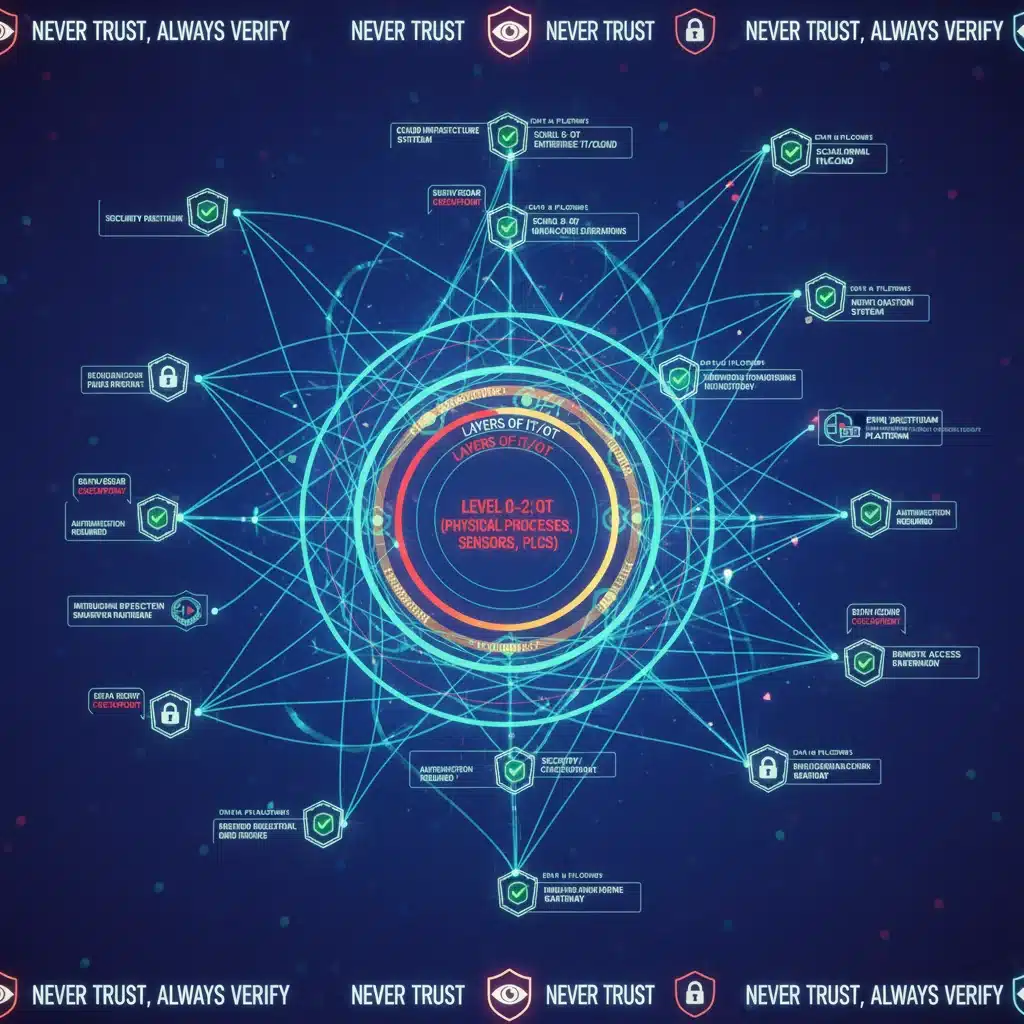
The Zero Trust model, at its core, operates on the principle of "never trust, always verify." It rejects the implicit trust traditionally granted to users and devices within the network perimeter. Instead, every access request, regardless of its origin, is treated as if it originated from an untrusted network. This fundamental shift in mindset is not merely a technological implementation but a strategic security philosophy that redefines how organizations approach access control and data protection. By 2026, for US critical infrastructure, Zero Trust will not be an option but a necessity.
Core Principles of Zero Trust
- Verify Explicitly: All resource requests must be authenticated and authorized based on all available data points, including user identity, location, device health, service or workload, data classification, and anomalous behavior. Trust is never assumed; it is continuously evaluated.
- Least Privilege Access: Users and devices are granted only the minimum access necessary to perform their specific tasks. This minimizes the potential damage if an account or device is compromised. Access is dynamic and context-aware, adjusting based on real-time risk assessments.
- Assume Breach: Organizations must operate under the assumption that a breach has already occurred or will eventually occur. This drives a proactive approach to security, focusing on limiting the blast radius of any compromise and ensuring rapid detection and response.
- Micro-segmentation: The network is divided into small, isolated segments, with strict controls governing traffic between them. This prevents lateral movement by attackers, even if they manage to breach one segment. Each segment essentially acts as its own perimeter.
- Continuous Monitoring and Verification: All activity is continuously monitored for anomalies and potential threats. Access decisions are not one-time events; they are continuously re-evaluated based on changes in context or risk posture.
Implementing Zero Trust Cybersecurity 2026 offers several critical advantages for protecting US infrastructure. Firstly, it significantly reduces the attack surface. By eliminating implicit trust, every access point becomes a potential enforcement point, forcing attackers to authenticate at every step. This makes it much harder for compromised credentials or devices to gain widespread access. Secondly, it enhances resilience against insider threats. Even if an insider or compromised account gains initial access, the least privilege principle and micro-segmentation severely restrict their ability to move laterally and access sensitive systems.
Furthermore, Zero Trust improves threat detection and response capabilities. Continuous monitoring and explicit verification generate a rich stream of security telemetry, providing deeper visibility into user and device behavior. Anomalies are more easily identified, allowing security teams to detect and respond to threats more rapidly. In critical infrastructure, where every second counts, this faster response time can prevent minor incidents from escalating into catastrophic events. This model also inherently supports the distributed and hybrid IT environments prevalent in modern infrastructure, securing access to cloud applications, remote workers, and IoT devices with consistent policies.
Key Components of a Zero Trust Architecture for US Infrastructure
Building a robust Zero Trust architecture for US critical infrastructure by 2026 requires a strategic and multi-faceted approach, integrating various technological and procedural components. It’s not a single product but a comprehensive framework that re-architects security operations. The foundation of this architecture lies in strong identity governance and administration (IGA).
Identity and Access Management (IAM)
At the heart of Zero Trust is robust identity verification. This involves implementing multi-factor authentication (MFA) for all users, including privileged accounts, and leveraging strong identity providers. IAM systems manage user identities, define roles, and enforce policies, ensuring that only authenticated and authorized individuals and services can access resources. For critical infrastructure, this means extending IAM to cover not just human users but also service accounts, applications, and even connected devices within IT and OT environments. Continuous authentication, where identity is re-verified at intervals or upon changes in context, is also crucial.
Device Trust and Endpoint Security
Every device attempting to access network resources must be verified for its security posture. This includes laptops, mobile devices, servers, and increasingly, OT devices and IoT sensors. Endpoint Detection and Response (EDR) and Extended Detection and Response (XDR) solutions play a vital role in continuously monitoring device health, detecting vulnerabilities, and ensuring compliance with security policies before and during access. Devices that fail to meet security requirements (e.g., outdated patches, suspicious software) are automatically quarantined or denied access, preventing them from becoming an entry point for attacks. This is a crucial layer in achieving effective Zero Trust Cybersecurity 2026.
Micro-segmentation and Network Security
Micro-segmentation is a cornerstone of Zero Trust, breaking down the traditional flat network into granular, isolated zones. This allows for precise control over traffic flow between these segments, dramatically limiting an attacker’s ability to move laterally even after gaining initial access. Policy enforcement points, such as next-generation firewalls (NGFWs) and software-defined networking (SDN) solutions, are deployed to inspect and control traffic between segments. This is especially vital for converged IT/OT networks, where isolating critical industrial control systems from the broader IT network can prevent operational disruptions.
Data Classification and Protection
Understanding the sensitivity and criticality of data is essential for applying appropriate security controls. Zero Trust mandates thorough data classification, allowing organizations to implement granular access policies based on data sensitivity. Data Loss Prevention (DLP) solutions are employed to monitor, detect, and block sensitive data from leaving the network or being accessed inappropriately. Encryption, both at rest and in transit, is also a non-negotiable component, ensuring that even if data is exfiltrated, it remains unreadable to unauthorized parties.
Security Analytics, Automation, and Orchestration
To effectively implement continuous verification and assume breach principles, organizations need robust security analytics. Security Information and Event Management (SIEM) and Security Orchestration, Automation, and Response (SOAR) platforms aggregate security logs, identify anomalous behavior, and automate response actions. Machine learning and AI are increasingly integrated into these platforms to detect subtle threats that human analysts might miss and to accelerate incident response. Automated policy enforcement and dynamic access adjustments based on real-time risk scores are critical for the agility required in a Zero Trust environment. This intelligent layer is what will make Zero Trust Cybersecurity 2026 truly effective against advanced threats.
Cloud Security Posture Management (CSPM) and Cloud Workload Protection (CWPP)
As infrastructure increasingly leverages cloud services, extending Zero Trust principles to the cloud is paramount. CSPM tools help identify and remediate misconfigurations in cloud environments, while CWPP solutions protect workloads (e.g., virtual machines, containers, serverless functions) running in the cloud. These tools ensure that cloud resources adhere to Zero Trust policies, with continuous monitoring and enforcement of access controls and security best practices, regardless of where the workload resides.
Challenges and Considerations for Implementation
While the benefits of Zero Trust are clear, its implementation, especially across complex US critical infrastructure, presents several challenges. It is not a simple ‘off-the-shelf’ solution but a transformative journey that requires significant planning, investment, and organizational buy-in. One of the primary hurdles is the sheer complexity of existing infrastructure. Many critical systems are legacy, built decades ago with little consideration for modern cybersecurity threats. These systems often run on outdated operating systems, use proprietary protocols, and cannot be easily updated or integrated with new security tools. Retrofitting Zero Trust principles onto such environments requires creative solutions, potentially involving network segmentation gateways and protocol translation layers, and a deep understanding of OT system fragility.
Another significant challenge is organizational culture and change management. Moving from a perimeter-focused mindset to one of ‘never trust, always verify’ requires a fundamental shift in how security is perceived and managed across the entire organization. Employees may resist new authentication procedures, and IT/OT teams may be wary of changes that could impact system uptime or performance. Effective communication, training, and leadership support are crucial to overcome this resistance and ensure successful adoption. This cultural shift is as important as the technological implementation for successful Zero Trust Cybersecurity 2026.
The cost of implementing a full Zero Trust architecture can also be substantial. It often involves significant investments in new technologies, including advanced IAM solutions, micro-segmentation tools, EDR/XDR platforms, and security analytics. Furthermore, there are costs associated with workforce training, system integration, and ongoing maintenance. For organizations with limited budgets, a phased approach, prioritizing the most critical assets, may be necessary. However, the long-term cost of a successful cyberattack on critical infrastructure far outweighs the investment in proactive security measures.
Interoperability and integration with existing systems pose another hurdle. Many organizations have a patchwork of security tools and legacy systems that may not seamlessly integrate with new Zero Trust components. This can lead to operational complexities, security gaps, and increased management overhead. A successful Zero Trust deployment requires careful planning to ensure that new solutions can communicate and share intelligence with existing infrastructure, creating a unified security fabric. The goal is to reduce complexity, not add to it.
The skill gap in cybersecurity is also a critical consideration. Implementing and managing a sophisticated Zero Trust architecture requires highly skilled professionals with expertise in network architecture, identity management, cloud security, and security analytics. There is a global shortage of such talent, making it difficult for organizations, particularly those in critical infrastructure sectors, to recruit and retain the necessary expertise. Investing in training current staff and partnering with specialized cybersecurity firms can help address this gap.
Finally, regulatory and compliance requirements add another layer of complexity. Critical infrastructure sectors are often subject to stringent regulations (e.g., NERC CIP for energy, CISA guidelines). Implementing Zero Trust must align with and ideally exceed these requirements, demonstrating a commitment to robust security. Navigating these regulatory landscapes while simultaneously transforming security architecture requires careful planning and expert guidance. By addressing these challenges head-on, organizations can successfully transition to a Zero Trust model, significantly enhancing their resilience against the cyber threats of 2026 and beyond.
Leveraging Advanced Technologies: AI, ML, and Behavioral Analytics
The sheer volume and velocity of cyber threats by 2026 will overwhelm human security analysts. This necessitates the intelligent application of advanced technologies to augment human capabilities, automate responses, and proactively identify emerging threats. Artificial Intelligence (AI) and Machine Learning (ML) are poised to play a transformative role in reinforcing Zero Trust Cybersecurity 2026 models, particularly in critical infrastructure protection.
AI and ML algorithms can process vast amounts of data from various sources – network logs, endpoint telemetry, identity data, threat intelligence feeds – to identify patterns and anomalies that indicate malicious activity. Unlike traditional signature-based detection, which relies on known threat indicators, AI/ML can detect novel attacks by recognizing deviations from normal behavior. This is crucial for combating zero-day exploits and highly polymorphic malware that constantly changes its signature. For example, ML models can learn the typical behavior of users and devices, flagging unusual login times, access patterns, or data transfers as potential indicators of compromise.
Behavioral analytics, powered by AI/ML, is particularly effective within a Zero Trust framework. By continuously monitoring and profiling user and entity behavior (UEBA), security systems can establish baselines of normal activity. Any deviation from these baselines, such as an employee attempting to access systems outside their usual scope or a device exhibiting unusual network communication, can trigger alerts or automated response actions. This continuous, context-aware monitoring aligns perfectly with the ‘never trust, always verify’ principle, dynamically adjusting trust levels based on real-time risk assessments.

Furthermore, AI can significantly enhance threat intelligence. ML algorithms can analyze global threat data, identify emerging attack campaigns, and predict potential targets and methodologies. This predictive capability allows critical infrastructure operators to proactively harden their defenses against anticipated threats, rather than merely reacting to attacks after they occur. AI-driven threat intelligence can also help prioritize vulnerabilities and allocate security resources more effectively, focusing on the most critical risks.
Automation and orchestration, also heavily reliant on AI and ML, are vital for rapid incident response. When a threat is detected, AI-powered SOAR platforms can automatically initiate predefined response playbooks, such as isolating compromised endpoints, blocking malicious IP addresses, revoking access credentials, or initiating forensic data collection. This reduces the time to respond from hours or days to minutes or even seconds, minimizing the impact of an attack. In critical infrastructure, where downtime is unacceptable, such rapid, automated responses are indispensable.
However, the integration of AI/ML is not without its challenges. It requires high-quality data for training models, and the potential for false positives or false negatives needs careful management. Explainable AI (XAI) is becoming increasingly important to ensure that security analysts understand why an AI made a particular decision, fostering trust and enabling better human-machine collaboration. Despite these challenges, the synergistic combination of AI, ML, and behavioral analytics with the Zero Trust model offers the most promising path to achieving a truly resilient and adaptive security posture for US critical infrastructure by 2026.
Policy, Regulation, and Collaboration for National Resilience
Technological solutions alone, no matter how advanced, are insufficient to fully protect US critical infrastructure from the evolving cyber threat landscape. A comprehensive strategy for Zero Trust Cybersecurity 2026 must be underpinned by robust policy, effective regulation, and unprecedented levels of collaboration across government, industry, and academia. These non-technical pillars are essential for creating an environment where advanced security practices can flourish and national resilience can be built.
Government policy plays a crucial role in setting the direction and priorities for cybersecurity. Directives such as the US Presidential Executive Order on Improving the Nation’s Cybersecurity have already mandated Zero Trust adoption within federal agencies, signaling a clear intent. By 2026, these mandates are expected to expand, potentially influencing or directly requiring similar implementations in critical infrastructure sectors. Policies need to encourage innovation, facilitate information sharing, and provide incentives for organizations to invest in next-generation security. They should also address the legal and ethical implications of advanced AI-driven security systems and ensure privacy protections are maintained.
Regulatory frameworks are vital for establishing minimum security standards and enforcing compliance. Sector-specific regulations, such as NERC CIP for the energy sector or those governing financial institutions, need to be updated and strengthened to incorporate Zero Trust principles. This involves moving beyond prescriptive controls to performance-based regulations that focus on outcomes and continuous improvement. Regulators must work closely with industry to ensure that requirements are achievable, effective, and do not unduly stifle innovation or create undue operational burdens. The goal is to raise the baseline security posture across all critical sectors, ensuring a consistent level of protection against sophisticated threats.
Collaboration is arguably the most critical non-technical element. The cyber threat landscape is too vast and complex for any single entity to tackle alone. Enhanced public-private partnerships are indispensable. Government agencies, like CISA (Cybersecurity and Infrastructure Security Agency), must continue to facilitate threat intelligence sharing, provide guidance, and offer support to critical infrastructure operators. Industry leaders, in turn, must be willing to share threat indicators, best practices, and lessons learned from their own experiences. This collective defense approach creates a network effect, where the security of one strengthens the security of all.
International collaboration is also paramount. Many cyber threats originate from beyond national borders, requiring coordinated responses with allied nations. Sharing threat intelligence, collaborating on incident response, and harmonizing cybersecurity standards globally can create a more resilient international cyber ecosystem. Diplomatic efforts to establish norms of responsible state behavior in cyberspace are also crucial for deterring state-sponsored attacks and reducing geopolitical tensions in the digital realm.
Finally, fostering a robust cybersecurity workforce through education and training initiatives is a long-term but essential policy objective. The demand for skilled cybersecurity professionals far outstrips supply. Government, academia, and industry must collaborate to develop curricula, provide scholarships, and create apprenticeship programs to build a pipeline of talent capable of designing, implementing, and managing advanced security architectures like Zero Trust. This investment in human capital is foundational to sustaining national cybersecurity resilience in the years leading up to and beyond 2026.
Conclusion: A Resilient Future with Zero Trust
The journey to securing US critical infrastructure against the evolving cyber threat landscape of 2026 is complex, challenging, but ultimately achievable with the right strategies and commitment. The traditional perimeter-based security models are no longer sufficient to combat the sophisticated, persistent, and adaptive adversaries targeting our most vital systems. The imperative to adopt a more resilient, dynamic, and proactive defense mechanism has never been more urgent.
Zero Trust Cybersecurity 2026 stands out as the foundational philosophy and architectural model capable of meeting these challenges head-on. By assuming no implicit trust and continuously verifying every access request, regardless of origin, Zero Trust fundamentally shifts the advantage from the attacker to the defender. Its core principles – explicit verification, least privilege access, micro-segmentation, continuous monitoring, and the assumption of breach – provide a robust framework for protecting identities, devices, networks, applications, and data across increasingly complex and distributed environments, including the critical IT/OT convergence zones within infrastructure.
The successful implementation of Zero Trust is not merely a technological upgrade; it represents a strategic transformation. It requires significant investment in advanced technologies such as AI, machine learning, and behavioral analytics to automate threat detection, analysis, and response at machine speed. These intelligent systems are crucial for augmenting human capabilities and staying ahead of AI-powered attacks. Furthermore, overcoming the challenges of legacy infrastructure, organizational change management, and the cybersecurity skill gap will require dedicated effort, strategic planning, and sustained leadership.
Beyond technology, the resilience of US infrastructure hinges on strong policy, adaptive regulation, and unparalleled collaboration. Government mandates, updated regulatory frameworks, and robust public-private partnerships are essential to foster an ecosystem where Zero Trust principles are widely adopted and effectively implemented. International cooperation in threat intelligence sharing and establishing norms of behavior in cyberspace will further strengthen collective defense.
As we look towards 2026, the commitment to building a comprehensive Zero Trust Cybersecurity 2026 architecture is not just about preventing breaches; it is about ensuring the continuous operation of essential services, safeguarding economic stability, and protecting the well-being of the nation. By embracing this proactive and adaptive security paradigm, the United States can build a truly resilient digital infrastructure, capable of withstanding the cyber challenges of today and tomorrow, securing a safer and more stable future.