Digital Privacy 2026: New Federal Data Protection Laws Explained
Digital Privacy in 2026: What New Federal Data Protection Laws Mean for Every American (RECENT UPDATES)
The digital landscape is constantly evolving, and with it, the complexities surrounding our personal data. As we approach 2026, the United States is poised for significant changes in how our digital privacy is protected. New federal data protection laws are on the horizon, promising to reshape the relationship between individuals, businesses, and government oversight. These updates are not merely technical adjustments; they represent a fundamental shift in how personal information is collected, processed, and secured across the nation. Understanding these impending regulations is crucial for every American, from the casual internet user to the largest corporations. This comprehensive guide will delve into the anticipated changes, their implications, and what you need to know to navigate the evolving world of digital privacy.
The Shifting Sands of Digital Privacy: Why New Federal Data Protection is Needed
For years, the U.S. has operated under a patchwork of state-level privacy laws, leading to inconsistencies and challenges for both consumers and businesses. While states like California (CCPA/CPRA), Virginia (VCDPA), and Colorado (CPA) have led the charge in establishing robust privacy frameworks, the lack of a unified national standard has created a complex and often confusing environment. This fragmented approach has highlighted the urgent need for comprehensive federal data protection legislation. The reasons are multifaceted:
- Inconsistent Consumer Rights: Depending on their state of residence, Americans have varying levels of control over their personal data. A federal law aims to standardize these rights, ensuring equal protection for all citizens.
- Business Compliance Challenges: Businesses operating nationally face the daunting task of complying with numerous, often conflicting, state regulations. A single federal framework would streamline compliance efforts, fostering a more predictable regulatory environment.
- Technological Advancements: The rapid pace of technological innovation, including AI, IoT, and advanced data analytics, continues to generate new privacy concerns. Existing laws often struggle to keep pace, necessitating forward-looking federal legislation.
- Global Data Flows: In an interconnected world, data often crosses international borders. A strong federal data protection law would enhance the U.S.’s position in global data governance discussions and facilitate international data transfers.
- Increased Data Breaches: The frequency and severity of data breaches continue to rise, underscoring the need for stronger security mandates and accountability measures at a national level.
The push for national federal data protection is driven by a collective recognition that digital privacy is a fundamental right in the 21st century. As our lives become increasingly intertwined with digital platforms, the need for robust safeguards against misuse, exploitation, and unauthorized access to our personal information becomes paramount.
Key Pillars of Anticipated Federal Data Protection Legislation in 2026
While the exact contours of the 2026 federal data protection laws are still being finalized, several key principles and provisions are expected to form their foundation. These pillars are designed to empower individuals, hold businesses accountable, and establish a clear framework for data governance across the nation.
Universal Consumer Rights: Taking Back Control
One of the most significant anticipated changes is the establishment of universal consumer rights regarding personal data. These rights are expected to mirror or even expand upon those found in leading state laws and international regulations like GDPR. Key rights will likely include:
- Right to Access: Individuals will have the right to request and obtain copies of their personal data held by businesses.
- Right to Deletion (Erasure): The ability to request that businesses delete their personal data, with certain exceptions.
- Right to Correction: The right to correct inaccurate or incomplete personal data.
- Right to Opt-Out of Sale/Sharing: A clear mechanism for consumers to opt-out of the sale or sharing of their personal data for targeted advertising or other purposes.
- Right to Data Portability: The right to receive their personal data in a structured, commonly used, and machine-readable format and to transmit that data to another controller without hindrance.
- Right to Limit Use of Sensitive Personal Information: Specific provisions for sensitive data categories (e.g., health, financial, biometric data) requiring explicit consent for collection and processing.
These rights are critical for fostering trust in the digital economy and giving individuals meaningful control over their digital footprint. Businesses will need to develop robust systems and processes to facilitate these requests efficiently and transparently, marking a significant compliance challenge but also an opportunity to build stronger consumer relationships.
Enhanced Business Obligations: Transparency and Accountability
New federal data protection laws will place substantial obligations on businesses that collect, process, or store personal data. These obligations are designed to ensure transparency, minimize data collection, and enhance security measures.
- Data Minimization: Businesses will be encouraged, and in many cases required, to collect only the personal data that is strictly necessary for the stated purpose. This moves away from the ‘collect everything’ mentality.
- Purpose Limitation: Data collected for one purpose cannot be used for an unrelated purpose without explicit consent or a clear legal basis.
- Data Security Requirements: Mandates for implementing reasonable administrative, technical, and physical safeguards to protect personal data from unauthorized access, disclosure, alteration, and destruction. This could include specific encryption standards, access controls, and regular security audits.
- Privacy by Design and Default: The principle that privacy considerations should be embedded into the design of systems and business practices from the outset, rather than being an afterthought. Default settings should be the most privacy-friendly option.
- Data Protection Assessments (DPAs): Requirements for businesses to conduct impact assessments for high-risk data processing activities, similar to GDPR’s Data Protection Impact Assessments (DPIAs).
- Vendor Management: Businesses will likely be held more accountable for the data privacy practices of their third-party vendors and service providers, necessitating stricter contract clauses and due diligence.
These obligations represent a significant shift from a reactive to a proactive approach to data privacy. Businesses that prioritize privacy will not only comply with the law but also build a competitive advantage through increased consumer trust.
Enforcement and Penalties: A Stronger Regulatory Hand
Effective federal data protection requires robust enforcement mechanisms and meaningful penalties for non-compliance. While the specifics are yet to be fully defined, it’s anticipated that the new laws will grant significant enforcement powers to federal agencies, likely including the Federal Trade Commission (FTC) and potentially a new dedicated privacy agency.
- Increased Fines: Penalties for violations are expected to be substantial, potentially based on a percentage of annual revenue (similar to GDPR) or per violation, designed to act as a genuine deterrent.
- Private Right of Action: A highly debated but crucial aspect is whether individuals will have a private right of action, allowing them to sue companies directly for privacy violations. This would significantly empower consumers and could lead to class-action lawsuits.
- Breach Notification Requirements: Standardized and stringent requirements for notifying affected individuals and regulatory authorities in the event of a data breach.
- Regulatory Audits and Investigations: Federal agencies will likely have increased authority to conduct audits and investigations into business data practices to ensure compliance.
The goal of these enforcement provisions is to ensure that businesses take their federal data protection responsibilities seriously, moving beyond mere lip service to actual implementation and adherence.
Implications for Everyday Americans: What Changes for You?
The introduction of comprehensive federal data protection laws in 2026 will have a profound and tangible impact on the daily digital lives of every American. While the immediate effects might not always be visible, the underlying changes will foster a more secure and transparent online environment.
Greater Control Over Your Personal Information
Perhaps the most direct benefit for individuals will be the increased control over their personal data. Imagine being able to:
- Easily request a copy of all the data a social media platform holds about you.
- Demand that an online retailer delete your purchase history.
- Opt-out of targeted advertising across multiple websites with a single, standardized mechanism.
- Know exactly what data is being collected about you and for what purpose, presented in clear, understandable language, not convoluted legal jargon.
These powers will shift the balance from companies having almost unfettered access to your data to you, the individual, having the final say. This will necessitate a change in how websites and apps design their user interfaces, making privacy settings more prominent and user-friendly.
Fewer Unwanted Solicitations and Targeted Ads
With stronger opt-out rights and stricter rules around data sharing for marketing purposes, you may notice a reduction in the volume of highly targeted advertisements that seem to follow you across the internet. While personalized advertising won’t disappear entirely, the new federal data protection framework should provide more effective tools to limit intrusive tracking and profiling.
Enhanced Security and Reduced Risk of Data Breaches
The mandate for businesses to implement robust data security measures means that your personal information will, in theory, be better protected against cyber threats. While no system is entirely foolproof, the increased accountability and potential penalties for security lapses should incentivize companies to invest more heavily in cybersecurity infrastructure and practices. This could lead to fewer data breaches and, when they do occur, more timely and transparent notifications.
Easier Understanding of Privacy Policies
A common complaint among internet users is the impenetrable nature of privacy policies. The new federal data protection laws are expected to push for more concise, transparent, and easily understandable privacy notices. This means you should be able to quickly grasp what data is being collected, why, and how it’s being used, without needing a law degree.
Empowerment Through Awareness and Education
As these laws roll out, there will likely be a surge in public awareness campaigns and educational resources from both government agencies and advocacy groups. This increased focus on digital literacy will empower Americans to better understand their rights and how to exercise them, further solidifying the impact of federal data protection.
Challenges and Criticisms: The Road Ahead for Federal Data Protection
While the prospect of comprehensive federal data protection is widely welcomed, the journey to implementation is not without its challenges and criticisms. Crafting legislation that balances consumer protection, business innovation, and national security is an intricate task.
Defining “Personal Data” and “Sensitive Data”
One of the perennial challenges in data privacy law is precisely defining what constitutes “personal data” and, more critically, “sensitive personal data.” The scope of these definitions directly impacts which information is protected and to what extent. Overly broad definitions can stifle innovation, while overly narrow ones can leave gaps in protection. The new federal data protection laws will need to strike a delicate balance here, especially as technology blurs the lines between identifiable and de-identifiable information.
Preemption of State Laws vs. Federal Floor
A major point of contention during legislative debates is whether a federal law should preempt existing state privacy laws. Some argue for complete preemption to create a uniform national standard, reducing compliance burdens for businesses. Others advocate for a “federal floor,” meaning the federal law would set a minimum standard, but states would still be free to enact more stringent protections. The outcome of this debate will significantly influence the landscape of federal data protection.
Enforcement Authority and Resources
Even the most robust laws are ineffective without adequate enforcement. Concerns exist about whether federal agencies, such as the FTC, will be granted sufficient funding, staffing, and authority to effectively enforce complex new federal data protection regulations across millions of businesses. The creation of a new, dedicated federal privacy agency is a possibility, but also comes with its own logistical and political hurdles.
Impact on Small Businesses
While large corporations typically have the resources to adapt to new regulations, small businesses (SMBs) often struggle with compliance costs. The new federal data protection laws will need to consider the impact on SMBs, potentially offering tiered compliance requirements or assistance programs to ensure they are not unduly burdened while still upholding privacy standards.
Balancing Innovation and Privacy
Critics sometimes argue that stringent privacy regulations can stifle technological innovation. The challenge for lawmakers is to craft federal data protection legislation that protects individuals without unduly hindering the development of new technologies and services that rely on data. This often involves risk-based approaches and fostering responsible innovation.
Global Interoperability
As data flows globally, the new U.S. federal data protection framework will need to consider its interoperability with international standards, particularly GDPR. Discrepancies can create friction for multinational companies and affect cross-border data transfers. Harmonization, where possible, would be beneficial.
Preparing for the Future: What Businesses Need to Do Now
The impending federal data protection laws in 2026 are not a distant threat but a clear call to action for businesses of all sizes. Proactive preparation is key to ensuring compliance, avoiding penalties, and maintaining consumer trust. Here’s what businesses should be doing now:
Conduct a Data Audit and Mapping Exercise
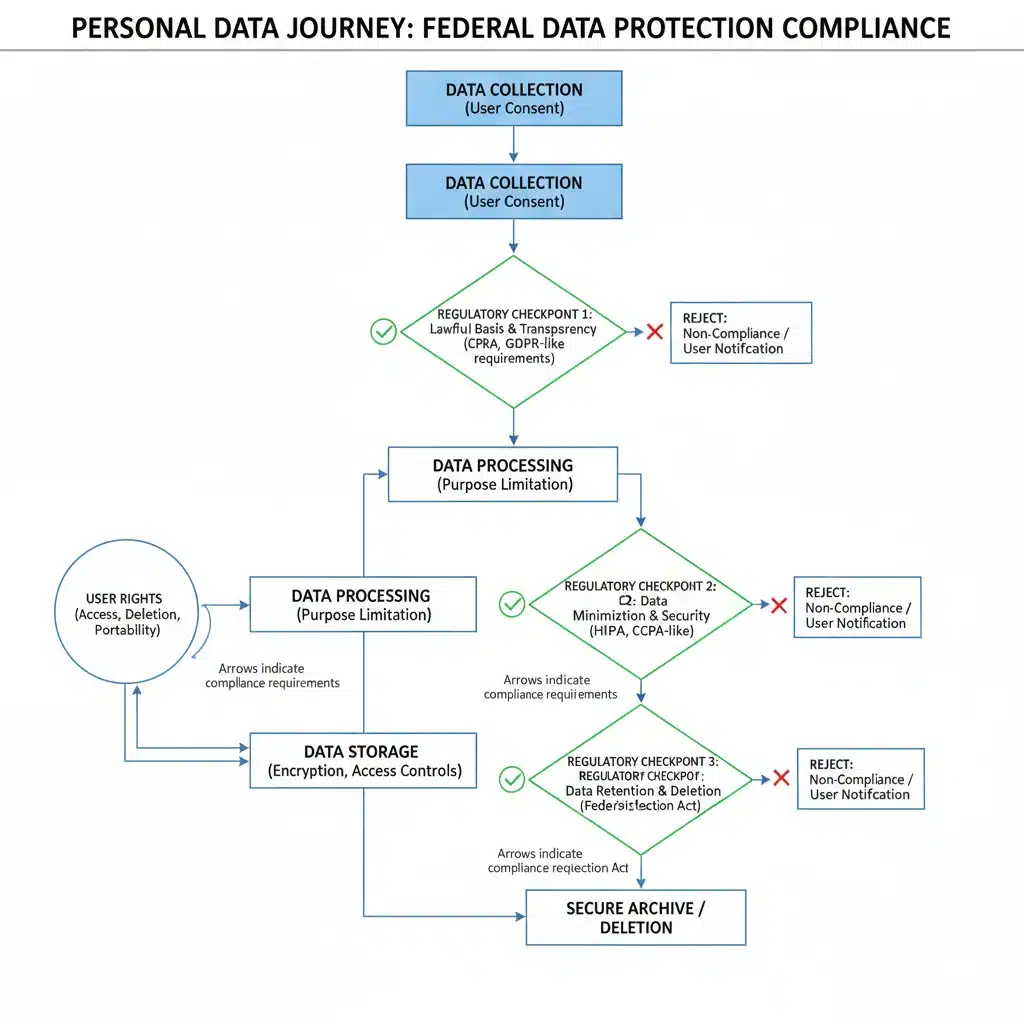
The first step is to understand what data your organization collects, where it’s stored, how it’s used, and who has access to it. This involves:
- Identifying all data sources: Websites, apps, CRM systems, marketing tools, HR systems, etc.
- Classifying data: Distinguishing between personal, sensitive, and non-personal data.
- Mapping data flows: Documenting how data moves through your organization and to third parties.
- Assessing data retention policies: Ensuring data is not kept longer than necessary.
A thorough data audit forms the foundation for all subsequent compliance efforts under new federal data protection mandates.
Update Privacy Policies and Consent Mechanisms
Businesses will need to revise their privacy policies to reflect the new consumer rights and business obligations. These policies must be clear, concise, and easily accessible. Consent mechanisms for data collection and processing will also need to be reviewed and updated to ensure they meet the new standards of explicit and informed consent required by federal data protection laws.
Enhance Data Security Measures
Strengthening cybersecurity is paramount. This includes:
- Implementing robust encryption for data at rest and in transit.
- Enhancing access controls and multi-factor authentication.
- Regularly conducting penetration testing and vulnerability assessments.
- Developing and testing incident response plans for data breaches.
- Training employees on data security best practices.
These proactive steps are essential for meeting the security mandates of the new federal data protection framework.
Review Third-Party Vendor Agreements
Your organization is often only as secure as its weakest link. Businesses must review contracts with all third-party vendors, cloud providers, and data processors to ensure they also comply with the new federal data protection requirements. This may involve renegotiating terms, conducting due diligence, and establishing clear data processing agreements.
Invest in Privacy-Enhancing Technologies (PETs)
Consider adopting Privacy-Enhancing Technologies (PETs) that can help minimize data collection, anonymize data, and secure processing. These tools can facilitate compliance with data minimization and privacy-by-design principles inherent in upcoming federal data protection regulations.
Train Employees and Foster a Culture of Privacy
Employee awareness and training are critical. Every individual within an organization who handles personal data needs to understand their responsibilities under the new federal data protection laws. Fostering a company-wide culture that prioritizes privacy is essential for long-term compliance and risk mitigation.
The Future of Digital Privacy: Beyond 2026
The 2026 federal data protection laws will undoubtedly mark a significant milestone in the evolution of digital privacy in the United States. However, the journey doesn’t end there. The digital world is dynamic, and privacy regulations will need to continue to adapt to new technologies and societal expectations.
Emerging Technologies and Privacy
As AI becomes more sophisticated, quantum computing emerges, and the metaverse expands, new privacy challenges will arise. Future iterations of federal data protection will need to address:
- AI Ethics and Data Usage: How to regulate data used to train AI models, prevent bias, and ensure transparency in AI decision-making.
- Biometric Data: Stricter controls over facial recognition, fingerprint scanning, and other biometric identifiers.
- IoT Privacy: Addressing the vast amounts of data collected by interconnected devices in homes, cars, and cities.
- Decentralized Technologies (Web3/Blockchain): Navigating privacy in decentralized environments where data ownership and control models are fundamentally different.
Global Harmonization Efforts
As more countries enact comprehensive data protection laws, there will be increasing pressure for global harmonization. The U.S. federal data protection framework will play a crucial role in international discussions and agreements, influencing how data is transferred and protected across borders.
Continuous Consumer Education
Empowering individuals will remain a core tenet. Ongoing education and awareness campaigns will be vital to ensure that Americans understand their evolving privacy rights and have the tools to exercise them effectively in an increasingly complex digital world.
Conclusion: A New Era for Federal Data Protection
The anticipated 2026 federal data protection laws represent a pivotal moment for digital privacy in the United States. They promise a more unified, robust, and consumer-centric approach to managing personal information in the digital age. While challenges in implementation and ongoing adaptation will persist, these laws are a necessary step towards building a more trustworthy and secure online environment for all Americans. By understanding these changes, both individuals and businesses can proactively prepare, fostering a future where digital innovation and personal privacy can coexist and thrive.
Stay informed, understand your rights, and prepare for a new era of federal data protection that aims to safeguard our most valuable digital asset: our personal information.