AI Data Privacy: Key US Regulations 2026

In an era increasingly defined by the pervasive influence of artificial intelligence, the landscape of data privacy is undergoing a profound transformation. As AI systems become more sophisticated and integrated into every facet of our lives, the volume and sensitivity of the data they process skyrocket. This rapid evolution presents unprecedented opportunities but also formidable challenges, particularly concerning how personal data is collected, used, and protected. For businesses operating within the United States, understanding the evolving regulatory environment is not merely a matter of compliance; it is a critical imperative for maintaining trust, avoiding hefty penalties, and fostering sustainable innovation. The year 2026 is poised to be a pivotal moment, with several key US regulations coming into sharper focus, demanding immediate attention from organizations leveraging AI.
The stakes are incredibly high. Data breaches can lead to catastrophic financial losses, reputational damage, and a complete erosion of consumer confidence. Moreover, the ethical implications of AI’s data handling practices are drawing increasing scrutiny from regulators, advocacy groups, and the public alike. Therefore, proactive engagement with the impending regulatory shifts is not an option but a necessity. This comprehensive guide will delve into the three most significant US regulations expected to shape AI data privacy in 2026, providing a detailed analysis of their scope, impact, and the practical steps businesses must take to ensure robust compliance. Our focus on AI Data Privacy Regulations aims to equip you with the knowledge needed to navigate this complex legal terrain successfully.
From potential federal frameworks like the American Data Privacy and Protection Act (ADPPA) to the continued proliferation and enforcement of stringent state-level privacy laws, and the sector-specific regulations that are adapting to AI’s unique challenges, we will break down what you need to know. This isn’t just about avoiding penalties; it’s about building a future where AI innovation and individual privacy rights coexist harmoniously. Let’s explore the critical legal frameworks that will define AI data privacy in the coming years.
The Looming Shadow of a Federal Data Privacy Law: The American Data Privacy and Protection Act (ADPPA)
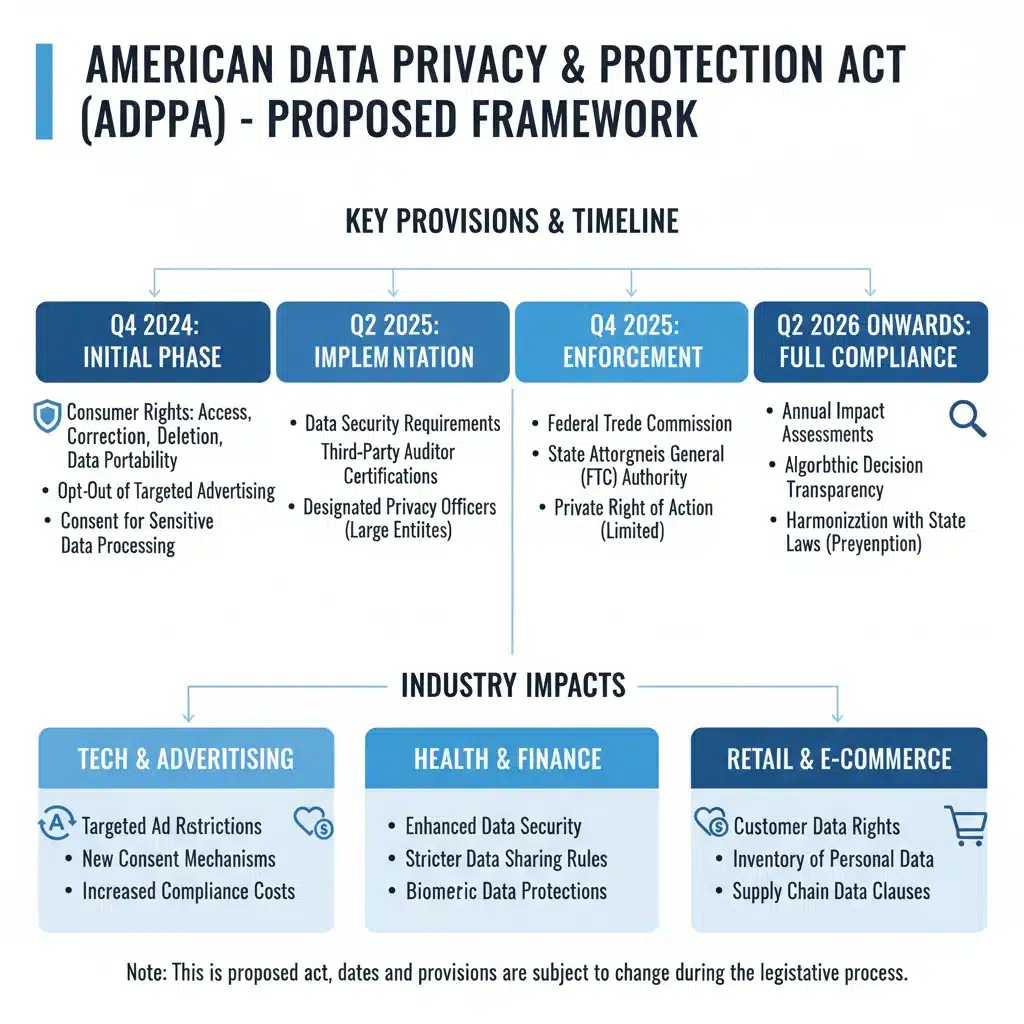
For years, the United States has operated without a comprehensive federal data privacy law, a stark contrast to the European Union’s GDPR. This regulatory vacuum has led to a patchwork of state-specific laws, creating a complex and often confusing compliance landscape for businesses operating nationwide. However, the American Data Privacy and Protection Act (ADPPA) has emerged as the most promising bipartisan effort to establish a unified federal standard. While its passage remains uncertain, its influence on the future of AI Data Privacy Regulations is undeniable, and businesses must prepare for its potential enactment and impact by 2026.
Understanding the ADPPA’s Core Tenets and AI Implications
The ADPPA, in its various iterations, proposes a broad framework that would significantly alter how companies collect, process, and share consumer data. Key provisions include:
- Data Minimization: A central tenet requiring companies to collect only the data that is reasonably necessary and proportionate to provide requested products or services. For AI systems, this means a fundamental shift away from indiscriminate data hoovering, demanding more precise data acquisition strategies.
- Purpose Limitation: Data collected for one specific purpose cannot be used for another unrelated purpose without explicit consumer consent. This directly impacts AI models trained on vast datasets, necessitating clear definitions of intended use and mechanisms for obtaining consent for new applications.
- Individual Rights: Consumers would gain enhanced rights, including the right to access, correct, delete, and port their personal data. AI systems must be designed with mechanisms to facilitate these requests, which can be particularly challenging when data is deeply embedded in complex algorithmic structures.
- Opt-Out Rights for Targeted Advertising: The ADPPA would grant consumers the right to opt out of targeted advertising, potentially reshaping the AI-driven advertising industry and requiring new consent management platforms.
- Data Security Requirements: Companies would be mandated to implement reasonable data security practices to protect personal information, a critical aspect given the increasing sophistication of AI-powered cyber threats and the potential for AI systems themselves to be vulnerable.
- Algorithmic Discrimination Protections: Significantly for AI, the ADPPA includes provisions aimed at preventing algorithmic discrimination, requiring impact assessments for high-risk AI systems and potentially mandating explainability for certain AI decisions. This is a direct response to growing concerns about bias in AI.
Preparing for ADPPA’s Potential Impact on AI Development and Deployment
Even if the ADPPA does not pass in its current form, its principles are likely to inform future federal legislation or influence state-level initiatives. Therefore, businesses should:
- Conduct Data Audits: Understand exactly what data your AI systems collect, where it comes from, how it’s used, and who has access to it. This is the foundational step for compliance with data minimization and purpose limitation.
- Implement Privacy-by-Design: Integrate privacy considerations into the very architecture of AI systems from the outset, rather than as an afterthought. This includes anonymization, pseudonymization, and robust access controls.
- Enhance Consent Management: Develop clear, transparent, and user-friendly mechanisms for obtaining and managing consumer consent, especially for data used to train and deploy AI models.
- Develop Algorithmic Transparency and Accountability Frameworks: Begin exploring methods for documenting AI decision-making processes, conducting bias assessments, and establishing human oversight mechanisms for high-stakes AI applications.
- Stay Informed: Continuously monitor legislative developments at the federal level. Engage with industry associations and legal experts to understand the latest proposals and their potential implications for AI Data Privacy Regulations.
The ADPPA represents a significant step towards a unified data privacy framework in the US, and its potential enactment or the adoption of its principles will profoundly impact how AI interacts with personal data. Proactive preparation is key to turning potential challenges into opportunities for responsible AI innovation.
The Continued Rise of State-Level Privacy Laws: California, Virginia, Colorado, and Beyond
In the absence of a federal standard, states have taken the lead in enacting comprehensive data privacy legislation, creating a complex, multi-jurisdictional compliance challenge. By 2026, the enforcement and evolution of these state-level laws will continue to be a primary driver of AI Data Privacy Regulations, particularly for businesses operating across state lines. The California Privacy Rights Act (CPRA), Virginia Consumer Data Protection Act (VCDPA), and Colorado Privacy Act (CPA) serve as prominent examples, and many other states are following suit.
California Privacy Rights Act (CPRA): A Gold Standard for AI Data
Building upon the California Consumer Privacy Act (CCPA), the CPRA significantly strengthened consumer rights and introduced new obligations for businesses. Its impact on AI is substantial:
- Sensitive Personal Information: The CPRA defines a new category of ‘sensitive personal information’ (e.g., racial or ethnic origin, religious beliefs, health data), granting consumers the right to limit its use and disclosure. AI systems processing such data face heightened scrutiny and stricter compliance requirements.
- Data Minimization and Purpose Limitation: Like the ADPPA, the CPRA emphasizes these principles, compelling AI developers to justify data collection and processing activities.
- Audits and Risk Assessments: Businesses engaged in high-risk processing activities (which often include AI-driven profiling or decision-making) may be required to conduct regular cybersecurity audits and privacy risk assessments.
- Automated Decision-Making: The CPRA specifically addresses automated decision-making technologies, requiring businesses to provide consumers with meaningful information about the logic involved in these decisions and the potential outcomes. This directly impacts the transparency and explainability of AI systems.
- Enforcement by the CPPA: The California Privacy Protection Agency (CPPA) has robust enforcement powers, including the ability to issue fines and conduct investigations, making CPRA compliance a high priority.
Virginia Consumer Data Protection Act (VCDPA) and Colorado Privacy Act (CPA): Expanding the Landscape
While sharing similarities with CPRA, the VCDPA and CPA introduce their own nuances and broaden the scope of state-level privacy protections:
- Opt-Out for Targeted Advertising and Sales: Both laws grant consumers the right to opt out of the processing of personal data for targeted advertising, the sale of personal data, and certain profiling activities. This directly impacts AI-driven marketing and personalization engines.
- Data Protection Assessments: Businesses conducting activities that present a heightened risk of harm to consumers (e.g., processing sensitive data, targeted advertising, profiling for consequential decisions) are required to conduct data protection assessments. AI systems often fall within this ‘heightened risk’ category.
- Universal Opt-Out Mechanisms: Both laws encourage the development of universal opt-out mechanisms, which could streamline consumer choices but add complexity for businesses managing consent across various platforms.
- Right to Appeal: Consumers have the right to appeal a controller’s decision regarding their privacy requests, adding another layer of accountability.
The Proliferation of Similar State Laws and Their Collective Impact
As of late 2023, numerous other states, including Utah, Connecticut, Iowa, Indiana, Montana, Tennessee, and Delaware, have enacted their own comprehensive privacy laws, with more expected by 2026. This creates a challenging environment for businesses leveraging AI:
- Jurisdictional Complexity: Determining which state law applies to which data processing activity can be incredibly difficult, especially for AI systems that process data from users across multiple states.
- Varying Definitions and Rights: While there are common themes, each state law has unique definitions of ‘personal data,’ ‘sensitive data,’ and slightly different consumer rights and enforcement mechanisms. This necessitates a granular approach to compliance.
- Consent and Opt-Out Management: Managing consent and opt-out preferences across a multitude of state-specific requirements is a significant operational challenge for AI-driven platforms.
Strategies for Navigating the State-Level Patchwork
To effectively manage the evolving landscape of state AI Data Privacy Regulations, businesses should:
- Adopt a ‘Highest Common Denominator’ Approach: Where possible, implement privacy practices that meet the strictest requirements of all applicable state laws. This often means aligning with CPRA or a similar robust framework.
- Utilize Privacy Management Platforms: Invest in technologies that can help manage consent, track data flows, facilitate data subject access requests (DSARs), and automate compliance tasks across multiple jurisdictions.
- Conduct Regular Legal Reviews: Periodically review your AI data handling practices against the latest state laws and amendments. The legal landscape is dynamic, and continuous monitoring is essential.
- Train Your Teams: Ensure that all personnel involved in AI development, data management, and customer service are fully aware of and trained on the relevant state privacy requirements.
- Map Data Flows for AI: Create detailed data maps that illustrate where personal data originates, how it’s processed by AI, where it’s stored, and how it’s eventually disposed of, ensuring compliance with each state’s data retention and deletion requirements.
The continued growth of state-level data privacy laws underscores the urgent need for a comprehensive federal solution. Until then, businesses must remain agile and meticulous in their compliance efforts to avoid legal pitfalls and build trust with their customers in the age of AI.
Sector-Specific Regulations Adapting to AI: HIPAA, GLBA, and Beyond
Beyond broad federal and state privacy laws, sector-specific regulations are also undergoing critical adaptations to address the unique challenges posed by AI. For industries like healthcare and finance, which handle highly sensitive personal information, the integration of AI necessitates a re-evaluation of existing compliance frameworks. By 2026, we can expect increased enforcement and clarification of how regulations like HIPAA and GLBA apply to AI-driven data processing, further shaping the landscape of AI Data Privacy Regulations.
HIPAA in the Age of AI: Protecting Health Data
The Health Insurance Portability and Accountability Act (HIPAA) sets stringent standards for protecting sensitive patient health information (PHI). As AI becomes integral to diagnostics, treatment planning, and patient management, the intersection with HIPAA is becoming increasingly complex:
- De-identification Challenges: AI models often require vast amounts of data for training. While HIPAA allows for the use of de-identified data, the sophistication of AI raises concerns about re-identification risks, even with supposedly anonymized datasets. The bar for ‘true’ de-identification for AI purposes is likely to be raised.
- Business Associate Agreements (BAAs): AI vendors and platforms that process PHI on behalf of covered entities (e.g., hospitals, clinics) must comply with HIPAA’s Business Associate requirements. This includes robust BAAs that clearly define responsibilities for data protection.
- Security Rule Compliance: AI systems must adhere to HIPAA’s Security Rule, implementing administrative, physical, and technical safeguards to protect electronic PHI. This includes securing AI models, their training data, and the outputs they generate.
- Patient Consent for AI Use: While HIPAA generally allows for data use for treatment, payment, and healthcare operations, the use of AI for novel applications may require specific patient consent, especially if data is used in ways not originally envisioned.
- Ethical AI and Bias: Though not explicitly a HIPAA provision, the ethical implications of AI in healthcare, including potential biases in diagnostic AI, are drawing regulatory attention. This could lead to future guidance or amendments requiring AI systems to be fair and equitable.
GLBA and Financial AI: Safeguarding Consumer Financial Information
The Gramm-Leach-Bliley Act (GLBA) protects the privacy of consumer financial information held by financial institutions. As AI is deployed for fraud detection, credit scoring, personalized financial advice, and automated trading, GLBA compliance takes on new dimensions:
- Financial Privacy Rule: GLBA’s Financial Privacy Rule requires financial institutions to explain their information-sharing practices to customers and allow them to opt out of some sharing. AI systems must respect these opt-out preferences.
- Safeguards Rule: This rule mandates that financial institutions develop, implement, and maintain a comprehensive information security program. For AI, this means securing AI models, data pipelines, and algorithms from unauthorized access, use, or disclosure.
- Fair Credit Reporting Act (FCRA) Overlap: Many AI applications in finance, particularly those related to credit decisions, overlap with FCRA. This requires transparency, accuracy, and the ability for consumers to understand and challenge AI-driven financial decisions. Algorithmic explainability becomes crucial here.
- Vendor Management: Financial institutions using third-party AI vendors must ensure those vendors are also GLBA compliant, extending security and privacy obligations through contracts and oversight.
- AI Bias in Lending/Insurance: Concerns about AI perpetuating or exacerbating bias in lending or insurance decisions are significant. While not directly a GLBA mandate, regulatory bodies like the CFPB are actively scrutinizing AI’s impact on fair access to financial services, hinting at future regulatory action.

Other Sector-Specific Considerations for AI Data Privacy
Beyond healthcare and finance, other sectors are also grappling with AI data privacy:
- Children’s Online Privacy Protection Act (COPPA): AI applications targeting or collecting data from children under 13 must adhere to COPPA’s strict consent requirements, which are even more complex when AI is involved in data collection or content delivery.
- Biometric Data Laws: Several states have enacted specific laws governing biometric data (e.g., Illinois’ BIPA). AI systems using facial recognition, voice recognition, or other biometric identifiers must comply with these specialized regulations, often requiring explicit consent and strict data handling protocols.
- Education (FERPA): AI tools used in educational settings must comply with FERPA, protecting student education records. This means careful consideration of how student data is processed, stored, and shared by AI platforms.
Ensuring Compliance in Sector-Specific AI Deployments
For businesses in regulated sectors, navigating AI Data Privacy Regulations requires a multi-layered approach:
- Deep Dive into Sector-Specific Guidance: Stay abreast of guidance issued by relevant regulatory bodies (e.g., HHS for HIPAA, CFPB for GLBA) on AI and data privacy.
- Legal and Compliance Expertise: Engage legal counsel and compliance officers with expertise in both AI and your specific industry’s regulations.
- Robust Data Governance: Implement strong data governance frameworks that track the lineage of data used by AI, ensuring it aligns with consent, regulatory permissions, and security requirements.
- Impact Assessments: Conduct thorough AI privacy impact assessments (PIA) and data protection impact assessments (DPIA) to identify and mitigate risks specific to your sector.
- Vendor Due Diligence: Scrutinize AI vendors to ensure their practices align with your sector-specific obligations, especially concerning data security and privacy.
The adaptation of sector-specific regulations to AI is an ongoing process. By 2026, we can anticipate clearer rules and increased enforcement, making proactive compliance an essential component of responsible AI development and deployment in these sensitive areas.
The Broader Implications of AI Data Privacy Regulations for Businesses
The convergence of potential federal legislation, the expansion of state-level laws, and the adaptation of sector-specific regulations paints a clear picture: AI Data Privacy Regulations are becoming more stringent, complex, and pervasive. For businesses leveraging AI, this isn’t just about avoiding fines; it’s about building a sustainable and trustworthy AI strategy.
Operational Challenges and Opportunities
- Increased Compliance Costs: Investing in privacy-enhancing technologies, legal counsel, and dedicated privacy teams will be necessary. However, this can also be seen as an investment in long-term stability and consumer trust.
- Innovation with Constraints: AI development will need to be more deliberate, incorporating privacy-by-design principles from the outset. This might slow down some rapid deployment cycles but can lead to more ethically sound and robust AI solutions.
- Competitive Advantage: Companies that proactively embrace strong data privacy practices and demonstrate transparency in their AI usage can build a significant competitive advantage, attracting privacy-conscious consumers and partners.
- Talent Demand: The need for professionals skilled in both AI and data privacy law will skyrocket, creating new roles and career paths.
Ethical AI and Public Trust
Beyond legal compliance, the evolving regulatory landscape is intrinsically linked to the broader push for ethical AI. Regulations often reflect societal concerns about algorithmic bias, lack of transparency, and the potential for AI to infringe on individual rights. By adhering to these regulations, businesses contribute to:
- Fairness and Equity: Reducing discriminatory outcomes from AI systems.
- Transparency and Explainability: Helping users understand how AI makes decisions.
- Accountability: Establishing clear responsibilities for AI’s impact.
- Public Trust: Building confidence in AI technologies, which is crucial for their widespread adoption and acceptance.
Conclusion: Navigating the Future of AI Data Privacy
The year 2026 marks a critical juncture for AI Data Privacy Regulations in the United States. The potential for a federal law like the ADPPA, the undeniable force of expanding state privacy laws like CPRA, VCDPA, and CPA, and the ongoing adaptation of sector-specific rules such as HIPAA and GLBA collectively demand a sophisticated and proactive approach from businesses. Ignoring these trends is not an option; the risks of non-compliance—financial penalties, reputational damage, and loss of consumer trust—are simply too high.
To thrive in this complex environment, organizations must:
- Develop a Comprehensive Privacy Strategy: Integrate privacy considerations into every stage of the AI lifecycle, from data acquisition and model training to deployment and monitoring.
- Invest in Technology and Expertise: Leverage privacy-enhancing technologies (PETs) and build internal teams or engage external experts with deep knowledge of both AI and privacy law.
- Foster a Culture of Privacy: Ensure that privacy and ethical considerations are embedded in the organizational culture, with regular training and clear policies for all employees.
- Engage with Regulators and Policymakers: Stay informed about legislative developments and actively participate in industry discussions to help shape future regulations.
The future of AI is intertwined with the future of data privacy. By embracing responsible data practices and adhering to the evolving regulatory frameworks, businesses can not only mitigate risks but also unlock the full potential of AI as a force for positive innovation, built on a foundation of trust and respect for individual rights. The time to prepare for 2026’s AI data privacy landscape is now.