Space Economy 2.0: Identifying 3 High-Potential Commercial Opportunities for the Next Decade
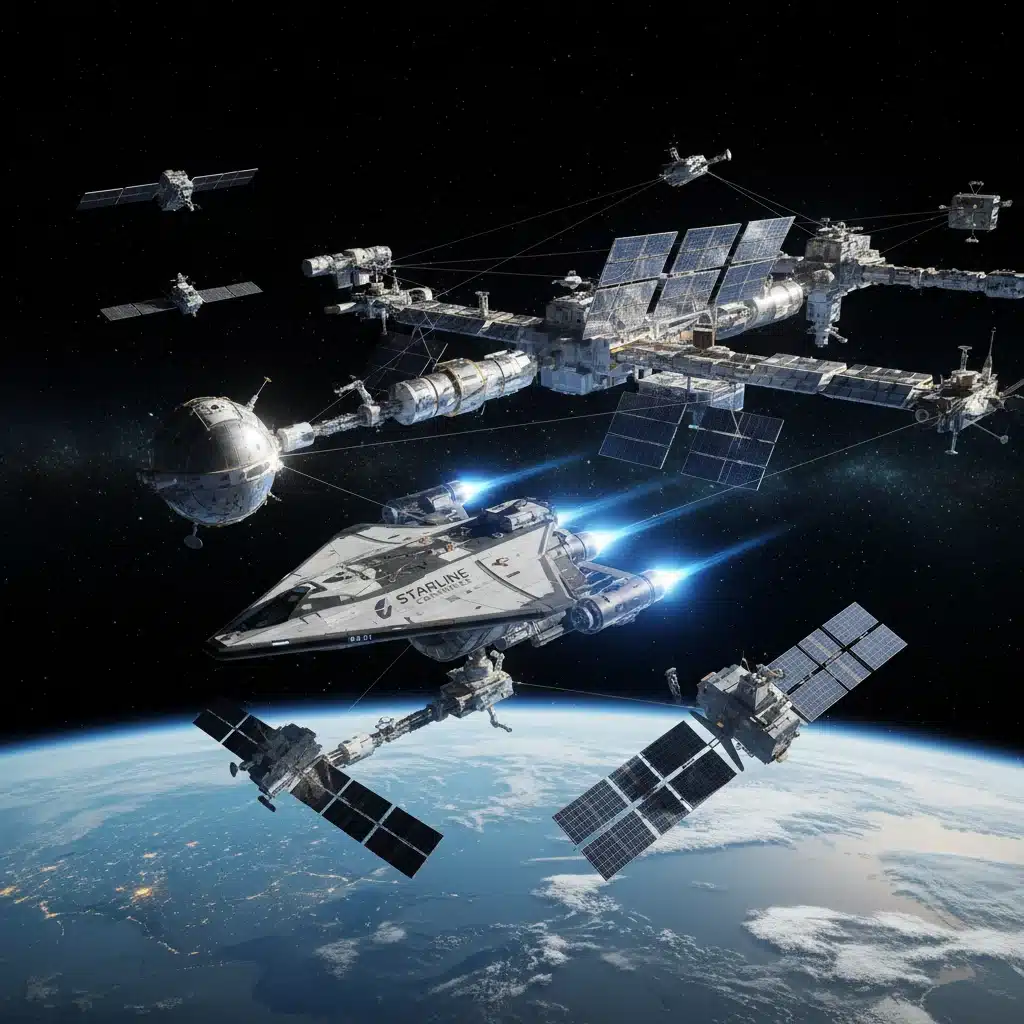
Space Economy 2.0: Identifying 3 High-Potential Commercial Opportunities for the Next Decade
The dawn of the 21st century has heralded an unprecedented era of innovation and commercialization in space. What was once the exclusive domain of government agencies and scientific endeavors is now rapidly evolving into a dynamic and burgeoning market, often referred to as the space economy. This isn’t just about launching rockets; it encompasses a vast array of activities, from satellite communications and Earth observation to in-space manufacturing and resource utilization. As we look towards the next decade, the space economy opportunities are not merely theoretical; they are tangible, investable, and poised for exponential growth. This article will delve into three high-potential commercial opportunities that are set to redefine the global economic landscape and offer significant returns for early movers.
The Resurgence of Space: A New Economic Frontier
For decades, space exploration was driven primarily by geopolitical competition and scientific curiosity. The Apollo missions, the Space Shuttle program, and the International Space Station (ISS) were monumental achievements, but they were largely government-funded and operated. However, a confluence of factors—including decreasing launch costs, advancements in propulsion technology, miniaturization of electronics, and increased private investment—has dramatically lowered the barriers to entry. This has paved the way for a new generation of entrepreneurs and companies to enter the fray, transforming space into a vibrant commercial arena. The term ‘Space Economy 2.0’ aptly describes this shift, where private enterprise is not just a participant but a driving force.
The global space economy is already a multi-billion dollar industry, with estimates varying but consistently showing upward trends. Morgan Stanley, for instance, projects that the global space industry could generate revenue of over $1 trillion or more by 2040. This growth is fueled by an increasing demand for space-based services, from ubiquitous internet connectivity to advanced climate monitoring. As Earth’s population grows and our technological reliance deepens, the need for robust, reliable, and innovative solutions delivered from orbit will only intensify. Identifying the specific sectors within this vast landscape that offer the most significant growth potential is crucial for investors, policymakers, and innovators alike.
Our focus here is on identifying high-potential space economy opportunities that are not just viable but are also likely to see substantial commercialization and profitability within the next ten years. These are areas where technological hurdles are being overcome, market demand is emerging, and the regulatory environment is beginning to adapt. While many fascinating prospects exist, we will concentrate on three distinct yet interconnected areas: satellite servicing and debris removal, space tourism, and asteroid mining.
1. Satellite Servicing and Debris Removal: Sustaining Orbital Infrastructure
The sheer number of satellites currently orbiting Earth is staggering, and it’s growing at an exponential rate. From communication satellites providing internet and broadcasting services to Earth observation satellites monitoring weather and climate, our modern world is incredibly reliant on these orbital assets. However, satellites have a finite lifespan, often limited by fuel, component degradation, or accidental damage. Once a satellite ceases to function, it becomes space debris, posing a significant threat to operational spacecraft and future missions. This is where satellite servicing and debris removal emerge as critical and highly lucrative space economy opportunities.
The Growing Problem of Space Debris
The European Space Agency (ESA) estimates that there are over 36,500 pieces of space debris larger than 10 cm, and millions of smaller, untrackable objects. These objects travel at orbital velocities, meaning even a small paint chip can cause catastrophic damage to a functional satellite. The Kessler Syndrome, a theoretical scenario where the density of objects in low Earth orbit (LEO) becomes so high that collisions generate more debris, making space unusable, is a looming threat. Preventing this scenario requires proactive measures, and satellite servicing offers a sustainable solution.
On-Orbit Servicing: Extending Lifespans and Enhancing Capabilities
Satellite servicing involves a range of activities designed to extend the operational life of satellites, repair them, or even upgrade their capabilities. This can include:
- Refueling: Many satellites are decommissioned not because their instruments fail, but because they run out of propellant needed for station-keeping maneuvers. On-orbit refueling missions can significantly extend their operational life, saving operators the immense cost of building and launching new satellites.
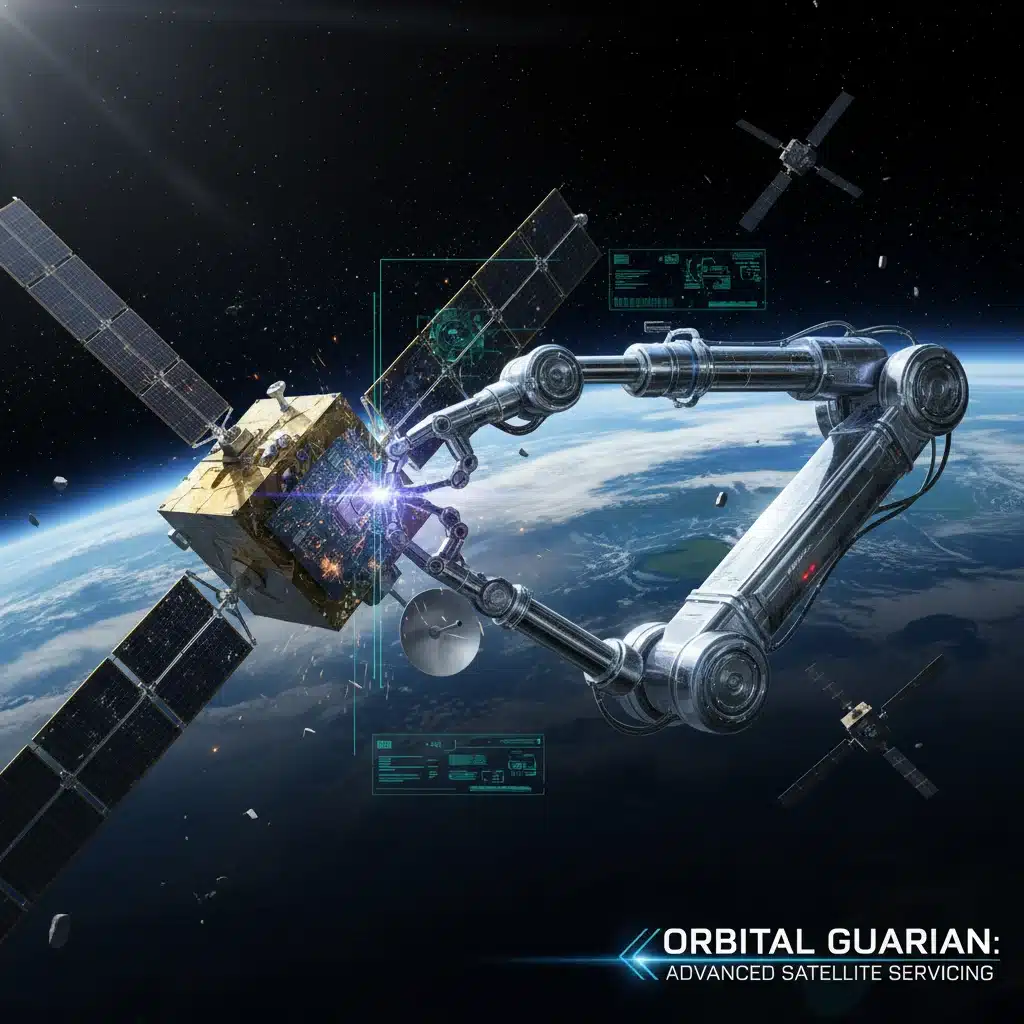
- Repair and Maintenance: Robotic spacecraft can be dispatched to inspect, repair, or replace faulty components on existing satellites. This could involve fixing antennas, solar panels, or other critical systems.
- Upgrades: As technology evolves rapidly, an older satellite might benefit from a technology upgrade, such as a new sensor or communication module, without needing a full replacement.
- Relocation and De-orbiting: Servicing vehicles can also assist in moving satellites to new orbits or safely de-orbiting them at the end of their lives, preventing them from becoming debris.
Companies like Northrop Grumman’s Space Logistics LLC are already demonstrating this capability with their Mission Extension Vehicles (MEV) that dock with geostationary satellites to provide propulsion. This pioneering work highlights the commercial viability and urgent need for such services.
Active Debris Removal: A Crucial Environmental Service
Beyond servicing operational satellites, the active removal of defunct satellites and rocket bodies is an equally critical and growing market. Several companies and space agencies are developing technologies for this, including:
- Nets and Harpoons: Capturing debris with specialized nets or harpoons.
- Robotic Arms: Grappling and de-orbiting larger pieces of debris.
- Drag Sails: Attaching devices to accelerate the atmospheric re-entry of debris.
The economic incentive is clear: a cleaner, safer orbital environment benefits all space operators. Governments and commercial entities are increasingly recognizing the importance of this, making active debris removal a prime area for investment and innovation within the broader space economy opportunities.
The market for satellite servicing and debris removal is projected to grow significantly. As more satellites are launched, the demand for these services will only increase, making it a cornerstone of a sustainable and thriving space economy. Early investment in this sector could yield substantial returns as the orbital environment becomes more congested and the need for these services becomes paramount.
2. Space Tourism: The Ultimate Adventure and Luxury Experience
Once a fantasy confined to science fiction, space tourism is rapidly becoming a reality, representing one of the most exciting and visible space economy opportunities. While still in its nascent stages, the sector is attracting significant investment from billionaires and visionary entrepreneurs, promising to open up space travel to a broader, albeit initially very affluent, segment of the population.
Suborbital vs. Orbital Tourism
Space tourism can be broadly categorized into two main types:
- Suborbital Tourism: This involves flying to the edge of space (typically around 80-100 km altitude) for a few minutes of weightlessness and breathtaking views of Earth’s curvature, before returning to the ground. Companies like Virgin Galactic and Blue Origin are at the forefront of this market, offering relatively shorter and less expensive (though still multi-hundred-thousand-dollar) experiences.
- Orbital Tourism: This involves actually reaching Earth orbit, staying in space for several days, weeks, or even longer, often involving stays on a space station or a dedicated orbital habitat. SpaceX, in collaboration with Axiom Space, has already facilitated private astronaut missions to the ISS. Companies like Orbital Assembly Corporation are even proposing large-scale orbital space hotels.
The Market and Its Potential
While the current price tag for a space tourism experience is out of reach for most, the history of commercial aviation suggests that prices will eventually come down as technology matures and competition increases. Early adopters are willing to pay a premium for the unique experience, generating revenue that funds further development and scalability. The allure of seeing Earth from space, experiencing weightlessness, and embarking on an adventure unlike any other is a powerful motivator for a niche, high-net-worth market segment.
Beyond the direct revenue from ticket sales, space tourism also drives innovation in related fields:
- Spacecraft Design: Developing vehicles that are safe, comfortable, and aesthetically pleasing for passengers.
- Life Support Systems: Creating robust and efficient systems for human habitation in space.
- Training and Logistics: Establishing sophisticated programs for astronaut training and mission support for civilians.
- Orbital Habitats: The development of dedicated space hotels and resorts will create an entirely new infrastructure segment within the space economy.

Challenges and Future Outlook
Significant challenges remain, including safety regulations, insurance, and the psychological and physiological effects of space travel on civilian passengers. However, the commitment of major players and the undeniable human fascination with space suggest that these challenges will be overcome. As launch costs continue to decrease and reusable rocket technology becomes more commonplace, space tourism is poised to become a multi-billion dollar industry within the next decade, offering unparalleled luxury experiences and opening up a new frontier for leisure and exploration. The long-term vision includes not just orbital hotels but potentially even lunar tourism.
3. Asteroid Mining: Unlocking Extraterrestrial Resources
Perhaps the most futuristic, yet potentially the most transformative, of the space economy opportunities is asteroid mining. Asteroids are rich in valuable resources, including precious metals (platinum, gold, silver), rare earth elements, and volatile compounds like water ice. These resources are not only critical for Earth-based industries but are also essential for enabling long-duration human missions and establishing permanent settlements in space.
The Resource Potential of Asteroids
Consider the sheer abundance: a single asteroid, just a few hundred meters in diameter, could contain more platinum group metals than have ever been mined on Earth. Water ice, found in abundance on many asteroids and comets, is invaluable in space. It can be used for:
- Life Support: Drinking water and oxygen for astronauts.
- Rocket Propellant: Electrolyzing water into hydrogen and oxygen provides highly efficient rocket fuel, enabling missions further into the solar system without needing to launch all propellant from Earth. This concept is known as In-Situ Resource Utilization (ISRU).
- Radiation Shielding: Water can also serve as effective shielding against harmful space radiation.
The economic implications are profound. Access to these extraterrestrial resources could reduce the cost of space operations, fuel deep-space exploration, and potentially even alleviate resource scarcity on Earth. It fundamentally shifts the paradigm from Earth-reliant space endeavors to a self-sustaining space-based industrial ecosystem.
Technological Hurdles and Emerging Solutions
Asteroid mining is still in its early stages of development, facing significant technological and economic hurdles. Key challenges include:
- Identification and Characterization: Precisely identifying and characterizing suitable asteroids (e.g., their composition, rotation, trajectory).
- Rendezvous and Capture: Developing spacecraft capable of reaching, rendezvousing with, and capturing or manipulating asteroids.
- Resource Extraction and Processing: Designing automated systems to extract and process resources in the harsh vacuum of space.
- Transportation: Efficiently transporting mined resources to their intended destination (e.g., Earth orbit, lunar orbit, or Mars).
Despite these challenges, several companies and research institutions are actively pursuing solutions. Concepts range from robotic probes that can extract water from near-Earth asteroids to more ambitious plans for capturing entire small asteroids and bringing them into Earth orbit for processing. NASA’s OSIRIS-REx mission, which successfully collected a sample from asteroid Bennu, demonstrates the feasibility of asteroid rendezvous and sample return, laying foundational groundwork for future mining operations.
The Long-Term Vision and Investment Potential
While full-scale asteroid mining might be more than a decade away, foundational technologies are being developed now. Investment in robotics, autonomous systems, advanced materials, and in-space manufacturing techniques are all crucial for realizing this vision. The long-term potential for asteroid mining to become a trillion-dollar industry, fundamentally altering resource economics and enabling the permanent expansion of humanity into space, makes it an incredibly compelling, albeit high-risk, high-reward, of all the space economy opportunities.
Early-stage investments in companies developing technologies for asteroid prospecting, capture, and processing could see immense returns as the industry matures. The strategic importance of these resources for future space infrastructure cannot be overstated, making asteroid mining a critical component of the future space economy.
The Interconnected Future of the Space Economy
It’s important to recognize that these three high-potential space economy opportunities are not isolated; they are deeply interconnected and mutually reinforcing. For example:
- Satellite servicing ensures the longevity of communication and navigation satellites, which are vital for supporting both space tourism logistics and asteroid mining operations.
- Space tourism will drive demand for more reliable and efficient launch systems, advanced life support, and orbital infrastructure, some of which could be built using resources from asteroid mining.
- Asteroid mining, by providing in-space propellant (water ice), could drastically reduce the cost of launching and operating space tourism vehicles and satellite servicing missions, making both more economically viable and scalable. The materials extracted could also be used for in-space manufacturing of parts for satellites or orbital habitats.
This synergistic relationship underscores the holistic nature of the evolving space economy. As one sector advances, it creates opportunities and efficiencies for others, fostering a virtuous cycle of growth and innovation. The regulatory framework, international cooperation, and private-public partnerships will also play a crucial role in shaping the trajectory of these opportunities.
Conclusion: Investing in the Next Frontier
The next decade promises to be a period of unprecedented expansion and commercialization in space. The three identified high-potential space economy opportunities—satellite servicing and debris removal, space tourism, and asteroid mining—represent diverse yet interconnected avenues for significant growth and innovation. Each addresses a critical need or desire, from sustaining vital orbital infrastructure to fulfilling humanity’s innate drive for exploration and resource acquisition.
For investors, entrepreneurs, and policymakers, understanding these emerging sectors is paramount. Early identification of key technologies, market trends, and regulatory shifts will be crucial for capitalizing on the immense potential of Space Economy 2.0. The challenges are significant, but the rewards—both economic and societal—are even greater. As we stand at the precipice of a new era of space commercialization, the opportunities are literally out of this world, inviting us to not just observe but actively participate in shaping humanity’s future among the stars.
The journey into the commercial space frontier has just begun, and the next ten years will undoubtedly lay the groundwork for a truly self-sustaining and prosperous space economy. By focusing on these high-potential areas, we can ensure a future where space is not just explored, but also sustainably utilized for the benefit of all.