Advanced Robotics: Automating 40% of Repetitive Tasks in US Industries by 2030 – A Detailed Analysis
Advanced Robotics: Automating 40% of Repetitive Tasks in US Industries by 2030 – A Detailed Analysis
The landscape of American industry is on the cusp of a profound transformation, driven by the relentless march of industrial robotics automation. Projections indicate that by 2030, a staggering 40% of repetitive tasks across various US industries will be handled by advanced robotic systems. This isn’t merely an incremental shift; it represents a fundamental redefinition of labor, productivity, and economic competitiveness. This comprehensive analysis delves into the technological drivers, economic implications, societal challenges, and strategic imperative behind this impending wave of automation.
The Dawn of a New Industrial Era: Why 40% Automation?
The figure of 40% automation by 2030 might seem ambitious, but it is rooted in several converging factors. The exponential growth in artificial intelligence (AI), machine learning (ML), and sensor technology has endowed robots with unprecedented capabilities. What were once clumsy, pre-programmed machines are now sophisticated, adaptable, and often collaborative entities capable of performing complex sequences of tasks with remarkable precision and speed. The drive for increased efficiency, reduced operational costs, and enhanced quality control is pushing US industries towards embracing industrial robotics automation at an accelerated pace.
Furthermore, global competition exerts immense pressure on domestic manufacturers to optimize their production processes. Labor shortages in key sectors, coupled with rising labor costs, make automation an increasingly attractive, if not essential, solution. The COVID-19 pandemic also highlighted the vulnerability of human-centric supply chains, accelerating the adoption of automated systems as a means of ensuring business continuity and resilience. The confluence of these factors creates a compelling case for the rapid deployment of advanced robotics, making the 40% target not just plausible but highly probable.
Defining Repetitive Tasks in the Context of Industrial Robotics Automation
Before diving deeper, it’s crucial to understand what constitutes a "repetitive task" in this context. These are activities characterized by their predictable nature, high frequency, and often physically demanding or ergonomically challenging aspects. Examples include:
- Assembly Line Operations: Picking, placing, fastening, and welding components in manufacturing.
- Material Handling: Loading, unloading, transporting, and stacking goods in warehouses and factories.
- Inspection and Quality Control: Repetitive visual checks or measurements of products.
- Packaging and Palletizing: Arranging and securing products for shipment.
- Data Entry and Processing: Though not physical, many back-office administrative tasks involve highly repetitive data handling.
The automation of these tasks frees human workers from monotonous work, allowing them to focus on more complex problem-solving, creative endeavors, and oversight roles. This shift is not about replacing humans entirely but rather augmenting their capabilities and reallocating human capital to higher-value activities.
Technological Leaps Driving Industrial Robotics Automation
The projected surge in industrial robotics automation is underpinned by significant advancements in several key technological domains:
Artificial Intelligence and Machine Learning
AI and ML are the brains behind modern robotics. They enable robots to learn from data, adapt to changing environments, and make autonomous decisions. This includes:
- Computer Vision: Allowing robots to "see" and interpret their surroundings, recognize objects, and detect defects with unparalleled accuracy.
- Reinforcement Learning: Enabling robots to learn optimal strategies through trial and error, improving their performance over time without explicit programming.
- Predictive Maintenance: AI algorithms analyze sensor data from robots to predict potential failures, allowing for proactive maintenance and minimizing downtime.
Collaborative Robots (Cobots)
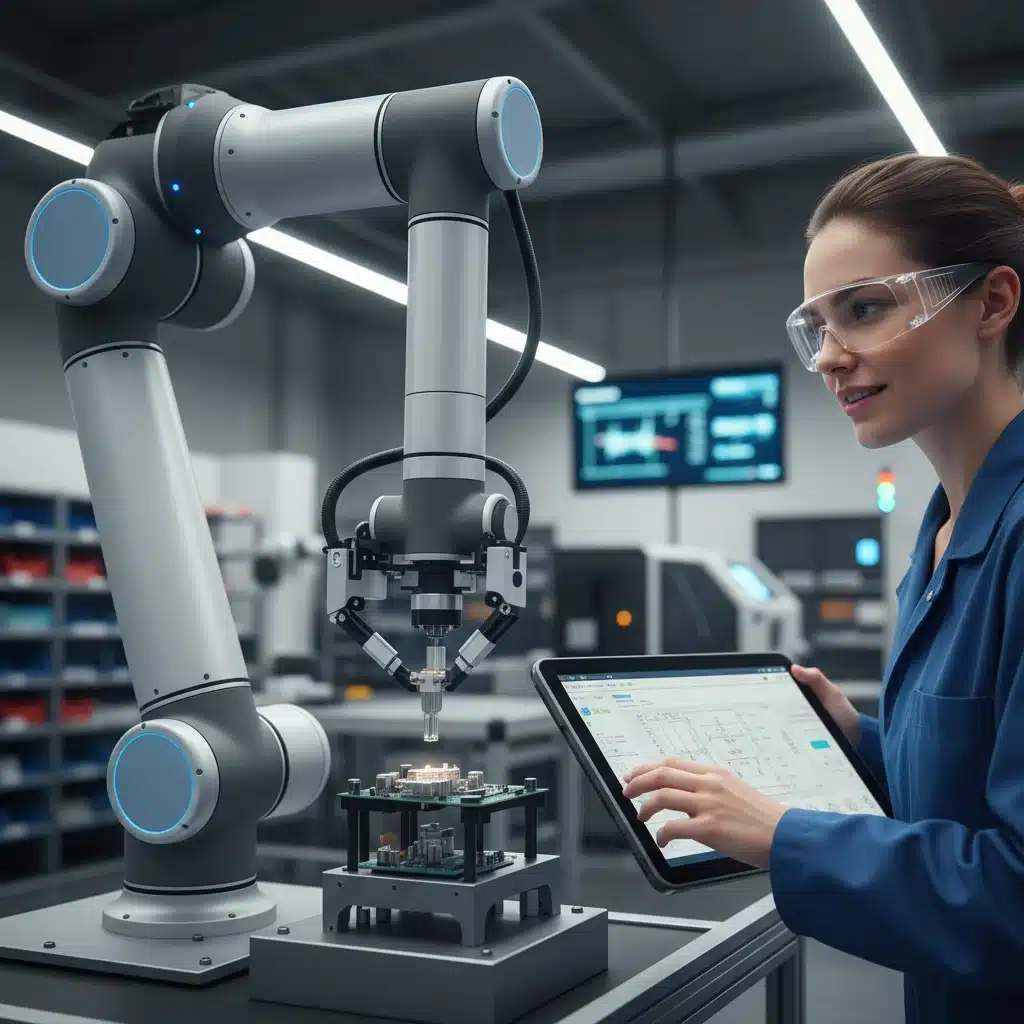
Cobots are designed to work safely alongside human employees without the need for extensive safety caging. Equipped with advanced sensors and force-limiting capabilities, they can detect human presence and adjust their movements accordingly. This fosters a collaborative environment where humans and robots can leverage their respective strengths, enhancing overall productivity and flexibility. The rise of cobots is a critical factor in expanding the reach of industrial robotics automation into tasks previously deemed too complex or sensitive for traditional industrial robots.
Advanced Sensors and Haptics
Modern robots are equipped with an array of sophisticated sensors, including improved LiDAR, cameras, force-torque sensors, and tactile sensors. These allow robots to perceive their environment with greater detail and interact with objects more delicately. Haptic feedback systems are also emerging, enabling robots to "feel" and manipulate objects with a level of dexterity approaching that of human hands, opening up new possibilities for automation in intricate assembly and handling tasks.
Improved Gripping Technologies
The development of versatile and adaptive grippers is crucial for handling a wide variety of objects. From soft robotic grippers inspired by biological designs to sophisticated multi-fingered manipulators, these advancements allow robots to grip delicate, irregularly shaped, or fragile items with ease, significantly broadening the scope of what industrial robotics automation can achieve.
Cloud Robotics and Edge Computing
Cloud robotics leverages cloud infrastructure for data storage, processing, and sharing of intelligence among robot fleets. This allows robots to access vast amounts of data and complex algorithms, enhancing their learning capabilities and coordination. Edge computing, on the other hand, brings computational power closer to the robots, enabling real-time decision-making and reducing latency, which is critical for safety-critical applications and high-speed operations.
Economic Impact of Widespread Industrial Robotics Automation
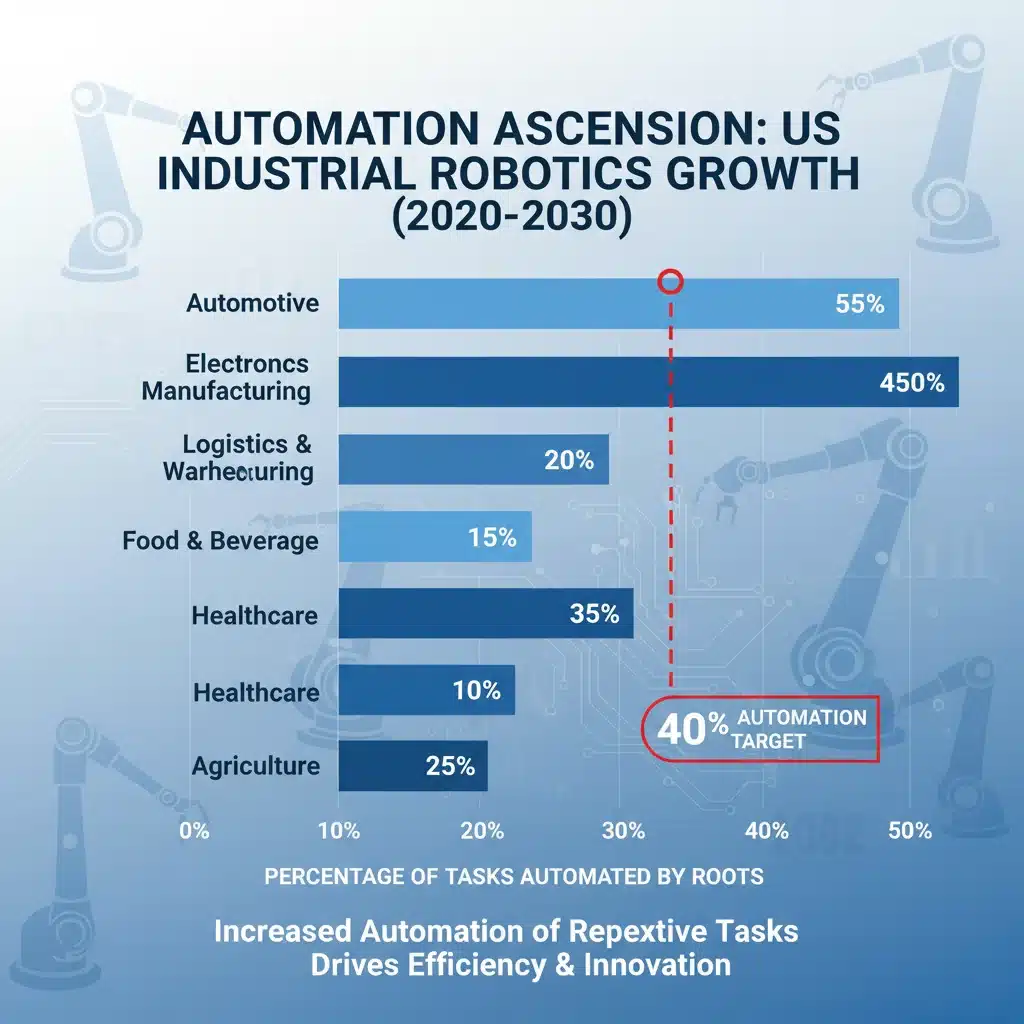
The projected 40% automation of repetitive tasks by 2030 will have multifaceted economic implications for the US, impacting productivity, competitiveness, and the labor market.
Increased Productivity and Efficiency
Robots can work continuously without fatigue, perform tasks with higher precision, and often operate at speeds far exceeding human capabilities. This leads to significant increases in production output, reduced cycle times, and more consistent product quality. For industries like automotive, electronics, and logistics, these gains translate directly into enhanced operational efficiency and profitability.
Cost Reduction and Competitiveness
While the initial investment in robotic systems can be substantial, the long-term cost savings are compelling. Reduced labor costs for repetitive tasks, lower error rates, minimized waste, and decreased insurance premiums (due to fewer workplace injuries) all contribute to a lower overall cost of production. This makes US industries more competitive globally, potentially leading to reshoring of manufacturing activities and strengthening the domestic industrial base.
Job Displacement and Creation: The Evolving Labor Market
One of the most widely discussed aspects of industrial robotics automation is its impact on employment. While it’s undeniable that robots will displace workers from highly repetitive tasks, the narrative is more nuanced than simple job loss. Automation is expected to:
- Displace Low-Skill, Repetitive Jobs: Workers performing routine manual tasks are most vulnerable.
- Create New Jobs: Demand will surge for roles in robot design, programming, maintenance, data analysis, and oversight. These are typically higher-skill, higher-wage positions.
- Transform Existing Roles: Many jobs will be augmented by robots, requiring workers to develop new skills in human-robot collaboration, supervision, and problem-solving.
The key challenge lies in managing this transition effectively, ensuring that displaced workers have access to retraining and upskilling opportunities to fill the newly created and transformed roles. Government policies, educational institutions, and industry partnerships will play crucial roles in facilitating this workforce adaptation.
Sector-Specific Impacts of Industrial Robotics Automation
While the impact of industrial robotics automation will be broad, certain sectors are poised for more dramatic shifts:
Manufacturing
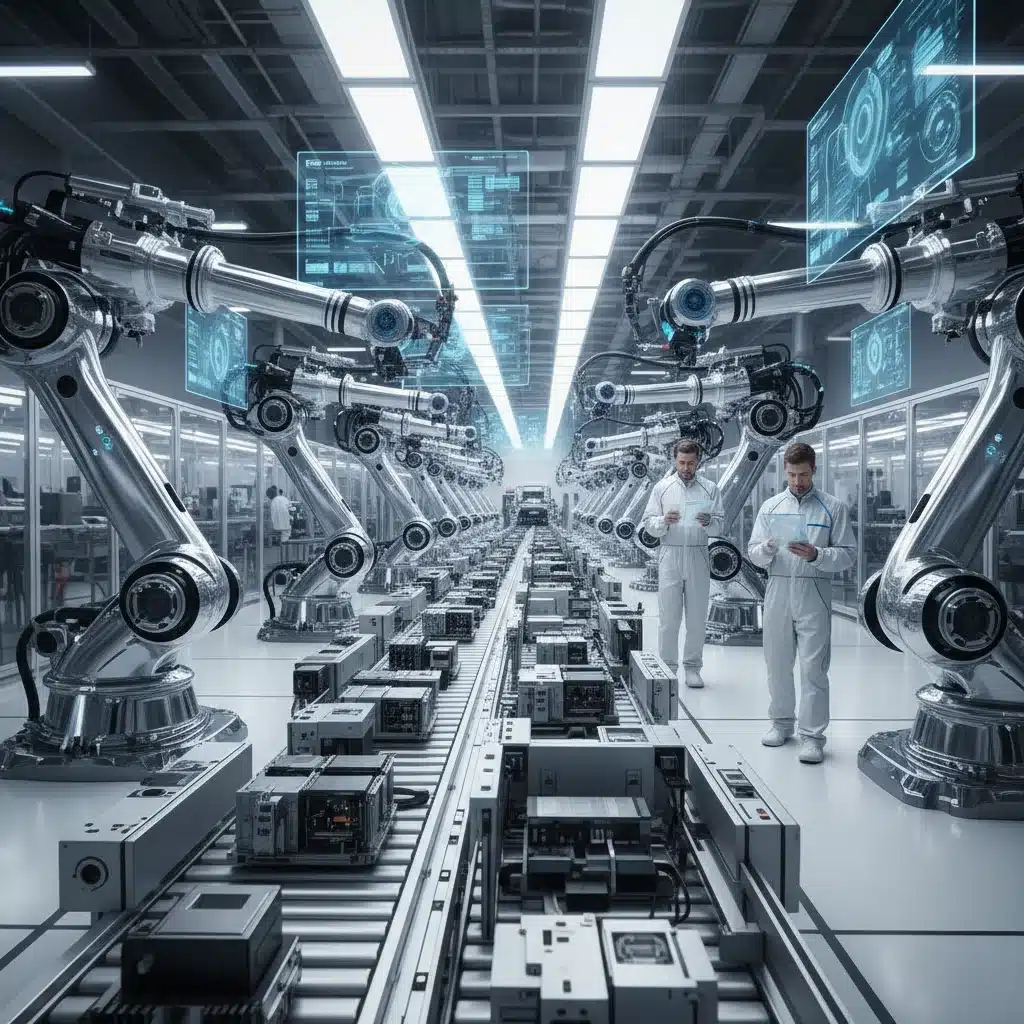
Historically, manufacturing has been at the forefront of robotic adoption. By 2030, the automation of assembly, welding, painting, and material handling will become even more pervasive. Advanced robots will handle increasingly complex and customized production runs, moving beyond mass production to highly flexible manufacturing systems.
Logistics and Warehousing
E-commerce growth has fueled an explosion in demand for highly efficient logistics. Autonomous mobile robots (AMRs) and automated guided vehicles (AGVs) are already common, handling picking, packing, and sorting tasks. By 2030, fully automated warehouses, capable of processing orders with minimal human intervention, will be more widespread, further streamlining supply chains.
Healthcare
In healthcare, robots are assisting with surgical procedures, dispensing medication, sterilizing equipment, and performing repetitive lab tasks. While direct patient care will remain human-centric, the automation of behind-the-scenes repetitive tasks will free up medical professionals to focus on critical patient interactions and complex diagnoses.
Agriculture
Robotics is transforming agriculture through automated planting, harvesting, weeding, and even livestock management. "Agribots" can perform repetitive tasks with greater precision, reducing waste, optimizing resource use, and addressing labor shortages in farming.
Challenges and Considerations for Industrial Robotics Automation by 2030
Achieving 40% automation of repetitive tasks by 2030 is not without its hurdles. Several challenges need to be addressed proactively:
Workforce Transition and Reskilling
The most significant challenge is ensuring a smooth transition for the workforce. This requires:
- Investment in Education and Training: Developing robust programs to equip workers with skills for the jobs of the future, focusing on robotics programming, maintenance, data analytics, and human-robot interaction.
- Social Safety Nets: Exploring policies like universal basic income or expanded unemployment benefits to support workers during transition periods.
- Lifelong Learning Initiatives: Fostering a culture where continuous learning is the norm, enabling workers to adapt to evolving technological demands.
Ethical and Societal Implications
As robots become more autonomous, ethical considerations surrounding decision-making, accountability, and the potential for bias in AI algorithms become paramount. Societal questions about the nature of work, leisure, and economic distribution will also need to be addressed as automation profoundly impacts daily life.
Cybersecurity Risks
Highly interconnected robotic systems are vulnerable to cyberattacks. A breach could lead to production disruptions, data theft, or even physical harm if robots are maliciously controlled. Robust cybersecurity protocols and infrastructure are essential to protect automated industrial environments.
Initial Investment and ROI
The upfront cost of implementing advanced robotic systems can be a barrier for small and medium-sized enterprises (SMEs). Demonstrating clear return on investment (ROI) and providing accessible financing options will be crucial for broader adoption, particularly among smaller businesses that form the backbone of many US industries.
Regulatory Frameworks
Existing regulations may not be adequate for the complex challenges posed by widespread industrial robotics automation. New frameworks will be needed to address issues such as robot safety standards, data privacy, liability in automated systems, and the ethical use of AI in the workplace.
Strategies for Success in the Automated Future
To successfully navigate the era of industrial robotics automation, stakeholders must adopt proactive strategies:
Government and Policy Initiatives
- Funding for R&D: Investing in fundamental and applied research in robotics and AI to maintain a competitive edge.
- Workforce Development Programs: Creating federal and state-level initiatives for retraining and upskilling the workforce.
- Incentives for Automation: Offering tax breaks or grants to companies that invest in automation, especially those that commit to fair workforce transition plans.
- Regulatory Clarity: Developing clear and adaptable regulations that foster innovation while ensuring safety and ethical considerations.
Industry Best Practices
- Phased Implementation: Adopting automation gradually, starting with pilot projects and scaling up as expertise and confidence grow.
- Human-Centric Automation: Designing systems that augment human capabilities rather than simply replacing them, fostering collaboration and creating more engaging work environments.
- Data-Driven Decision Making: Leveraging the vast amounts of data generated by automated systems to continuously optimize processes and improve performance.
- Partnerships and Ecosystems: Collaborating with technology providers, academic institutions, and other industries to share knowledge, resources, and best practices.
Educational System Reforms
- STEM Education Emphasis: Strengthening science, technology, engineering, and mathematics education from an early age.
- Vocational Training for Robotics: Developing specialized vocational programs for robotics technicians, programmers, and operators.
- Interdisciplinary Learning: Encouraging curricula that combine technical skills with critical thinking, problem-solving, and adaptability.
The Long-Term Vision: A More Productive and Prosperous America
The journey towards 40% automation of repetitive tasks in US industries by 2030 is not merely a technological quest; it is a strategic imperative for sustained economic growth and prosperity. By embracing industrial robotics automation, the US can:
- Boost Productivity: Drive unprecedented levels of output and efficiency across sectors.
- Enhance Competitiveness: Strengthen its position in the global economy by producing high-quality goods and services at competitive costs.
- Foster Innovation: Free up human capital to focus on creativity, research, and development, leading to new industries and breakthroughs.
- Improve Working Conditions: Eliminate dangerous, dirty, and dull tasks, leading to safer and more fulfilling work for humans.
While challenges remain, particularly concerning workforce adaptation and ethical governance, the potential benefits far outweigh the risks. With thoughtful planning, strategic investments, and collaborative efforts from government, industry, and academia, the US can successfully navigate this transformative period, emerging as a leader in the automated future.
The integration of advanced robotics is not a question of if, but when and how. By 2030, the image of a factory floor, a warehouse, or even a hospital ward will be significantly different, characterized by the seamless interplay between human ingenuity and robotic precision. This future, driven by industrial robotics automation, promises a more productive, efficient, and ultimately, a more prosperous society.