Neuromorphic Computing: Revolutionizing US Data Centers in 5 Years

In the rapidly evolving landscape of artificial intelligence, the demand for more powerful, efficient, and scalable hardware is insatiable. Traditional computing architectures, primarily based on the Von Neumann model, are increasingly encountering limitations when confronted with the energy and processing requirements of modern AI workloads. This is where neuromorphic computing data centers emerge as a revolutionary paradigm, promising to reshape the very foundation of AI hardware within US data centers in the next five years. This article delves deep into the transformative potential of neuromorphic computing, exploring its underlying principles, its advantages over conventional systems, and the significant impact it is poised to have on the future of AI infrastructure, particularly within the critical context of US data centers.
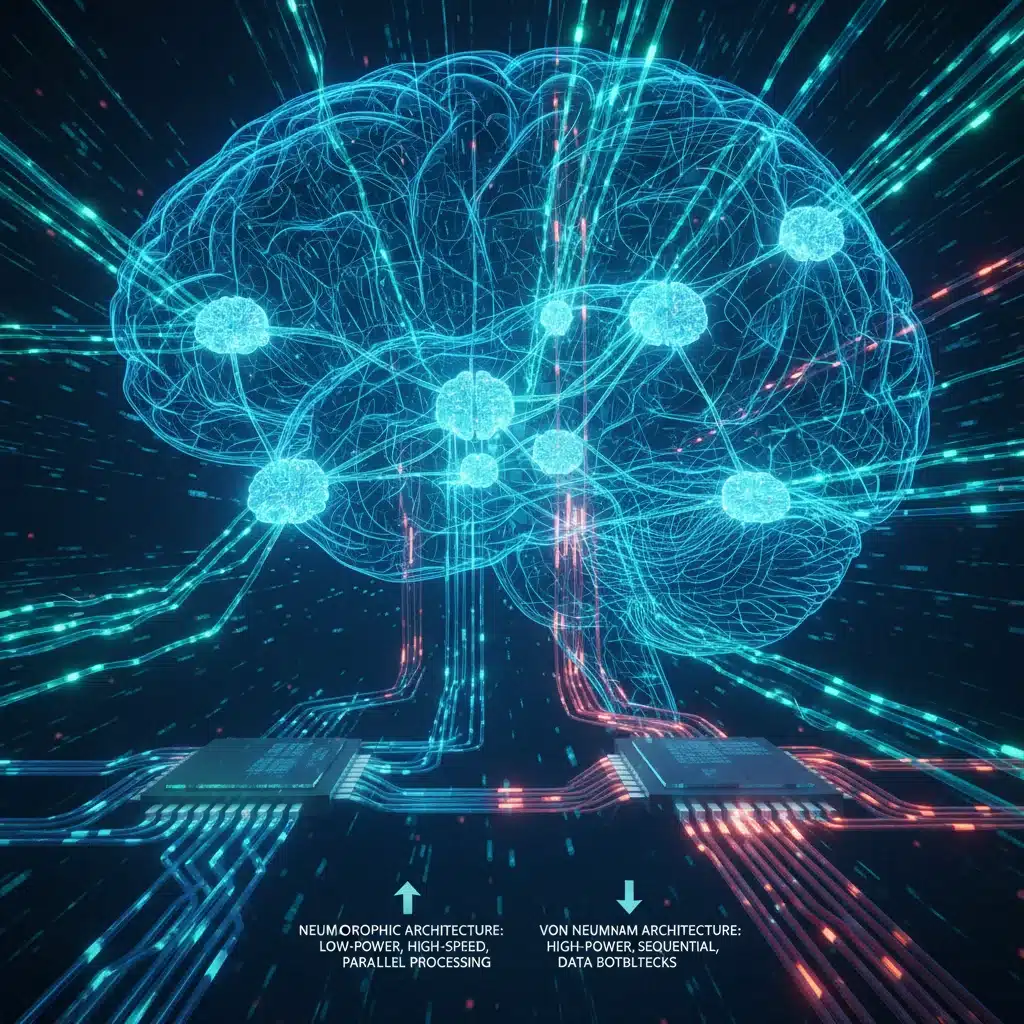
The quest for AI that can mimic the human brain’s efficiency and adaptability has driven researchers to explore biologically inspired computing. Neuromorphic computing, at its core, seeks to emulate the structure and function of the human brain, employing artificial neurons and synapses to process information in a massively parallel and event-driven manner. Unlike traditional processors that separate memory and processing units, leading to the ‘Von Neumann bottleneck,’ neuromorphic chips integrate these functions, allowing for significantly reduced power consumption and higher processing speeds for specific AI tasks. This inherent design advantage makes neuromorphic computing data centers particularly attractive for addressing the escalating energy demands and computational complexities of advanced AI.
The Genesis of Neuromorphic Computing: A Biological Inspiration
The human brain, with its extraordinary ability to learn, adapt, and process vast amounts of sensory information with remarkable energy efficiency, serves as the ultimate blueprint for neuromorphic computing. While a traditional CPU operates on a clock-driven cycle, executing instructions sequentially, the brain functions asynchronously, with neurons firing only when activated by sufficient input. This ‘event-driven’ processing is a cornerstone of neuromorphic architecture. Instead of moving data back and forth between a central processing unit and memory, neuromorphic chips perform computations directly where the data resides, minimizing energy expenditure and latency. This fundamental shift in design is what grants neuromorphic computing data centers their transformative power.
Early pioneers like Carver Mead at Caltech laid the groundwork for neuromorphic engineering in the 1980s, envisioning circuits that would mimic neural structures. Fast forward to today, and major players like IBM (with their TrueNorth chip), Intel (with Loihi), and numerous academic institutions are actively developing and refining neuromorphic hardware. These chips are not general-purpose processors; instead, they are highly specialized for tasks that excel in pattern recognition, real-time learning, and cognitive computing – areas where traditional AI hardware often struggles with efficiency.
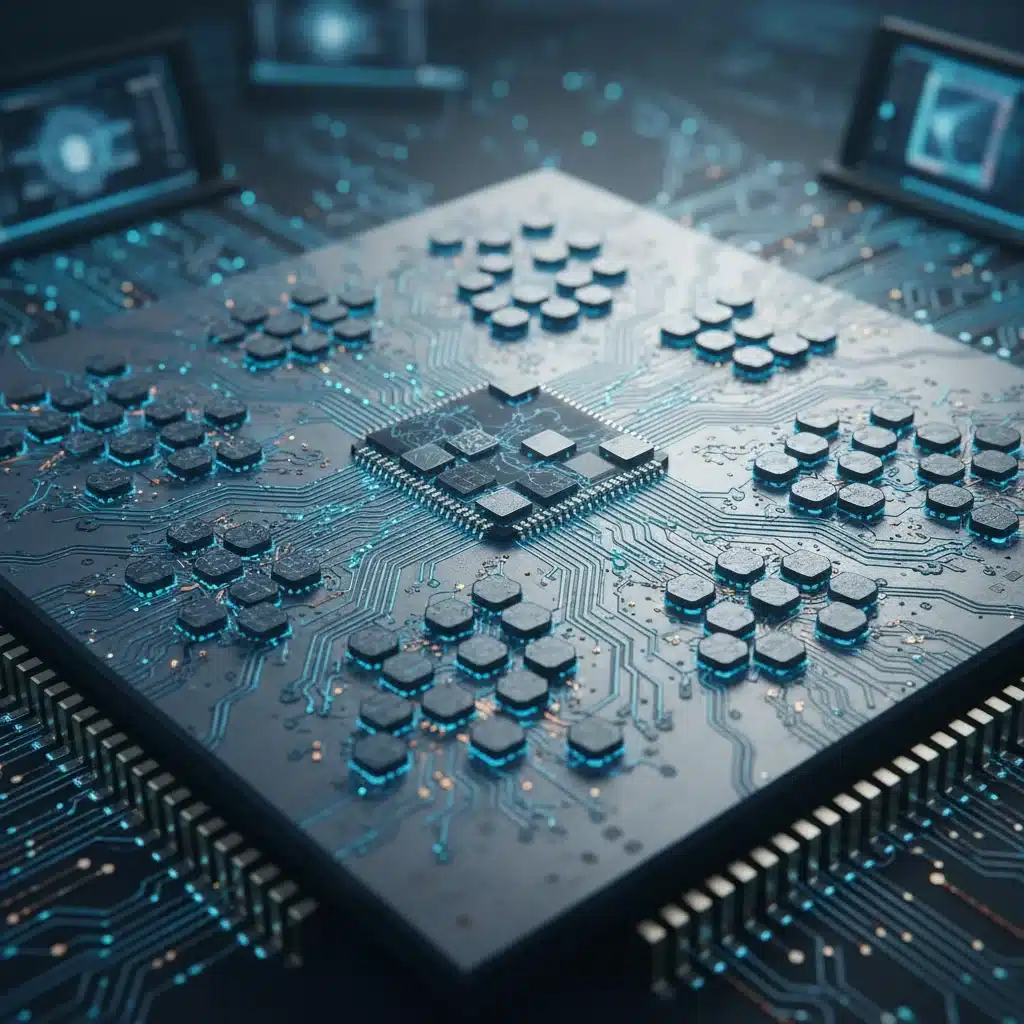
The architecture of a neuromorphic chip typically consists of a vast network of interconnected ‘neurons’ and ‘synapses.’ These synapses can be programmed to strengthen or weaken their connections, mimicking synaptic plasticity in the brain, which is crucial for learning. When a neuron receives sufficient input from its connected synapses, it ‘fires,’ transmitting a signal to other neurons. This parallel, distributed processing model is inherently suited for tasks involving sparse and event-driven data, making it a perfect fit for many AI applications that currently strain conventional data center resources. The promise of such efficiency is a key driver behind the projected integration of neuromorphic computing data centers.
Why Neuromorphic Computing is Critical for US Data Centers
US data centers are at the forefront of global technological innovation, but they also face immense challenges, particularly regarding energy consumption and the escalating costs associated with powering and cooling ever-growing server farms. The current trajectory of AI development, with its reliance on massive deep learning models, is unsustainable within the existing hardware paradigm. Training a single large language model can consume energy equivalent to several households for a year, and this demand is only increasing. This is where neuromorphic computing data centers offer a compelling solution.
Energy Efficiency: A Game Changer
One of the most significant advantages of neuromorphic computing is its unparalleled energy efficiency. By operating in an event-driven manner and integrating memory and processing, these chips drastically reduce the energy wasted in moving data. This is particularly crucial for AI workloads that involve continuous learning, inference, and real-time data processing. For US data centers, where power consumption is a major operational cost and environmental concern, the ability to perform complex AI tasks with orders of magnitude less energy is a game-changer. Imagine reducing the carbon footprint of AI operations while simultaneously increasing computational throughput – this is the promise of neuromorphic computing data centers.
Accelerated AI Workloads
Beyond energy savings, neuromorphic chips can significantly accelerate specific AI workloads. Tasks like pattern recognition, anomaly detection, sensory data processing (vision, audio), and reinforcement learning are inherently well-suited to the parallel and adaptive nature of neuromorphic architectures. For applications requiring real-time decision-making and continuous adaptation, such as autonomous vehicles, advanced robotics, and intelligent surveillance, neuromorphic processors can deliver performance that is unattainable or prohibitively expensive with traditional hardware. The integration of neuromorphic computing data centers will therefore unlock new possibilities for real-time AI applications across various industries.
Overcoming the Von Neumann Bottleneck
The Von Neumann bottleneck, characterized by the constant shuttling of data between the CPU and memory, creates a significant performance and energy overhead. Neuromorphic computing fundamentally bypasses this bottleneck by performing computation in-memory. This ‘in-memory computing’ approach eliminates the need for extensive data transfers, leading to faster processing and lower power consumption. As AI models become more complex and data-intensive, the ability to overcome this architectural limitation becomes increasingly vital for the sustained growth and efficiency of US data centers. This architectural advantage is central to the future of neuromorphic computing data centers.
Key Applications and Use Cases in the Next 5 Years
The impact of neuromorphic computing data centers will be felt across a wide array of sectors, particularly in areas demanding high-speed, low-power AI processing. Within the next five years, we can expect to see significant advancements and deployments in:
Edge AI and IoT Devices
One of the most immediate and impactful applications of neuromorphic computing is in edge AI. Imagine smart sensors, cameras, and IoT devices that can perform sophisticated AI inference directly at the source, without constantly sending data back to a central cloud. This reduces latency, enhances privacy, and significantly decreases network bandwidth requirements. Neuromorphic chips, with their low power footprint, are ideal for these constrained environments, enabling a new generation of intelligent edge devices that can process data efficiently and make real-time decisions. This decentralization of AI processing will be a hallmark of future neuromorphic computing data centers, extending their reach to the very edge of the network.
Real-time Data Analytics and Anomaly Detection
For industries like finance, cybersecurity, and manufacturing, real-time anomaly detection is paramount. Neuromorphic systems excel at identifying patterns and deviations in streaming data with incredible speed and efficiency. This allows for instant fraud detection, proactive cybersecurity threat identification, and predictive maintenance in industrial settings. The ability to process vast streams of data and detect subtle anomalies in milliseconds will provide a significant competitive advantage and enhance operational resilience for businesses reliant on US data centers. The integration of neuromorphic capabilities will elevate the analytical power of neuromorphic computing data centers.
Advanced Robotics and Autonomous Systems
Robotics and autonomous systems require continuous, real-time processing of sensory data (vision, lidar, radar) to navigate, interact with their environment, and make split-second decisions. Neuromorphic processors can handle this type of sensory fusion and cognitive processing with far greater efficiency than traditional CPUs or GPUs. This will lead to more intelligent, responsive, and energy-efficient robots and autonomous vehicles, pushing the boundaries of what these systems can achieve. The development of such advanced systems will heavily rely on the capabilities offered by neuromorphic computing data centers.
Next-Generation Natural Language Processing (NLP)
While large language models (LLMs) currently consume enormous computational resources, neuromorphic approaches could offer more efficient ways to handle certain aspects of NLP, particularly for continuous learning and adaptation in conversational AI. The brain’s ability to process language contextually and learn from ongoing interactions provides a compelling model for future NLP architectures. As research progresses, we may see neuromorphic accelerators playing a crucial role in making sophisticated NLP more accessible and less resource-intensive within neuromorphic computing data centers.
Scientific Research and Drug Discovery
Simulating complex biological systems, analyzing vast datasets in genomics, and accelerating drug discovery processes often involve pattern recognition and optimization problems well-suited for neuromorphic architectures. The ability to run these simulations with unprecedented energy efficiency can significantly reduce the time and cost associated with groundbreaking scientific research, pushing the boundaries of discovery within US academic and industrial research institutions. The scientific community stands to gain immensely from the advent of neuromorphic computing data centers.
Challenges and the Road Ahead for Neuromorphic Computing Data Centers
Despite its immense promise, the widespread adoption of neuromorphic computing data centers is not without its challenges. Overcoming these hurdles will be crucial for realizing the full potential of this transformative technology.
Software and Programming Models
One of the primary challenges is the development of robust and user-friendly software frameworks and programming models. Neuromorphic chips operate on fundamentally different principles than traditional Von Neumann architectures, requiring new ways of thinking about algorithms and data representation. Developers need tools and languages that can effectively map complex AI problems onto neuromorphic hardware. Significant research and development are currently underway to create compilers, libraries, and development environments that simplify this process, making neuromorphic computing more accessible to a broader range of AI engineers. The success of neuromorphic computing data centers hinges on the maturation of this software ecosystem.
Integration with Existing Infrastructure
US data centers represent massive investments in existing hardware and software infrastructure. Integrating neuromorphic accelerators into these environments will require careful planning and hybrid approaches. It’s unlikely that neuromorphic chips will completely replace traditional CPUs and GPUs overnight; rather, they will likely function as specialized co-processors, handling specific AI tasks where they offer superior efficiency. Seamless integration, including standardization of interfaces and communication protocols, will be vital for smooth deployment within neuromorphic computing data centers.
Scalability and Manufacturing
While current neuromorphic chips demonstrate impressive capabilities, scaling them up to meet the demands of enterprise-level data centers presents manufacturing and architectural challenges. Producing these complex chips in high volumes and ensuring their reliability and interoperability will be critical. Furthermore, designing entire data center architectures around neuromorphic principles will require innovative approaches to cooling, power distribution, and network topology. Addressing these scalability concerns is paramount for the widespread adoption of neuromorphic computing data centers.
Benchmarking and Performance Evaluation
Establishing standardized benchmarks for neuromorphic performance is another critical area. Traditional metrics like FLOPS (floating-point operations per second) are not directly applicable to event-driven, sparse neuromorphic operations. New metrics are needed that accurately reflect the energy efficiency and effective processing power of these systems for specific AI tasks. This will enable clearer comparisons and help drive further innovation in the field, solidifying the value proposition of neuromorphic computing data centers.
The Economic and Strategic Implications for the US
The rapid adoption of neuromorphic computing data centers carries profound economic and strategic implications for the United States. As a leader in AI research and development, the US stands to gain significantly from this technological shift.
Competitive Advantage in AI
By embracing neuromorphic computing, the US can maintain and strengthen its competitive edge in the global AI race. Superior AI hardware that is both powerful and energy-efficient will enable the development and deployment of more advanced AI applications across defense, healthcare, finance, and technology sectors. This leadership in next-generation AI infrastructure will be a key differentiator, making neuromorphic computing data centers a strategic national asset.
Reduced Operational Costs and Environmental Impact
The substantial energy savings offered by neuromorphic computing will translate into significant reductions in operational costs for US data centers. This economic benefit will free up resources for further innovation and investment. Moreover, the decreased energy consumption will contribute to national sustainability goals, reducing the carbon footprint of the digital economy. This alignment of economic and environmental benefits makes neuromorphic computing data centers a highly attractive proposition.
Job Creation and Workforce Development
The emergence of neuromorphic computing will create new demands for specialized skills in hardware design, software development, and systems integration. This will spur job creation and necessitate investments in workforce development programs to train the next generation of engineers and researchers. Universities and industry collaborations will play a crucial role in building the talent pipeline required to support the growth of neuromorphic computing data centers.
National Security and Resilience
For national security applications, the ability to process vast amounts of intelligence data in real-time, with enhanced efficiency and autonomy, is invaluable. Neuromorphic capabilities can bolster cybersecurity defenses, improve intelligence analysis, and enable more sophisticated autonomous defense systems. Furthermore, a more diversified and efficient computing infrastructure strengthens the overall resilience of critical national systems, making neuromorphic computing data centers a cornerstone of future national security.
The Future is Neuromorphic: A 5-Year Outlook
Within the next five years, we can anticipate a phased but accelerating integration of neuromorphic computing data centers within the US. Early adopters will likely be organizations with specific, high-value AI workloads that benefit most from neuromorphic advantages, such as large tech companies, government research labs, and specialized AI startups. These pioneers will leverage neuromorphic accelerators for tasks like real-time sensor fusion, complex pattern recognition in massive datasets, and energy-efficient inference at the edge.
As software tools mature and manufacturing processes become more refined, the accessibility of neuromorphic hardware will increase. We will see the development of hybrid data center architectures where neuromorphic processors work in conjunction with traditional GPUs and CPUs, each handling the tasks they are best suited for. Cloud providers will begin offering neuromorphic-as-a-service options, democratizing access to this advanced technology. This will allow a broader range of enterprises to experiment with and deploy neuromorphic solutions without significant upfront infrastructure investments.
Research will continue to push the boundaries, exploring new materials, architectures, and algorithms inspired by the brain. Expect breakthroughs in areas like spiking neural networks (SNNs), which are inherently more biologically plausible and energy-efficient than traditional artificial neural networks. The focus will also be on developing neuromorphic systems that can learn continuously and adapt to new information, much like the human brain, rather than requiring extensive retraining. These advancements will further solidify the position of neuromorphic computing data centers as the vanguard of AI innovation.
The journey towards fully brain-inspired computing is long, but the initial steps are already yielding impressive results. The next five years will be a pivotal period, witnessing the transition of neuromorphic computing from a promising research concept to a tangible, impactful technology within US data centers. This transformation will not only redefine the capabilities of AI but also set new standards for energy efficiency and sustainability in the digital age. The future of AI hardware, powered by the principles of the human brain, is rapidly approaching, and neuromorphic computing data centers are at its core.
Conclusion: Embracing the Brain-Inspired Future
The impending revolution of neuromorphic computing data centers represents a critical juncture for artificial intelligence and the broader technological landscape. The limitations of conventional computing architectures in the face of ever-growing AI demands necessitate a fundamental shift, and neuromorphic computing offers a compelling, biologically inspired path forward. By emulating the brain’s efficiency, parallelism, and adaptive learning capabilities, these systems promise unprecedented energy savings, accelerated AI workloads, and the ability to unlock entirely new applications.
While challenges in software development, integration, and scalability remain, the rapid pace of innovation suggests that these hurdles will be progressively overcome. Within the next five years, US data centers are poised to integrate neuromorphic accelerators, initially for specialized tasks, then gradually expanding their role across the AI ecosystem. This transition will not only make AI more sustainable and powerful but also cement the United States’ position at the forefront of global technological leadership.
The economic, strategic, and environmental benefits of neuromorphic computing data centers are too significant to ignore. As we move towards an increasingly intelligent and interconnected world, the ability to process information with brain-like efficiency will be a defining characteristic of advanced AI. Investing in and fostering the development of neuromorphic technologies is not just an option; it is a necessity for a future where AI continues to drive innovation without compromising our planet’s resources. The brain-inspired future of computing is not a distant dream; it is on the horizon, ready to transform US data centers and redefine the very essence of artificial intelligence.