AI Ethics in Practice: Bias & Fairness in US AI Development 2026

AI Ethics in Practice: Navigating the Complexities of Bias and Fairness in US AI Development for 2026
The rapid advancement of Artificial Intelligence (AI) has ushered in an era of unprecedented technological capability, transforming industries and aspects of daily life at an astonishing pace. As we look towards 2026, the United States remains at the forefront of AI innovation, pushing boundaries in machine learning, natural language processing, computer vision, and robotics. However, with this immense power comes a profound responsibility: ensuring that AI systems are developed and deployed ethically, fairly, and without perpetuating or amplifying existing societal biases. The concept of AI ethics in practice is no longer an academic debate but a critical imperative for maintaining public trust, fostering equitable outcomes, and preventing unintended harms.
The journey towards ethical AI is fraught with challenges. AI models learn from data, and if that data reflects historical or systemic biases, the AI will inevitably learn and reproduce those biases. This can lead to discriminatory outcomes in critical areas such as hiring, lending, healthcare, and criminal justice. The stakes are incredibly high, as biased AI can exacerbate inequalities, erode individual rights, and undermine the very fabric of a just society. Consequently, understanding, identifying, and mitigating bias and ensuring fairness in US AI development is paramount for 2026 and beyond.
This comprehensive exploration delves into the multifaceted landscape of AI ethics in practice, specifically focusing on the intricate issues of bias and fairness within the context of US AI development. We will examine the various forms of bias, their origins, and their potential impacts. Furthermore, we will explore the evolving regulatory frameworks, industry initiatives, and technological solutions being developed to address these challenges. The goal is to provide a holistic understanding of how the US is striving to build responsible AI systems that uphold ethical principles and serve all members of society equitably.
The Foundation of AI Ethics in Practice: Understanding Bias
To effectively implement AI ethics in practice, one must first grasp the pervasive nature of bias in AI systems. Bias in AI is not a singular phenomenon; it manifests in various forms, each with distinct causes and consequences. Recognizing these different types is the initial step toward developing robust mitigation strategies.
Data Bias: The Root of Many Evils
The most common source of AI bias stems directly from the data used to train machine learning models. Data bias occurs when the training data does not accurately represent the real-world population or contains historical prejudices. This can happen in several ways:
- Selection Bias: When certain groups or characteristics are overrepresented or underrepresented in the training data. For example, if a facial recognition system is primarily trained on images of light-skinned individuals, it may perform poorly on individuals with darker skin tones, leading to higher error rates and potential discrimination.
- Historical Bias: When data reflects past societal biases, even if unintentionally. For instance, if historical hiring data shows a preference for male candidates in certain roles, an AI trained on this data might learn to unfairly prioritize male applicants, perpetuating gender inequality.
- Measurement Bias: Errors or inconsistencies in how data is collected or labeled. If data collectors have unconscious biases, they might label similar inputs differently based on demographic factors, injecting bias into the dataset.
- Outlier Bias: When rare or unusual data points disproportionately influence the model, leading to skewed predictions for minority groups.
Algorithmic Bias: Flaws in Design
Beyond data, bias can also be introduced or amplified by the algorithms themselves. Algorithmic bias refers to systematic and repeatable errors in a computer system that create unfair outcomes, such as favoring one arbitrary group over others. This can occur due to:
- Design Flaws: The way an algorithm is structured or the objectives it’s optimized for can inadvertently lead to biased outcomes. For example, an algorithm designed to maximize efficiency might inadvertently penalize certain groups if their data patterns deviate from the majority.
- Feature Selection Bias: When developers choose features (variables) for the model that are correlated with protected attributes (like race or gender) even if they don’t directly represent them. This can create proxies for protected characteristics, leading to indirect discrimination.
- Confirmation Bias in Development: Developers might unconsciously reinforce their own existing biases during the model development process, for example, by interpreting results in a way that confirms initial hypotheses or by overlooking certain edge cases.
Interaction Bias: Human-AI Feedback Loops
Bias isn’t static; it can evolve and even worsen through human interaction with AI systems. This is known as interaction bias. For example, if an AI system is deployed and users provide feedback that reinforces existing stereotypes, the AI might learn from this biased feedback and further entrench discriminatory patterns. This creates a dangerous feedback loop where human bias influences AI, which then influences human behavior, which in turn further biases the AI.
Ensuring Fairness: A Cornerstone of AI Ethics in Practice
While bias refers to systematic errors, fairness in AI speaks to the equitable treatment and outcomes for all individuals and groups. Defining fairness, however, is a complex philosophical and technical challenge. There isn’t a single, universally accepted definition of fairness in AI, as different contexts and values may necessitate different approaches.
Defining Fairness: Multiple Perspectives
Researchers and ethicists have proposed various mathematical and philosophical definitions of fairness, each with its strengths and weaknesses:
- Demographic Parity (or Group Fairness): This approach aims for equal representation of different demographic groups in the outcomes of an AI system. For example, if an AI is used for loan approvals, demographic parity would mean that the approval rate for different racial or gender groups is roughly equal.
- Equal Opportunity: This definition focuses on ensuring that different groups have equal chances of achieving a positive outcome, given certain conditions. For instance, if an AI predicts success in a job, equal opportunity would mean that individuals from different groups with similar qualifications have an equal probability of being recommended.
- Individual Fairness: This seeks to ensure that similar individuals are treated similarly by the AI system, regardless of their group affiliation. This is often harder to achieve and measure in practice.
- Predictive Parity: This aims for equal predictive accuracy (e.g., false positive rates or false negative rates) across different groups. This is particularly relevant in high-stakes applications like medical diagnosis or criminal justice.
The challenge lies in the fact that these definitions of fairness can often be mutually exclusive. An AI system optimized for one type of fairness might inherently violate another. Therefore, organizations implementing AI ethics in practice must carefully consider which fairness metrics are most appropriate for their specific application and societal context.
The US Landscape: AI Development and Ethical Imperatives for 2026
The United States, as a global leader in AI research and development, faces unique responsibilities in shaping the future of ethical AI. By 2026, the integration of AI into various sectors is expected to be even more pervasive, making the proactive adoption of AI ethics in practice absolutely crucial.
Government Initiatives and Regulatory Frameworks
The US government has recognized the importance of ethical AI and has begun to implement various initiatives and regulatory considerations. Key developments include:
- National AI Initiative Act of 2020: This act established a comprehensive strategy for AI research and development, emphasizing ethical considerations, societal impacts, and trustworthy AI.
- NIST AI Risk Management Framework (AI RMF): Published by the National Institute of Standards and Technology (NIST), the AI RMF provides voluntary guidance for managing risks associated with AI, including those related to bias and fairness. It encourages organizations to integrate trustworthiness considerations throughout the AI lifecycle. This framework is expected to gain significant traction by 2026 as a de facto standard for AI ethics in practice.
- Executive Orders and Policy Directives: Various executive orders have called for the responsible development and use of AI, particularly in government applications. These directives often stress the importance of transparency, accountability, and the mitigation of bias.
- Sector-Specific Regulations: While a comprehensive federal AI law is still in development, sector-specific regulations (e.g., in healthcare, finance, or employment) are beginning to address AI’s ethical implications. For instance, fair lending laws are being updated to consider AI-driven credit scoring models.

These governmental efforts signal a growing commitment to embedding AI ethics in practice within the national AI strategy. However, the challenge lies in translating these broad guidelines into actionable policies and enforceable regulations that can keep pace with rapid technological advancements.
Industry Best Practices and Self-Regulation
Beyond government mandates, many US-based tech companies and organizations are proactively developing their own ethical AI guidelines and best practices. This self-regulatory approach is driven by a combination of public pressure, brand reputation concerns, and a genuine desire to build responsible technology.
- Internal AI Ethics Boards and Committees: Many leading tech firms have established dedicated ethics boards or committees responsible for reviewing AI projects, developing internal policies, and ensuring adherence to ethical principles.
- Fairness Toolkits and Libraries: Companies are investing in developing open-source tools and libraries designed to help developers detect and mitigate bias in their AI models. Examples include Google’s What-If Tool and IBM’s AI Fairness 360. These tools are becoming indispensable for AI ethics in practice.
- Ethical AI Training and Education: There’s a growing emphasis on educating AI developers, data scientists, and product managers on ethical AI principles, bias detection, and responsible deployment strategies.
- Transparency and Explainability Initiatives: Efforts to make AI models more transparent (understandable) and explainable (able to articulate their reasoning) are crucial for identifying and addressing bias. Explainable AI (XAI) is a rapidly evolving field aimed at achieving this.
Strategies for Mitigating Bias and Promoting Fairness in AI Development
Implementing AI ethics in practice requires a multi-pronged approach that addresses bias at every stage of the AI lifecycle, from data collection to model deployment and monitoring.
1. Data-Centric Approaches
Given that data bias is a primary culprit, focusing on data quality and representativeness is paramount:
- Diverse Data Collection: Actively seek out and incorporate diverse datasets that accurately reflect the target population. This may involve oversampling minority groups or augmenting existing datasets.
- Bias Auditing of Data: Regularly audit training data for demographic imbalances, historical biases, and other forms of prejudice. Tools and methodologies are emerging to automate parts of this process.
- Data Augmentation and Synthetic Data: When real-world diverse data is scarce, techniques like data augmentation (creating variations of existing data) or generating synthetic data can help balance datasets, though synthetic data must be carefully scrutinized to ensure it doesn’t introduce new biases.
- Fair Labeling Practices: Implement strict guidelines and training for human annotators to minimize subjective bias in data labeling. Consider using multiple annotators for critical tasks and establishing clear, objective labeling criteria.
2. Algorithmic and Model-Centric Approaches
Addressing bias within the algorithms themselves is another critical dimension of AI ethics in practice:
- Pre-processing Techniques: Apply techniques to the data before training to reduce bias, such as re-weighing samples or re-labeling to achieve fairness objectives.
- In-processing Techniques: Modify the learning algorithm during training to incorporate fairness constraints. This might involve adding regularization terms to the loss function that penalize biased outcomes.
- Post-processing Techniques: Adjust the model’s predictions after training to achieve fairness. For example, calibrating predictions or setting different decision thresholds for different demographic groups.
- Fairness-Aware Machine Learning Models: Research is ongoing to develop inherently fairer machine learning algorithms that are designed from the ground up with fairness considerations.
- Explainable AI (XAI): Developing transparent models that can explain their decisions helps identify where bias might be creeping in. Understanding why an AI makes a particular prediction is crucial for diagnosing and fixing bias.
3. Human-Centric and Process-Oriented Approaches
Technology alone cannot solve the problem of AI bias. Human oversight, diverse teams, and robust processes are essential for effective AI ethics in practice:
- Diverse Development Teams: Bringing together individuals from varied backgrounds, cultures, and perspectives can help identify potential biases that might be overlooked by a homogeneous team.
- Ethical Impact Assessments: Conduct thorough ethical impact assessments (EIAs) before deploying AI systems, similar to environmental impact assessments. These assessments should evaluate potential risks of bias, discrimination, and other harms.
- Continuous Monitoring and Auditing: AI models are not static; their performance can degrade, and new biases can emerge over time due to shifts in data or usage patterns. Continuous monitoring and regular independent audits are crucial to detect and address these issues promptly.
- Stakeholder Engagement: Involve affected communities and stakeholders in the design and evaluation of AI systems. Their insights can be invaluable in identifying potential harms and ensuring fairness.
- Clear Accountability Frameworks: Establish clear lines of responsibility and accountability for ethical AI development and deployment within organizations.
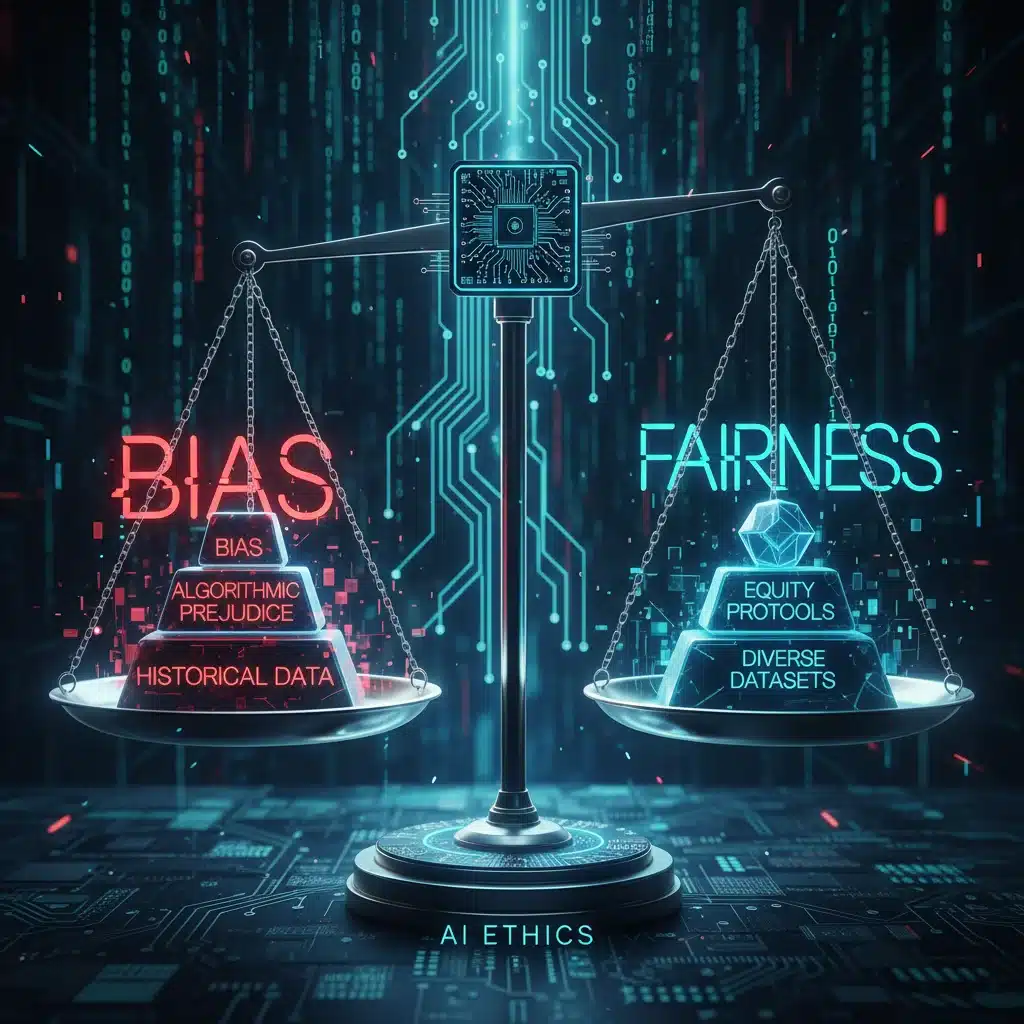
By combining these data, algorithmic, and human-centric strategies, organizations can build a robust framework for embedding AI ethics in practice.
The Future of AI Ethics in Practice in the US: Challenges and Opportunities for 2026
As we approach 2026, the landscape of AI ethics in practice in the US will continue to evolve, presenting both significant challenges and exciting opportunities.
Emerging Challenges
- Regulatory Harmonization: The lack of a unified federal AI regulation means a patchwork of state and sector-specific rules, creating complexity for developers and deployers. Harmonizing these regulations while fostering innovation will be a key challenge.
- AI Explainability in Complex Models: As AI models become more complex (e.g., deep learning), achieving true explainability remains a significant technical hurdle. Without it, identifying and correcting subtle biases becomes increasingly difficult.
- Bias in Generative AI: The rise of powerful generative AI models (like large language models and image generators) introduces new forms of bias, including the generation of harmful stereotypes, misinformation, or even deepfakes. Mitigating these biases requires novel approaches.
- Global AI Ethics Alignment: While the US is developing its own approach, AI is a global phenomenon. Ensuring interoperability and alignment with international ethical AI guidelines will be crucial to prevent fragmentation and foster responsible global AI development.
- Resource Allocation: Implementing comprehensive ethical AI practices requires significant investment in time, expertise, and financial resources. Smaller organizations may struggle to keep pace, potentially creating an ethical divide.
Opportunities for Progress
- Standardization and Certification: The development of industry-wide standards and certification mechanisms for ethical AI could provide clarity and accountability, similar to safety standards in other industries. NIST’s AI RMF is a step in this direction.
- AI Ethics as a Competitive Advantage: Companies that prioritize ethical AI development can build greater trust with consumers and gain a competitive edge, especially as public awareness of AI risks grows.
- Interdisciplinary Collaboration: The field of AI ethics thrives on collaboration between technologists, ethicists, legal scholars, social scientists, and policymakers. Strengthening these interdisciplinary partnerships will lead to more holistic and effective solutions.
- Education and Public Engagement: Increased public education and engagement about AI’s capabilities, limitations, and ethical implications can empower citizens to demand more responsible AI and participate in shaping its future.
- Technological Innovation in Fairness Tools: Continued research and development in fairness-aware algorithms, bias detection tools, and explainable AI techniques promise more robust technical solutions for embedding AI ethics in practice.
Conclusion: Building a Responsible AI Future in the US
The imperative to address bias and ensure fairness in US AI development is not merely a technical problem; it is a fundamental societal challenge that demands concerted effort from all stakeholders. As we look towards 2026, the commitment to AI ethics in practice must be woven into the very fabric of AI innovation, from initial conceptualization to widespread deployment.
Achieving this vision requires a delicate balance: fostering technological advancement while safeguarding human values and rights. It demands continuous vigilance, proactive mitigation strategies, and a willingness to adapt as AI technology evolves. Government bodies, industry leaders, academic institutions, and civil society organizations all have a vital role to play in shaping a future where AI serves as a force for good, enhancing human potential without perpetuating injustice.
By prioritizing diverse data, designing fair algorithms, implementing robust governance, and fostering a culture of ethical responsibility, the United States can lead the way in building AI systems that are not only intelligent and powerful but also trustworthy, equitable, and truly beneficial for all. The journey is complex, but the destination—a responsible and fair AI future—is well worth the effort. The ongoing commitment to AI ethics in practice will define the success and societal acceptance of AI in the years to come.