Hyper-Connectivity: Transforming US Urban Living by 2030
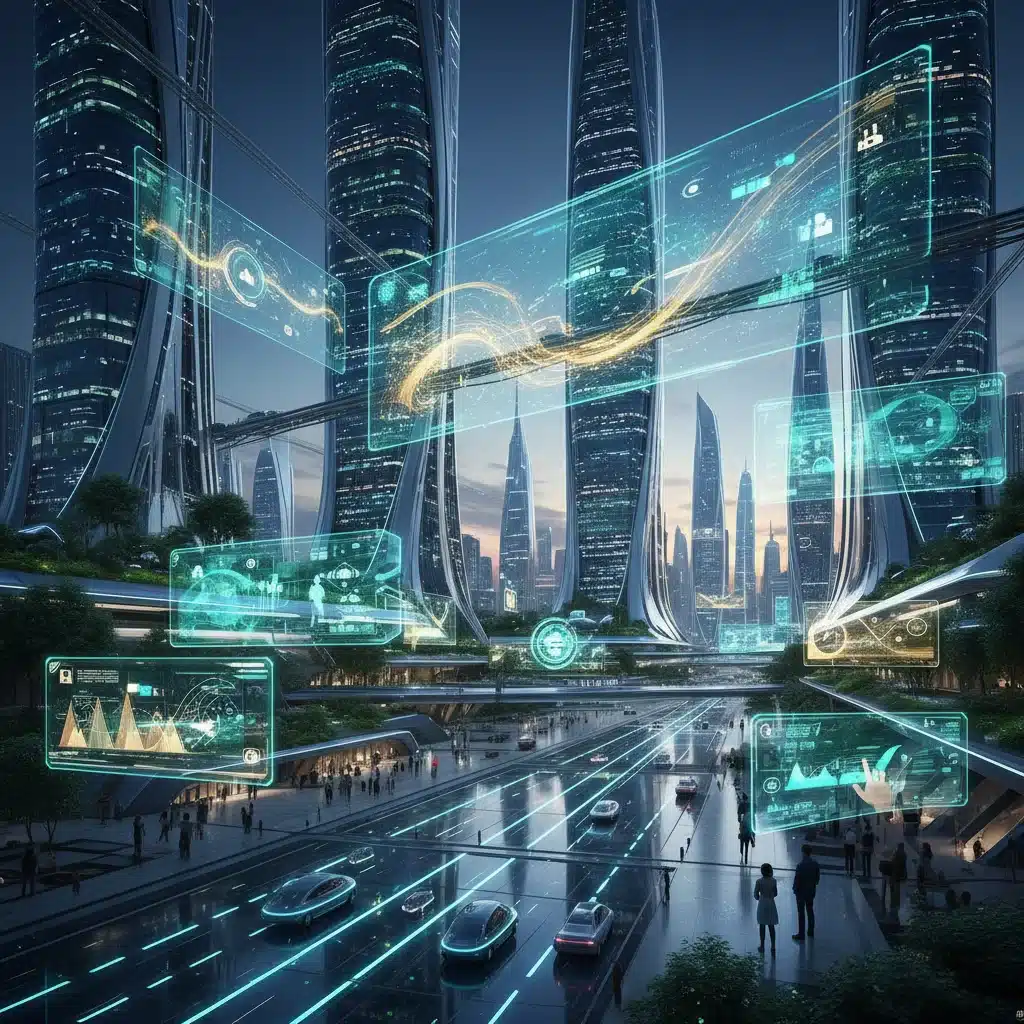
The concept of the ‘smart city’ has been a popular topic for years, envisioning urban centers that leverage technology to improve efficiency, sustainability, and the quality of life for their residents. However, as we approach 2030, the vision is evolving beyond mere smartness to something far more profound: urban hyper-connectivity. This isn’t just about individual devices being connected; it’s about an intricate, pervasive web of interconnected systems, data streams, and intelligent agents that will fundamentally redefine how we live, work, and interact within US urban environments. The future of US urban living is not just smart, it’s hyper-connected, and the implications are monumental.
Beyond Smart Cities: How Urban Hyper Connectivity Will Transform US Urban Living by 2030
The journey from rudimentary internet access to ubiquitous, high-speed, low-latency networks forms the bedrock of this transformation. By 2030, 5G will be commonplace, and 6G will be on the horizon, offering speeds and reliability that were once unimaginable. This technological leap will enable an unprecedented density of connected devices, creating a truly intelligent urban fabric. This article delves into how this urban hyper connectivity will manifest across various facets of US urban living, comparing the current smart city paradigm with the hyper-connected future and analyzing the profound shifts it will bring.
The Foundation: 5G, IoT, and AI as Pillars of Urban Hyper Connectivity
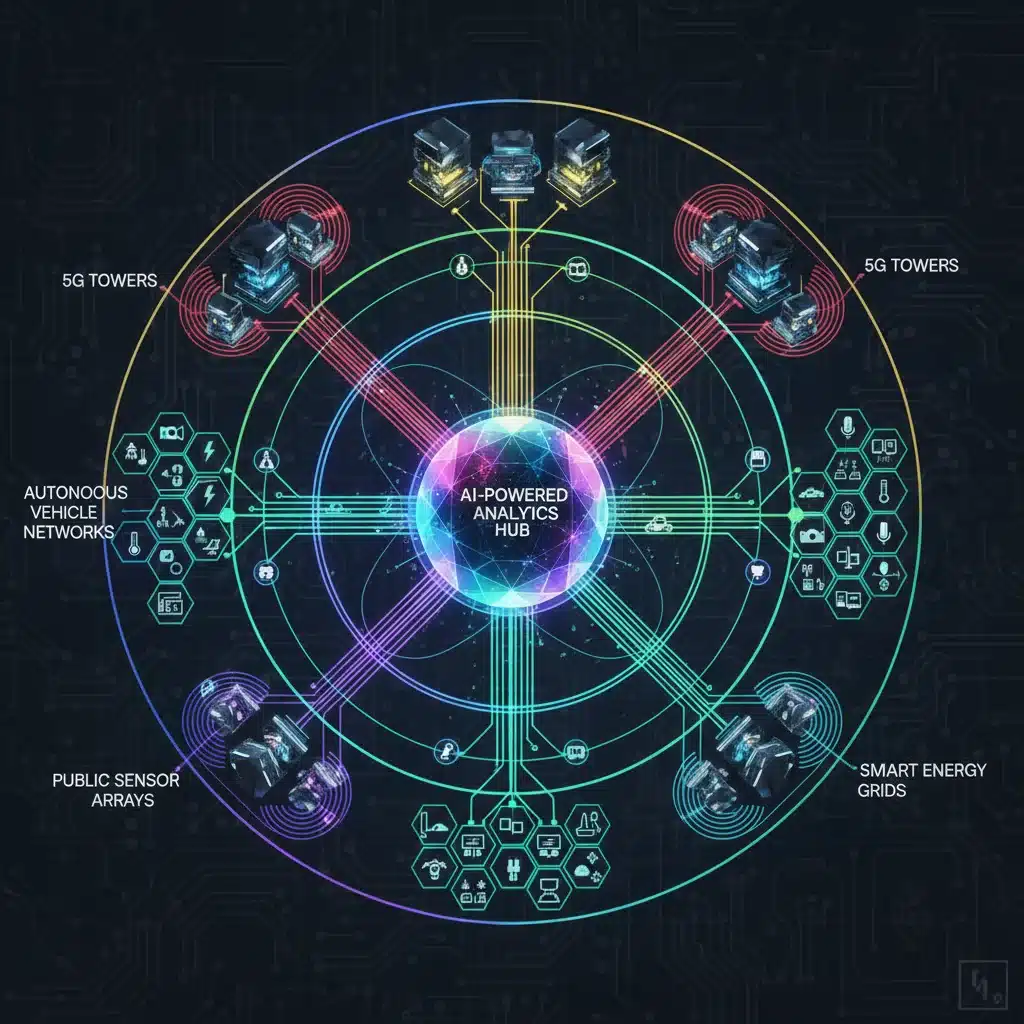
At the core of urban hyper-connectivity are three intertwined technological pillars: 5G networks, the Internet of Things (IoT), and Artificial Intelligence (AI). Each plays a crucial, synergistic role in building the intelligent urban ecosystem of tomorrow.
5G: The Unseen Highway for Data
While 4G brought us mobile internet and the app revolution, 5G is poised to deliver the bandwidth and low latency necessary for truly real-time, mission-critical applications. Imagine self-driving cars communicating with traffic lights and other vehicles in milliseconds, or augmented reality applications overlaying crucial information onto our physical world without any perceptible delay. This isn’t just about faster downloads; it’s about enabling a new class of services and interactions that demand instantaneous data exchange. By 2030, 5G will be the standard, providing the robust infrastructure for urban hyper connectivity, ensuring that every sensor, every device, and every person can communicate seamlessly and efficiently.
IoT: The Eyes and Ears of the City
The Internet of Things encompasses billions of physical devices worldwide that are now connected to the internet, all collecting and sharing data. In a hyper-connected urban environment, IoT devices will be everywhere: embedded in roads, buildings, public transport, waste bins, and even individual wearables. These sensors will continuously gather data on everything from air quality and traffic flow to pedestrian movement and structural integrity of infrastructure. This real-time data flood is what transforms a ‘smart’ city into a ‘hyper-connected’ one, providing an unprecedented level of situational awareness. The sheer volume and granularity of data collected by these IoT networks will be critical for the predictive and proactive capabilities that define urban hyper connectivity.
AI: The Brain Interpreting the Data Deluge
Without Artificial Intelligence, the vast amounts of data generated by 5G-enabled IoT networks would be overwhelming and largely meaningless. AI algorithms are the ‘brain’ that processes this data, identifies patterns, makes predictions, and automates responses. From optimizing traffic signals based on real-time congestion to predicting infrastructure failures before they occur, AI will be central to making hyper-connected cities truly intelligent and responsive. Machine learning will constantly refine these systems, making them more efficient and effective over time. AI’s role is not just about analysis; it’s about enabling adaptive and resilient urban systems, a cornerstone of future urban hyper connectivity.
Transforming Daily Life: From Smart Homes to Smart Ecosystems
The most tangible impact of urban hyper-connectivity will be felt in the daily lives of urban residents. What started as individual smart devices will evolve into fully integrated, predictive, and personalized living experiences.
The Hyper-Connected Home: Beyond Automation
Today’s smart homes offer convenience, allowing us to control lights, thermostats, and security systems remotely. By 2030, the hyper-connected home will be an active participant in the wider urban ecosystem. Your home will not only react to your preferences but also anticipate your needs based on your schedule, local weather, and energy grid demands. It will communicate with the city’s infrastructure, for example, adjusting energy consumption based on grid load or automatically pre-cooling when peak energy prices are anticipated. Security systems will leverage advanced AI for predictive threat detection, and home health monitoring will seamlessly integrate with local healthcare providers. This level of integration demonstrates the true power of urban hyper connectivity.

Revolutionizing Transportation: Seamless and Autonomous Mobility
Perhaps nowhere will urban hyper connectivity be more transformative than in transportation. Autonomous vehicles (AVs) will be a common sight, but their true potential is unlocked when they are part of a hyper-connected network. AVs will communicate with each other, with traffic infrastructure (smart traffic lights, dynamic road signage), and with public transit systems. This will lead to:
- Optimized Traffic Flow: AI-driven systems will dynamically manage traffic, minimizing congestion and reducing travel times.
- Enhanced Safety: Real-time communication between vehicles and infrastructure will drastically reduce accidents caused by human error.
- Personalized Mobility: On-demand autonomous ride-sharing services will become the norm, offering efficient and flexible transportation options tailored to individual needs.
- Sustainable Commuting: Electric AVs, optimized routing, and integrated public transport will significantly reduce carbon emissions and urban pollution.
The morning commute, once a source of stress, will become a productive or relaxing experience as vehicles navigate the city with unparalleled efficiency, all thanks to advanced urban hyper connectivity.
Public Services and Infrastructure: Proactive and Predictive
Hyper-connectivity will enable urban public services to move from reactive to proactive models. Smart sensors in water pipes will detect leaks before they become major breaks, saving millions in repair costs and preventing water waste. Waste management systems will optimize collection routes based on bin fill levels, reducing fuel consumption and operational costs. Public safety will be enhanced through intelligent surveillance systems that can identify anomalies and alert authorities, not for constant monitoring, but for rapid response to critical situations. Emergency services will benefit from real-time data on traffic, crowd movements, and incident locations, allowing for faster and more effective interventions. This level of data-driven governance is what elevates smart cities to hyper-connected urban centers, providing unprecedented levels of service delivery and efficiency through urban hyper connectivity.
Economic and Social Implications of Urban Hyper Connectivity
The transformation driven by urban hyper connectivity extends far beyond technological upgrades; it will have profound economic and social repercussions, creating new opportunities while also presenting new challenges.
Economic Growth and Innovation
Hyper-connected cities will become hubs of innovation. The vast amounts of data generated will fuel new industries and services, from advanced analytics and AI development to personalized urban experiences and sustainable solutions. Startups will thrive on the ability to access and leverage real-time urban data, creating applications that enhance everything from local commerce to public health. The efficiency gains across sectors – transportation, energy, public services – will translate into significant economic savings and increased productivity. This environment fosters a dynamic ecosystem where businesses can innovate faster and more effectively, driven by the rich data streams enabled by urban hyper connectivity.
Social Equity and Digital Inclusion
One of the critical challenges and opportunities of urban hyper connectivity is ensuring equitable access and benefits for all residents. While advanced technology promises improvements, there’s a risk of exacerbating the digital divide if not managed carefully. City planners and policymakers must prioritize digital inclusion, ensuring that high-speed internet access, digital literacy programs, and accessible interfaces are available to everyone, regardless of socioeconomic status. The goal should be to leverage hyper-connectivity to bridge gaps, offering better access to education, healthcare, and economic opportunities for underserved communities. This requires intentional design and policy to ensure that the benefits of urban hyper connectivity are truly universal.
Privacy and Security Concerns
The pervasive nature of IoT sensors and the constant flow of data raise significant privacy and security concerns. Who owns this data? How is it protected? How is it used? Robust regulatory frameworks, transparent data governance policies, and advanced cybersecurity measures will be paramount. Citizens need assurances that their privacy is protected and that the data collected is used ethically and responsibly. Building trust will be crucial for the successful adoption and long-term viability of hyper-connected urban environments. Addressing these concerns proactively is essential for the ethical implementation of urban hyper connectivity.
Challenges and Considerations for 2030
While the vision of hyper-connected US urban living by 2030 is exciting, realizing it comes with a set of significant challenges that require careful planning and execution.
Infrastructure Investment
The transition to urban hyper connectivity demands massive investment in infrastructure. This includes not only upgrading existing physical infrastructure to accommodate new technologies but also deploying vast numbers of sensors, antennas, and data centers. Funding models will need to be innovative, involving public-private partnerships and potentially new forms of municipal bonds. The sheer scale of this undertaking cannot be underestimated.
Interoperability and Standardization
For a truly hyper-connected city, all systems must be able to communicate seamlessly. This requires a high degree of interoperability and standardization across different technologies, vendors, and platforms. Without common protocols and open APIs, cities risk creating fragmented, siloed systems that undermine the very purpose of hyper-connectivity. Collaborative efforts between industry, government, and academia will be crucial to establish these standards.
Cybersecurity Resilience
A hyper-connected city presents a much larger attack surface for cyber threats. A breach in one system could potentially cascade, affecting critical infrastructure, public safety, and personal data. Developing robust, multi-layered cybersecurity defenses, including AI-driven threat detection and rapid response protocols, will be an ongoing and evolving challenge. The resilience of these systems against sophisticated cyberattacks is paramount for maintaining public trust and operational stability in an era of urban hyper connectivity.
Governance and Policy Frameworks
The rapid pace of technological change often outstrips the ability of governance structures to adapt. New legal and ethical frameworks will be needed to address issues such as data ownership, algorithmic bias, autonomous decision-making, and the balance between public good and individual privacy. Proactive policymaking, involving broad stakeholder engagement, will be essential to guide the development of hyper-connected cities in a way that aligns with societal values and ensures democratic oversight. This governance will be key to managing the complexities introduced by urban hyper connectivity.
The Human Element in a Hyper-Connected Future
Amidst all the technological advancements, it’s crucial to remember that the ultimate goal of urban hyper connectivity is to improve the human experience. Cities are, at their heart, places for people. The successful implementation of hyper-connectivity will depend on how well these technologies serve human needs and desires, and how seamlessly they integrate into daily life without feeling intrusive or overwhelming.
Enhancing Quality of Life
Imagine a city where traffic jams are a distant memory, where public spaces are dynamically managed for optimal comfort and safety, where energy waste is minimal, and where resources are allocated efficiently to those who need them most. Hyper-connectivity has the potential to create healthier, more sustainable, and more enjoyable urban environments. From personalized public health alerts to on-demand access to cultural events, the quality of life can be significantly elevated. The goal is not just efficiency but also creating more vibrant and livable communities through urban hyper connectivity.
Citizen Engagement and Participation
Hyper-connectivity can also foster new forms of citizen engagement. Digital platforms can allow residents to provide real-time feedback on city services, participate in urban planning decisions, and access localized information relevant to their immediate surroundings. This can lead to more responsive governance and a stronger sense of community ownership. Empowering citizens with data and tools can transform them from passive recipients of services into active co-creators of their urban future, thanks to the interactive possibilities of urban hyper connectivity.
Conclusion: The Dawn of Truly Integrated Urban Living
By 2030, US urban living will be defined by an unprecedented level of urban hyper connectivity. This transformation goes far beyond the initial vision of smart cities, creating an intricate, intelligent web that integrates every aspect of urban life. From our homes to our commutes, from how we consume energy to how we interact with public services, technology will be an invisible yet pervasive force, optimizing, personalizing, and enhancing our experiences.
The journey to this hyper-connected future is not without its hurdles, particularly concerning infrastructure investment, interoperability, cybersecurity, and ethical governance. However, the potential benefits – increased efficiency, sustainability, economic growth, and an elevated quality of life – are too significant to ignore. As we move closer to 2030, cities that embrace and strategically implement urban hyper connectivity will be the ones that thrive, offering their residents a truly integrated, responsive, and future-ready living experience. The era of the hyper-connected city is not just coming; it’s already being built, piece by digital piece, laying the foundation for a revolutionary urban future.