Quantum Computing Breakthroughs: US Innovations Reshaping Data Security by 2030
Quantum Computing Breakthroughs: US Innovations Reshaping Data Security by 2030
The dawn of quantum computing brings with it both unprecedented opportunities and formidable challenges, particularly in the realm of data security. As the world races towards a future powered by quantum mechanics, the United States has emerged as a pivotal player, driving significant innovations that promise to fundamentally reshape how we protect our most sensitive information. By 2030, the landscape of Quantum Data Security is expected to undergo a radical transformation, largely propelled by US-led research, development, and strategic initiatives. This article delves into these groundbreaking advancements, exploring their implications for cybersecurity and outlining the path to a quantum-resistant future.
The Quantum Threat: A Looming Challenge for Current Cryptography
Before we can appreciate the solutions, it’s crucial to understand the problem. Modern data security relies heavily on cryptographic algorithms, primarily public-key cryptography, which underpins everything from secure online transactions to encrypted communications. These algorithms, such as RSA and Elliptic Curve Cryptography (ECC), derive their strength from the computational difficulty of factoring large numbers or solving discrete logarithm problems for even the most powerful classical supercomputers. However, quantum computers, with their ability to exploit quantum phenomena like superposition and entanglement, possess the potential to break these classical cryptographic schemes with relative ease. Shor’s algorithm, for instance, could efficiently factor large numbers, rendering current encryption methods obsolete.
The threat is not merely theoretical. Adversaries, both state-sponsored and otherwise, are actively pursuing quantum computing capabilities, recognizing the immense strategic advantage it would confer. The ability to decrypt vast swathes of previously secured data, including financial records, national security intelligence, and personal communications, presents a catastrophic risk. This impending ‘cryptographically relevant quantum computer’ (CRQC) necessitates a proactive and robust response, and the US has taken significant strides to lead this charge in developing resilient Quantum Data Security measures.
US Leadership in Quantum Computing Research and Development
The United States has invested heavily in quantum computing research and development, recognizing its dual nature as both a threat and an opportunity. Government agencies, academic institutions, and private companies are collaborating to accelerate progress in quantum hardware, software, and algorithms. Initiatives like the National Quantum Initiative Act, signed into law in 2018, have provided substantial funding and a strategic framework to foster a robust quantum ecosystem. This concerted effort aims to maintain US leadership in quantum science and technology, ensuring national security and economic competitiveness in the quantum age.
Key Areas of US Innovation in Quantum Computing:
- Quantum Hardware Development: US companies and research labs are at the forefront of building increasingly powerful and stable quantum processors. Giants like IBM, Google, and Intel, alongside numerous startups, are pushing the boundaries of qubit coherence, connectivity, and error correction. These advancements are critical for constructing fault-tolerant quantum computers capable of running complex algorithms necessary for breaking current encryption.
- Quantum Software and Algorithms: Beyond hardware, significant progress is being made in developing quantum software stacks, programming languages, and specialized algorithms. This includes not only algorithms that pose a threat to classical cryptography but also those designed to enhance security in a quantum world.
- Post-Quantum Cryptography (PQC): Perhaps the most direct response to the quantum threat is the development of PQC, also known as quantum-resistant cryptography. The National Institute of Standards and Technology (NIST) in the US has been leading a multi-year global standardization process for PQC algorithms. This initiative aims to identify, evaluate, and standardize new cryptographic schemes that are resistant to attacks from both classical and quantum computers.
Post-Quantum Cryptography (PQC): The Cornerstone of Future Quantum Data Security
The NIST PQC standardization process is arguably the most critical component of the US strategy for ensuring Quantum Data Security. Launched in 2016, this process invited cryptographic experts worldwide to submit new algorithms designed to withstand quantum attacks. After several rounds of evaluation, NIST has identified a portfolio of candidate algorithms, with initial standards expected to be finalized in the coming years. These algorithms fall into several mathematical categories, each offering different security properties and performance characteristics:
- Lattice-based Cryptography: Algorithms like CRYSTALS-Dilithium (for digital signatures) and CRYSTALS-Kyber (for key encapsulation mechanisms) are based on the mathematical problem of finding short vectors in high-dimensional lattices. These are considered highly promising due to their perceived security and efficiency.
- Hash-based Signatures: Schemes like SPHINCS+ offer strong security guarantees based on the properties of cryptographic hash functions, which are generally considered quantum-resistant.
- Code-based Cryptography: Algorithms such as Classic McEliece rely on error-correcting codes. While often having larger key sizes, they offer a long history of security analysis.
- Multivariate Polynomial Cryptography: These schemes derive their security from the difficulty of solving systems of multivariate polynomial equations over finite fields.
The transition to PQC will be a monumental undertaking, requiring widespread adoption across all sectors, from government and critical infrastructure to commercial enterprises and personal devices. The US government is actively preparing for this transition, developing guidelines and strategies for agencies to begin migrating their systems to quantum-resistant standards. This proactive approach is essential to avoid a ‘Y2K-like’ cryptographic crisis when quantum computers become powerful enough to break current encryption.
Quantum Key Distribution (QKD): An Alternative Paradigm for Secure Communication
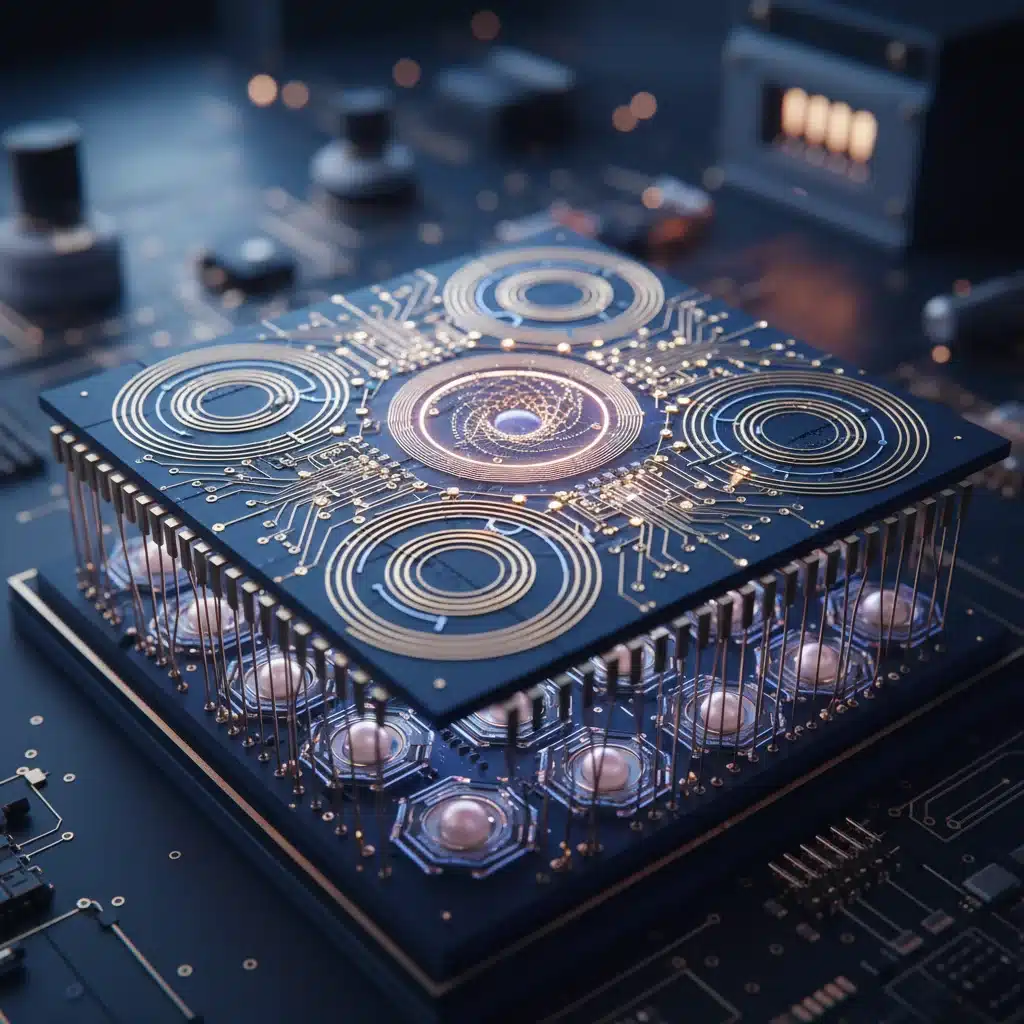
While PQC focuses on developing new mathematical algorithms to resist quantum attacks, Quantum Key Distribution (QKD) offers an entirely different approach to secure key exchange, leveraging the fundamental principles of quantum mechanics. QKD protocols, such as BB84, ensure that any attempt by an eavesdropper to intercept the shared secret key will inevitably disturb the quantum state of the transmitted photons, thus revealing their presence. This provides an information-theoretically secure method for two parties to establish a shared secret key, whose security is guaranteed by the laws of physics rather than computational complexity.
The US has been actively researching and developing QKD technologies, both for terrestrial fiber-optic networks and satellite-based communication. While QKD offers unparalleled security for key exchange, it also presents practical challenges, including limited range, hardware complexity, and the need for dedicated quantum channels. Therefore, QKD is often viewed as a complementary technology to PQC, particularly for highly sensitive communications where the highest level of security is paramount. The integration of QKD into existing communication infrastructures is an ongoing area of research and development, with significant US contributions aimed at overcoming these practical hurdles and enhancing overall Quantum Data Security.
The Role of Quantum-Resistant Hardware and Infrastructure
Beyond algorithms and key distribution, the future of Quantum Data Security also depends on the development of quantum-resistant hardware and infrastructure. This includes:
- Secure Enclaves: Designing hardware components that can securely store and process cryptographic keys and data, even in the presence of quantum adversaries.
- Quantum-Secure Networks: Building network architectures that can support both classical and quantum-resistant communication protocols, ensuring seamless and secure data transmission.
- Supply Chain Security: Protecting the entire lifecycle of hardware and software components from quantum-enabled attacks, from manufacturing to deployment.
US companies and government agencies are actively exploring these areas, recognizing that a holistic approach is necessary to achieve comprehensive Quantum Data Security. This involves not just theoretical advancements but also practical engineering solutions to harden our digital infrastructure against future quantum threats.
Challenges and Opportunities on the Road to 2030
The journey to a quantum-resistant future is not without its challenges. The migration to PQC algorithms is complex and costly, requiring significant resources, expertise, and coordination across industries. Legacy systems, embedded devices, and long-lived data will need careful consideration to ensure their continued security. Furthermore, the rapid pace of quantum innovation means that the cryptographic landscape is constantly evolving, necessitating ongoing research and adaptation.
However, these challenges also present significant opportunities. The development and deployment of quantum-resistant technologies will drive innovation, create new industries, and foster economic growth. The US, by leading in this field, can establish itself as a global leader in secure digital infrastructure, offering advanced cybersecurity solutions to the world. Moreover, a robust Quantum Data Security posture will inspire greater trust in digital systems, facilitating further advancements in areas like artificial intelligence, cloud computing, and the Internet of Things.
Ethical Considerations and Policy Frameworks:
As quantum technologies mature, ethical considerations and robust policy frameworks become increasingly important. The potential for quantum computing to break current encryption raises concerns about privacy, surveillance, and the balance of power. The US government is engaging in discussions to establish ethical guidelines and regulatory frameworks that ensure the responsible development and deployment of quantum technologies, prioritizing both innovation and societal well-being. This includes addressing issues of dual-use technology and preventing the misuse of quantum capabilities for malicious purposes.
Anticipated Impact by 2030: A Transformed Landscape
By 2030, the impact of US innovations in quantum computing on Quantum Data Security will be profound. We can anticipate several key transformations:
- Widespread PQC Adoption: A significant portion of critical infrastructure, government communications, and major financial transactions will have transitioned to NIST-standardized PQC algorithms. This will create a more secure foundation for the global digital economy.
- Hybrid Security Solutions: Many organizations will implement hybrid cryptographic solutions, combining classical and post-quantum algorithms to provide layered security and manage transition risks. This ‘crypto-agility’ will be crucial for adapting to evolving threats.
- Enhanced Secure Communications: QKD will see niche but critical applications, particularly in government, defense, and high-security financial networks, providing an additional layer of quantum-proof key exchange.
- Quantum-Resilient Hardware: New hardware architectures designed with quantum resistance in mind will begin to emerge, offering built-in protections against quantum attacks.
- A More Robust Cybersecurity Workforce: The demand for cybersecurity professionals with expertise in quantum cryptography and quantum-safe protocols will surge, leading to specialized training programs and a more skilled workforce.
- Global Collaboration and Standards: While the US leads, international collaboration will continue to be vital in establishing global standards and ensuring interoperability for quantum-safe technologies.
The Path Forward: Sustained Investment and Strategic Planning
To fully realize these benefits and mitigate the risks, sustained investment in quantum research, strategic planning for cryptographic migration, and robust public-private partnerships are essential. The US government, through agencies like NIST, NSA, and DARPA, will continue to play a crucial role in funding basic research, guiding standardization efforts, and developing secure implementation guidelines. Private industry will be instrumental in developing commercial products and services that incorporate these new security paradigms, driving innovation and widespread adoption.
Education and workforce development are also paramount. Training a new generation of scientists, engineers, and cybersecurity experts who understand quantum mechanics and its implications for cryptography is vital for building and maintaining a quantum-resistant infrastructure. Universities and research institutions, often supported by federal grants, are expanding their quantum computing programs to meet this growing demand.
Conclusion: Securing Tomorrow with Today’s Quantum Innovations
The journey towards a quantum-resistant future is well underway, with the United States at the forefront of innovation. The breakthroughs in quantum computing, particularly in post-quantum cryptography and quantum key distribution, are not merely academic exercises; they represent the foundational elements of tomorrow’s Quantum Data Security. By 2030, thanks to these concerted efforts, we anticipate a digital landscape fortified against the most advanced computational threats, ensuring the continued integrity, confidentiality, and availability of our data.
The challenges are significant, but the commitment to securing our digital future is unwavering. As quantum technologies continue to evolve, so too will our strategies for protection. The proactive and collaborative approach taken by the US in advancing quantum computing and cryptography offers a powerful testament to the nation’s dedication to safeguarding information in an increasingly quantum world. The era of quantum-safe computing is not a distant dream but a rapidly approaching reality, shaped by the innovations happening today.