Cybersecurity in the Age of AI: 3 Proactive Strategies for Businesses in 2026 to Combat New Threats

The digital landscape is evolving at an unprecedented pace, and with it, the sophistication of cyber threats. As we approach 2026, Artificial Intelligence (AI) is not just a tool for innovation; it’s becoming an indispensable weapon in the ongoing battle for cybersecurity. Businesses that fail to adopt proactive AI cybersecurity strategies risk falling victim to increasingly complex and automated attacks. This article delves into three crucial strategies every business must implement to safeguard their digital assets in an an AI-driven world.
The Escalating Threat Landscape: Why AI Cybersecurity Strategies Are Crucial Now
The rise of AI brings a double-edged sword to cybersecurity. While it offers powerful defensive capabilities, it also empowers malicious actors with advanced tools for crafting more effective and evasive attacks. Traditional, reactive security measures are simply no longer sufficient. Signature-based detection, for instance, struggles against polymorphic malware and zero-day exploits generated by AI. The sheer volume and velocity of modern cyberattacks demand a paradigm shift towards proactive, intelligent defense systems.
By 2026, we anticipate an even greater proliferation of AI-powered attacks, including sophisticated phishing campaigns that mimic human communication, autonomous malware that can adapt and spread without human intervention, and advanced denial-of-service attacks that learn to bypass conventional defenses. Businesses face not just data breaches, but also intellectual property theft, operational disruption, and severe reputational damage. Therefore, integrating robust AI cybersecurity strategies is not a luxury but a fundamental requirement for survival and growth in the coming years.
The global cost of cybercrime is projected to reach astronomical figures, underscoring the urgent need for robust defenses. Small and medium-sized enterprises (SMEs), often lacking the resources of larger corporations, are particularly vulnerable. However, AI offers scalable solutions that can level the playing field, providing advanced protection without requiring an army of security analysts. The key is understanding how to effectively harness AI’s potential to anticipate, detect, and respond to threats before they cause significant harm.
Understanding the AI Advantage in Cyber Defense
AI’s strength in cybersecurity lies in its ability to process vast amounts of data, identify patterns, and make predictions at speeds far beyond human capability. Machine learning algorithms can analyze network traffic, user behavior, and system logs to detect anomalies that might indicate a cyberattack. This proactive approach allows organizations to move beyond simply reacting to known threats and instead predict and prevent emerging ones.
Furthermore, AI can automate many of the laborious and repetitive tasks traditionally performed by security analysts, freeing up human experts to focus on more complex strategic challenges. This automation not only improves efficiency but also reduces the likelihood of human error, which remains a significant factor in many security incidents. The integration of AI into security operations centers (SOCs) is transforming how threats are managed, from initial detection to rapid remediation.
Strategy 1: Implementing AI-Powered Threat Detection and Prediction
The first and arguably most critical AI cybersecurity strategy for businesses in 2026 is the widespread adoption of AI-powered threat detection and prediction systems. These systems move beyond static rules and signatures, employing machine learning to understand ‘normal’ network behavior and identify deviations that signal a potential attack. This includes everything from unusual login times and locations to anomalous data access patterns and unexpected network traffic spikes.
Behavioral Analytics and Anomaly Detection
AI excels at behavioral analytics. By continuously monitoring user and entity behavior (UEBA), AI systems can build profiles of typical activity for each user, device, and application within an organization’s network. Any significant departure from these established baselines triggers an alert. For example, if an employee who usually accesses specific sales reports suddenly attempts to download the entire customer database, an AI system would flag this as suspicious, even if the employee’s credentials are valid.
This capability is particularly effective against insider threats, credential compromise, and advanced persistent threats (APTs) that often involve subtle, prolonged infiltration. Traditional security tools might miss these nuanced indicators, but AI’s ability to correlate disparate data points across various systems provides a much more comprehensive view of potential risks.
Predictive Threat Intelligence and Vulnerability Management
Beyond detection, AI can also provide predictive threat intelligence. By analyzing global threat data, including emerging malware strains, attack vectors, and exploit kits, AI algorithms can forecast potential vulnerabilities within a business’s infrastructure. This allows security teams to proactively patch systems, reconfigure firewalls, and strengthen defenses before a specific attack even targets them.
AI-driven vulnerability management tools can continuously scan systems for weaknesses, prioritize patches based on real-world threat intelligence, and even simulate attacks to test the resilience of existing defenses. This shift from reactive patching to proactive, intelligent risk mitigation is a cornerstone of future-proof AI cybersecurity strategies.

Strategy 2: Automating Incident Response with AI and Orchestration
Once a threat is detected, the speed and effectiveness of the response are paramount. Manual incident response processes are often too slow to contain fast-moving, AI-powered attacks. The second critical AI cybersecurity strategy involves leveraging AI for automated incident response and security orchestration, automation, and response (SOAR) platforms.
Rapid Containment and Remediation
AI can automate many first-line response actions, significantly reducing the time to contain and remediate threats. For instance, upon detecting a phishing attempt, an AI-powered system can automatically block the malicious email, quarantine affected endpoints, revoke compromised credentials, and initiate a forensic investigation. This immediate action minimizes the spread of an attack and limits potential damage.
SOAR platforms, augmented with AI, can integrate various security tools – firewalls, intrusion detection systems, endpoint protection, identity management – and orchestrate their actions in response to an incident. This creates a cohesive and rapid defensive posture that human teams alone cannot achieve. The automation extends to collecting evidence, analyzing logs, and even generating incident reports, streamlining the entire response lifecycle.
Adaptive Security Policies
AI also enables adaptive security policies. Instead of static rules, AI systems can dynamically adjust security controls based on real-time threat intelligence and the evolving risk posture of the organization. For example, if a new vulnerability is discovered in a specific software, AI can automatically implement stricter access controls for applications using that software until a patch is applied.
This adaptability extends to user access. AI can continuously assess user risk scores based on their behavior, device health, and network location, dynamically adjusting their access privileges. A user attempting to log in from an unusual location might be prompted for additional multi-factor authentication, while a device showing signs of compromise might have its network access temporarily restricted. These dynamic policies are essential for maintaining security in fluid and complex IT environments.
Strategy 3: Fostering a Culture of AI-Savvy Security and Continuous Learning
Technology alone is never enough. The third indispensable AI cybersecurity strategy focuses on the human element: fostering a culture of AI-savvy security awareness and continuous learning within the organization. As AI tools become more prevalent, employees need to understand their role in the security ecosystem and how to interact safely with AI-driven systems.
Educating the Workforce on AI-Driven Threats and Defenses
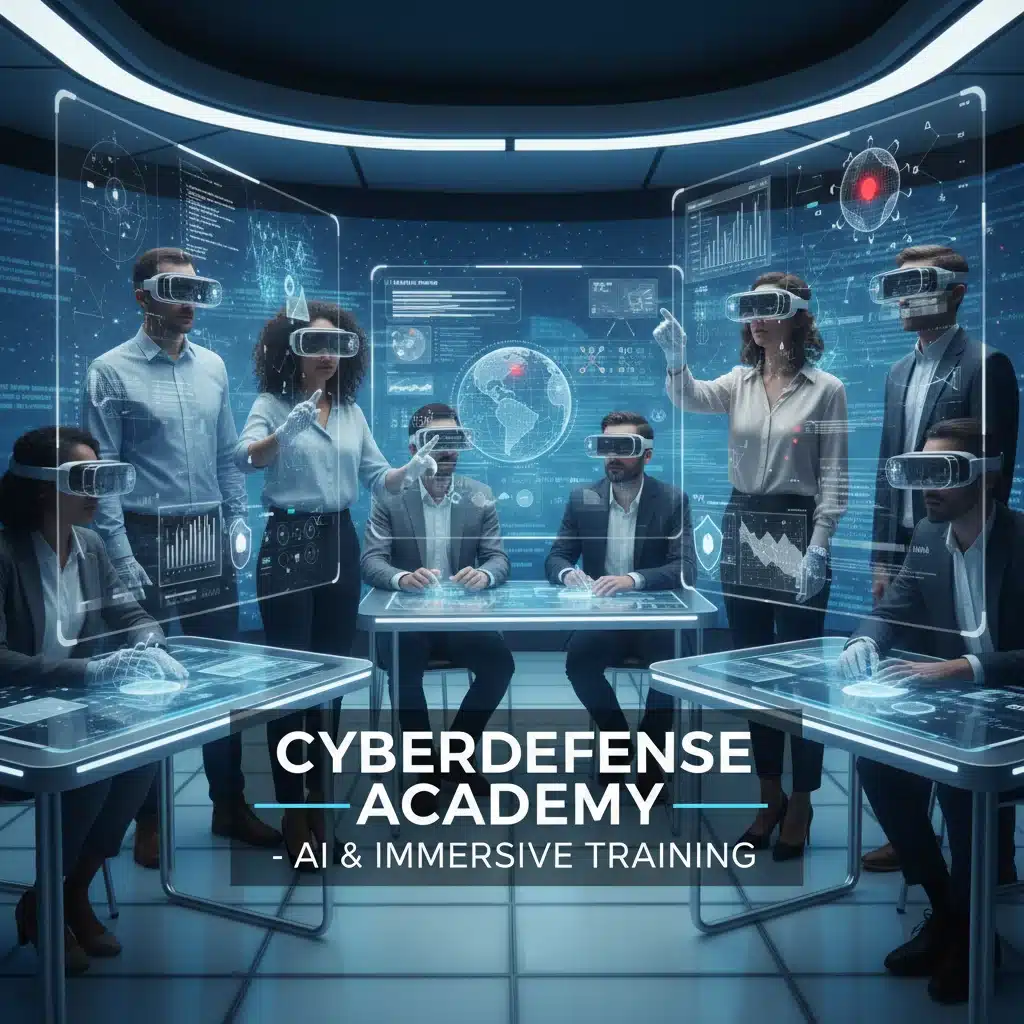
Employees are often the first line of defense, but they can also be the weakest link. Comprehensive training programs must educate the workforce not just on traditional cybersecurity best practices, but also on the unique challenges posed by AI-driven attacks. This includes recognizing sophisticated AI-generated phishing emails, understanding the risks of deepfakes, and being aware of social engineering tactics enhanced by AI.
Conversely, employees also need to understand how AI tools are being used for defense. This knowledge can build trust in the security systems and encourage adherence to new protocols. Training should be ongoing, adaptive, and tailored to different roles within the organization, from front-line staff to executive leadership.
Investing in Security Talent and Upskilling
The demand for cybersecurity professionals with AI expertise is skyrocketing. Businesses must invest in attracting, retaining, and upskilling their security teams to effectively manage and leverage AI tools. This means providing opportunities for training in machine learning, data science, and AI ethics as they apply to cybersecurity.
Security analysts need to transition from purely reactive roles to becoming ‘AI orchestrators,’ capable of configuring, monitoring, and fine-tuning AI security systems. They will also need to develop skills in threat hunting, using AI to uncover hidden threats that even automated systems might initially miss. Continuous professional development is key to ensuring that human expertise remains a powerful complement to AI capabilities.
The Future of AI Cybersecurity: Beyond 2026
While these three strategies lay a strong foundation for 2026, the evolution of AI and cyber threats is continuous. Businesses must view AI cybersecurity as an ongoing journey, not a destination. Looking beyond 2026, we can anticipate even more sophisticated applications of AI in defense, such as:
- Generative AI for Threat Simulation: AI models capable of generating realistic attack scenarios to test defenses, pushing security boundaries further.
- Quantum-Resistant Cryptography: As quantum computing advances, AI will play a role in developing and implementing cryptographic solutions that can withstand quantum attacks.
- Self-Healing Networks: Networks capable of autonomously detecting, isolating, and repairing compromised segments without human intervention.
- AI Ethics in Cybersecurity: Addressing the ethical implications of using AI in defense, ensuring fairness, transparency, and accountability.
The integration of AI into every layer of the security stack will become standard. From endpoint protection to cloud security and identity management, AI will provide the intelligence needed to maintain a resilient defense. Businesses that embrace these advancements will not only protect their assets but also gain a significant competitive advantage by fostering trust and ensuring operational continuity.
Challenges and Considerations in AI Cybersecurity Implementation
Implementing AI cybersecurity strategies is not without its challenges. Data quality is paramount; AI models are only as good as the data they are trained on. Businesses must ensure they have clean, relevant, and sufficiently large datasets to train effective security AI. Furthermore, the ‘black box’ nature of some AI models can make it difficult for human analysts to understand why certain decisions are made, raising concerns about explainability and accountability.
Another critical consideration is the potential for AI systems to be targeted themselves. Adversarial AI attacks, where malicious actors attempt to trick or manipulate AI models, are an emerging threat. Businesses must implement defenses against these types of attacks, ensuring the integrity and resilience of their AI security tools. The cost of implementation, skilled talent shortages, and the need for continuous integration with existing IT infrastructure also present hurdles that require careful planning and investment.
Despite these challenges, the benefits of AI in cybersecurity far outweigh the risks. With proper planning, strategic investment, and a commitment to continuous improvement, businesses can harness AI to build formidable defenses against the cyber threats of today and tomorrow. The proactive AI cybersecurity strategies outlined here provide a roadmap for navigating the complex digital landscape of 2026 and beyond.
Conclusion: Securing the Future with AI Cybersecurity Strategies
The year 2026 marks a pivotal point in cybersecurity, where AI transitions from a nascent technology to a foundational element of enterprise defense. Businesses that proactively adopt AI cybersecurity strategies, focusing on AI-powered threat detection and prediction, automated incident response, and a culture of AI-savvy security, will be best positioned to thrive. The digital future belongs to those who are prepared to leverage intelligence against intelligence, securing their operations and protecting their stakeholders from an ever-evolving array of cyber threats.
Investing in these strategies is not merely about preventing breaches; it’s about building resilience, ensuring business continuity, and maintaining trust in a hyper-connected world. As AI continues to reshape the technological landscape, so too must our approach to security. By embracing these proactive AI cybersecurity strategies, businesses can transform their defense mechanisms from reactive measures into intelligent, adaptive, and predictive powerhouses, safeguarding their future in the age of artificial intelligence.