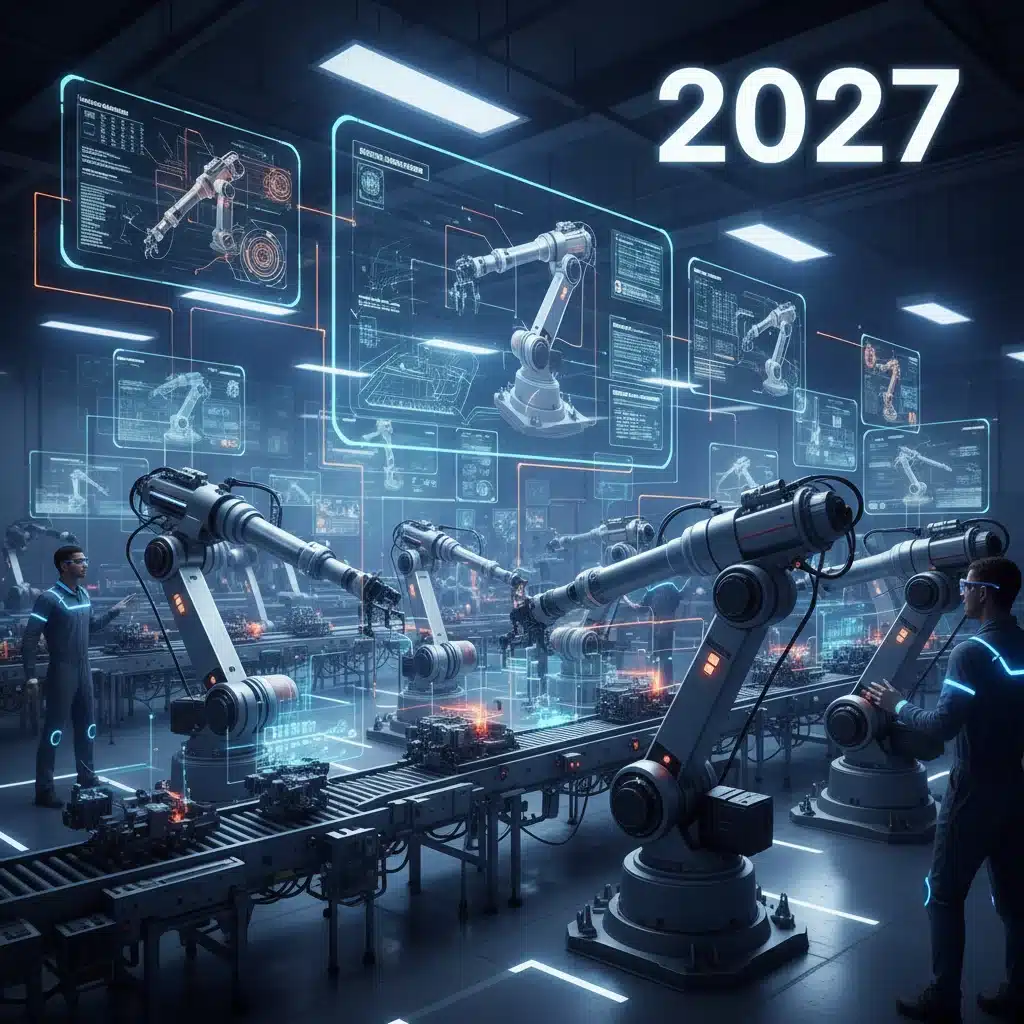
Digital Twin Manufacturing US: Transforming Industries by 2027
The landscape of manufacturing is undergoing a profound transformation, driven by advancements in digital technologies. Among these, the concept of the digital twin stands out as a particularly powerful innovation, poised to redefine efficiency, innovation, and competitiveness across various sectors. A digital twin is essentially a virtual replica of a physical object, process, or system. This virtual model is updated in real-time with data from its physical counterpart, allowing for comprehensive monitoring, analysis, and simulation. The implications for industries are immense, offering unprecedented opportunities for predictive maintenance, optimized operations, product development, and risk mitigation.
In the United States, the adoption of digital twin technology is accelerating, with significant investments and strategic implementations expected to reach critical mass in several key manufacturing sectors by 2027. This article delves into the burgeoning role of Digital Twin Manufacturing US, highlighting the two major industries that are not only embracing this technology but are also set to be profoundly shaped by it in the coming years. We will explore the reasons behind their rapid adoption, the benefits they are reaping, and the future outlook for these pioneering sectors.
Understanding the Digital Twin Revolution in Manufacturing
Before we dive into specific industries, it’s crucial to grasp the fundamental principles and benefits that make digital twin technology so revolutionary. At its core, a digital twin creates a dynamic, living digital model that mirrors a physical entity. This entity could be a single machine, an entire factory, a complex supply chain, or even a product throughout its lifecycle. Sensors on the physical asset collect data on its performance, environment, and condition, which is then fed into the digital twin. This continuous flow of information allows the virtual model to behave and react just like its real-world counterpart.
The power of the digital twin lies in its ability to facilitate:
- Real-time Monitoring and Diagnostics: Manufacturers can gain insights into the current state of their assets, identifying anomalies and potential issues before they escalate.
- Predictive Maintenance: By analyzing historical and real-time data, digital twins can predict equipment failures, enabling proactive maintenance and reducing costly downtime.
- Process Optimization: Simulations using the digital twin allow for testing different scenarios, optimizing production lines, energy consumption, and resource allocation without disrupting physical operations.
- Product Design and Development: Digital twins can be used to prototype and test new product designs virtually, accelerating time-to-market and reducing development costs.
- Improved Quality Control: By modeling production processes, digital twins can help identify and eliminate sources of defects, leading to higher quality products.
- Enhanced Decision-Making: Access to comprehensive, real-time data empowers managers and engineers to make more informed and strategic decisions.
The convergence of IoT (Internet of Things), AI (Artificial Intelligence), machine learning, and cloud computing has made digital twins more accessible and powerful than ever before. This technological synergy is a key driver behind the increasing adoption of Digital Twin Manufacturing US across diverse sectors.
Industry 1: Aerospace and Defense – Precision and Performance Amplified
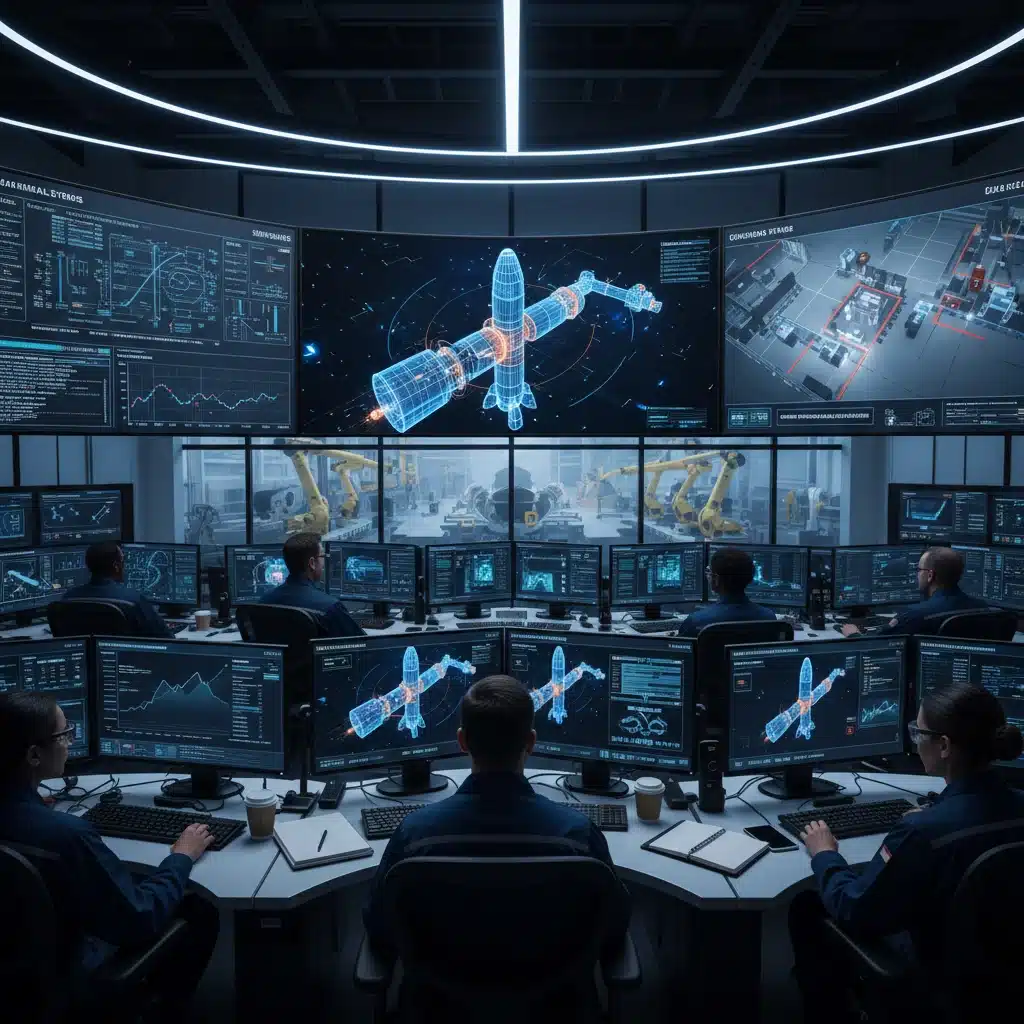
The aerospace and defense industry is a prime candidate for digital twin technology, driven by its inherent demands for extreme precision, rigorous safety standards, and the management of incredibly complex, high-value assets. From designing intricate aircraft components to managing the lifecycle of entire fleets, digital twins offer unparalleled capabilities. By 2027, this sector is projected to be one of the leading adopters of Digital Twin Manufacturing US, fundamentally transforming how aircraft are designed, built, operated, and maintained.
Current Applications and Benefits
Aerospace manufacturers are leveraging digital twins across various stages:
- Design and Prototyping: Creating virtual models of new aircraft designs or components allows engineers to simulate performance under various conditions, test material properties, and identify potential flaws long before physical prototypes are built. This significantly reduces development costs and accelerates the design cycle.
- Manufacturing Process Optimization: Digital twins of production lines enable manufacturers to simulate different assembly sequences, optimize robotic movements, and identify bottlenecks. This leads to more efficient production, reduced waste, and higher quality output. For instance, simulating the additive manufacturing of complex parts ensures optimal heat distribution and structural integrity.
- Predictive Maintenance for Aircraft: A digital twin of an aircraft can track the performance and wear of every component in real-time. By analyzing flight data, maintenance logs, and sensor readings, the digital twin can predict when specific parts are likely to fail, allowing for scheduled maintenance before an issue arises. This not only enhances safety but also minimizes aircraft downtime, a critical factor for airlines and defense agencies.
- Supply Chain Management: Digital twins can model the entire aerospace supply chain, from raw material sourcing to component delivery. This provides real-time visibility, helps identify potential disruptions, and allows for optimized logistics and inventory management.
- Training and Simulation: Digital twins offer realistic environments for training pilots, maintenance crews, and ground staff, allowing them to practice complex procedures in a safe, virtual setting.
Recent Updates and Future Outlook
Recent developments in the aerospace sector show a clear trend towards deeper integration of digital twins. Companies are investing heavily in advanced simulation software, IoT sensors for aircraft components, and AI-powered analytics platforms to extract maximum value from their digital twin data. The move towards more sustainable aviation also benefits from digital twins, as they can optimize fuel efficiency and reduce emissions by simulating various flight paths and operational parameters.
By 2027, we can expect to see nearly every major aerospace and defense contractor in the US utilizing digital twins as a cornerstone of their operations. The technology will move beyond individual components to encompass entire systems of systems, including air traffic control networks and integrated defense platforms. The ability to create a ‘digital thread’ that follows an asset from conception through retirement will become standard, ensuring complete traceability and continuous optimization.
Industry 2: Automotive Manufacturing – Driving Innovation and Efficiency
The automotive industry, characterized by its complex assembly lines, stringent quality requirements, and rapid innovation cycles, is another sector where digital twin technology is making significant inroads. The drive towards electric vehicles (EVs), autonomous driving, and personalized mobility solutions further amplifies the need for advanced simulation and optimization tools. By 2027, the automotive sector will be a powerhouse of Digital Twin Manufacturing US, leveraging the technology to build smarter, more efficient, and more sustainable vehicles and production processes.
Current Applications and Benefits
Automotive manufacturers are deploying digital twins across their value chain:
- Vehicle Design and Development: Digital twins of vehicle prototypes allow engineers to simulate crash tests, aerodynamic performance, and component interactions in a virtual environment. This dramatically reduces the need for expensive physical prototypes and speeds up the design iteration process. It’s particularly valuable for complex systems like battery packs for EVs or autonomous driving sensors.
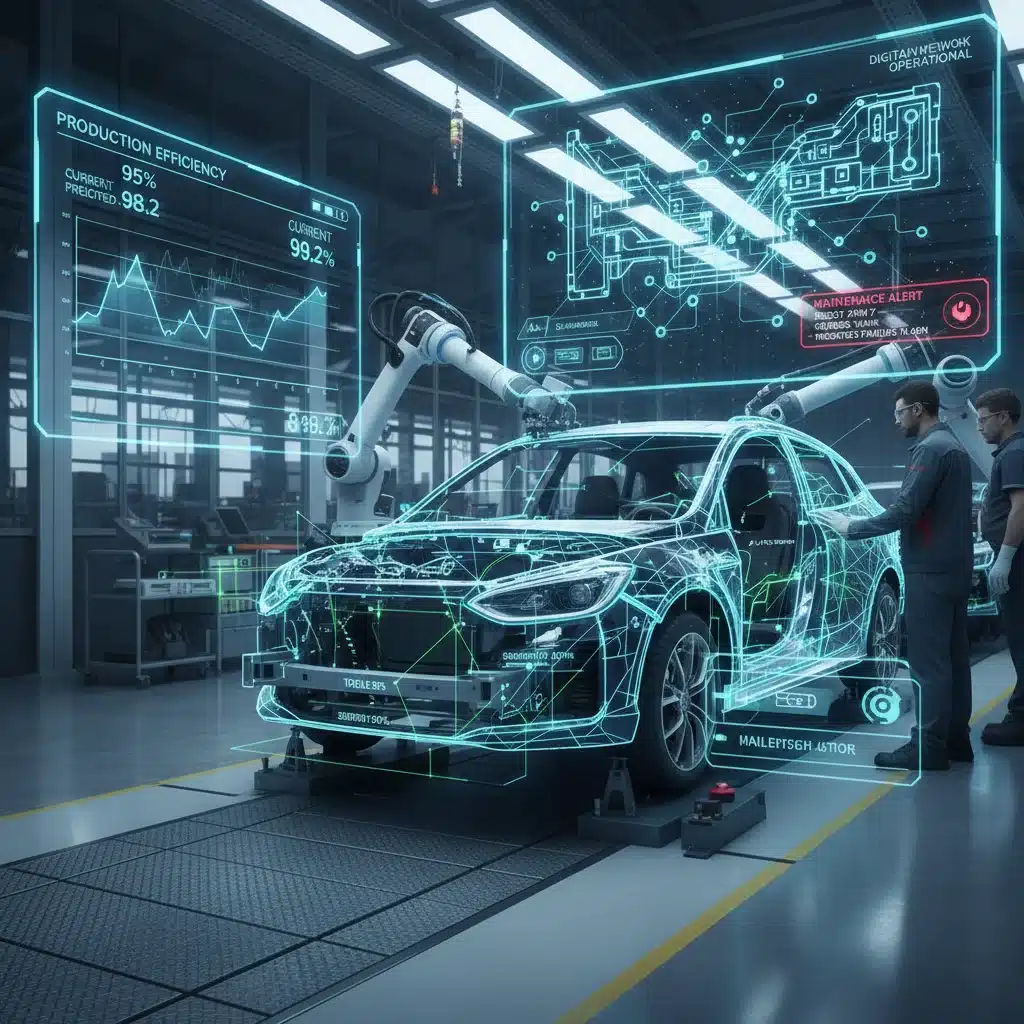
- Production Line Optimization: Creating a digital twin of an entire automotive factory enables manufacturers to simulate different production layouts, test robot programming, and optimize material flow. This helps in identifying bottlenecks, improving efficiency, and reducing operational costs. The ability to simulate the impact of changes before implementing them physically is a game-changer for complex assembly lines.
- Predictive Maintenance for Factory Equipment: Like aerospace, automotive plants rely on thousands of pieces of equipment. Digital twins of these machines can monitor their health in real-time, predict potential failures, and schedule maintenance proactively. This minimizes unplanned downtime, a critical factor in high-volume production.
- Supply Chain Visibility: The automotive supply chain is notoriously complex. Digital twins can provide end-to-end visibility, tracking components from suppliers to the assembly line, anticipating delays, and optimizing inventory levels.
- Post-Sale Vehicle Performance Monitoring: Digital twins of individual vehicles can be maintained post-sale, collecting data on driving patterns, component wear, and system performance. This data can be used to provide personalized maintenance recommendations, improve future vehicle designs, and even inform new services like usage-based insurance.
Recent Updates and Future Outlook
The automotive industry is in a phase of intense innovation, with digital twins playing a central role. Automakers are increasingly using digital twins to develop software-defined vehicles, where changes and updates can be simulated and deployed virtually before reaching the physical car. The integration of AI with digital twins is leading to more intelligent factories that can self-optimize and adapt to changing demands.
By 2027, the concept of a ‘product digital twin’ that accompanies a vehicle throughout its entire lifecycle, from design to recycling, will be standard. This will enable continuous improvement, personalized customer experiences, and more sustainable manufacturing practices. The focus on integrating digital twins with advanced robotics and generative AI will further accelerate the pace of innovation, allowing for hyper-customization and on-demand manufacturing possibilities in Digital Twin Manufacturing US automotive plants.
The Broader Impact of Digital Twin Manufacturing US
While aerospace and automotive are leading the charge, the widespread adoption of digital twins in these industries will have a ripple effect across the entire US manufacturing sector. The lessons learned, the technological advancements made, and the skilled workforce developed will inevitably spill over into other areas. This includes heavy machinery, electronics, pharmaceuticals, and even consumer goods manufacturing, all of which stand to gain significantly from the capabilities of digital twin technology.
Challenges and Opportunities
Despite the immense potential, the journey to full digital twin integration is not without its challenges. These include:
- Data Management: Handling the vast amounts of data generated by sensors and ensuring its quality, security, and accessibility is a complex task.
- Interoperability: Ensuring that different systems and software platforms can communicate effectively to build a cohesive digital twin ecosystem.
- Skilled Workforce: The need for engineers and technicians with expertise in data science, AI, IoT, and simulation tools is growing rapidly.
- Initial Investment: The upfront costs associated with implementing digital twin solutions can be substantial, although the long-term ROI is often compelling.
- Cybersecurity: Protecting the sensitive data and intellectual property embedded within digital twins is paramount.
However, these challenges also present significant opportunities for innovation and growth. Companies that can effectively navigate these hurdles will gain a considerable competitive advantage. The development of robust cloud-based digital twin platforms, standardized data protocols, and accessible training programs will be crucial for accelerating adoption.
Government and Industry Initiatives
Recognizing the strategic importance of advanced manufacturing technologies like digital twins, the US government and various industry consortia are actively promoting their development and deployment. Initiatives aimed at fostering collaboration between academia and industry, funding research and development, and creating supportive regulatory frameworks are helping to pave the way for broader adoption of Digital Twin Manufacturing US.
These efforts are critical for ensuring that American manufacturing remains at the forefront of global innovation, enhancing productivity, and creating high-value jobs. The focus is not just on adopting technology but on building an ecosystem that supports continuous innovation and adaptation.
Conclusion: A Digitally Twinned Future for US Manufacturing
The trajectory for digital twin adoption in US manufacturing is clear and upward. By 2027, the aerospace and defense, and automotive industries will stand as exemplars of how this technology can revolutionize every facet of production, from initial design to end-of-life management. Their successes will serve as blueprints for other sectors, driving a broader wave of digital transformation across the industrial landscape.
The rise of Digital Twin Manufacturing US signifies more than just a technological upgrade; it represents a fundamental shift in how we conceive, create, and manage industrial assets. It promises a future where factories are smarter, products are more reliable, processes are more efficient, and decision-making is more informed. As we move closer to 2027, the impact of digital twins will become increasingly tangible, cementing their status as an indispensable tool for competitive and sustainable manufacturing in the United States and beyond.
Manufacturers that embrace this technology early and strategically will be best positioned to thrive in the increasingly complex and dynamic global economy, unlocking new levels of innovation and operational excellence.