Autonomous Systems Ethics: US Policy Frameworks Unpacked

In an era defined by rapid technological advancement, autonomous systems have transcended the realm of science fiction to become an integral part of our daily lives. From self-driving cars navigating bustling city streets to AI-powered algorithms making critical decisions in healthcare and finance, the presence of these systems is undeniable. However, with their growing sophistication comes a complex web of ethical considerations that demand careful scrutiny and robust policy frameworks. The United States, at the forefront of technological innovation, is actively grappling with these challenges, seeking to strike a delicate balance between fostering innovation and safeguarding societal values. This deep dive into Autonomous Systems Ethics in the US aims to unpack the critical discussions, the evolving policy landscape, and the insider knowledge essential for understanding this pivotal moment in technological governance.
The rise of autonomous systems brings forth a host of profound ethical questions. Who is accountable when an autonomous vehicle causes an accident? How do we ensure these systems are free from inherent biases that could perpetuate societal inequalities? What level of human control is necessary to prevent unintended consequences? These are not merely academic debates; they have real-world implications that can impact lives, economies, and the very fabric of society. Addressing these concerns requires a multi-faceted approach, involving technologists, ethicists, legal scholars, policymakers, and the public.
The urgency to establish clear guidelines and regulations is palpable. Without a coherent ethical framework, the unchecked proliferation of autonomous systems could lead to unforeseen risks, erode public trust, and exacerbate existing societal divisions. Conversely, overly restrictive policies could stifle innovation, hindering the potential benefits that these technologies offer, such as increased efficiency, improved safety, and enhanced accessibility. Therefore, the discussions surrounding Autonomous Systems Ethics are not just about what is right or wrong, but about shaping a future where technology serves humanity responsibly and equitably.
The Foundations of Autonomous Systems Ethics: Core Principles
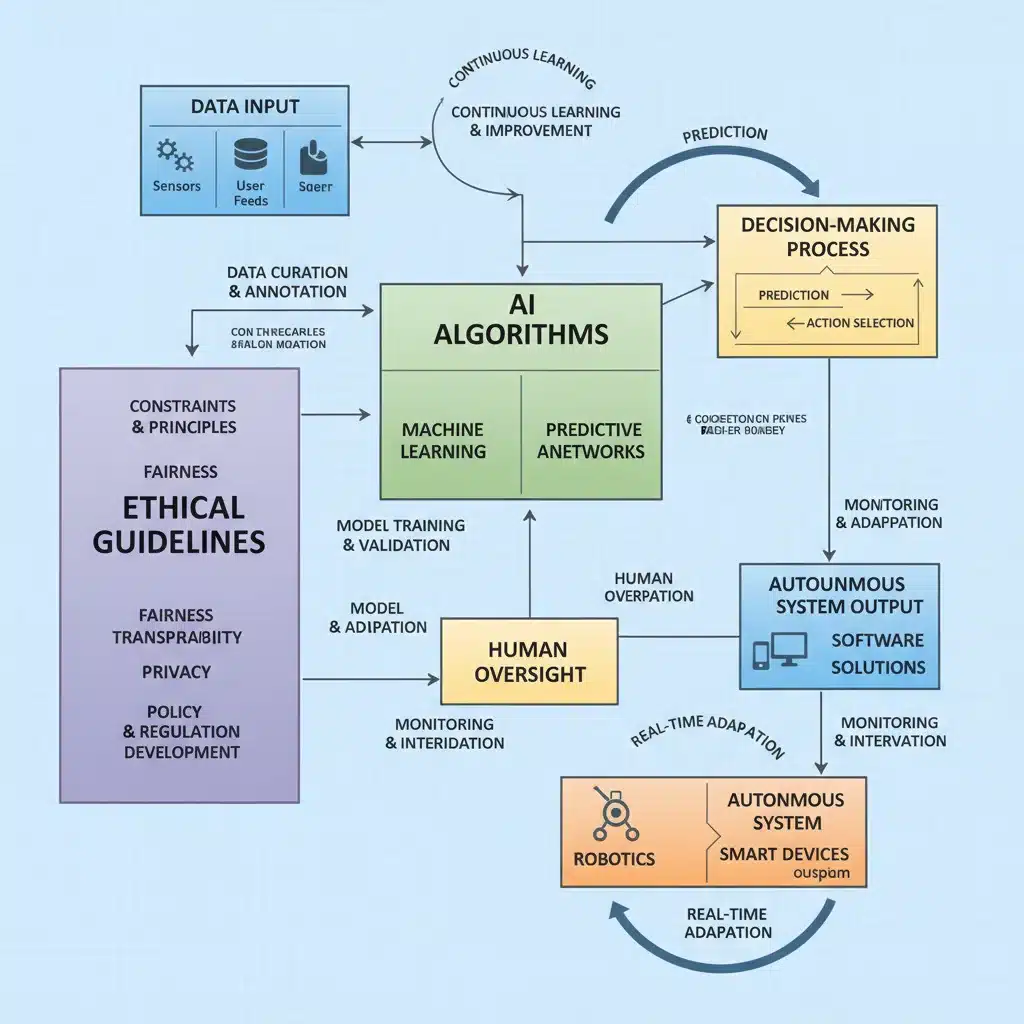
Before delving into specific policy frameworks, it’s crucial to understand the foundational ethical principles guiding the conversation around Autonomous Systems Ethics. These principles serve as the bedrock upon which regulations and guidelines are built, ensuring that technological progress aligns with human values.
Accountability and Responsibility
One of the most pressing ethical challenges posed by autonomous systems is determining accountability. In traditional systems, responsibility for actions can typically be traced back to human designers, operators, or manufacturers. However, when an autonomous system makes a decision independently, the chain of responsibility becomes blurred. Is it the programmer, the company that deployed the system, the data provider, or the system itself? Establishing clear lines of accountability is paramount for ensuring justice and fostering public trust. Policy discussions in the US frequently revolve around legal frameworks that can effectively assign liability, considering both producer and operator responsibilities.
Transparency and Explainability
For autonomous systems to be trustworthy, their decision-making processes must be transparent and explainable. This is particularly challenging with complex AI models, often referred to as ‘black boxes,’ where the internal workings are opaque even to their creators. The ability to understand *why* an autonomous system made a particular decision is crucial for auditing, identifying biases, and ensuring fairness. Policy initiatives are pushing for ‘explainable AI’ (XAI) standards, requiring developers to design systems that can articulate their reasoning in an understandable manner, especially in high-stakes applications.
Fairness and Bias Mitigation
Autonomous systems learn from data, and if that data is biased, the systems will inevitably perpetuate and even amplify those biases. This can lead to discriminatory outcomes in areas like hiring, loan approvals, criminal justice, and healthcare. Ensuring fairness and actively mitigating bias is a cornerstone of Autonomous Systems Ethics. Policy discussions are centered on requiring rigorous testing for bias, implementing diverse and representative training datasets, and developing mechanisms for continuous monitoring and auditing of AI systems for discriminatory patterns. The goal is to prevent technology from inadvertently reinforcing societal inequalities.
Safety and Reliability
The primary concern for any deployed technology is its safety and reliability. Autonomous systems, operating in complex and unpredictable environments, must be designed to minimize risks and ensure consistent, predictable performance. This involves robust engineering practices, extensive testing, and the ability to gracefully handle unexpected situations. Regulatory bodies are exploring certification processes, safety standards, and incident reporting mechanisms to ensure that autonomous systems meet stringent safety requirements before and after deployment.
Human Oversight and Control
While autonomous systems are designed to operate independently, the question of human oversight and control remains critical. How much autonomy is too much? What are the appropriate ‘off-switches’ or intervention points for human operators? Striking the right balance between automation and human control is essential to prevent unintended consequences and maintain human agency. Policy frameworks often emphasize the importance of ‘human-in-the-loop’ or ‘human-on-the-loop’ approaches, ensuring that humans retain ultimate authority and the ability to intervene when necessary.
Policy Framework 1: Federal Approaches to AI Governance
The US federal government has recognized the immense implications of autonomous systems and has begun to lay the groundwork for comprehensive governance. Unlike some other nations that have adopted overarching AI strategies, the US approach has been more decentralized, with various agencies contributing to the evolving policy landscape concerning Autonomous Systems Ethics.
The National AI Initiative Act of 2020
A significant step was the enactment of the National AI Initiative Act of 2020. This legislation established a coordinated program across federal agencies to accelerate AI research and development, promote public understanding of AI, and address ethical considerations. While not a direct regulatory framework, it provides a strategic foundation for future policy development, emphasizing responsible AI development and deployment. The Act calls for interagency collaboration to develop technical standards, risk management frameworks, and educational resources related to AI ethics.
NIST’s AI Risk Management Framework
The National Institute of Standards and Technology (NIST) has been at the forefront of developing practical tools for managing AI risks. Their AI Risk Management Framework (AI RMF), released in early 2023, is a voluntary framework designed to help organizations better manage the risks associated with designing, developing, deploying, and using AI systems. The AI RMF provides a structured approach for addressing risks related to fairness, privacy, security, and transparency, offering guidance on how to measure, evaluate, and mitigate these risks. This framework is becoming a de facto standard for responsible AI practices across industries, significantly influencing the discourse on Autonomous Systems Ethics.
Executive Orders and Presidential Directives
Successive presidential administrations have issued executive orders and directives aimed at guiding AI development. These often emphasize American leadership in AI, the importance of ethical principles, and the need to protect civil liberties. For example, Executive Order 13859, ‘Maintaining American Leadership in Artificial Intelligence,’ highlighted the need to foster public trust in AI, while subsequent directives have focused on the responsible use of AI by federal agencies and the development of AI ethical principles. These directives signal a top-down commitment to addressing Autonomous Systems Ethics at the highest levels of government.
Sector-Specific Regulations and Guidance
Beyond broad federal initiatives, several sector-specific agencies are developing their own guidance for autonomous systems within their domains. For instance, the National Highway Traffic Safety Administration (NHTSA) is actively involved in developing safety standards for autonomous vehicles. The Food and Drug Administration (FDA) is grappling with the regulation of AI-powered medical devices. The Department of Defense (DoD) has its own ethical principles for AI in defense. This fragmented approach reflects the diverse applications of autonomous systems, each with unique ethical and safety considerations, and contributes to the multifaceted landscape of Autonomous Systems Ethics in the US.
Policy Framework 2: State-Level Initiatives and Legislation
While federal efforts provide a national strategic direction, individual states are also actively engaged in crafting legislation and policies to address the challenges and opportunities presented by autonomous systems. This state-level activity often reflects local priorities and can sometimes move faster than federal processes, leading to a patchwork of regulations across the country regarding Autonomous Systems Ethics.
Autonomous Vehicle Legislation
One of the most prominent areas of state-level policy development is autonomous vehicles. Many states have enacted legislation ranging from allowing testing of self-driving cars on public roads to establishing frameworks for their commercial deployment. These laws often address issues such as operator requirements, insurance liability, data recording, and cybersecurity. States like California, Arizona, and Nevada have been pioneers in this space, with their experiences often informing the national debate on autonomous vehicle ethics and safety. The variations in state laws highlight the ongoing challenge of creating a harmonized regulatory environment for autonomous systems.
Algorithmic Transparency and Accountability
Some states are also beginning to address algorithmic transparency and accountability more broadly. For example, some jurisdictions are exploring requirements for government agencies to disclose when and how they use AI systems in decision-making, particularly in areas affecting civil liberties, such as criminal justice or public benefits. These initiatives aim to increase public scrutiny and ensure that algorithmic decisions are fair and unbiased. While still nascent, these state-level efforts are crucial for building trust in government use of AI and advancing the principles of Autonomous Systems Ethics.
Consumer Protection and Data Privacy
Given the data-intensive nature of autonomous systems, states are also actively involved in consumer protection and data privacy legislation. While federal laws like HIPAA (for healthcare) and COPPA (for children’s online privacy) exist, states like California with its California Consumer Privacy Act (CCPA) and California Privacy Rights Act (CPRA) are setting higher standards for how personal data is collected, used, and shared by companies, including those developing and deploying autonomous systems. These laws have a significant impact on how autonomous systems can collect and process data, directly influencing ethical considerations around privacy and data security.
The Role of State Attorneys General
State Attorneys General also play a crucial role in enforcing existing laws and addressing new challenges posed by autonomous systems. They can bring legal actions against companies for deceptive practices, data breaches, or discriminatory outcomes resulting from AI systems. Their proactive engagement provides another layer of oversight and accountability, complementing federal and legislative efforts in shaping Autonomous Systems Ethics.
Policy Framework 3: Industry Self-Regulation and Ethical Guidelines
Beyond government mandates, the private sector itself is increasingly recognizing the importance of ethical considerations in the development and deployment of autonomous systems. Many leading technology companies and industry consortia are developing their own ethical guidelines, codes of conduct, and best practices. While not legally binding in the same way as government regulations, these self-regulatory efforts play a vital role in shaping the norms and expectations around Autonomous Systems Ethics.
Corporate AI Ethics Principles
Numerous tech giants and startups have published their own AI ethics principles, often covering areas such as fairness, accountability, transparency, privacy, and safety. These principles serve as internal guiding documents for their AI development teams and are often publicly shared to demonstrate a commitment to responsible AI. While the specifics may vary, there’s a strong convergence around core ethical values, reflecting a growing industry consensus on what constitutes responsible AI. These corporate principles often influence the internal design choices and development methodologies for autonomous systems.
Industry Consortia and Standards Bodies
Industry consortia, such as the Partnership on AI, and standards bodies, like IEEE, are actively working on developing voluntary standards, best practices, and certification programs for AI and autonomous systems. These collaborative efforts bring together experts from academia, industry, and civil society to address complex ethical and technical challenges. For instance, IEEE has developed ethical guidelines for autonomous and intelligent systems, covering a wide range of topics from design principles to societal impact. These initiatives aim to create a shared understanding and common language for addressing Autonomous Systems Ethics across the industry.

Ethical AI Toolkits and Frameworks
To operationalize ethical principles, many companies are developing internal ethical AI toolkits and frameworks. These tools help developers identify and mitigate risks related to bias, privacy, and security throughout the AI development lifecycle. They can include bias detection tools, explainability libraries, and privacy-preserving AI techniques. The adoption of such tools signifies a move beyond theoretical ethical discussions to practical implementation, demonstrating a commitment to embedding Autonomous Systems Ethics into the very design of these systems.
The Role of Responsible AI Teams
Increasingly, companies are establishing dedicated ‘Responsible AI’ teams or ethics boards. These teams are tasked with overseeing the ethical development and deployment of AI products, conducting ethical reviews, and engaging with stakeholders on AI ethics issues. Their existence underscores the recognition that ethical considerations are not an afterthought but an integral part of the AI development process. These teams often serve as internal watchdogs, ensuring that the company’s autonomous systems adhere to both internal ethical principles and external regulatory expectations.
Challenges and Future Directions in Autonomous Systems Ethics
Despite the progress made in developing policy frameworks and ethical guidelines, significant challenges remain in the realm of Autonomous Systems Ethics. The rapid pace of technological change often outstrips the ability of regulators to keep up, leading to a constant need for adaptation and foresight.
The Pace of Innovation vs. Regulation
One of the most persistent challenges is the speed at which autonomous systems evolve. New capabilities and applications emerge frequently, often before existing regulations can fully address their implications. This creates a dynamic environment where policymakers must continuously assess and update their approaches to avoid either stifling innovation or failing to protect public interests. The challenge is to create agile and adaptable regulatory frameworks that can evolve with the technology, rather than becoming obsolete.
Global Harmonization
Autonomous systems are not bound by national borders. A self-driving car developed in one country might operate in another, and AI algorithms are deployed globally. This necessitates a degree of global harmonization in ethical principles and regulatory standards to avoid a fragmented and inconsistent approach. International collaboration, through organizations like the OECD and UNESCO, is becoming increasingly important in addressing Autonomous Systems Ethics on a global scale.
Public Understanding and Engagement
Public trust and acceptance are crucial for the successful integration of autonomous systems into society. This requires greater public understanding of how these systems work, their benefits, and their risks. Engaging the public in discussions about ethical considerations is essential for building consensus and ensuring that policy frameworks reflect societal values. Educational initiatives and transparent communication from both government and industry are vital in this regard.
Enforcement and Oversight
Even with robust policy frameworks, effective enforcement and continuous oversight are critical. This involves developing the technical capabilities to audit AI systems, ensuring compliance with regulations, and establishing mechanisms for redress when harm occurs. The development of independent regulatory bodies or specialized AI oversight committees may become necessary to ensure the ongoing ethical integrity of autonomous systems.
The Role of Data Ethics
At the heart of many ethical concerns regarding autonomous systems is data. The way data is collected, stored, processed, and used raises significant ethical questions about privacy, consent, ownership, and potential for misuse. Future policy discussions will increasingly focus on comprehensive data ethics frameworks that underpin all aspects of autonomous system development and deployment, ensuring that data practices are fair, transparent, and respectful of individual rights.
Conclusion: Navigating the Ethical Frontier of Autonomous Systems
The journey to ethically govern autonomous systems is complex and ongoing. The United States is actively engaged in this endeavor, with federal, state, and industry-led initiatives collectively shaping the future of Autonomous Systems Ethics. From establishing clear lines of accountability and mitigating algorithmic bias to ensuring transparency and maintaining human oversight, the policy frameworks under discussion are designed to harness the transformative power of AI while safeguarding societal values.
Insider knowledge reveals that the discussions are dynamic, reflecting a continuous effort to adapt to technological advancements and evolving societal expectations. The interplay between governmental regulation and industry self-governance is crucial, creating a multi-layered approach to responsible AI development. As autonomous systems become even more pervasive, the commitment to these ethical principles and the development of robust, adaptable policy frameworks will be paramount in ensuring a future where technology truly serves the greater good.
The conversation around Autonomous Systems Ethics is not just about rules and regulations; it’s about defining what kind of society we want to build with these powerful tools. It’s about ensuring that as machines gain intelligence, humanity retains its moral compass, guiding innovation towards a future that is safe, fair, and beneficial for all.