Augmented Reality Enterprise: 10% Revenue Growth by 2028

Augmented Reality (AR) in Enterprise: Driving 10% Revenue Growth for US Businesses Through Immersive Experiences by 2028
The business landscape is in a constant state of evolution, driven by technological advancements that redefine how companies operate, interact with customers, and generate revenue. Among these transformative technologies, Augmented Reality (AR) stands out as a powerful catalyst for change. Far from being a mere novelty, AR is rapidly maturing into a strategic imperative for enterprises, particularly in the United States. Projections indicate that AR is set to drive a substantial 10% revenue growth for US businesses by 2028, largely through the integration of immersive experiences across various sectors. This isn’t just about enhancing existing processes; it’s about unlocking entirely new avenues for value creation, efficiency, and customer engagement.
The promise of AR enterprise growth is not an overstatement. As businesses seek competitive advantages in an increasingly digital world, AR offers a unique blend of digital information overlaid onto the real world, providing contextually relevant insights and interactive capabilities that traditional methods cannot match. From optimizing manufacturing processes and streamlining logistics to revolutionizing retail and healthcare, AR’s impact is broad and profound. This comprehensive article will delve into the mechanisms by which AR achieves this growth, explore its diverse applications, and outline the strategic steps US businesses can take to harness its full potential and secure their share of this projected revenue uplift.
Understanding the Foundation: What is Augmented Reality in the Enterprise Context?
Before we dissect its growth potential, it’s crucial to define what Augmented Reality means within the enterprise. Unlike Virtual Reality (VR), which creates entirely simulated environments, AR overlays digital content—such as images, videos, 3D models, and interactive data—onto the real world, as viewed through a device like a smartphone, tablet, or specialized AR headset. This integration of the digital and physical realms allows for a more intuitive and contextually rich experience, enhancing human perception and interaction with their surroundings.
In an enterprise setting, AR transcends consumer-facing applications like games or social media filters. Here, it is a sophisticated tool designed to solve complex business challenges, improve operational efficiency, enhance training, and elevate customer experiences. The core value proposition of enterprise AR lies in its ability to provide real-time, on-demand information and interactive guidance, reducing errors, accelerating decision-making, and fostering a more engaged workforce and customer base. The push for AR enterprise growth is rooted in these tangible benefits.
The Technological Underpinnings of Enterprise AR
The robust capabilities of enterprise AR are built upon several key technological pillars:
- Hardware: This includes a range of devices from standard smartphones and tablets to purpose-built AR glasses and headsets (e.g., Microsoft HoloLens, Magic Leap). These devices are equipped with cameras, sensors (accelerometers, gyroscopes, depth sensors), and powerful processors to capture the real world and render digital overlays accurately.
- Software: AR software development kits (SDKs) like ARKit (Apple) and ARCore (Google) provide the frameworks for developers to create AR applications. These SDKs handle crucial tasks such as tracking the device’s position and orientation, recognizing surfaces, and rendering 3D objects realistically.
- Computer Vision: This field of artificial intelligence enables AR systems to interpret and understand visual information from the real world. It allows for object recognition, spatial mapping, and tracking, which are essential for seamlessly integrating digital content.
- Cloud Computing: Many advanced AR applications leverage cloud computing for processing complex data, storing large 3D models, and enabling collaborative AR experiences across multiple users and locations.
- 5G Connectivity: The advent of 5G networks is a game-changer for AR, providing the low latency and high bandwidth necessary for real-time, data-intensive AR applications, especially in industrial and remote assistance scenarios.
The synergy of these technologies creates a powerful platform for immersive experiences that are not only visually compelling but also highly functional and integrated into existing business workflows. This technological maturity is a primary driver behind the projected 10% revenue growth for US businesses through AR enterprise growth initiatives.
The Economic Imperative: How AR Drives 10% Revenue Growth by 2028
The forecast of 10% revenue growth for US businesses by 2028 due to AR is a significant indicator of its economic impact. This growth isn’t a singular phenomenon but rather a cumulative effect stemming from various operational efficiencies, new product offerings, and enhanced customer experiences. Let’s break down the key mechanisms through which AR contributes to this substantial revenue increase.
1. Enhanced Operational Efficiency and Cost Reduction
One of the most direct ways AR contributes to the bottom line is by improving operational efficiency and reducing costs. This translates into higher profit margins and, consequently, increased revenue. Consider these applications:
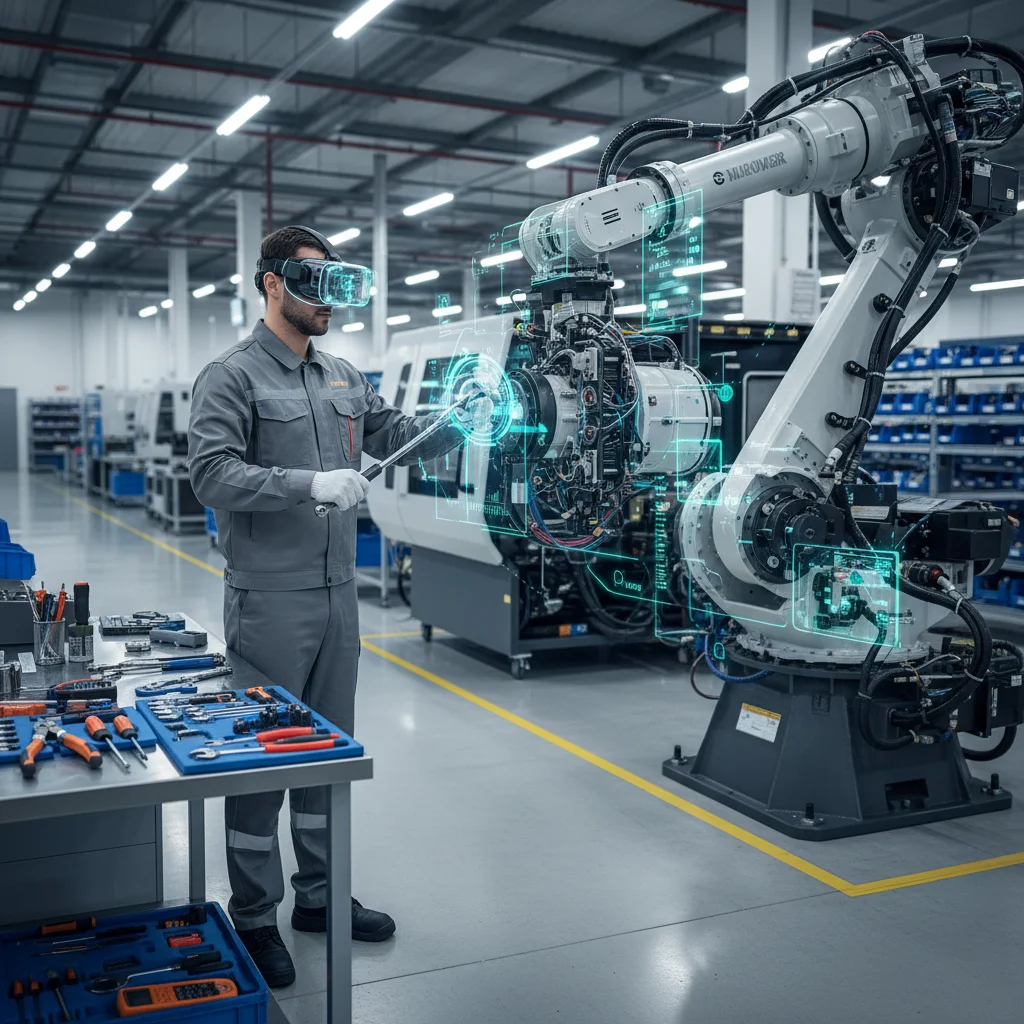
- Manufacturing and Assembly: AR can overlay step-by-step instructions directly onto machinery, guiding workers through complex assembly or maintenance tasks. This reduces training time, minimizes errors, and speeds up production cycles. For instance, Boeing reported a 30% improvement in wiring harness assembly time using AR.
- Logistics and Warehousing: AR-powered smart glasses can guide warehouse workers to the correct items for picking, optimizing routes and reducing picking errors. This leads to faster order fulfillment and lower operational costs.
- Field Service and Maintenance: Technicians can use AR to visualize schematics, receive remote expert assistance, or identify faulty components in real-time. This reduces downtime for equipment, improves first-time fix rates, and decreases travel costs for specialists.
By streamlining these critical processes, businesses can produce more with less, directly impacting their revenue potential and fueling AR enterprise growth.
2. Elevated Customer Experience and Engagement
In today’s competitive market, customer experience is paramount. AR offers innovative ways to engage customers, driving sales and fostering brand loyalty:
- Retail and E-commerce: AR allows customers to virtually try on clothes, visualize furniture in their homes before purchase, or explore product features in 3D. This reduces product returns, increases conversion rates, and creates a more engaging shopping journey. IKEA Place, for example, lets users place virtual furniture in their homes, significantly impacting purchase decisions.
- Marketing and Sales: AR can create immersive product demonstrations, allowing potential buyers to interact with digital twins of products in their environment. This can be particularly effective for complex machinery, automotive sales, or real estate, where showcasing the product’s scale and functionality is crucial.
- Training and Education: AR provides immersive training simulations, allowing employees or customers to learn complex procedures in a safe, interactive environment. This leads to better retention, reduced training costs, and a more skilled workforce or informed customer base.
These enhanced experiences not only attract new customers but also encourage repeat business, directly contributing to revenue growth.
3. New Product and Service Offerings
AR isn’t just about optimizing existing operations; it’s also a fertile ground for developing entirely new revenue streams:
- AR-as-a-Service (ARaaS): Companies can develop and offer specialized AR solutions to other businesses, creating a new service line. This could involve custom AR app development, AR content creation, or providing AR-powered remote assistance platforms.
- Immersive Product Configurators: For industries like automotive or custom manufacturing, AR allows customers to design and visualize highly customized products in real-time, leading to premium sales and unique offerings.
- Enhanced Data Visualization: AR can transform complex data sets into interactive 3D visualizations, offering enterprises new ways to analyze information and make strategic decisions, potentially leading to new consulting services or analytical tools.
The ability to innovate and diversify product portfolios through AR is a significant driver for the projected AR enterprise growth and the associated revenue increase.
Key Sectors Poised for Significant AR Enterprise Growth
While AR’s potential is widespread, certain sectors are particularly well-positioned to leverage its capabilities and contribute significantly to the 10% revenue growth target.
Manufacturing and Industrial Operations
The manufacturing sector is a prime candidate for AR adoption. From design and prototyping to assembly, quality control, and maintenance, AR streamlines processes and enhances worker capabilities. Imagine engineers collaborating on a 3D model of a new product, overlaying design changes in real-time. Maintenance technicians can receive visual guidance on complex repairs, reducing errors and downtime. This leads to faster production cycles, reduced waste, and improved product quality, all contributing to increased revenue and profitability.
Retail and E-commerce
The retail sector is experiencing a profound transformation with AR. The ability for customers to virtually ‘try before they buy’ is a game-changer. Whether it’s clothes, cosmetics, or home furnishings, AR provides a realistic preview, reducing buyer’s remorse and returns. This not only boosts sales conversion rates but also enhances customer satisfaction and brand loyalty. Furthermore, in-store AR experiences can guide shoppers, provide product information, and offer personalized recommendations, blurring the lines between online and offline shopping. This direct impact on sales figures is a critical component of AR enterprise growth.
Healthcare and Medical Training
In healthcare, AR is revolutionizing training, surgical precision, and patient care. Medical students can practice complex procedures on virtual organs, gaining invaluable experience without risk. Surgeons can use AR overlays during operations to visualize patient data, anatomical structures, and even guide instruments with greater accuracy. For patients, AR can provide interactive rehabilitation exercises or help visualize treatment plans. These applications lead to better patient outcomes, more efficient medical procedures, and advanced training methodologies, all of which contribute to the sector’s growth.
Architecture, Engineering, and Construction (AEC)
The AEC industry benefits immensely from AR’s visualization capabilities. Architects can walk through virtual models of buildings on a construction site, identifying potential issues before they become costly problems. Engineers can overlay digital blueprints onto physical structures for inspection and quality control. Construction workers can receive real-time instructions and safety warnings. This leads to fewer errors, faster project completion, and improved safety records, directly impacting project profitability and supporting AR enterprise growth in the sector.
Education and Training
Beyond specific industries, AR is transforming how we learn and train. From corporate onboarding to specialized skill development, AR offers immersive, hands-on learning experiences. Trainees can interact with virtual equipment, simulate dangerous scenarios safely, and receive immediate feedback. This leads to faster skill acquisition, higher knowledge retention, and ultimately, a more competent and productive workforce, which is a foundational element for sustained revenue growth.
Overcoming Challenges for Successful AR Enterprise Adoption
While the potential for AR enterprise growth is undeniable, successful adoption requires addressing several key challenges:
1. High Initial Investment
Developing custom AR applications and acquiring specialized hardware can involve significant upfront costs. Businesses need to conduct thorough ROI analyses to justify these investments and ensure they align with strategic objectives.
2. Technical Complexity and Integration
Integrating AR solutions with existing enterprise systems (ERP, CRM, PLM) can be complex. It requires skilled developers and a robust IT infrastructure. Data security and privacy also need careful consideration, especially when dealing with sensitive enterprise data.
3. User Acceptance and Training
Introducing new technology often faces resistance. Employees need adequate training and support to comfortably adopt AR tools. Designing intuitive user interfaces and providing clear benefits to end-users are crucial for successful deployment and to truly unlock the potential of AR enterprise growth.
4. Content Creation and Management
Creating high-quality 3D models and interactive AR content can be time-consuming and expensive. Businesses need efficient pipelines for content creation, management, and updates to keep AR experiences relevant and effective.
5. Scalability
Ensuring AR solutions can scale effectively across different departments, locations, and user bases is vital. This requires careful planning of infrastructure, software architecture, and support systems.
Strategic Implementation: A Roadmap for US Businesses to Achieve AR Enterprise Growth
To capitalize on the projected 10% revenue growth, US businesses need a clear strategy for AR implementation. Here’s a roadmap:
1. Identify Core Business Problems and Opportunities
Don’t implement AR for AR’s sake. Start by identifying specific pain points or opportunities where AR can deliver measurable value. Is it reducing errors in assembly? Enhancing customer engagement? Improving remote collaboration? A clear problem statement will guide your AR strategy and ensure it contributes to AR enterprise growth.
2. Start Small with Pilot Programs
Begin with small-scale pilot projects in a controlled environment. This allows businesses to test AR solutions, gather feedback, iterate, and demonstrate tangible ROI before a full-scale rollout. Learning from these initial deployments is crucial.
3. Partner with Experienced AR Providers
Leverage the expertise of specialized AR development companies or consultants. They can provide insights into best practices, help select the right hardware and software, and accelerate development, mitigating many of the technical challenges.
4. Invest in Training and Change Management
Successful AR adoption hinges on user acceptance. Provide comprehensive training programs for employees, highlighting the benefits and ease of use. A robust change management strategy will help overcome resistance and foster a culture of innovation.
5. Focus on Data and Analytics
Implement mechanisms to track the performance of your AR solutions. Collect data on efficiency gains, error reductions, customer engagement, and sales uplift. This data will validate your investment, inform future optimizations, and demonstrate the direct contribution to AR enterprise growth.
6. Ensure Scalability and Future-Proofing
Design AR solutions with scalability in mind. Choose flexible platforms and architectures that can accommodate future growth and evolving technological advancements. Consider how AR integrates with other emerging technologies like AI and IoT for even greater impact.

The Future of AR in US Enterprises: Beyond 2028
The projected 10% revenue growth by 2028 is just the beginning. As AR technology continues to mature, its integration into the enterprise will become even more seamless and pervasive. We can anticipate several key trends:
1. Convergence with AI and IoT
The true power of AR will be unleashed when it fully converges with Artificial Intelligence (AI) and the Internet of Things (IoT). Imagine AR systems that not only overlay information but also intelligently analyze real-world data from IoT sensors and provide predictive insights, guiding workers through proactive maintenance or optimizing real-time operational decisions. This synergy will further amplify AR enterprise growth.
2. Ubiquitous AR Devices
As AR hardware becomes more lightweight, comfortable, and affordable, dedicated AR glasses will become as common in the workplace as smartphones are today. This widespread adoption will unlock new possibilities for hands-free operation and constant, context-aware information access.
3. Metaverse for Enterprise
While the consumer metaverse is still evolving, the concept of an ‘enterprise metaverse’ is gaining traction. This would involve persistent, shared AR environments where geographically dispersed teams can collaborate on 3D models, conduct virtual training, or even manage complex supply chains in an immersive digital twin of their operations. This represents a significant leap for AR enterprise growth.
4. Hyper-Personalization
AR will enable hyper-personalized experiences for both employees and customers. For employees, this means AR tools that adapt to individual skill levels and preferences. For customers, it translates to highly tailored product recommendations and interactive experiences based on their specific needs and context.
Conclusion: Embracing the Immersive Future for Sustained Revenue Growth
The evidence is clear: Augmented Reality is no longer a futuristic concept but a tangible technology driving real business value. The projection of 10% revenue growth for US businesses by 2028 through immersive AR experiences underscores its transformative power. From optimizing operational efficiencies and reducing costs to revolutionizing customer engagement and creating new revenue streams, AR offers a multifaceted approach to business expansion.
For US enterprises looking to stay competitive and secure their future, embracing AR is not merely an option but a strategic imperative. By understanding its capabilities, identifying key opportunities, and implementing a thoughtful adoption strategy, businesses can unlock significant growth, foster innovation, and deliver unparalleled immersive experiences. The journey toward significant AR enterprise growth has already begun, and those who lead the charge will reap the greatest rewards in the evolving digital economy.
The time to invest in Augmented Reality is now. As the technology continues to evolve and become more accessible, its impact will only deepen, solidifying its role as a cornerstone of modern enterprise strategy and a powerful engine for sustained revenue growth across the United States.