Augmented Reality in Retail: 5 US Shopping Experiences for 2026
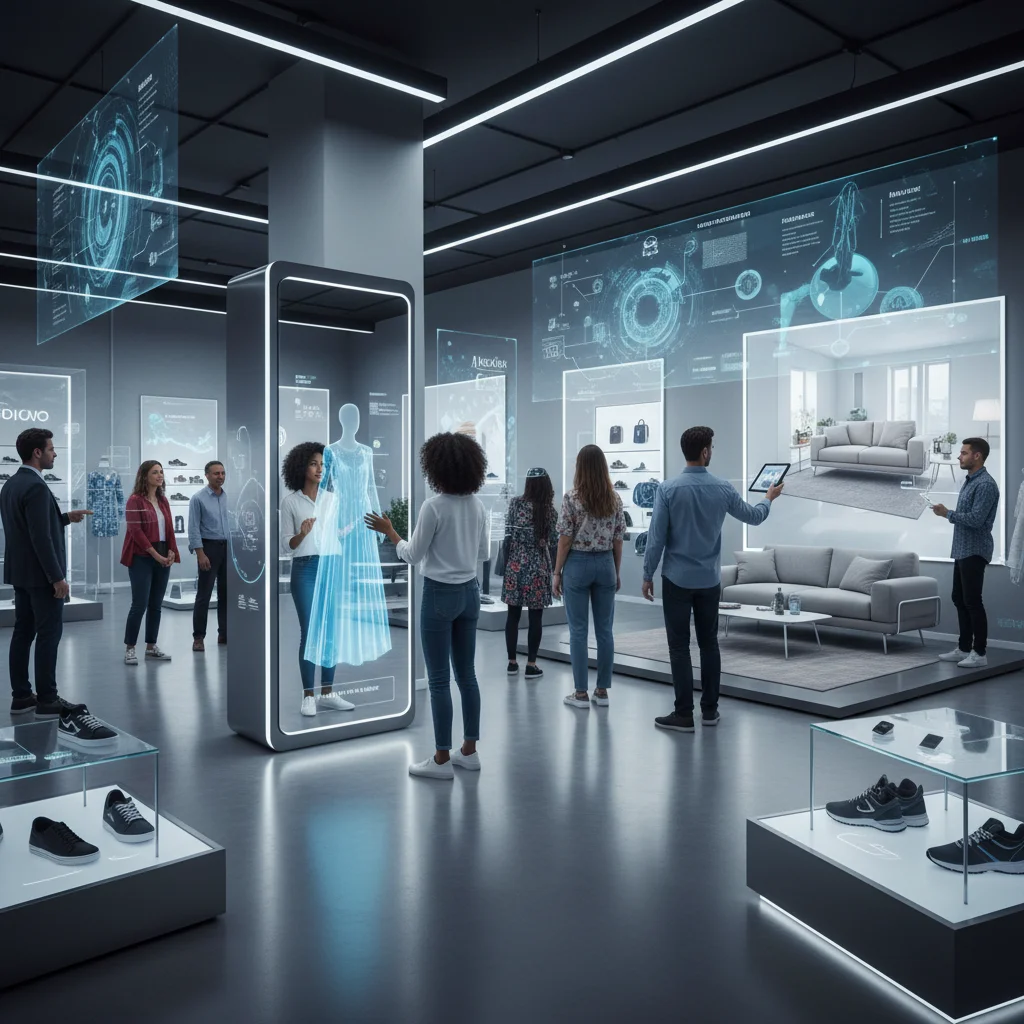
The retail landscape is in a constant state of flux, driven by technological advancements and evolving consumer expectations. Among the myriad innovations reshaping how we shop, Augmented Reality (AR) stands out as a transformative force. Far from being a mere gimmick, AR is proving to be a powerful tool that bridges the gap between the physical and digital worlds, offering immersive, personalized, and highly engaging shopping experiences. By 2026, the integration of AR into US retail will be not just common, but expected, fundamentally altering customer journeys and operational efficiencies. This article delves into five innovative AR retail experiences that are poised to dominate the US market, offering practical solutions for businesses looking to stay ahead.
The allure of AR lies in its ability to enhance reality, overlaying digital information onto our physical environment in real-time. For retailers, this translates into unprecedented opportunities to showcase products, assist customers, and create memorable interactions that drive sales and foster loyalty. From virtual try-ons to interactive store navigation, AR is crafting a new era of retail where convenience meets immersion.
The Rise of Augmented Reality in Retail: A Paradigm Shift
Before we dive into specific examples of AR retail experiences, it’s crucial to understand the underlying shift AR represents. Traditional retail often faces challenges such as product visualization limitations, the inconvenience of trying items, and the difficulty of personalizing the shopping journey at scale. E-commerce, while offering convenience, lacks the tactile and experiential aspects of in-store shopping, leading to high return rates, especially for items like clothing and furniture.
AR directly addresses these pain points. It allows customers to virtually interact with products, see how items fit or look in their own environment, and receive personalized recommendations, all without the friction of physical barriers. This not only improves customer satisfaction but also significantly reduces costs associated with returns and inventory management. The market for AR in retail is booming, with projections indicating substantial growth as more businesses recognize its tangible benefits.
The pandemic accelerated the adoption of digital solutions, pushing retailers to innovate faster. AR, previously seen as a futuristic concept, rapidly moved into the mainstream as businesses sought ways to offer engaging remote shopping experiences and enhance safety in physical stores. This momentum is set to continue, making AR retail experiences a cornerstone of future strategies.
For US retailers, investing in AR is no longer an option but a necessity to remain competitive. Consumers, particularly younger demographics, are increasingly tech-savvy and expect seamless, interactive experiences. Those who fail to adapt risk being left behind in a rapidly evolving market. The focus is on creating value, solving customer problems, and building emotional connections – all areas where AR excels.
1. Virtual Try-On Solutions: Redefining Apparel and Beauty Shopping
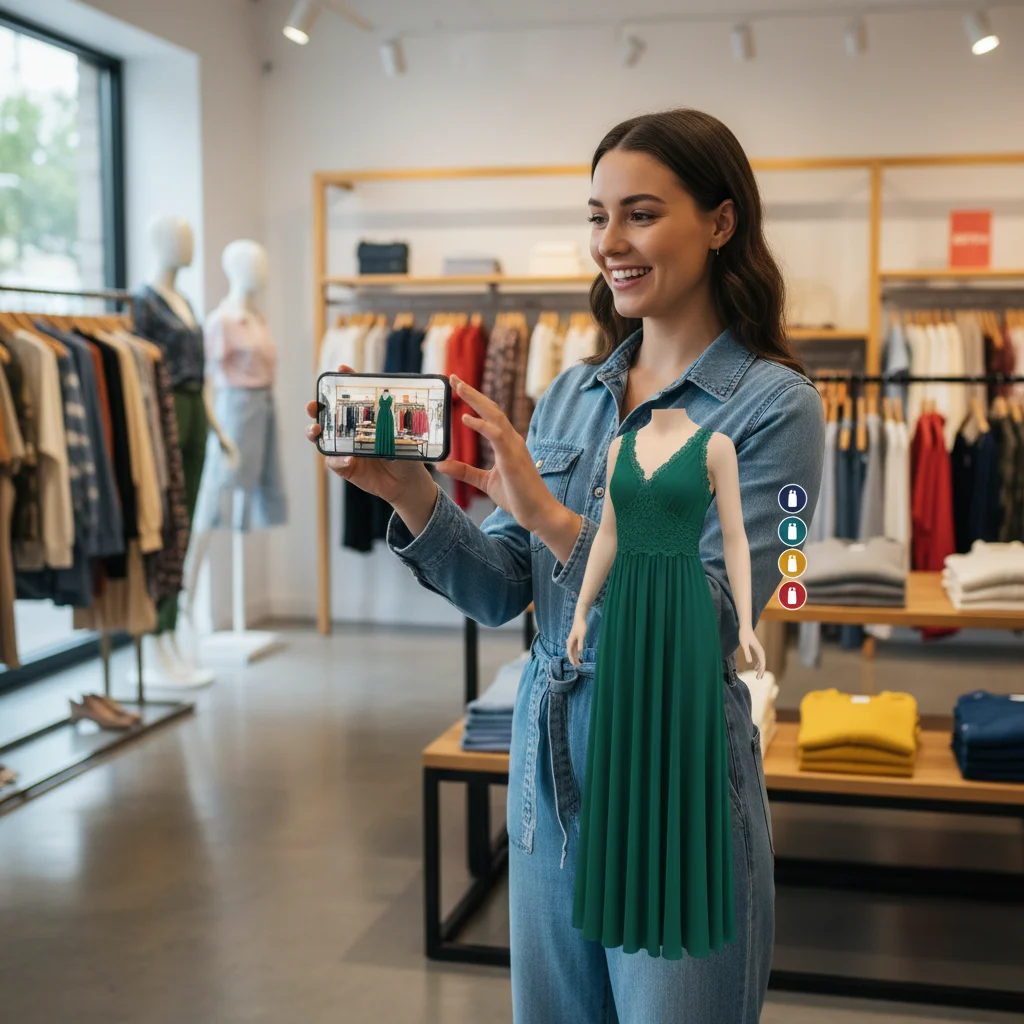
One of the most impactful AR retail experiences transforming the US market is the virtual try-on. This technology allows customers to virtually ‘wear’ clothing, accessories, or makeup using their smartphone cameras or in-store smart mirrors. The benefits are multifold: it eliminates the need for crowded fitting rooms, provides a hygienic alternative, and offers the convenience of trying on numerous items quickly.
How it Works:
- Apparel: AR apps use advanced body tracking and 3D rendering to overlay garments onto a customer’s live camera feed. This allows them to see how clothes fit, move, and look from different angles. Companies like Shopify and Snapchat have already integrated virtual try-on features, making it accessible for brands to implement.
- Eyewear: Warby Parker pioneered AR for virtual try-on of glasses, allowing customers to see how different frames suit their face shape from the comfort of their homes. This significantly reduces uncertainty and boosts online sales.
- Beauty: Sephora’s Virtual Artist app enables users to try on various shades of lipstick, eyeshadow, and other makeup products. This not only helps customers make informed purchasing decisions but also encourages experimentation with new looks, driving product discovery.
Impact and Future:
By 2026, virtual try-on will be a standard feature for most apparel and beauty retailers in the US. It will extend beyond basic visualization to include advanced fabric simulation, personalized sizing recommendations based on body scans, and even AI-powered style advice. This will lead to higher conversion rates, fewer returns, and a more satisfying shopping experience overall, solidifying its place as a leading AR retail experience.
The technology is constantly improving, with more realistic renderings and better tracking capabilities. This means that the virtual experience will become almost indistinguishable from the physical one, offering unprecedented levels of confidence to consumers. Retailers who invest in sophisticated virtual try-on solutions will gain a significant competitive edge, attracting a tech-savvy customer base that values convenience and personalization.
Moreover, virtual try-on can be integrated with social media platforms, allowing users to share their virtual looks with friends for feedback, further expanding brand reach and engagement. This social aspect adds another layer of interaction, turning shopping into a shared experience even when done remotely. The data collected from these interactions can also provide valuable insights into customer preferences and trends, informing future product development and marketing strategies.
2. Immersive Product Visualization: Transforming Home Goods and Automotive
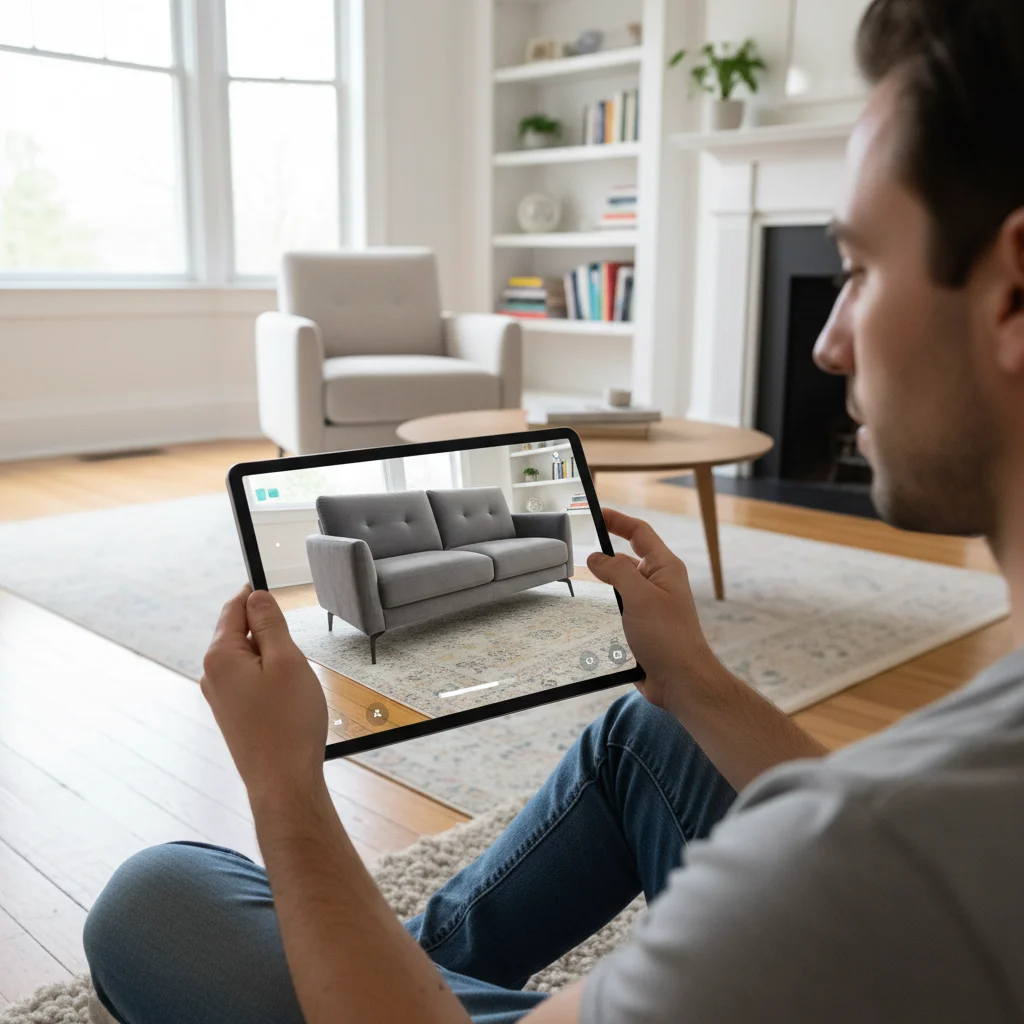
Visualizing how a product will look in a customer’s own space is a critical factor in purchasing decisions for large items like furniture, appliances, or even vehicles. Augmented Reality offers a groundbreaking solution, allowing shoppers to virtually place 3D models of products into their real-world environment using their smartphone or tablet cameras.
How it Works:
- Furniture and Home Decor: IKEA Place was one of the pioneers, enabling users to place virtual furniture in their homes, scaled accurately, to see if it fits and matches their existing decor. This eliminates guesswork and reduces buyer’s remorse, a common issue with online furniture purchases.
- Appliances: Retailers are developing AR apps that let customers visualize how a new refrigerator or washing machine would look in their kitchen or laundry room, ensuring it fits the aesthetic and physical dimensions.
- Automotive: Dealers are using AR to allow potential buyers to explore car models in their driveway, customize colors and features, and even peek inside the interior, all without visiting a showroom. This is particularly powerful for generating leads and offering a premium digital experience.
Impact and Future:
By 2026, immersive product visualization will be indispensable for categories where size, scale, and aesthetics are paramount. This AR retail experience will feature hyper-realistic rendering, advanced lighting simulation, and even interactive elements, allowing customers to open drawers, change materials, and experience products as if they were physically present. The reduction in returns and increased confidence in large purchases will be a significant win for both consumers and retailers.
The evolution of this technology will also include multi-user AR experiences, where several people can simultaneously view and interact with virtual products in a shared physical space, facilitating collaborative decision-making among family members or friends. This adds a social dimension to what is often a solitary online shopping experience.
Furthermore, integration with smart home systems could allow AR apps to understand the existing layout and style of a customer’s home, offering even more personalized and contextualized product recommendations. Imagine an AR app that not only shows you a new sofa but also suggests complementary rugs or lighting fixtures based on your current decor. This level of intelligent assistance will make these AR retail experiences incredibly valuable.
3. Interactive In-Store Navigation and Information: Enhancing the Physical Retail Journey
While AR is often associated with online shopping, its potential to revolutionize the physical store experience is equally profound. Interactive in-store navigation and information overlays transform a traditional shopping trip into an engaging, efficient, and personalized adventure.
How it Works:
- Wayfinding: AR-powered apps can guide shoppers directly to specific products within large stores, displaying virtual arrows and directions on their smartphone screens as they walk. This eliminates the frustration of searching for items and improves overall efficiency.
- Product Information Overlays: By pointing their phone at a product, customers can instantly access detailed information such as ingredients, reviews, pricing, complementary items, and even videos demonstrating usage. This rich digital layer enhances the physical product, providing more context than a simple label.
- Personalized Offers and Promotions: AR can deliver location-based, personalized offers directly to a customer’s device as they browse specific aisles or departments, making promotions more relevant and timely.
- Gamification: Retailers can integrate AR games or scavenger hunts within their stores, turning shopping into an entertaining experience. Customers might follow AR clues to find hidden discounts or unlock exclusive content.
Impact and Future:
By 2026, smart mirrors, AR-enabled kiosks, and personal AR apps will be common in US brick-and-mortar stores. This AR retail experience will not only streamline shopping but also provide valuable data on customer behavior within the store, allowing retailers to optimize layouts and product placements. The blend of digital convenience with the tangibility of physical shopping will create a hybrid experience that caters to all preferences.
The future will see AR glasses becoming more prevalent, offering hands-free navigation and information overlays directly in the wearer’s field of vision, making the experience even more seamless. Imagine walking into a store and instantly seeing ratings, reviews, and nutritional information for products appear as you look at them, all without pulling out your phone.
This also extends to staff assistance. Sales associates equipped with AR devices could quickly access inventory levels, customer purchase history, and product details, enabling them to provide more informed and personalized service. This empowers both customers and staff, making the physical store a more dynamic and intelligent environment.
4. Experiential Marketing and Brand Storytelling: Creating Memorable Connections
Beyond utility, AR excels at creating emotional connections and memorable brand experiences. It allows retailers to tell their brand story in innovative ways, turning passive viewing into active participation.
How it Works:
- Interactive Displays: AR can transform static storefronts or in-store displays into dynamic, interactive experiences. Customers might scan a QR code to unlock an AR animation that tells the story behind a product or brand, or interact with virtual characters.
- Product Launch Events: Brands can use AR to create spectacular virtual launch events, allowing customers to experience new products in a visually stunning and interactive way, regardless of their physical location.
- Educational Content: AR can be used to educate customers about product origins, sustainability practices, or complex features through engaging visualizations and interactive tutorials.
- Personalized Avatars and Digital Identities: Customers can create AR avatars that reflect their style, which can then be used across various virtual try-on experiences or even in metaverse retail environments.
Impact and Future:
By 2026, experiential marketing powered by AR will be a cornerstone of brand building in the US retail sector. This AR retail experience will move beyond novelty to deeply integrated storytelling, fostering stronger brand loyalty and driving word-of-mouth marketing. Campaigns will be more immersive, allowing consumers to step into virtual worlds or interact with digital elements that bring a brand’s narrative to life.
The integration of AR with emerging technologies like the metaverse will open up even richer possibilities for brand storytelling. Imagine attending a virtual fashion show where you can instantly try on the outfits displayed or exploring a brand’s history through an interactive AR museum. These experiences blur the lines between marketing, entertainment, and commerce.
Furthermore, AR can enable co-creation experiences, where customers can virtually design or customize products and see their creations come to life in AR before production. This level of involvement not only increases engagement but also gives customers a sense of ownership, making them more invested in the brand and its offerings.
5. AR-Enhanced Packaging and Smart Labels: Extending the Product Journey
The retail experience doesn’t end at the point of sale. Augmented Reality can extend the product journey beyond the store or e-commerce site, transforming product packaging into an interactive gateway for additional content and engagement.
How it Works:
- Interactive Packaging: By scanning a product’s packaging with a smartphone, customers can unlock AR content such as cooking instructions, recipe ideas, usage tutorials, nutritional facts, or even fun games and animations related to the brand.
- Supply Chain Transparency: AR can provide customers with detailed information about a product’s origin, manufacturing process, and sustainability credentials, simply by scanning a smart label. This builds trust and caters to the growing demand for ethical consumption.
- Post-Purchase Support: AR can offer interactive troubleshooting guides or assembly instructions for complex products, reducing the need for customer service calls and improving user satisfaction.
- Cross-Selling and Upselling: AR-enabled packaging can suggest complementary products or accessories, extending the sales opportunity even after the initial purchase.
Impact and Future:
By 2026, AR retail experiences will seamlessly integrate with product packaging, turning every item into a portal for rich digital content. This will not only enhance the unboxing experience but also provide ongoing value to the customer, fostering loyalty and encouraging repeat purchases. It represents a subtle yet powerful way to keep the brand conversation going long after the transaction.
The future will see advanced AR packaging that can detect product tampering, provide real-time freshness indicators for perishables, or even offer personalized messages based on individual customer profiles. This level of intelligence embedded in packaging will create a truly smart product ecosystem.
Furthermore, AR-enhanced labels could connect consumers directly to brand communities or loyalty programs, offering exclusive content, early access to new products, or personalized rewards. This transforms the humble product label into a dynamic tool for ongoing customer engagement and relationship building, making it a vital component of future AR retail experiences.
Implementing AR in Your Retail Strategy: Practical Considerations
For US retailers looking to adopt these innovative AR retail experiences, several practical considerations are crucial for successful implementation:
1. Define Clear Objectives:
Before investing in AR, clearly define what problems you aim to solve or what experiences you want to enhance. Is it reducing returns, increasing engagement, improving conversion rates, or boosting brand loyalty? Specific goals will guide your technology choices and measurement metrics.
2. Start Small and Scale Up:
You don’t need to implement all five experiences at once. Begin with a pilot project, perhaps a virtual try-on for a specific product line or interactive packaging for a new launch. Learn from the initial deployment, gather user feedback, and then gradually scale your AR initiatives.
3. Choose the Right Technology Partner:
Developing robust AR experiences requires specialized expertise. Partner with experienced AR development companies that understand the nuances of retail, 3D modeling, and user experience design. Look for platforms that offer scalability and integration with your existing e-commerce and CRM systems.
4. Focus on User Experience (UX):
An AR experience, no matter how technologically advanced, will fail if it’s not intuitive and easy to use. Ensure the interface is clean, the instructions are clear, and the performance is smooth. A seamless UX is paramount for adoption and enjoyment of any AR retail experience.
5. Promote and Educate:
Customers may not immediately understand the benefits of AR. Actively promote your AR features through marketing campaigns, in-store signage, and social media. Provide clear tutorials and demonstrations to educate users on how to access and utilize these new experiences.
6. Measure and Iterate:
Track key performance indicators (KPIs) such as engagement rates, conversion rates, time spent interacting, and customer feedback. Use this data to continually refine and improve your AR offerings. The retail landscape is dynamic, and your AR strategy should be too.
7. Data Privacy and Security:
As AR experiences increasingly collect user data (e.g., body scans, environmental mapping), ensure robust data privacy and security measures are in place. Transparency with customers about data usage is essential for building trust.
Conclusion: The Augmented Future of US Retail
The future of US retail is undeniably augmented. By 2026, the five innovative AR retail experiences discussed – virtual try-on, immersive product visualization, interactive in-store navigation, experiential marketing, and AR-enhanced packaging – will be standard elements of the shopping journey. These technologies are not just about novelty; they are about solving real customer pain points, enhancing convenience, fostering deeper engagement, and ultimately driving sales and brand loyalty.
Retailers who embrace AR now, understanding its potential to create seamless, personalized, and memorable interactions, will be the leaders of tomorrow. The integration of AR represents a strategic investment in customer satisfaction and operational efficiency, promising a vibrant, interactive, and highly profitable future for the retail sector. The time to augment your retail strategy is now, ensuring your business is ready for the immersive shopping revolution.