Metaverse Future: US Companies Shaping Digital Realities by 2027
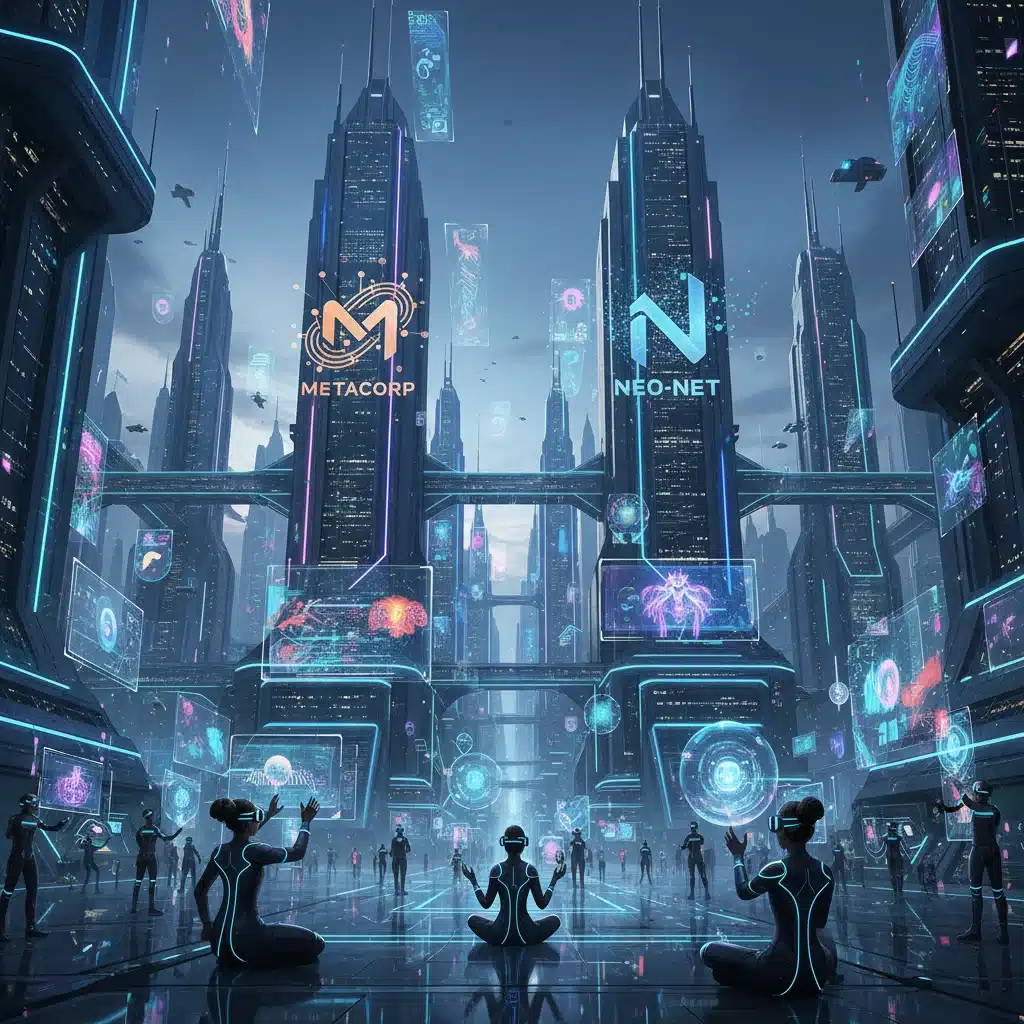
The concept of the metaverse, once confined to science fiction novels and speculative films, is rapidly transforming into a tangible reality. As we approach 2027, the groundwork being laid by major US companies is not just building virtual worlds; it’s redefining human interaction, commerce, and entertainment. This article delves into the strategies, innovations, and projected impact of two pivotal US companies at the forefront of shaping these digital realities. Understanding their approaches is crucial to grasping the future landscape of our increasingly interconnected lives.
The Genesis of the Metaverse: A New Frontier for Innovation
The term ‘metaverse’ itself, coined by Neal Stephenson in his 1992 novel ‘Snow Crash,’ describes a persistent, shared, 3D virtual space. Today, it encompasses a much broader vision: a convergence of virtual reality (VR), augmented reality (AR), artificial intelligence (AI), and blockchain technology, creating an immersive digital ecosystem. This isn’t merely about gaming; it’s about persistent digital identities, virtual economies, digital ownership, and new forms of social connection and collaboration. The race to build this next iteration of the internet is intense, with significant investment and strategic maneuvering from tech giants.
The allure of the metaverse lies in its promise of an enhanced, more engaging digital experience. Imagine attending a concert with friends from across the globe, collaborating on a project in a virtual office, or shopping for digital fashion that you can wear across multiple platforms – all seamlessly and with a profound sense of presence. This vision is what drives the massive investments and strategic pivots we are witnessing from companies eager to stake their claim in this nascent but rapidly expanding domain. The financial implications are staggering, with market projections estimating the metaverse economy could be worth trillions of dollars in the coming decade. This potential has fueled a fierce competition among tech behemoths, each vying for a dominant position in this new digital frontier.
Early iterations of metaverse-like experiences have existed for years, from online multiplayer games like ‘Second Life’ to virtual world platforms. However, the current push, largely spearheaded by Metaverse US Companies, aims for a more interoperable, persistent, and economically robust digital universe. This ambition requires not only groundbreaking technological advancements but also the establishment of new protocols, standards, and ethical frameworks. The challenges are immense, ranging from hardware limitations and network latency to issues of digital identity, privacy, and governance. Yet, the potential rewards are equally monumental, promising to unlock unprecedented opportunities for creativity, commerce, and human connection.
Company A: Pioneering Immersive Social Experiences
One of the most prominent players aggressively pursuing the metaverse vision is a company widely recognized for its social media dominance. Let’s refer to them as ‘Company A’ for the purpose of this discussion. Their pivot towards the metaverse is not just a strategic shift; it’s a fundamental reorientation of their entire corporate identity and future direction. Their vision for the metaverse is deeply rooted in creating immersive social experiences, leveraging their vast existing user base and expertise in connecting people.
Strategic Pillars and Technological Advancements
Company A’s strategy revolves around several key pillars. Firstly, hardware development is paramount. They are investing heavily in advanced VR and AR headsets, aiming to make these devices more accessible, comfortable, and powerful. Their current VR headsets are already leading the market in terms of adoption, and future iterations promise even greater immersion, lighter designs, and more sophisticated tracking capabilities. This focus on hardware is critical, as the metaverse experience is inherently tied to the quality of the interface.
Secondly, they are building a robust software ecosystem. This includes developing their own metaverse platforms, complete with tools for content creation, social interaction, and virtual events. They are fostering a developer community, providing SDKs and resources to encourage the creation of diverse experiences within their metaverse. This open approach, while still within their ecosystem, is designed to accelerate adoption and content richness. Their efforts extend to creating realistic avatars, sophisticated physics engines, and seamless integration with their existing social platforms, aiming to bridge the gap between their current offerings and the future of digital interaction.
Thirdly, Company A is heavily focused on the economic aspect of the metaverse. They are exploring digital currencies, NFTs (Non-Fungible Tokens), and virtual marketplaces to enable creators to monetize their work and users to own digital assets. This economic infrastructure is vital for a thriving metaverse, allowing for a self-sustaining ecosystem where value can be created, exchanged, and stored. The goal is to empower a new generation of digital entrepreneurs and creators, fostering an economy built on virtual goods and services. By 2027, we can expect to see significant advancements in these areas, making virtual economies a more integrated part of daily digital life.
Challenges and Opportunities for Company A
Despite their significant head start and investment, Company A faces considerable challenges. Public perception, privacy concerns, and regulatory scrutiny are major hurdles. The very nature of a persistent, immersive digital world raises new questions about data ownership, content moderation, and ethical behavior. Company A is actively working on solutions for these issues, but the path is complex and requires ongoing dialogue with policymakers and users.
However, the opportunities are immense. By establishing an early lead in hardware and platform development, Company A is positioning itself to become a foundational layer of the metaverse. Their ability to onboard millions of existing users into new virtual experiences gives them a distinct advantage. Furthermore, their continuous innovation in AI and haptic feedback technologies promises to make their metaverse offerings incredibly realistic and engaging. The integration of AI will personalize experiences, make virtual assistants more intuitive, and even enable more dynamic and responsive virtual environments. Haptic feedback, meanwhile, will add a new dimension of realism, allowing users to ‘feel’ virtual objects and interactions, further blurring the lines between the physical and digital worlds.
By 2027, Company A aims to have a well-established metaverse platform that serves as a primary hub for social interaction, entertainment, and professional collaboration. Their success will largely depend on their ability to create an open, interoperable, and appealing environment that attracts both users and developers, while also addressing the complex ethical and societal implications of such a powerful technology. The company’s long-term vision is not just to create a product, but to build an entire digital civilization, complete with its own rules, economies, and social norms.
Company B: Revolutionizing Enterprise and Digital Ownership
Another major player, let’s call them ‘Company B,’ is approaching the metaverse from a slightly different, yet equally impactful, angle. Known for its enterprise software, cloud computing, and gaming innovations, Company B is focusing on creating a metaverse that empowers businesses, developers, and professional users, alongside a strong emphasis on digital ownership and creation tools.

Enterprise-Grade Metaverse Solutions
Company B’s strategy is deeply intertwined with its existing strengths in enterprise solutions. They envision a metaverse where businesses can conduct virtual meetings, design products collaboratively in 3D, train employees in realistic simulations, and even create digital twins of physical assets for predictive maintenance and operational optimization. Their cloud infrastructure provides the scalable backbone necessary to support these complex, data-intensive metaverse applications. This focus on enterprise solutions differentiates them from Company A’s more consumer-centric approach, although there is certainly overlap and potential for integration.
A key aspect of Company B’s metaverse initiative is its focus on developer tools and platforms. They are building powerful engines and frameworks that allow creators to build high-fidelity virtual worlds and experiences. This includes advanced 3D rendering capabilities, AI-powered content generation tools, and seamless integration with existing design software. By empowering developers, Company B aims to foster a rich ecosystem of diverse metaverse applications, catering to a wide range of industries and use cases. Their commitment to open standards and interoperability is also a significant differentiator, aiming to create a metaverse that is not walled off but rather connected to a broader digital landscape.
Furthermore, Company B is a strong proponent of digital ownership through blockchain technology and NFTs. They are exploring ways to integrate these technologies into their metaverse offerings, allowing users and businesses to truly own their digital assets, from virtual real estate to unique digital art and intellectual property. This focus on verifiable ownership and secure transactions is crucial for building trust and enabling a robust digital economy within the metaverse. By 2027, we anticipate that Company B will have established several foundational enterprise metaverse solutions, transforming how businesses operate and innovate in the digital realm.
Impact on Gaming and Creative Industries
Beyond enterprise, Company B’s extensive experience in gaming is a significant asset. They are leveraging their popular gaming franchises and platforms to introduce metaverse elements, creating interconnected virtual worlds where players can move seamlessly between different experiences. This approach naturally appeals to a massive existing user base and provides a fertile ground for experimenting with new metaverse mechanics, social features, and economic models.
Their focus on creative tools also positions them as a leader in empowering artists, designers, and developers to build the next generation of digital content. By providing powerful, accessible tools, Company B is democratizing content creation within the metaverse, allowing a broader range of individuals and small studios to contribute to its growth. This emphasis on user-generated content and creative freedom is a cornerstone of their vision, aiming to create a metaverse that is truly shaped by its inhabitants. The integration of advanced AI tools will further accelerate this, allowing for more efficient content creation and personalized experiences within their metaverse platforms.
The challenges for Company B include integrating their diverse product portfolio into a cohesive metaverse strategy and convincing businesses of the tangible ROI of adopting these new digital realities. However, their strong relationships with enterprises and their robust technological infrastructure provide a solid foundation for overcoming these hurdles. Their commitment to security, scalability, and interoperability will be key to their success in building a trusted and valuable metaverse for professional use. The company’s long-term vision is to create a ‘meta-operating system’ that underpins various metaverse experiences, providing a stable and secure foundation for innovation.
The Intersection and Divergence: A Future of Interoperability?
While Company A and Company B have distinct primary focuses – social immersion versus enterprise and creation – their paths are not entirely separate. Both recognize the importance of interoperability and open standards for the metaverse to truly flourish. A truly expansive and valuable metaverse cannot exist as a collection of isolated digital islands. The ability for users to port their avatars, digital assets, and identities across different virtual worlds and platforms is a crucial aspiration.
By 2027, we might see the emergence of foundational protocols that enable this interoperability, perhaps spearheaded by industry consortiums rather than single companies. Both Company A and Company B are active participants in discussions around these standards, understanding that a fragmented metaverse ultimately limits its potential. Their differing strengths, however, suggest that the metaverse will likely evolve into a multifaceted ecosystem, with various dominant players excelling in different aspects, from consumer entertainment to industrial applications.
The convergence of their efforts also highlights the multi-layered nature of the metaverse. Company A might provide the social fabric and consumer-facing experiences, while Company B could offer the underlying infrastructure, development tools, and enterprise solutions. This symbiotic relationship could ultimately lead to a more robust and diverse metaverse than either company could build alone. The competition is healthy, pushing both companies to innovate faster and more effectively, ultimately benefiting the end-user.

The Broader Impact: Reshaping Society by 2027
The advancements driven by these Metaverse US Companies will have profound implications across various sectors by 2027. Education could be revolutionized through immersive learning environments, allowing students to explore historical events or complex scientific concepts in 3D. Healthcare could see virtual consultations, surgical training simulations, and even remote therapy sessions conducted within the metaverse. Retail will likely embrace virtual storefronts and personalized shopping experiences, allowing consumers to try on digital clothing or visualize furniture in their homes before purchase.
The job market will also undergo significant transformation. New roles will emerge, from metaverse architects and digital fashion designers to virtual event planners and NFT curators. Existing professions will require new skills, adapting to tools and workflows within virtual environments. This shift will necessitate new educational programs and training initiatives to prepare the workforce for the demands of the metaverse economy. The digital divide, however, remains a concern, as access to high-speed internet and advanced hardware will be crucial for participation.
Ethical considerations will continue to be at the forefront. Questions about digital ownership, intellectual property rights, data privacy, and the psychological impact of extended immersion in virtual worlds will require careful consideration and robust regulatory frameworks. Both Company A and Company B, alongside other industry leaders, will play a critical role in shaping these discussions and implementing responsible practices. The development of the metaverse is not just a technological challenge but a societal one, requiring a balanced approach to innovation and ethical governance.
The Role of Artificial Intelligence and Blockchain
Artificial intelligence (AI) is an indispensable component of the evolving metaverse. AI will power intelligent virtual assistants, generate dynamic content, personalize user experiences, and even create sophisticated non-player characters (NPCs) that enhance immersion. Imagine AI-driven storefronts that intuitively understand your preferences or virtual companions that learn and adapt to your needs. Both Company A and Company B are heavily investing in AI research and integration, recognizing its potential to make the metaverse more intelligent, responsive, and engaging. AI will be crucial for managing the sheer complexity and scale of persistent virtual worlds, automating tasks, and providing real-time moderation and security.
Blockchain technology, on the other hand, provides the foundational layer for digital ownership, verifiable scarcity, and secure transactions. NFTs, built on blockchain, enable true ownership of digital assets, from virtual land and collectibles to unique avatars and in-game items. This capability is vital for establishing a robust and trustworthy virtual economy. Decentralized autonomous organizations (DAOs) could also play a role in metaverse governance, allowing communities to collectively make decisions about virtual spaces and assets. The combination of AI and blockchain creates a powerful synergy, enabling a metaverse that is both intelligent and secure, dynamic and decentralized.
Conclusion: A Glimpse into 2027 and Beyond
The journey towards a fully realized metaverse is a marathon, not a sprint. However, the rapid advancements and strategic investments by Metaverse US Companies like Company A and Company B are accelerating its development at an unprecedented pace. By 2027, we can anticipate significant milestones: more affordable and powerful VR/AR hardware, richer and more interconnected virtual worlds, and a burgeoning digital economy fueled by NFTs and virtual goods. These companies are not just building technologies; they are constructing the very fabric of our future digital lives.
Their distinct yet complementary approaches suggest a metaverse that will be diverse and multifaceted, catering to both consumer entertainment and critical enterprise functions. The challenges of interoperability, ethics, and regulation remain, but the momentum is undeniable. As these tech giants continue to push the boundaries of what’s possible, the metaverse will undoubtedly reshape how we work, play, learn, and connect, ushering in an era where digital realities become an integral and indispensable part of our everyday existence. The next few years will be critical in determining the ultimate shape and impact of this transformative technology, and the innovation from these leading US companies will be at its core.