AI in Education: Reshaping Personalized Learning for 15 Million US Students
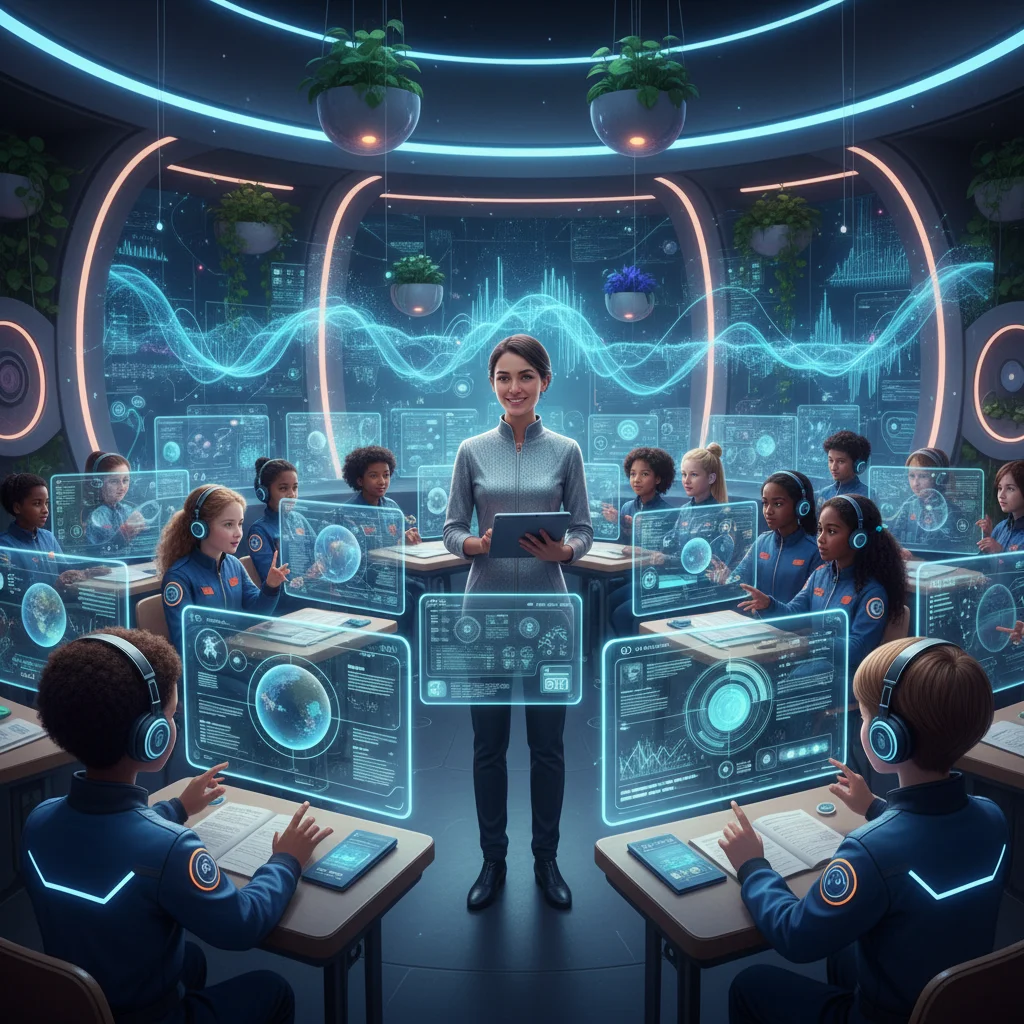
The landscape of education is undergoing a profound transformation, driven by the relentless advancement of artificial intelligence (AI). In the United States, with a student population exceeding 50 million, the promise of AI personalized education is particularly compelling for the more than 15 million students currently enrolled in K-12 public schools alone, many of whom could benefit immensely from tailored learning experiences. This isn’t merely about integrating technology; it’s about fundamentally reshaping how students learn, how teachers teach, and how educational outcomes are achieved. The vision is clear: to move beyond the one-size-fits-all model and usher in an era where every student receives an education perfectly attuned to their individual pace, style, and needs.
The concept of personalized learning has long been a pedagogical ideal, but its practical implementation at scale has always been hampered by logistic and resource constraints. Teachers, often overwhelmed by large class sizes and diverse learning requirements, find it challenging to cater to each student’s unique profile. This is where AI steps in as a game-changer. AI technologies offer the tools to analyze vast amounts of student data, identify patterns, predict learning trajectories, and deliver customized content and support with unprecedented efficiency and precision. The potential impact on academic achievement, student engagement, and equitable access to quality education is nothing short of revolutionary.
This article delves into the transformative power of AI in creating truly personalized learning experiences for US students. We will explore the practical applications of AI, from adaptive learning platforms and intelligent tutoring systems to data-driven insights for educators. We will also examine the tangible benefits, such as improved student outcomes, enhanced engagement, and greater accessibility. Furthermore, we will address the critical challenges that must be navigated, including ethical considerations, data privacy, and the need for robust teacher training. By understanding the current state and future potential of AI personalized education, we can better prepare for a future where every student has the opportunity to unlock their full potential.
The Promise of AI Personalized Education: Beyond the Hype
For decades, educators have dreamed of a system where learning is tailored to each student. AI is now making this dream a reality. At its core, AI personalized education leverages sophisticated algorithms and machine learning to understand individual student needs and preferences. It’s not about replacing teachers, but empowering them with data and tools to be more effective and responsive.
Adaptive Learning Platforms: The Foundation of Personalization
Perhaps the most prominent application of AI in personalized learning is adaptive learning platforms. These systems continuously assess a student’s knowledge, skills, and learning pace. Based on this assessment, they dynamically adjust the curriculum, presenting content that is neither too easy nor too difficult, but optimally challenging. For instance, if a student struggles with a particular math concept, the platform can provide additional exercises, different explanations, or even recommend supplementary resources until mastery is achieved. Conversely, if a student quickly grasps a concept, they can be accelerated to more advanced material, preventing boredom and fostering continuous growth.
Companies like Knewton, DreamBox Learning, and ALEKS have pioneered these adaptive technologies, demonstrating significant improvements in student performance and engagement. These platforms collect vast amounts of data on student interactions, including response times, correct/incorrect answers, and even how long a student spends on a particular problem. This data feeds into AI algorithms that refine the learning path in real-time, creating a truly dynamic educational experience. The sheer scale of data processed allows for insights that no human teacher could possibly derive manually, providing a granular understanding of each student’s cognitive processes and learning patterns.
Intelligent Tutoring Systems: One-on-One Support at Scale
Intelligent Tutoring Systems (ITS) take personalization a step further by mimicking the interaction of a human tutor. These AI-powered systems can provide immediate, individualized feedback, answer questions, and even engage in Socratic dialogues to guide students toward deeper understanding. Imagine a student working on a complex physics problem; an ITS could identify their specific misconception, offer a hint, or re-explain the underlying principles in a different way, just as a human tutor would. Some advanced ITS can even detect emotional states, adjusting their approach if a student appears frustrated or disengaged.
The advantage of ITS lies in their scalability. While one-on-one human tutoring is often prohibitively expensive and inaccessible for many, AI-powered tutors can provide similar benefits to millions of students simultaneously. This democratizes access to high-quality, individualized instruction, which is particularly crucial in bridging achievement gaps in underserved communities. The consistent, non-judgmental nature of an AI tutor can also be beneficial for students who might be hesitant to ask questions in a traditional classroom setting.
AI-Powered Content Curation and Recommendation
The digital age has brought an explosion of educational content, from videos and interactive simulations to articles and virtual labs. Navigating this vast ocean of information can be daunting for both students and teachers. AI-powered content curation systems can act as intelligent guides, recommending resources that are most relevant to a student’s current learning goals, interests, and preferred learning style. By analyzing a student’s past interactions and performance, these systems can suggest specific videos, articles, or even entire courses that are most likely to enhance their understanding and engagement.
This capability extends beyond formal curriculum. AI can recommend extracurricular learning opportunities, projects, or even career paths based on a student’s demonstrated aptitudes and emerging interests. This proactive personalization helps students discover passions and develop skills that might not be explicitly covered in the standard curriculum, fostering a more holistic and self-directed learning journey. The ability to connect students with highly relevant and engaging content is a cornerstone of effective AI personalized education.
Practical Applications in US K-12 Education
The integration of AI into US K-12 education is not a distant future but a present reality, impacting millions of students. Let’s look at some practical ways AI personalized education is being implemented:
Differentiated Instruction for Diverse Learners
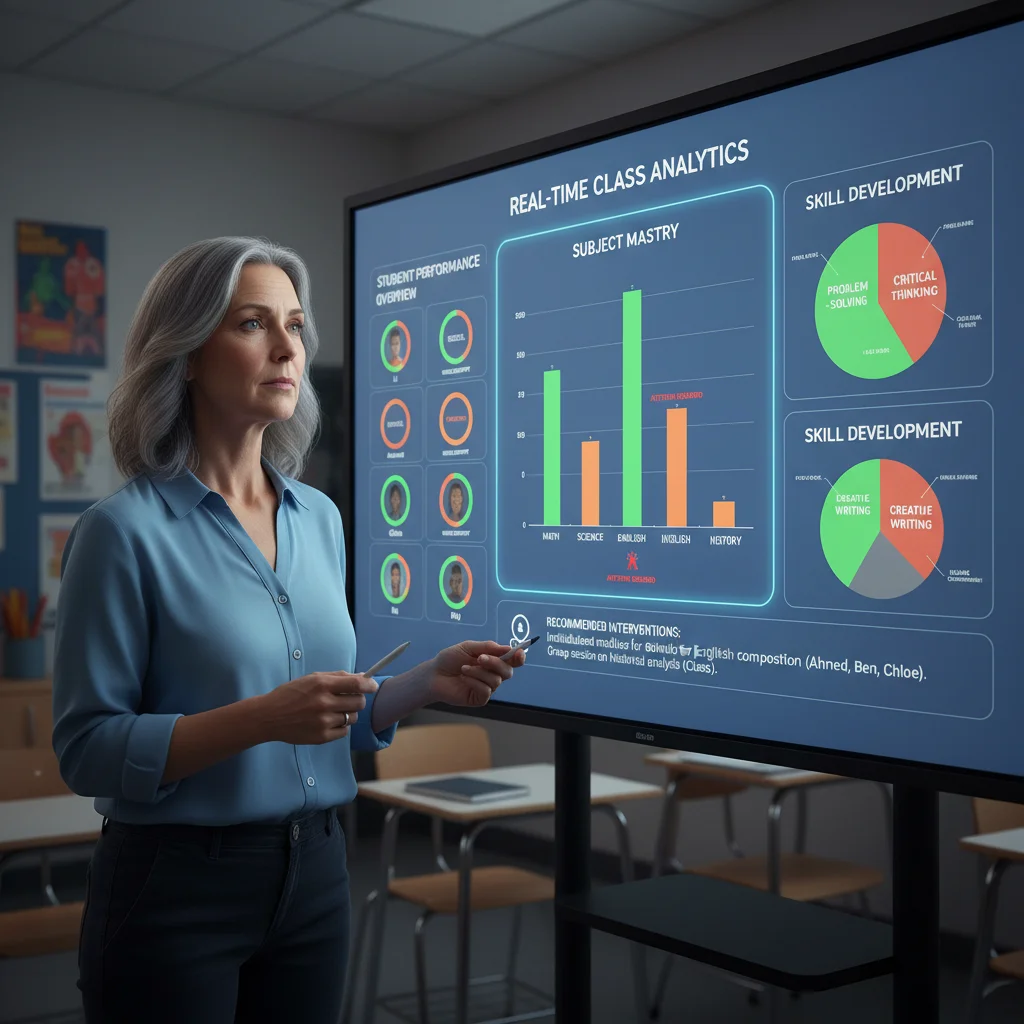
One of the biggest challenges for teachers is addressing the wide range of abilities and learning styles within a single classroom. AI tools provide teachers with real-time data on student progress, allowing them to differentiate instruction more effectively. AI can group students based on specific needs, identify those who require extra support, or challenge advanced learners with more complex tasks. This data-driven approach moves beyond anecdotal observations, providing concrete evidence to inform instructional decisions.
For example, an AI platform might flag several students who consistently struggle with fractions, enabling the teacher to pull them into a small group for targeted intervention. Simultaneously, it might identify students who have already mastered the concept, allowing the teacher to assign them enrichment activities or peer-tutoring roles. This dynamic differentiation ensures that no student is left behind or held back.
Automated Grading and Feedback: Freeing Up Teacher Time
Teachers spend a significant portion of their time on administrative tasks, including grading. AI can automate the grading of objective assessments, essays (with increasing sophistication), and even provide preliminary feedback on written assignments. This frees up valuable teacher time, allowing them to focus on higher-level instructional tasks, such as one-on-one student conferences, lesson planning, and developing creative learning experiences.
Beyond simple grading, AI can analyze student writing for grammar, syntax, coherence, and even provide suggestions for improvement, acting as a virtual writing coach. While human judgment remains crucial for nuanced feedback, AI can handle the repetitive aspects, making the feedback loop more immediate and efficient for students.
Early Intervention and Predictive Analytics
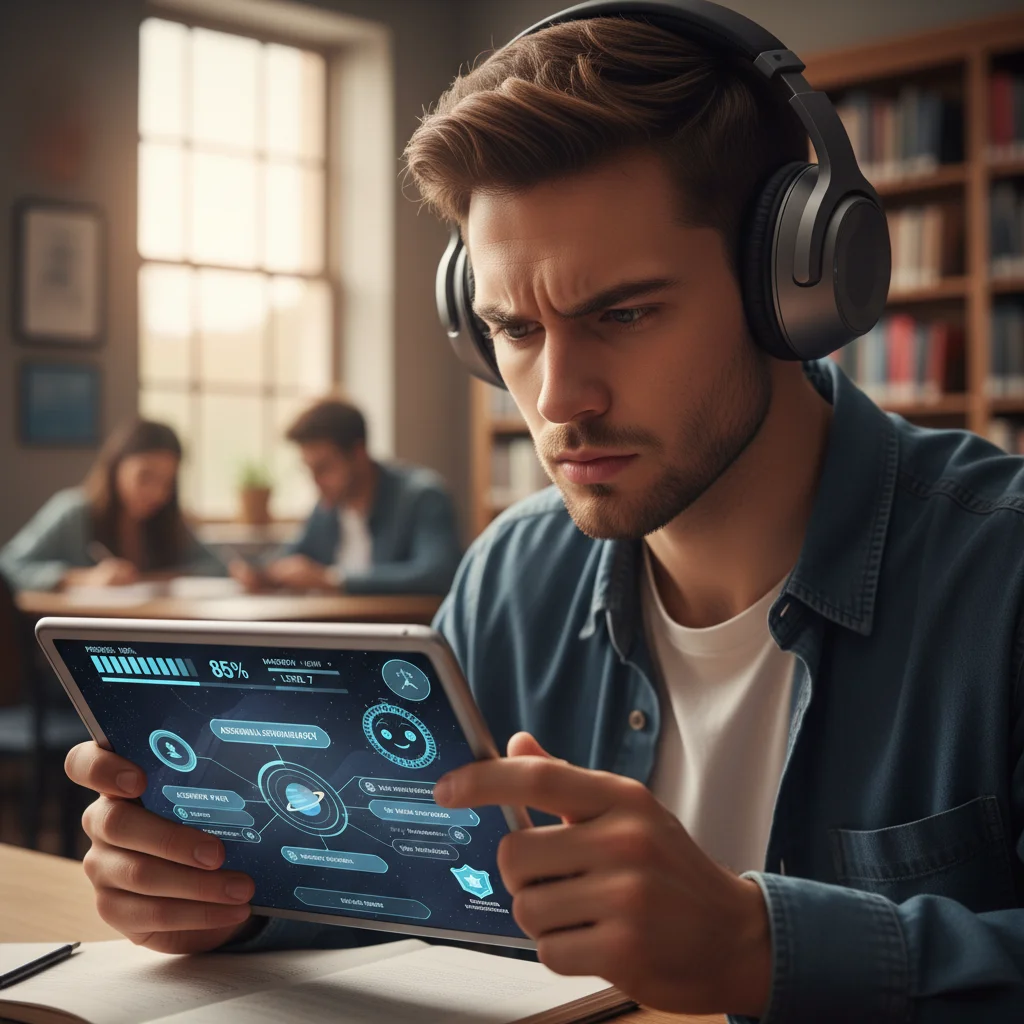
AI’s ability to analyze patterns in student data is invaluable for early intervention. By identifying students who are at risk of falling behind or disengaging, AI can alert educators to potential problems before they become critical. This predictive capability allows for timely support, whether it’s academic tutoring, counseling, or adjustments to the learning environment.
For instance, an AI system might detect a sudden drop in a student’s quiz scores, a decrease in participation, or a change in their login patterns, indicating a potential issue. This early warning system enables teachers, counselors, and administrators to reach out and offer support proactively, rather than reacting to a crisis. This preventative approach is a cornerstone of effective AI personalized education.
Accessibility and Inclusive Learning
AI also plays a crucial role in making education more accessible for students with diverse needs. AI-powered tools can provide real-time captions for videos, translate content into multiple languages, and offer text-to-speech or speech-to-text functionalities. For students with learning disabilities, AI can adapt materials to their specific requirements, such as providing larger fonts, simplified language, or alternative formats.
For example, a student with dyslexia might benefit from an AI tool that highlights text in a specific way or reads it aloud with adjustable speed. A non-English speaking student can access translated materials, enabling them to participate more fully in classroom activities. This focus on inclusivity ensures that the benefits of AI personalized education extend to all learners, fostering a more equitable educational environment.
Benefits of AI Personalized Education for Students and Educators
The integration of AI in personalized learning offers a multitude of benefits that extend beyond mere academic performance.
For Students:
- Improved Academic Outcomes: By tailoring content and pace, AI ensures students receive instruction at their optimal learning level, leading to better comprehension, retention, and ultimately, higher grades and test scores.
- Enhanced Engagement and Motivation: When learning is relevant and appropriately challenging, students are more likely to stay engaged. Gamified AI platforms, immediate feedback, and the ability to progress at one’s own pace foster a sense of accomplishment and intrinsic motivation.
- Development of Self-Directed Learning Skills: AI tools often encourage students to take ownership of their learning journey, setting goals, monitoring progress, and choosing resources. This cultivates crucial self-regulation and meta-cognitive skills.
- Reduced Learning Anxiety: The pressure of keeping up with a class or fear of asking ‘dumb’ questions can be debilitating. AI provides a safe, private space for students to struggle, make mistakes, and learn at their own speed without judgment.
- Access to High-Quality Resources: AI can curate and recommend a vast array of high-quality educational content, democratizing access to learning materials that might otherwise be unavailable.
For Educators:
- Data-Driven Insights: AI provides teachers with granular, real-time data on student performance, engagement, and learning patterns. This enables them to make informed instructional decisions and identify areas where students need support.
- Efficient Differentiation: Automating the personalization of content and activities frees up teachers to focus on complex pedagogical tasks, such as facilitating discussions, mentoring, and addressing socio-emotional needs.
- Reduced Administrative Burden: AI can automate grading, attendance tracking, and other administrative tasks, allowing teachers to dedicate more time to teaching and interacting with students.
- Professional Development: By analyzing teaching effectiveness in relation to student outcomes, AI can provide insights that help teachers refine their methodologies and develop new skills.
- Enhanced Collaboration: AI tools can facilitate collaboration among teachers by sharing best practices, resources, and data insights, leading to a more cohesive and effective educational system.
Challenges and Considerations for Implementing AI Personalized Education
While the promise of AI personalized education is immense, its widespread and ethical implementation comes with significant challenges that must be carefully addressed.
Data Privacy and Security
Collecting vast amounts of student data is central to AI’s ability to personalize learning. However, this raises serious concerns about data privacy and security. Who owns this data? How is it stored and protected? How is it used, and for what purposes? Schools and EdTech companies must implement robust data governance policies, adhere to regulations like FERPA (Family Educational Rights and Privacy Act), and be transparent with parents and students about data collection and usage. The potential for misuse or breaches of sensitive student information is a critical concern that requires constant vigilance.
Algorithmic Bias and Equity
AI algorithms are only as unbiased as the data they are trained on. If historical educational data reflects societal biases or inequalities, AI systems could inadvertently perpetuate or even exacerbate these disparities. For example, if an AI is trained predominantly on data from affluent school districts, it might not effectively serve the needs of students from diverse socio-economic backgrounds or those with different linguistic or cultural contexts. Addressing algorithmic bias requires diverse and representative training datasets, continuous auditing of algorithms, and a commitment to designing AI that promotes equity rather than hindering it. Ensuring equitable access to these technologies is also paramount; without it, AI could widen the digital divide.
Teacher Training and Professional Development
AI tools are not meant to replace teachers but to augment their capabilities. However, for teachers to effectively leverage these tools, they need comprehensive training and ongoing professional development. This includes understanding how AI works, interpreting data insights, integrating AI tools into their pedagogical practices, and knowing when and how to intervene. Without adequate training, teachers may feel overwhelmed, resistant, or simply unable to harness the full potential of AI personalized education.
Infrastructure and Funding
Implementing AI personalized learning at scale requires significant investment in infrastructure, including reliable internet access, devices for students, and robust IT support. Many school districts, particularly in rural or low-income areas, lack these fundamental resources. Funding models need to be re-evaluated to ensure equitable access to AI technologies across all schools, preventing a two-tiered educational system where only well-resourced districts can benefit from these advancements.
Maintaining Human Connection and Social-Emotional Learning
While AI excels at delivering academic content, it cannot fully replicate the nuances of human interaction, empathy, and social-emotional learning. Education is not just about knowledge acquisition; it’s also about developing critical thinking, collaboration skills, creativity, and emotional intelligence. Educators must ensure that the integration of AI does not diminish the vital human connection in the classroom or sideline the development of these essential life skills. The role of the teacher evolves into that of a facilitator, mentor, and guide, focusing on the human aspects of learning that AI cannot address.
The Future of AI Personalized Education in the US
The trajectory of AI personalized education in the US is bright, with continuous innovation and increasing adoption. We can anticipate several key developments:
More Sophisticated AI Models
As AI technology matures, we will see even more sophisticated models capable of understanding complex learning behaviors, recognizing nuanced emotional states, and generating highly creative and adaptive content. Generative AI, for example, could create personalized learning scenarios, simulations, and even virtual mentors that are indistinguishable from human interaction.
Seamless Integration with Existing Systems
Future AI tools will be more seamlessly integrated into existing Learning Management Systems (LMS) and school administrative platforms, reducing friction for both teachers and students. This will create a unified ecosystem where data flows effortlessly, providing a holistic view of each student’s educational journey.
Focus on Lifelong Learning and Skills Development
Beyond K-12, AI personalized education will extend into higher education and lifelong learning. It will help individuals identify skill gaps, recommend relevant courses, and adapt to evolving career demands. This will be crucial in a rapidly changing job market that requires continuous upskilling and reskilling.
Ethical AI Frameworks and Governance
As AI becomes more pervasive, there will be an increased emphasis on developing robust ethical AI frameworks and governance structures. This will involve collaboration between policymakers, educators, AI developers, and civil society to ensure that AI is used responsibly, equitably, and in the best interest of students.
Hybrid Learning Models
The pandemic accelerated the adoption of hybrid learning models. AI will play a critical role in optimizing these models, ensuring that personalized learning experiences are consistent and effective whether students are learning in person, remotely, or in a blended environment. This flexibility will be key to catering to diverse student needs and circumstances.
Conclusion: A New Era for American Education
The journey towards fully realizing the potential of AI personalized education for the 15 million-plus students in the US is complex, but the destination is immensely promising. AI is not merely a tool; it is a catalyst for a paradigm shift, enabling an educational system that truly puts the student at its center. By leveraging AI’s capacity for data analysis, adaptive delivery, and intelligent support, we can create learning environments that are more engaging, effective, equitable, and ultimately, more human.
The challenges of data privacy, algorithmic bias, teacher training, and infrastructure are significant, but they are surmountable with thoughtful planning, ethical considerations, and collaborative efforts from all stakeholders. As we move forward, it is crucial to remember that technology serves pedagogy, not the other way around. AI should empower teachers, inspire students, and foster a love for lifelong learning.
The future of American education, powered by AI personalized education, holds the promise of unlocking the full potential of every student, preparing them not just for tests, but for a future that demands adaptability, critical thinking, and continuous growth. By embracing this revolution responsibly, the US can lead the way in creating an educational system that is truly fit for the 21st century and beyond, ensuring that no student’s unique brilliance goes unrecognized or undeveloped.