US National Debt: $35 Trillion & 2026 Economic Outlook

The U.S. National Debt Exceeds $35 Trillion: Expert Insights on the Economic Outlook for 2026
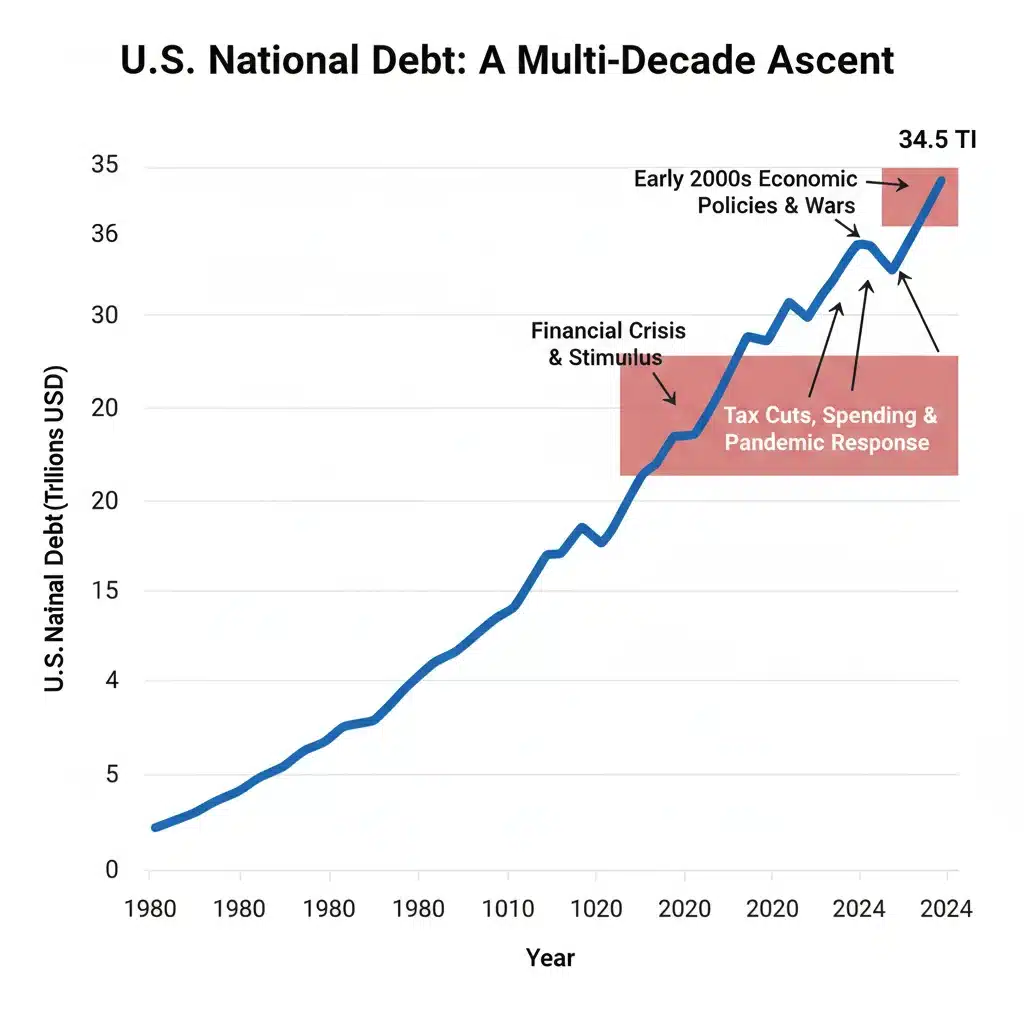
The United States national debt has crossed a staggering and unprecedented threshold, now exceeding $35 trillion. This monumental figure isn’t just a number; it represents a complex web of economic decisions, historical events, and future implications that will undoubtedly shape the economic landscape for years to come. As we look towards 2026, understanding the ramifications of this immense debt is crucial for policymakers, businesses, and individual citizens alike. This comprehensive analysis delves into the causes behind this surge in the US national debt, explores the potential economic consequences, and offers expert insights into what the future might hold.
Understanding the Magnitude: What is the US National Debt?
Before diving into the implications, it’s essential to define what the US national debt truly signifies. The national debt, also known as the public debt, is the total amount of money that the U.S. federal government owes to its creditors. These creditors include individuals, corporations, foreign governments, and even various government agencies. It’s essentially the accumulated result of past government borrowing to finance budget deficits, which occur when government spending exceeds revenue.
Components of the National Debt
The $35 trillion figure comprises two main components:
- Debt Held by the Public: This is the portion of the national debt held by investors outside of the federal government. It includes Treasury securities held by individuals, businesses, state and local governments, the Federal Reserve, and foreign entities. This is the more commonly discussed and impactful component, as it represents money owed to external parties.
- Intragovernmental Holdings: This portion represents debt that the government owes to itself. It primarily consists of government account balances, such as the Social Security Trust Fund and federal employee retirement funds, which are invested in special Treasury securities. While these are obligations, they don’t represent a net drain on the economy in the same way debt held by the public does.
The Road to $35 Trillion: Key Drivers of the US National Debt
The journey to a $35 trillion US national debt has been a long one, accelerated by a confluence of factors over several decades. Understanding these drivers is key to grasping the challenge ahead.
1. Increased Government Spending
One of the primary contributors to the escalating national debt is sustained increases in government spending. This includes:
- Social Programs: Entitlement programs like Social Security, Medicare, and Medicaid represent a significant and growing portion of federal expenditures. As the population ages and healthcare costs rise, these programs place increasing demands on the federal budget.
- Defense Spending: Military expenditures, particularly during periods of conflict or geopolitical tension, contribute substantially to the debt.
- Infrastructure and Other Investments: While often necessary for economic growth, large-scale infrastructure projects, research and development, and other government investments require significant upfront capital, often financed through borrowing.
2. Tax Cuts
Periods of significant tax cuts, without corresponding reductions in spending, can lead to larger budget deficits and, consequently, an increase in the national debt. While tax cuts can stimulate economic activity, their immediate effect is often a reduction in government revenue.
3. Economic Crises and Recessions
Major economic downturns, such as the 2008 financial crisis and the COVID-19 pandemic, have historically led to massive increases in government borrowing. During these times, governments implement stimulus packages, unemployment benefits, and other emergency measures to support the economy, often at the cost of ballooning deficits.
4. Interest Payments on the Debt
As the national debt grows, so do the interest payments required to service that debt. These interest payments become a significant line item in the federal budget, diverting funds that could otherwise be used for other government programs or investments. With rising interest rates, the cost of servicing the debt accelerates, creating a feedback loop where more borrowing is needed just to pay the interest on existing debt.
5. Demographics
The aging population in the U.S. plays a critical role. As more people retire, the ratio of retirees to active workers shifts, putting greater strain on social security and Medicare systems. This demographic trend is a long-term structural challenge to fiscal sustainability.
Expert Insights: The Economic Outlook for 2026 and Beyond
The implications of a $35 trillion US national debt are far-reaching and complex. Economists and financial experts offer a range of perspectives on how this will shape the economic outlook for 2026 and the coming years.
Increased Interest Rates and Inflationary Pressures
One of the most immediate concerns is the potential for higher interest rates. As the government borrows more, it competes with private borrowers for available capital, which can push up interest rates across the economy. Higher rates make it more expensive for businesses to invest and for consumers to borrow, potentially slowing economic growth. Moreover, large government spending, especially when financed by printing money (quantitative easing), can contribute to inflationary pressures, eroding the purchasing power of citizens.
Crowding Out Private Investment
When the government needs to borrow heavily, it can ‘crowd out’ private investment. This means that government borrowing consumes a larger share of available savings, leaving less capital for businesses to invest in expansion, innovation, and job creation. Over the long term, this can lead to slower economic growth and reduced productivity.
Reduced Fiscal Flexibility
A high national debt severely limits the government’s fiscal flexibility. In the event of another economic crisis or unforeseen national emergency, the government’s ability to respond effectively with significant stimulus or spending programs may be constrained by its already heavy debt burden. This could lead to slower recoveries and prolonged economic hardship.
Risk to the Dollar’s Status as a Reserve Currency
While the U.S. dollar currently enjoys its status as the world’s primary reserve currency, a persistently high and growing national debt could, in the extreme, undermine confidence in the dollar. If international investors perceive the U.S. government as fiscally irresponsible or unable to manage its debt, they might reduce their holdings of U.S. Treasury securities, potentially weakening the dollar and increasing borrowing costs for the U.S.
Intergenerational Equity Concerns
The mounting US national debt also raises significant questions about intergenerational equity. Current generations are benefiting from government spending, while future generations will bear the burden of repaying the debt through higher taxes or reduced public services. This transfer of debt to future generations is a moral and economic concern.
Potential Scenarios for 2026
Forecasting the future is always challenging, but based on current trends and expert analysis, several scenarios could unfold by 2026 regarding the US national debt and its economic impact:
Scenario 1: Continued Growth and Mild Economic Headwinds
In this scenario, the national debt continues its upward trajectory, but economic growth remains resilient enough to absorb some of the pressure. Interest rates might remain elevated but manageable, and inflation could moderate. However, the underlying structural issues remain unaddressed, leading to a gradual erosion of fiscal space and potentially slower long-term growth. This scenario is characterized by a ‘muddling through’ approach, where no drastic policy changes are implemented.
Scenario 2: Fiscal Crisis and Market Turmoil
A more pessimistic scenario involves a loss of confidence in the U.S.’s ability to manage its debt. This could be triggered by a sudden spike in interest rates, a downgrade of U.S. credit ratings, or a significant geopolitical event. In this situation, the government could face difficulty borrowing, leading to a sharp increase in interest payments, potential cuts to essential services, and a severe economic downturn. This scenario, while less likely in the short term, highlights the risks of unchecked debt growth.
Scenario 3: Policy Interventions and Fiscal Adjustment
In a more optimistic outlook, policymakers could implement significant fiscal adjustments to address the debt. This might involve a combination of spending cuts, tax increases, and reforms to entitlement programs. While such measures could be politically challenging and potentially lead to short-term economic slowdowns, they would put the U.S. on a more sustainable fiscal path, restoring confidence and reducing long-term risks. The effectiveness and timing of such interventions would be critical.
Addressing the Challenge: Policy Options for the US National Debt
Addressing the $35 trillion US national debt requires a multi-faceted approach, combining fiscal discipline with strategic investments. There is no single, easy solution, and any effective strategy will likely involve difficult choices.
1. Fiscal Consolidation
This involves reducing the budget deficit through a combination of:
- Spending Cuts: Identifying areas where government spending can be reduced without significantly harming essential services or economic growth. This could include reviewing defense budgets, reducing waste and inefficiency, and streamlining government operations.
- Revenue Enhancements: Increasing government revenue through tax reforms. This could involve raising income tax rates, adjusting corporate tax rates, closing tax loopholes, or introducing new taxes.
- Entitlement Reform: Given the significant share of the budget consumed by Social Security, Medicare, and Medicaid, reforms to these programs are often considered essential for long-term fiscal sustainability. These reforms could include adjusting eligibility ages, modifying benefit formulas, or increasing contributions.
2. Promoting Economic Growth
A growing economy can help to reduce the debt-to-GDP ratio, even if the absolute amount of debt continues to rise. Policies that foster economic growth include:
- Investment in Infrastructure: Modernizing infrastructure can boost productivity and create jobs.
- Education and Workforce Development: Investing in human capital can lead to a more skilled and productive workforce.
- Innovation and Research: Supporting technological advancements can drive long-term economic expansion.
- Regulatory Reform: Reducing unnecessary regulatory burdens can stimulate business investment and entrepreneurship.
3. Managing Interest Rates
The Federal Reserve’s monetary policy plays a crucial role in managing interest rates. While the Fed operates independently, its decisions have a direct impact on the cost of servicing the national debt. A balanced approach that controls inflation without stifling economic growth is essential.
4. International Cooperation and Trade
Engaging in fair and open international trade can boost economic activity and revenue. Furthermore, global economic stability can indirectly support the U.S. economy and its ability to manage its debt.

The Role of Political Will and Public Discourse
Ultimately, addressing the US national debt is not just an economic challenge but also a political one. Implementing the necessary reforms often requires difficult decisions that may not be popular in the short term. A robust and informed public discourse is crucial to building consensus around sustainable fiscal policies. Educating the public about the long-term consequences of unchecked debt growth and the trade-offs involved in various solutions is a vital step toward achieving fiscal responsibility.
Challenges to Political Will
- Short-Term Political Cycles: Politicians often prioritize short-term gains and re-election prospects over long-term fiscal health, making it difficult to implement unpopular but necessary reforms.
- Partisan Divides: Deep partisan divisions can hinder bipartisan cooperation on fiscal issues, leading to gridlock and inaction.
- Special Interest Groups: Powerful lobbying groups can resist changes to spending or tax policies that benefit their constituents, further complicating reform efforts.
Overcoming these challenges requires leadership that prioritizes the nation’s long-term financial stability over immediate political expediency. It also requires an engaged citizenry that demands accountability and supports sustainable fiscal policies.
Conclusion: Navigating the Future of the US National Debt
The U.S. national debt surpassing $35 trillion is a stark reminder of the fiscal challenges facing the nation. The economic outlook for 2026 and beyond will be heavily influenced by how effectively policymakers address this growing burden. While the immediate consequences may not always be visible, the long-term implications for economic growth, fiscal flexibility, and intergenerational equity are profound.
A combination of fiscal consolidation, strategic investments in economic growth, and responsible monetary policy will be essential to navigate these turbulent waters. The path forward will undoubtedly be complex, requiring difficult choices and a commitment to long-term sustainability. The conversation around the US national debt is not merely about numbers; it’s about the economic future and prosperity of the United States.
By understanding the causes, potential impacts, and available solutions, we can collectively work towards a more stable and prosperous economic future for all.