Measuring Social Program Impact: Crucial Metrics for 2026 Success
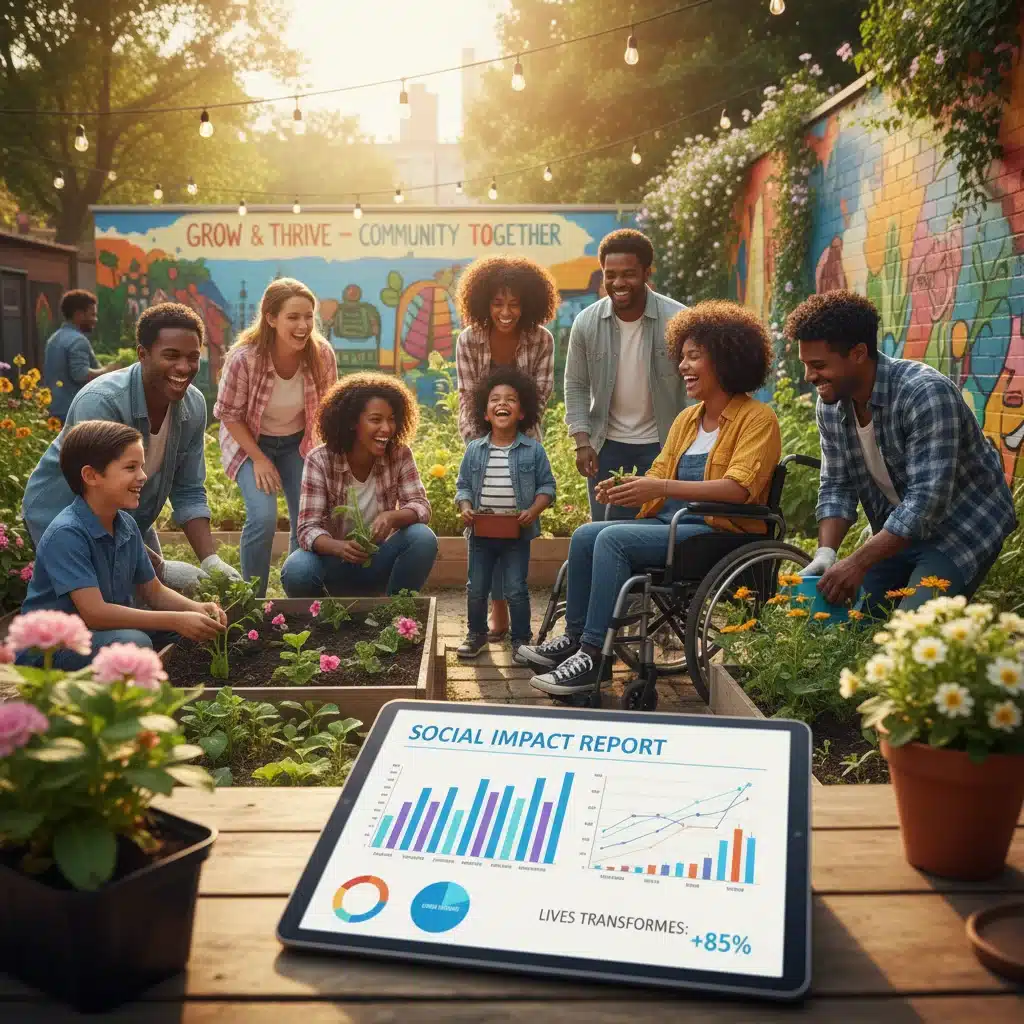
In the dynamic landscape of social development and humanitarian aid, merely implementing programs is no longer enough. Organizations are increasingly scrutinized for their effectiveness, demanding concrete evidence of the social program impact they generate. As we look towards 2026, the imperative to rigorously measure and articulate this impact has never been more critical. Funding bodies, beneficiaries, and the public alike seek assurance that resources are being utilized efficiently to create lasting, positive change. This comprehensive guide will delve into three crucial metrics that social programs must track to achieve 20% greater effectiveness by 2026, transforming anecdotal success into demonstrable progress.
The journey to enhanced effectiveness begins with a fundamental shift in mindset: from activity-based reporting to impact-driven evaluation. This means moving beyond simply counting the number of people served or workshops conducted, and instead focusing on the tangible changes in beneficiaries’ lives, communities, and broader societal systems. By adopting a strategic approach to measuring social program impact, organizations can not only justify their existence but also refine their methodologies, innovate their interventions, and ultimately, amplify their reach and influence.
The challenges in measuring social program impact are manifold. Social change is often complex, non-linear, and influenced by a myriad of external factors. Attributing specific outcomes solely to a single program can be difficult. Furthermore, traditional evaluation methods can be time-consuming and resource-intensive, posing significant hurdles for organizations with limited budgets. However, with advancements in data collection technologies, analytical tools, and a growing understanding of effective impact frameworks, these challenges are becoming more surmountable. This article aims to provide a clear roadmap for navigating these complexities, offering actionable insights into selecting and applying the most relevant metrics for profound social change.
Understanding the ‘why’ behind impact measurement is paramount. It’s not just about compliance; it’s about learning, adapting, and improving. When organizations consistently measure their social program impact, they gain invaluable insights into what works, for whom, and under what circumstances. This evidence base empowers them to make data-driven decisions, allocate resources more effectively, and advocate for policy changes that can create even larger systemic shifts. Ultimately, robust impact measurement is the cornerstone of sustainable social development, ensuring that every effort contributes meaningfully to a better future.
Let’s embark on this exploration of crucial metrics, recognizing that the ability to demonstrate social program impact is not just a trend, but a fundamental requirement for any organization committed to making a real difference in the world.
The Foundational Shift: From Outputs to Outcomes and Beyond
Before diving into specific metrics, it’s essential to grasp the fundamental distinction between outputs, outcomes, and impact. This hierarchy forms the backbone of effective social program impact measurement:
- Outputs: These are the direct, tangible results of your activities. Examples include the number of training sessions conducted, meals served, or individuals reached. While important for tracking activity levels, outputs alone do not tell the story of change.
- Outcomes: These are the short-to-medium term changes that occur in the lives of beneficiaries as a direct result of your program’s outputs. Outcomes answer the question, “What changed for the people we served?” Examples might be increased literacy rates, improved health behaviors, or enhanced job-seeking skills. Measuring outcomes is a significant step towards understanding social program impact.
- Impact: This represents the long-term, systemic changes that occur as a consequence of your program’s outcomes. Impact addresses the broader question, “What lasting difference did our program make in the community or society?” This could include reductions in poverty, improved community health, or increased social cohesion. True social program impact often takes years to fully materialize and can be challenging to isolate.
The goal for 2026 is to move beyond merely reporting outputs and to robustly measure both outcomes and, where feasible, long-term impact. This requires a well-defined theory of change – a clear articulation of how and why your program is expected to lead to desired changes. Without a solid theory of change, selecting relevant metrics for social program impact becomes a shot in the dark.
Developing a strong theory of change involves several key steps:
- Identify the Problem: Clearly define the social issue your program aims to address, backed by evidence.
- Specify Activities: Detail the actions your program will undertake.
- Outline Outputs: Enumerate the direct results of these activities.
- Project Outcomes: Describe the short-term and medium-term changes expected in beneficiaries.
- Envision Impact: Articulate the long-term, systemic change your program aspires to contribute to.
- Identify Assumptions: List the underlying beliefs about how change will occur and the external factors that might influence it.
This structured thinking allows organizations to pinpoint the critical junctures where evidence of change is most likely to appear, thereby guiding the selection of appropriate metrics for social program impact. It transforms a vague notion of ‘doing good’ into a targeted strategy for measurable improvement.

Crucial Metric 1: Beneficiary Progress & Well-being Indicators
The most direct way to measure social program impact is through the observable changes in the lives of the individuals or communities your program serves. These are not just statistics; they are stories told through data, reflecting improved health, education, economic stability, or social inclusion. For 2026, organizations need to move beyond simple participation rates and focus on granular, longitudinal data that tracks actual progress.
Key Aspects of Beneficiary Progress & Well-being Indicators:
- Individual-Level Outcome Tracking: This involves collecting data from the same beneficiaries over time to monitor their journey. For an educational program, this might mean tracking academic performance, attendance, and progression to higher education or employment. For a health program, it could involve monitoring disease incidence, access to healthcare, or adoption of healthy behaviors. The key is to establish baseline data at the start of the program and then measure changes at regular intervals.
- Qualitative Data Integration: While quantitative data provides the ‘what,’ qualitative data illuminates the ‘how’ and ‘why.’ Interviews, focus groups, case studies, and testimonials from beneficiaries offer rich insights into their experiences, perceptions of change, and the nuances of the program’s influence. This human element is critical for a holistic understanding of social program impact.
- Standardized Well-being Scales: Where applicable, utilizing established and validated well-being scales can provide comparable and robust data. These might measure mental health, life satisfaction, perceived safety, or social cohesion. Such tools allow for cross-program comparisons and can demonstrate broader societal shifts.
- Disaggregated Data: To ensure equity and understand who benefits most (or least) from a program, data must be disaggregated by demographics such as age, gender, ethnicity, disability status, and geographic location. This reveals disparities and helps tailor interventions to specific needs, thereby maximizing social program impact for all.
Implementation Strategies:
- Robust Data Collection Systems: Invest in user-friendly data collection tools, whether digital platforms or well-designed paper forms, that allow for efficient and accurate data entry.
- Training for Field Staff: Ensure that program staff are thoroughly trained in data collection protocols, ethical considerations, and the importance of data quality.
- Consent and Privacy: Always prioritize informed consent and protect beneficiary privacy in all data collection and reporting activities.
- Feedback Loops: Establish mechanisms for beneficiaries to provide feedback on the program and their perceived progress, fostering a participatory approach to impact measurement.
By diligently tracking beneficiary progress and well-being, organizations can demonstrate direct evidence of their social program impact, moving beyond assumptions to verifiable improvements in people’s lives. This metric is foundational for proving effectiveness and securing continued support.
Crucial Metric 2: Cost-Effectiveness and Return on Investment (ROI)
In an era of limited resources, demonstrating not just that a program works, but that it works efficiently, is paramount. Funders and stakeholders are increasingly demanding evidence of cost-effectiveness and the return on investment (ROI) of social programs. This metric goes beyond simply showing positive outcomes; it quantifies the value generated relative to the resources expended. By 2026, organizations that can articulate their cost-effectiveness will have a significant advantage in securing funding and illustrating their responsible stewardship of resources.
Key Aspects of Cost-Effectiveness and ROI:
- Cost-Benefit Analysis (CBA): This involves monetizing both the costs of the program and the benefits it generates. For example, a program reducing crime might calculate the monetary savings in law enforcement, judicial costs, and reduced victim suffering. While challenging, CBA provides a powerful argument for the societal value of a program and its social program impact.
- Cost-Effectiveness Analysis (CEA): When benefits are difficult to monetize, CEA compares the costs of different interventions to achieve a specific outcome. For instance, comparing the cost per child vaccinated across various immunization programs. This helps identify the most efficient ways to achieve desired social outcomes.
- Social Return on Investment (SROI): SROI is a framework that measures and accounts for the broader social, environmental, and economic value created by an organization or program. It assigns monetary values to non-financial outcomes recognized by stakeholders, providing a comprehensive picture of social program impact. An SROI ratio of 3:1, for example, means that for every dollar invested, three dollars of social value are created.
- Efficiency Ratios: Simple efficiency metrics can also be powerful. These might include cost per beneficiary reached, cost per unit of outcome (e.g., cost per student achieving literacy), or administrative costs as a percentage of total program expenditure. These ratios help identify areas for operational improvement and demonstrate responsible resource management, directly contributing to understanding social program impact.
Implementation Strategies:
- Detailed Financial Tracking: Maintain meticulous records of all program expenditures, categorizing them appropriately (e.g., staff salaries, materials, overhead).
- Attribution of Costs: Accurately attribute costs to specific program activities and outcomes. This often requires careful planning and robust accounting practices.
- Stakeholder Engagement for Valuation: For SROI, actively engage stakeholders to determine what outcomes they value and how they would quantify that value. This ensures the analysis is relevant and credible.
- Capacity Building: Invest in training staff on financial analysis and impact valuation methodologies, or partner with experts in these fields.
By rigorously applying cost-effectiveness and ROI analyses, social programs can transcend the perception of being mere expenditures and instead be recognized as vital investments that yield significant social and economic returns. This strengthens the case for continued funding and enhances the overall understanding of social program impact.

Crucial Metric 3: Systemic Change and Policy Influence
While individual-level outcomes are crucial, truly transformative social program impact often extends to broader systemic changes and influences policy. Many social problems are rooted in structural issues, and addressing these requires more than just direct service delivery; it demands advocacy, institutional reform, and shifts in societal norms. By 2026, leading social programs will be adept at measuring their contribution to these larger-scale changes.
Key Aspects of Systemic Change and Policy Influence:
- Policy Adoption and Implementation: This metric tracks the extent to which your program or its evidence has influenced the creation, adoption, or effective implementation of new policies, laws, or regulations at local, national, or even international levels. This could involve tracking legislative changes, budget allocations, or the establishment of new government programs that align with your objectives.
- Institutional Capacity Building: Measure the extent to which your program strengthens the capacity of local institutions (e.g., schools, health clinics, community organizations) to deliver services, manage resources, and advocate for their communities. This could involve tracking improvements in institutional governance, staff training completion, or increased access to resources for these local entities, directly contributing to long-term social program impact.
- Shifts in Social Norms and Attitudes: Measuring changes in public opinion, community attitudes, or cultural practices related to the social issue your program addresses. This often requires surveys, media analysis, and qualitative research to assess shifts in awareness, stigma, or acceptance. For example, a gender equality program might measure changes in attitudes towards women’s rights over time.
- Replication and Scaling of Interventions: Track how often your successful program models or interventions are adopted and replicated by other organizations, governments, or communities. This demonstrates the wider applicability and potential for scalable social program impact. Measuring the number of partners adopting your methodology or the geographic expansion of your proven approach are key indicators.
- Ecosystem Strengthening: Assess how your program contributes to a stronger, more collaborative ecosystem of actors working on similar issues. This might involve tracking new partnerships formed, increased information sharing, or collective advocacy efforts, all of which amplify social program impact.
Implementation Strategies:
- Theory of Change for Systemic Impact: Develop a specific theory of change that articulates how your program intends to influence policy and systemic change, not just individual outcomes.
- Advocacy Tracking: Keep detailed records of advocacy efforts, meetings with policymakers, submitted policy briefs, and media engagement related to policy influence.
- Partner Surveys and Interviews: Conduct surveys and interviews with partners, government officials, and community leaders to gauge their perceptions of your program’s influence on policies and institutions.
- Media Monitoring and Content Analysis: Monitor media coverage, social media discussions, and public discourse to identify shifts in narratives and public awareness.
By diligently tracking these systemic metrics, social programs can demonstrate their role as catalysts for broader societal transformation, moving beyond individual change to contribute to a more just and equitable world. This is the ultimate demonstration of profound social program impact.
Integrating and Reporting Impact Data for 2026
Measuring these crucial metrics is only half the battle; effectively integrating and reporting the data is equally vital for maximizing social program impact. By 2026, organizations should aim for sophisticated, transparent, and user-friendly reporting mechanisms that resonate with diverse audiences.
Key Integration and Reporting Strategies:
- Dashboard Reporting: Develop interactive dashboards that visualize key impact metrics in real-time or near real-time. These dashboards should be accessible to relevant stakeholders, allowing them to explore data, identify trends, and understand program performance at a glance. This fosters transparency and accountability, crucial for understanding social program impact.
- Storytelling with Data: Combine compelling narratives and case studies with quantitative data. Human stories bring statistics to life, illustrating the real-world implications of your social program impact. A powerful story backed by solid data is far more persuasive than either alone.
- Regular Impact Reports: Produce concise, engaging impact reports annually or semi-annually. These reports should clearly communicate your theory of change, the metrics you track, your findings, lessons learned, and future plans. Tailor reports to different audiences (e.g., a detailed report for funders, a summary for the public).
- Learning and Adaptation Cycles: Establish internal processes for regularly reviewing impact data and using it to inform programmatic adjustments. Impact measurement should be an iterative process that fuels continuous improvement, not just a one-off report. This adaptive management approach is central to increasing social program impact.
- External Validation and Audits: Consider engaging third-party evaluators or auditors to validate your impact measurement methodologies and findings. Independent verification adds credibility and trustworthiness to your reported social program impact.
- Leveraging Technology: Utilize modern data management systems, CRM software, and visualization tools to streamline data collection, analysis, and reporting. Cloud-based solutions can facilitate collaboration and ensure data security.
- Open Data Initiatives: Where appropriate and ethically sound, consider making anonymized impact data publicly available. This promotes transparency, encourages further research, and contributes to the broader knowledge base in the social sector.
The goal is to create a culture of evidence-based decision-making where impact data is not just collected but actively used to learn, adapt, and drive greater effectiveness. By 2026, organizations that master these integration and reporting strategies will not only demonstrate their social program impact but also inspire confidence and catalyze further investment in their vital work.
Overcoming Challenges in Impact Measurement
While the benefits of robust impact measurement are clear, organizations often face significant challenges. Addressing these proactively is crucial for success:
- Resource Constraints: Impact measurement can be resource-intensive. Solutions include integrating measurement into existing program activities, using cost-effective digital tools, and building staff capacity incrementally.
- Attribution vs. Contribution: It’s often difficult to attribute outcomes solely to one program. Focus on demonstrating your program’s contribution to broader changes, acknowledging the role of other factors and partners.
- Data Quality: Ensure data accuracy and consistency through clear protocols, regular training, and quality control checks. “Garbage in, garbage out” applies directly to impact data.
- Complexity of Social Change: Social issues are complex. Employ mixed-methods approaches (combining quantitative and qualitative data) to capture the nuances and complexities of social program impact.
- Ethical Considerations: Always prioritize the safety, privacy, and dignity of beneficiaries. Obtain informed consent, anonymize data where necessary, and ensure data collection processes are respectful and non-exploitative.
- Resistance to Change: Some staff or stakeholders may resist new measurement approaches. Communicate the ‘why’ effectively, highlight the benefits, and involve them in the design process to build buy-in.
By anticipating and strategizing around these common hurdles, organizations can build more resilient and effective impact measurement systems, ultimately enhancing their social program impact.
Conclusion: A Future Defined by Demonstrable Impact
As we approach 2026, the demand for demonstrable social program impact will only intensify. Organizations that proactively embrace rigorous measurement, focusing on beneficiary progress, cost-effectiveness, and systemic change, will be best positioned to thrive. These three crucial metrics provide a powerful framework for understanding, enhancing, and communicating the profound difference social programs make.
Moving forward, the conversation will shift from ‘Are we doing good?’ to ‘How much good are we doing, for whom, and at what cost?’ By meticulously tracking these indicators, social programs can not only secure vital funding and build trust but also continuously learn, adapt, and innovate to achieve even greater effectiveness. The future of social change is data-driven, strategic, and ultimately, more impactful. Let us collectively commit to this journey, ensuring that every effort translates into measurable, meaningful, and lasting social program impact for a better world.