Opioid Crisis 2026: Federal Strategies & Funding for Practical Solutions

The opioid crisis continues to be one of the most pressing public health challenges facing the United States. While its origins are complex and multifactorial, spanning decades of over-prescription, illicit drug proliferation, and socio-economic disparities, the human toll remains staggering. As we look towards 2026, the federal government is redoubling its efforts, unveiling a comprehensive suite of strategies and substantial funding to tackle this epidemic head-on. These renewed federal opioid strategies are not just theoretical frameworks; they represent practical, actionable solutions designed to make a tangible difference in communities nationwide.
Understanding the scope and evolution of the opioid crisis is crucial for appreciating the necessity of these new interventions. What began largely with prescription painkillers morphed into a wider crisis involving heroin and, more recently, synthetic opioids like fentanyl, which pose an unprecedented threat due to their potency. The multifaceted nature of the crisis demands an equally multifaceted response, and the 2026 federal initiatives aim to deliver just that, focusing on prevention, treatment, harm reduction, and recovery support.
The Evolving Landscape of the Opioid Crisis: A 2026 Perspective
The opioid crisis is not static; it evolves, demanding continuous adaptation from policymakers and healthcare providers. In 2026, we are witnessing a landscape where fentanyl remains the primary driver of overdose deaths, often mixed unknowingly into other illicit drugs. This presents unique challenges for prevention and emergency response. Furthermore, the crisis has deepened existing health disparities, with certain demographic groups and geographic regions disproportionately affected. Rural areas, for instance, often lack adequate access to treatment and harm reduction services, exacerbating the problem.
Another significant development is the increasing recognition of polysubstance use, where individuals use opioids in combination with other substances like stimulants or benzodiazepines. This complicates treatment protocols and increases the risk of overdose. The 2026 federal opioid strategies acknowledge these complexities, moving beyond a narrow focus on a single substance to embrace a more holistic approach to substance use disorder.
Public perception and stigma also continue to play a critical role. Despite growing awareness, the stigma associated with opioid use disorder (OUD) often acts as a significant barrier to seeking help. Federal efforts in 2026 are not only targeting the supply and demand of opioids but also investing in public awareness campaigns designed to destigmatize addiction and promote understanding, encouraging more individuals to access life-saving treatment and support.
Pillars of the 2026 Federal Opioid Strategies: A Multi-pronged Approach
The core of the 2026 federal response rests on several interconnected pillars, each designed to address a critical aspect of the opioid crisis. These pillars represent a concerted effort to build a resilient national infrastructure capable of preventing new cases of OUD, treating those affected, and supporting long-term recovery.
1. Enhanced Prevention and Early Intervention
Prevention remains the cornerstone of any effective public health strategy. In 2026, federal initiatives are placing a renewed emphasis on primary prevention, aiming to stop opioid use disorder before it starts. This includes:
- Prescription Drug Monitoring Programs (PDMPs): Strengthening and integrating PDMPs across states to provide healthcare providers with real-time information on patients’ prescription histories, reducing instances of doctor shopping and over-prescription. Federal funding will support technological upgrades and interoperability between state systems.
- Public Awareness and Education Campaigns: Launching targeted campaigns in schools, communities, and online platforms to educate the public, especially youth, about the dangers of opioids, the risks of misuse, and the importance of safe storage and disposal of prescription medications. These campaigns will be culturally sensitive and tailored to specific populations.
- Alternative Pain Management: Promoting and funding research into non-opioid pain management alternatives, including physical therapy, acupuncture, cognitive-behavioral therapy, and other evidence-based approaches. This aims to reduce reliance on opioids for chronic pain, a significant entry point into OUD for many.
- Early Intervention Programs: Implementing screening, brief intervention, and referral to treatment (SBIRT) programs in primary care settings, emergency departments, and other healthcare touchpoints to identify individuals at risk of substance use disorder early and connect them with appropriate support.
2. Expanding Access to Evidence-Based Treatment
For those already struggling with OUD, access to effective treatment is paramount. The 2026 federal opioid strategies prioritize expanding the availability and accessibility of evidence-based treatments, particularly Medication-Assisted Treatment (MAT).
- MAT Expansion: Significant federal investment is directed towards increasing the number of healthcare providers certified to prescribe buprenorphine, a key component of MAT. This includes reducing administrative burdens for prescribers and providing training and technical assistance. Funding will also support the integration of MAT into diverse settings, such as correctional facilities and rural health clinics.
- Telehealth Services: Leveraging telehealth to deliver OUD treatment, particularly in underserved and rural areas where access to specialized care is limited. Federal guidelines are being updated to ensure reimbursement parity for telehealth services, making them a viable and sustainable option for patients.
- Integrated Care Models: Promoting and funding integrated care models that address both substance use disorder and co-occurring mental health conditions. Many individuals with OUD also experience mental health challenges, and treating both simultaneously leads to better outcomes.
- Harm Reduction Initiatives: Expanding access to life-saving harm reduction tools, such as naloxone (Narcan), which can reverse an opioid overdose. Federal programs will support the distribution of naloxone to first responders, community organizations, and individuals at risk, along with overdose education. Supervised consumption sites, where legally permissible and community-supported, are also being explored as part of broader harm reduction strategies.
3. Robust Recovery Support Services
Recovery from OUD is a long-term process that requires sustained support. The 2026 federal initiatives recognize this by investing heavily in recovery support services that help individuals maintain sobriety and reintegrate into society.
- Recovery Housing: Providing funding for safe, stable, and supportive recovery housing options, which are critical for individuals transitioning out of treatment. These environments offer peer support, structure, and a drug-free living space.
- Peer Support Services: Expanding the availability of certified peer recovery specialists who have lived experience with OUD and can provide invaluable guidance, mentorship, and support to others on their recovery journey. Federal grants will support training and employment of peer specialists.
- Employment and Educational Support: Developing programs that assist individuals in recovery with vocational training, job placement, and educational opportunities. Economic stability is a significant factor in long-term recovery, and these programs aim to remove barriers to employment.
- Family Support: Recognizing the profound impact of OUD on families, federal programs will also fund initiatives that provide support, education, and resources for family members of individuals in recovery.
4. Targeted Law Enforcement and Supply Reduction
While public health approaches are central, law enforcement efforts to disrupt the supply of illicit opioids remain a crucial component of the overall strategy. The 2026 federal opioid strategies include enhanced measures to:
- Interdict Illicit Opioid Trafficking: Increasing resources for federal agencies like the DEA and Customs and Border Protection to interdict illicit opioids, particularly fentanyl, at the border and within communities. This includes advanced detection technologies and intelligence sharing.
- Combat Illicit Manufacturing: Targeting clandestine laboratories and individuals involved in the illicit manufacturing and distribution of synthetic opioids.
- International Cooperation: Strengthening partnerships with international allies to disrupt the global supply chain of illicit opioids, especially those originating from countries known for fentanyl production.
- Data-Driven Enforcement: Utilizing advanced data analytics to identify emerging drug threats and allocate law enforcement resources more effectively to high-impact areas.
Funding the Fight: Federal Investment in 2026
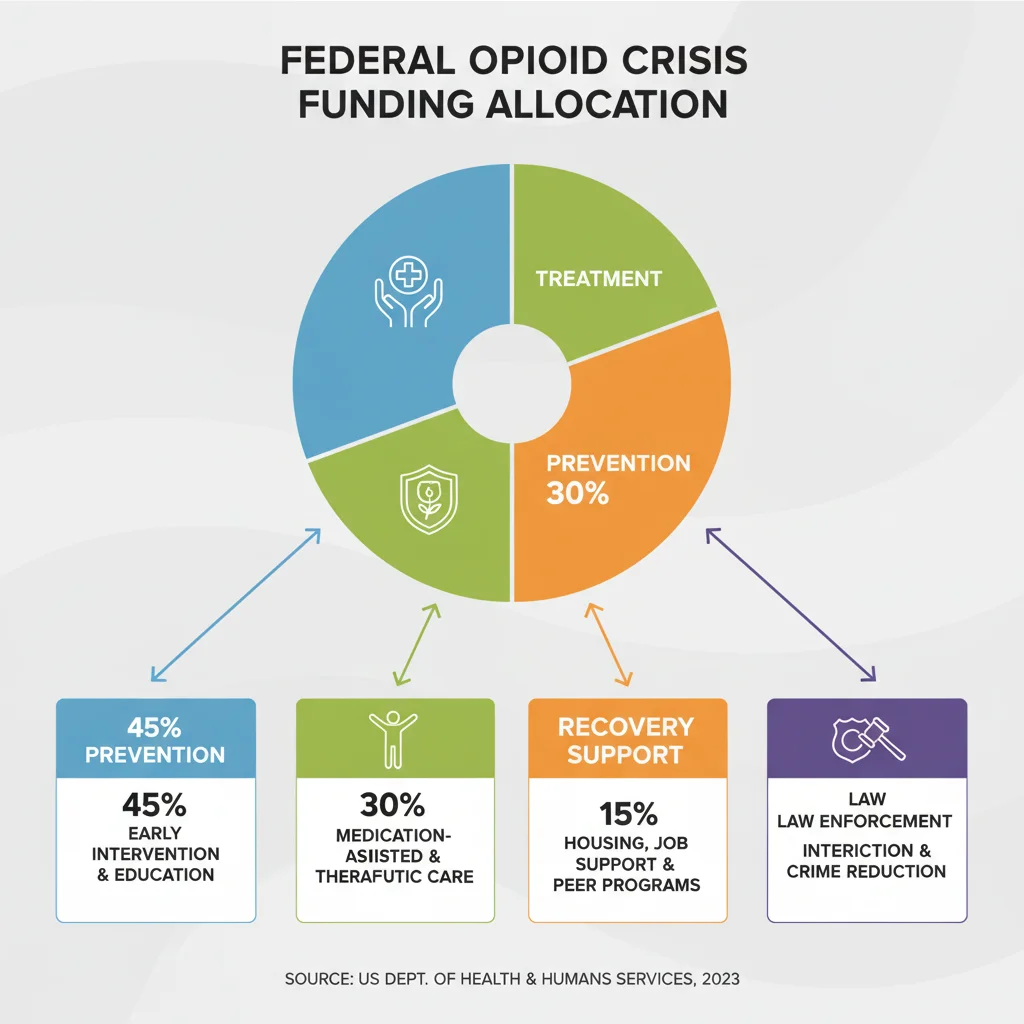
To support these ambitious strategies, the federal government has committed substantial financial resources for 2026. This funding is distributed across various agencies and programs, ensuring a broad and coordinated response. Key funding areas include:
- SAMHSA Grants: The Substance Abuse and Mental Health Services Administration (SAMHSA) will continue to be a primary channel for funding, distributing grants to states, territories, and tribal communities for prevention, treatment, and recovery services. These grants are often flexible, allowing states to tailor programs to their specific needs.
- NIH Research Initiatives: The National Institutes of Health (NIH) will receive significant funding for research into the neurobiology of addiction, the development of new treatments, and the effectiveness of various intervention strategies. This includes research into non-addictive pain management and overdose reversal medications.
- CDC Public Health Programs: The Centers for Disease Control and Prevention (CDC) will receive funding to enhance surveillance systems, track overdose data, and implement public health interventions at the local level. This data-driven approach is vital for understanding the evolving nature of the crisis and targeting resources effectively.
- Law Enforcement and Border Security: Increased appropriations for federal law enforcement agencies to combat drug trafficking and interdict illicit opioids.
- Medicaid Expansion: Continued federal support for states to expand Medicaid, which plays a critical role in providing access to substance use disorder treatment for low-income individuals.
Practical Solutions: How These Strategies Translate to Community Impact
The true measure of these federal opioid strategies lies in their practical application and tangible impact on communities. Here’s how these initiatives are expected to bring about real change:
Strengthening Local Healthcare Infrastructure
Federal funding and technical assistance will empower local health departments and community health centers to expand their capacity to offer OUD services. This means more accessible clinics, more trained professionals, and a greater integration of addiction care into primary care settings. For a rural community, this could mean the establishment of a new MAT clinic or the ability for local doctors to prescribe buprenorphine, significantly reducing travel burdens for patients.
Empowering First Responders and Emergency Services
First responders, including police, paramedics, and firefighters, are often the first on the scene of an overdose. Federal initiatives will ensure they are equipped with naloxone and trained in its administration. Beyond immediate overdose reversal, these strategies also promote the development of ‘warm handoff’ programs, where individuals revived from an overdose are immediately connected to treatment and recovery services, rather than simply being released.
Community-Led Initiatives and Grassroots Engagement
Recognizing that solutions must be tailored to local contexts, federal programs are increasingly supporting community-led initiatives. This includes funding for local coalitions, peer support networks, and faith-based organizations that are often at the forefront of addressing the crisis. These grassroots efforts are crucial for building trust, reducing stigma, and reaching vulnerable populations who may be hesitant to engage with traditional healthcare systems.
Leveraging Technology for Better Outcomes
Beyond telehealth, federal strategies are investing in other technological advancements. This includes developing AI-powered tools for predicting overdose hotspots, enhancing data sharing across healthcare systems to improve patient care coordination, and utilizing mobile apps to provide recovery support and connect individuals with resources. The goal is to make support more immediate, personalized, and accessible.
Addressing Co-occurring Conditions Holistically
The recognition of co-occurring mental health disorders is leading to more integrated treatment models. Federal funding will encourage clinics to offer both mental health counseling and OUD treatment under one roof, reducing the fragmentation of care that often hinders recovery. This holistic approach acknowledges that addiction rarely exists in isolation and that addressing underlying mental health issues is vital for sustained recovery.

Challenges and Future Outlook of Federal Opioid Strategies
Despite the comprehensive nature of the 2026 federal opioid strategies, significant challenges remain. The sheer scale of the crisis, the evolving nature of illicit drug markets, and persistent societal stigma are formidable obstacles. One major challenge is ensuring equitable access to care across all demographics and geographic regions. While federal funding aims to address disparities, deep-seated systemic inequalities can be slow to change.
Another hurdle is the workforce shortage in addiction medicine. There is a critical need for more doctors, nurses, counselors, and peer support specialists trained in substance use disorder treatment. Federal initiatives are attempting to address this through scholarships, loan repayment programs, and expanded training opportunities, but building a robust workforce takes time.
The constant emergence of new, more potent synthetic drugs also poses an ongoing threat, requiring continuous adaptation of harm reduction and treatment protocols. Research and development of new medications that can effectively treat fentanyl addiction, for instance, are high priorities.
Looking ahead, the success of these federal strategies will depend on sustained political will, consistent funding, and strong collaboration between federal, state, and local governments, as well as private organizations and community groups. Continuous evaluation and data collection will be essential to identify what works, what needs adjustment, and where resources can be most effectively deployed. The emphasis on evidence-based practices and outcomes will guide future policy decisions.
The 2026 federal approach signifies a renewed national commitment to turning the tide on the opioid crisis. By focusing on a comprehensive, multi-pronged strategy that encompasses prevention, treatment, harm reduction, and recovery support, coupled with significant financial investment, there is a tangible hope for reducing overdose deaths, increasing access to life-saving care, and supporting individuals and communities on the path to recovery. While the road ahead is challenging, these practical solutions offer a beacon of hope for a healthier future for all Americans.