AI Reshapes US Industries: The Future of Work in 2026
In the rapidly accelerating digital age, Artificial Intelligence (AI) stands as a pivotal force, fundamentally reshaping industries and the very nature of work. As we approach 2026, the integration of AI is not merely a technological upgrade but a complete paradigm shift, influencing everything from operational efficiencies to job roles and skill requirements across the United States. This comprehensive exploration delves into how AI is transforming four major US industries: Healthcare, Finance, Manufacturing, and Retail, offering insights into the future of work and what businesses and professionals can expect.
The ubiquity of AI is no longer confined to science fiction; it’s an everyday reality that’s evolving at an unprecedented pace. From automating mundane tasks to powering complex decision-making processes, AI’s capabilities are expanding, promising both immense opportunities and significant challenges. Understanding these dynamics is crucial for anyone looking to thrive in the workforce of tomorrow.
The AI Revolution: A General Overview for the Future of Work
The term ‘AI’ often conjures images of sentient robots, but its current applications are far more practical and pervasive. AI encompasses machine learning, natural language processing, computer vision, and expert systems, all designed to enable machines to perform tasks that typically require human intelligence. By 2026, these applications will have matured significantly, leading to more sophisticated and integrated systems across various sectors.
The driving force behind this rapid adoption is AI’s ability to process vast amounts of data, identify patterns, and make predictions or decisions with remarkable accuracy and speed. This capability translates into enhanced productivity, reduced operational costs, and the potential for innovation previously thought impossible. However, this also necessitates a re-evaluation of human roles, emphasizing skills that complement AI rather than compete with it.
The future of work, heavily influenced by AI, will see a shift towards more analytical, creative, and interpersonal roles, as AI takes over repetitive and data-intensive tasks. This transformation requires a proactive approach from both individuals and organizations to adapt to new skill demands and embrace continuous learning. The key to success in this AI-driven era lies in understanding how to leverage AI as a tool to augment human potential, rather than replace it entirely.
Healthcare: Precision, Personalization, and Predictive Power
The healthcare industry is on the cusp of an AI-driven revolution, promising to transform patient care, diagnostics, and administrative processes. By 2026, AI’s role will be indispensable, moving beyond just data analysis to direct patient interaction and surgical assistance. The impact of AI on the future of work in healthcare is profound, creating new specializations and redefining existing ones.
Advanced Diagnostics and Treatment
AI algorithms are becoming increasingly adept at analyzing medical images (X-rays, MRIs, CT scans) with greater accuracy than human experts, often detecting subtle anomalies that might be missed. This capability significantly speeds up diagnosis and improves treatment efficacy. For example, AI-powered tools can assist in early cancer detection, identify neurological disorders, and even predict the likelihood of disease progression. This means radiologists and pathologists will work alongside AI, using its insights to refine their diagnoses and focus on complex cases requiring human judgment.
Furthermore, AI is instrumental in drug discovery and development. By simulating molecular interactions and predicting drug efficacy, AI can drastically reduce the time and cost associated with bringing new medications to market. This accelerates the pace of innovation, offering new hope for patients with previously untreatable conditions.
Personalized Medicine and Patient Care
The future of work in healthcare will heavily feature personalized medicine, tailored to an individual’s genetic makeup, lifestyle, and environment. AI analyzes vast datasets of patient information to recommend highly specific treatments and preventive measures. This level of personalization promises more effective care and better patient outcomes.
AI-powered chatbots and virtual assistants are also changing how patients interact with healthcare providers. These tools can answer common questions, schedule appointments, monitor chronic conditions, and provide mental health support, freeing up human professionals to focus on more critical patient needs. This shift enhances accessibility and efficiency in patient care, making healthcare services more responsive and patient-centric.
Operational Efficiency and Administrative Tasks
Beyond clinical applications, AI streamlines administrative tasks that often burden healthcare professionals. From automating billing and coding to managing electronic health records (EHRs), AI reduces manual workload, minimizes errors, and improves overall operational efficiency. This allows doctors and nurses to dedicate more time to direct patient care, improving job satisfaction and reducing burnout.
The challenges in healthcare include ensuring data privacy and security, integrating AI systems seamlessly into existing workflows, and addressing ethical considerations surrounding autonomous AI in medical decisions. The workforce will need to adapt by developing AI literacy, data analysis skills, and a deeper understanding of human-AI collaboration.

Finance: Automation, Risk Management, and Algorithmic Trading
The financial sector has long been a pioneer in adopting new technologies, and AI is no exception. By 2026, AI will be deeply embedded in nearly every aspect of finance, from front-office customer interactions to back-office compliance and risk management. The future of work in finance will be characterized by increased automation, sophisticated analytical capabilities, and a demand for new specialized skills.
Enhanced Fraud Detection and Cybersecurity
One of AI’s most impactful applications in finance is its ability to detect and prevent fraud. AI algorithms can analyze transaction patterns, identify anomalies, and flag suspicious activities in real-time, far more effectively than traditional rule-based systems. This proactive approach significantly reduces financial losses and enhances security for both institutions and customers.
Beyond fraud, AI is crucial for cybersecurity, protecting sensitive financial data from increasingly sophisticated cyber threats. AI-powered systems can monitor networks for vulnerabilities, detect intrusion attempts, and respond to threats automatically, bolstering the overall security posture of financial institutions.
Personalized Financial Advice and Customer Service
Robo-advisors, powered by AI, are democratizing financial planning by offering personalized investment advice at a fraction of the cost of traditional human advisors. These platforms analyze an individual’s financial goals, risk tolerance, and market conditions to create optimized investment portfolios. By 2026, robo-advisors will become even more sophisticated, offering holistic financial planning services, including retirement planning, tax optimization, and debt management.
Customer service in finance is also being transformed by AI. Chatbots and virtual assistants handle routine inquiries, provide instant support, and guide customers through complex financial products. This not only improves customer satisfaction but also allows human financial advisors to focus on building deeper relationships and addressing more complex client needs.
Algorithmic Trading and Market Analysis
AI and machine learning are at the core of modern algorithmic trading strategies. These algorithms can analyze vast quantities of market data, identify trends, and execute trades at speeds impossible for humans. This leads to more efficient markets and potentially higher returns. However, it also introduces new risks, such as flash crashes, highlighting the need for robust regulatory frameworks.
For financial analysts, AI tools provide advanced market insights, predictive analytics, and scenario modeling capabilities. This enables them to make more informed decisions, identify emerging opportunities, and manage risk more effectively. The future of work for financial professionals will involve a greater emphasis on interpreting AI-generated insights and developing strategies based on these advanced analytics.
Challenges in finance include regulatory compliance, ethical considerations in AI decision-making (e.g., loan approvals), and the need for continuous skill development in data science and AI ethics. The workforce will require strong analytical skills, an understanding of AI models, and the ability to navigate complex regulatory landscapes.
Manufacturing: Smart Factories and Human-Robot Collaboration
The manufacturing sector is undergoing its fourth industrial revolution, driven by AI, automation, and the Internet of Things (IoT). By 2026, ‘smart factories’ will be the norm, where AI optimizes production processes, predicts maintenance needs, and enables unprecedented levels of customization. The future of work in manufacturing will see a blend of human ingenuity and robotic precision, redefining roles on the factory floor and in design offices.
Predictive Maintenance and Quality Control
AI-powered predictive maintenance systems analyze data from sensors embedded in machinery to anticipate equipment failures before they occur. This proactive approach minimizes downtime, extends equipment lifespan, and significantly reduces maintenance costs. By predicting when a machine needs servicing, manufacturers can schedule maintenance during non-production hours, ensuring continuous operation.
In quality control, AI-driven computer vision systems can inspect products for defects with remarkable speed and accuracy, surpassing human capabilities. This ensures higher product quality, reduces waste, and enhances customer satisfaction. These systems can identify even microscopic flaws, leading to a significant improvement in overall production standards.
Optimized Production and Supply Chain Management
AI algorithms optimize every stage of the production process, from raw material procurement to final product delivery. This includes optimizing factory layouts, scheduling production runs, and managing inventory levels to minimize costs and maximize output. AI’s ability to analyze real-time data allows manufacturers to respond quickly to changes in demand or supply chain disruptions, making their operations more agile and resilient.
Supply chain management benefits immensely from AI, which can predict demand fluctuations, optimize logistics routes, and identify potential bottlenecks. This leads to more efficient and sustainable supply chains, reducing lead times and improving delivery reliability. The future of work in supply chain management will require professionals who can leverage AI tools to analyze complex networks and make strategic decisions.
Human-Robot Collaboration (Cobots)
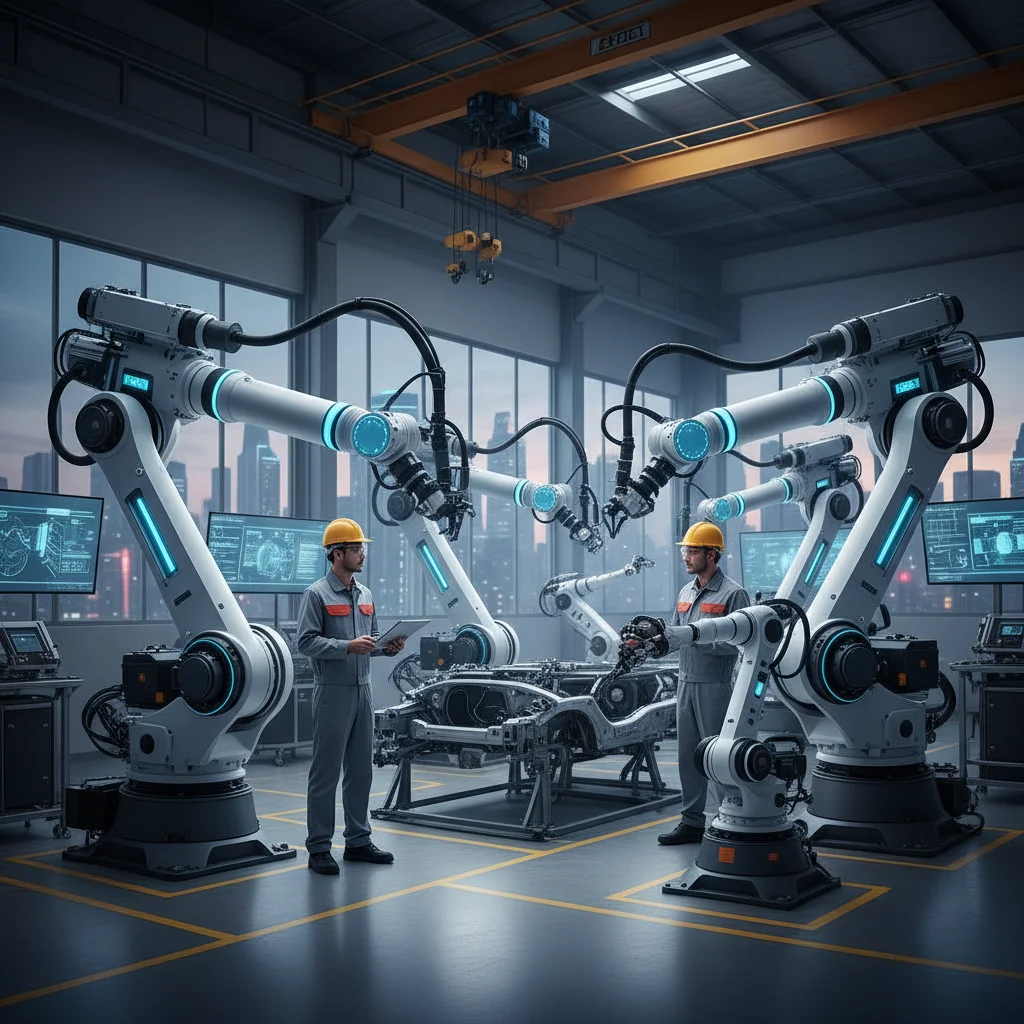
Perhaps the most significant shift in manufacturing is the rise of collaborative robots, or ‘cobots.’ Unlike traditional industrial robots that operate in cages for safety, cobots are designed to work alongside human employees, assisting with tasks that require precision, strength, or repetitive motion. This collaboration enhances productivity, reduces physical strain on workers, and allows humans to focus on tasks requiring creativity, problem-solving, and fine motor skills.
The future of work in manufacturing will involve training workers to program, operate, and maintain these advanced AI-powered systems. New roles such as ‘robot trainers’ and ‘AI system integrators’ will emerge, requiring a blend of technical expertise and interpersonal skills. The emphasis will shift from manual labor to overseeing automated processes and innovating new manufacturing techniques.
Retail: Hyper-Personalization and Seamless Customer Experiences
The retail industry is undergoing a dramatic transformation, driven by AI’s ability to understand consumer behavior, personalize shopping experiences, and optimize operations. By 2026, AI will be the backbone of both online and brick-and-mortar retail, creating highly engaging and efficient shopping environments. The future of work in retail will demand a blend of technological proficiency and a deep understanding of customer psychology.
Personalized Shopping Experiences
AI is enabling retailers to offer unprecedented levels of personalization. Through sophisticated algorithms, AI analyzes customer data (browsing history, purchase patterns, preferences) to recommend products, personalize promotions, and even customize website layouts. This hyper-personalization creates a more engaging and relevant shopping experience, driving sales and customer loyalty.
In physical stores, AI-powered systems like smart mirrors and personalized digital signage offer tailored recommendations, while AI-driven inventory management ensures that popular items are always in stock. The future of work for sales associates will involve using AI tools to provide more informed and personalized assistance to customers, moving beyond transactional interactions to genuine advisory roles.
Optimized Inventory and Supply Chain
AI plays a critical role in optimizing retail inventory management. By analyzing sales data, seasonal trends, and external factors like weather forecasts, AI can predict demand with high accuracy, preventing overstocking or stockouts. This reduces waste, improves cash flow, and ensures that customers can always find the products they want.
AI also streamlines the retail supply chain, from warehouse automation to last-mile delivery. AI-powered robots in warehouses can sort and retrieve items efficiently, while AI-optimized delivery routes reduce shipping times and costs. This ensures a seamless flow of products from supplier to customer, enhancing overall operational efficiency.
Enhanced Customer Service and Engagement
AI-powered chatbots and virtual assistants are becoming standard in retail customer service, providing instant support, answering queries, and resolving issues around the clock. These tools free up human customer service representatives to handle more complex or sensitive customer interactions, improving service quality and reducing wait times.
AI also facilitates engaging customer experiences through augmented reality (AR) applications that allow customers to virtually ‘try on’ clothes or visualize furniture in their homes. This innovative use of technology blurs the lines between online and offline shopping, creating immersive and interactive retail environments.
Challenges in retail include data privacy concerns, the need for robust cybersecurity measures, and the ethical use of customer data for personalization. The workforce will need to develop skills in data analytics, digital marketing, and customer experience design, alongside a strong understanding of AI’s capabilities and limitations.
Preparing for the AI-Driven Future of Work
The pervasive integration of AI across these industries by 2026 presents both significant challenges and unparalleled opportunities. The primary challenge lies in the potential for job displacement, particularly in roles involving repetitive or predictable tasks. However, history has shown that technological advancements also create new jobs and transform existing ones, requiring a shift in skills rather than outright elimination.
Upskilling and Reskilling the Workforce
For individuals, continuous learning and skill development will be paramount. Investing in education and training programs that focus on AI literacy, data science, critical thinking, creativity, and emotional intelligence will be crucial. These ‘human-centric’ skills are difficult for AI to replicate and will become increasingly valuable in an AI-augmented workforce.
Governments, educational institutions, and businesses must collaborate to create accessible and effective reskilling initiatives. This includes developing curricula that prepare students for AI-driven roles and offering lifelong learning opportunities for current employees. The goal is not to compete with AI but to learn how to effectively collaborate with it, leveraging its power to enhance human capabilities.
Ethical AI and Regulatory Frameworks
As AI becomes more integrated into critical functions, ethical considerations and robust regulatory frameworks will be essential. Issues such as algorithmic bias, data privacy, accountability for AI decisions, and the societal impact of automation need to be addressed proactively. Developing ethical AI guidelines and legal frameworks will ensure that AI technologies are developed and deployed responsibly, serving humanity’s best interests.
Strategic Investment and Innovation
Businesses must strategically invest in AI technologies, not just as a cost-cutting measure but as a driver of innovation and competitive advantage. This involves fostering a culture of experimentation, encouraging interdisciplinary collaboration, and committing to continuous research and development in AI. Companies that embrace AI as a core component of their strategy will be better positioned to lead in their respective industries.
Conclusion: Embracing the AI-Powered Future
By 2026, AI will have profoundly reshaped the future of work across healthcare, finance, manufacturing, and retail in the US. This transformation is characterized by increased automation, hyper-personalization, enhanced efficiency, and the emergence of new forms of human-AI collaboration. While challenges related to job displacement and ethical considerations remain, the opportunities for innovation, productivity gains, and improved quality of life are immense.
The key to navigating this AI-driven future lies in adaptability, continuous learning, and a proactive approach to embracing technological change. For individuals, this means developing a blend of technical and human-centric skills. For businesses, it involves strategic investment in AI, fostering a culture of innovation, and prioritizing ethical considerations. As we move closer to 2026, the industries that successfully integrate AI will not only thrive but also set new standards for efficiency, customer experience, and human potential.
The future of work is not about AI replacing humans, but about AI empowering humans to achieve more. It’s an exciting frontier, promising a world where intelligence, both artificial and human, collaborates to solve complex problems and create unprecedented value. The journey ahead requires foresight, collaboration, and a commitment to shaping an inclusive and prosperous AI-powered future.