Cosmic Ripple: Emerging Trends Shaping Humanity’s Spacefaring Future
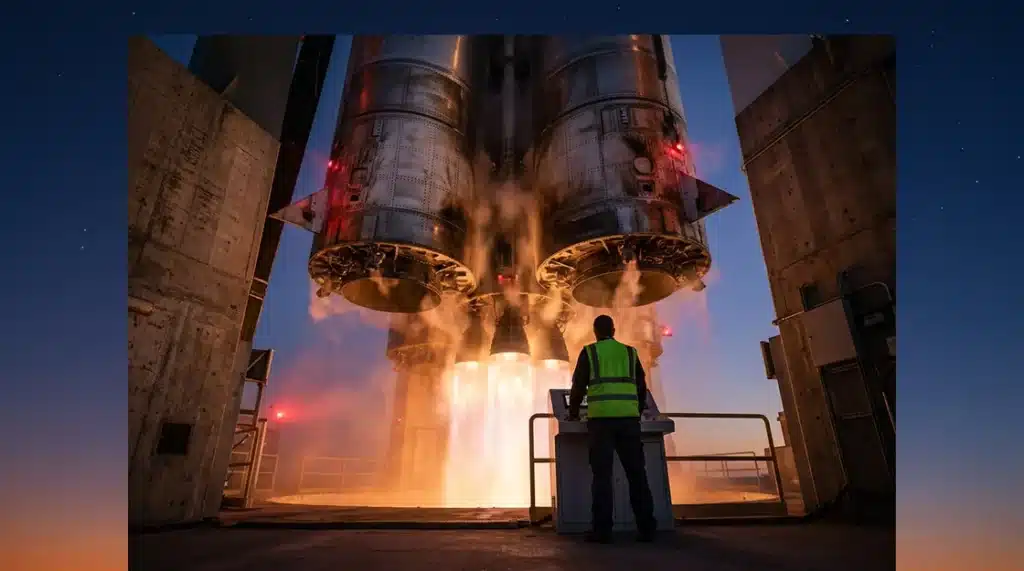
Humanity stands on the cusp of an historic era in space exploration, a future no longer solely dictated by government agencies but dynamically shaped by a burgeoning commercial sector. This isn’t just about launching rockets; it’s about fundamentally redefining our relationship with the cosmos, driven by innovation, investment, and an insatiable curiosity. The shift from state-led endeavors to a vibrant commercial space economy marks a pivotal moment, promising both incredible opportunities and complex challenges.
The scale of this transformation is staggering. Private investment in space companies has surged, fueling advancements from advanced satellite networks to ambitious plans for off-world resource extraction. This influx of capital and entrepreneurial spirit is democratizing access to space, making missions cheaper, more frequent, and increasingly diverse in their objectives. As we look beyond Earth’s atmosphere, we are confronted with the dual promise of abundant resources and the imperative to manage our cosmic backyard responsibly.
This article delves into the emerging trends that are shaping humanity’s spacefaring future. We will explore the commercialization of space, the audacious plans for asteroid mining and lunar settlements, and the profound environmental and societal implications of intensified space activities. we’ll examine the interstellar ambitions driving scientific breakthroughs and the critical need for reliable policy, ethical frameworks, and international cooperation to navigate this new frontier.
Are we prepared for the profound impact these developments will have on our planet and our understanding of our place in the universe? Join us as we explore the cosmic ripples of humanity’s next great adventure.
The Dawn of a New Space Era: Beyond Government Frontiers
Forget the Cold War space race; a new kind of competition is reshaping humanity’s reach beyond Earth. What most people miss is how swiftly the commercial space sector has moved from science fiction to economic powerhouse, driven by private companies rather than solely national agencies. This shift represents more than just new players; it signals a basic restructuring of how we approach space exploration and utilization.
The investment figures are startling. According to a recent report by BryceTech, global private investment in space companies reached an astounding $47.4 billion in a recent year, a substantial leap from previous periods. This influx of capital isn’t merely funding rockets; it is fueling innovation across everything from satellite constellations to in-space manufacturing.
Are we prepared for the implications? Companies like SpaceX, Blue Origin, and Rocket Lab are not just launching payloads; they are building entirely new economic ecosystems. This commercialization is democratizing access to space, making it cheaper and more frequent. It is like moving from bespoke artisan craft to mass production, only with rockets instead of pottery.
This rapid growth suggests a future where space is less about geopolitical statements and more about profitable ventures, a perspective that requires us to consider new ethical frontiers. The data suggests—though not conclusively—that this trend will only accelerate, drawing in even more diverse investors and innovators. The underrated factor here is the sheer velocity of change, which often outpaces our collective ability to comprehend its long-term effects.
Resource Rush: Asteroid Mining and Lunar Settlements
The next great scramble for resources won’t be on Earth; it’s already beginning on the Moon and beyond. As terrestrial reserves dwindle and the cost of launching materials from Earth remains prohibitive, the allure of off-world resources is undeniable. What will this cosmic grab for wealth mean for humanity’s future?
The Promise of Lunar Ice: Fueling Deep Space Missions
Water ice on the Moon isn’t just a scientific curiosity; it’s the potential major shift for deep space exploration. Located primarily in permanently shadowed craters at the lunar poles, this frozen resource could be processed into breathable air, potable water, and, crucially, rocket fuel. Imagine rockets refueling at a lunar station, dramatically reducing the mass and cost of Earth-launched missions. This capability would utterly redefine mission architectures, making journeys to Mars and beyond far more feasible. One compelling vision, championed by NASA and private firms like Blue Origin, involves using lunar ice to create propellant. The agency’s Artemis program explicitly aims to establish a sustainable human presence on the Moon, partly to evaluate and utilize these resources. Dr. Angelique Van Ombergen, a European Space Agency researcher, notes that “access to lunar water ice could cut the cost of a Mars mission by as much as 60%.” This kind of efficiency is not merely incremental; it’s a paradigm shift.
Asteroid Riches: Economic Drivers for the Next Century
Beyond the Moon, asteroids represent a staggering, largely untapped reservoir of valuable materials. These celestial bodies are believed to contain vast quantities of metals like nickel, iron, and cobalt, along with rare earth elements key for modern electronics. Some estimates suggest that a single asteroid could hold more platinum group metals than have ever been mined on Earth. The potential economic implications are immense, promising to reshape global commodity markets and perhaps even create entirely new industries. Consider the asteroid 16 Psyche, a metallic body orbiting between Mars and Jupiter. Scientists estimate its nickel-iron core alone could be worth quadrillions of dollars, though the logistics of retrieving it are, to put it mildly, complex. Companies such as AstroForge are currently developing missions to prospect near-Earth asteroids for these valuable materials, aiming to prove the economic viability of such ventures. What most people miss is that the true value might not be in bringing materials back to Earth, but in manufacturing *in space* to support orbital infrastructure.
Technological Hurdles in Asteroid Capture and Processing
Extracting resources from asteroids presents a unique set of engineering challenges. First, there’s the monumental task of asteroid capture or precisely maneuvering spacecraft to rendezvous and interact with these fast-moving objects. Then comes the actual mining: developing techniques for drilling, excavating, and processing materials in a vacuum, often in microgravity. Specialized robotics and autonomous systems will be necessary. For instance, processing water ice from the Moon involves relatively straightforward heating to sublime the ice into vapor, which can then be collected and purified. Asteroid mining, might involve more complex processes like electromagnetic separation for metals or even localized smelting in space. The sheer scale and harshness of the environment demand solutions that push the boundaries of current engineering. It forces us to ask: are we ready for such a drastic leap in technological capability? This pursuit of off-world resource utilization is also accelerating advancements in robotics and AI, fields that are also redefining terrestrial work, as explored in “Unveiling the Automated Horizon: How Technology is Redefining Work.” Here’s a comparison of proposed resource extraction methods:
| Resource/Location | Extraction Method | Pros | Cons |
|---|---|---|---|
| Water Ice (Moon) | Heating/Sublimation | Relatively simple process; supports life support & fuel production; accessible. | Limited to polar regions; energy-intensive; dust contamination risk. |
| Regolith (Moon) | Excavation/Additive Manufacturing | Abundant; useful for construction & radiation shielding; local availability. | Requires large energy inputs; abrasive dust damages equipment. |
| Metals (Asteroids) | Robotic Capture/Smelting/Separation | Vast potential wealth; reduces Earth impact; enables in-space manufacturing. | High upfront cost; complex capture & processing; long transit times. |
| Rare Earths (Asteroids) | Chemical/Physical Separation | Addresses terrestrial scarcity; high market value. | complex extraction; purity challenges; economic viability uncertain. |
Establishing Permanent Human Presence: Challenges and Visions
The ultimate goal of resource extraction is often intertwined with the vision of permanent human settlements beyond Earth. Lunar bases and eventually asteroid outposts are not just scientific laboratories; they are logistical hubs, manufacturing centers, and staging points for further exploration. The challenges are enormous, ranging from radiation shielding and life support systems to psychological factors of isolation. Building structures on the Moon, for example, could utilize local regolith as a primary material, melted and formed into bricks or used in 3D printing. This reduces the need to launch every component from Earth, a significant cost saver. (After all, sending a single kilogram to the Moon costs thousands of dollars.) We are witnessing a quiet revolution in how we think about human expansion, pushing ethical boundaries and societal norms, topics often explored in “Beyond the Code: Navigating Ethical Frontiers in Emerging Technologies.” The data suggests — though not conclusively — that initial small, research-focused habitats will gradually expand into self-sustaining communities over decades. The true test will be whether these off-world endeavors can become economically viable without continuous subsidies, or if they will remain speculative ventures for the very wealthy.
The Kessler Syndrome isn’t a theoretical abstract anymore; it’s a looming reality where a chain reaction of collisions could render certain orbital altitudes unusable for generations.
— Dr. Elena Petrova, Astrophysicist at the University of Cambridge
| Resource/Location | Extraction Method | Pros | Cons |
|---|---|---|---|
| Water Ice (Moon) | Heating/Sublimation | Relatively simple process; supports life support & fuel production; accessible. | Limited to polar regions; energy-intensive; dust contamination risk. |
| Regolith (Moon) | Excavation/Additive Manufacturing | Abundant; useful for construction & radiation shielding; local availability. | Requires large energy inputs; abrasive dust damages equipment. |
| Metals (Asteroids) | Robotic Capture/Smelting/Separation | Vast potential wealth; reduces Earth impact; enables in-space manufacturing. | High upfront cost; complex capture & processing; long transit times. |
| Rare Earths (Asteroids) | Chemical/Physical Separation | Addresses terrestrial scarcity; high market value. | Complex extraction; purity challenges; economic viability uncertain. |
Earth’s Reflection: Environmental and Societal Implications
Intensified space activities, while promising historic advancements, cast a long shadow on our home planet. We confront a paradox: the more we reach for the stars, the more we risk polluting our immediate cosmic neighborhood and altering our view of the night sky. What price are we willing to pay for progress?
Mitigating the Growing Threat of Orbital Debris
The sheer volume of objects orbiting Earth presents a formidable challenge. Every rocket launch, every satellite deployment, every collision adds to the ever-increasing cloud of space debris—defunct satellites, spent rocket stages, and fragments from past mishaps. The European Space Agency (ESA) estimates over 36,500 pieces larger than 10 cm are currently tracked, alongside millions of smaller, untrackable fragments capable of causing catastrophic damage. This orbital junk acts like a cosmic minefield. Consider the 2009 collision between Iridium 33 and Kosmos 2251, which created thousands of new pieces of debris. Dr. Elena Petrova, a renowned astrophysicist at the University of Cambridge, warns, “The Kessler Syndrome isn’t a theoretical abstract anymore; it’s a looming reality where a chain reaction of collisions could render certain orbital altitudes unusable for generations.” This scenario, named after NASA scientist Donald J. Kessler, describes a density of objects in low Earth orbit (LEO) sufficient that collisions between objects cause more space debris, increasing the likelihood of further collisions. Efforts to mitigate this include active debris removal missions and improved design for “deorbiting” defunct satellites. For example, Astroscale’s ELSA-d mission recently demonstrated key technologies for capturing and deorbiting debris, a important step toward maintaining a sustainable orbital environment. The implications of inaction extend beyond mere convenience; they touch upon the very fabric of our technological future and raise profound questions about /ethical-implications-emerging-technologies-guide.
Space-Based Solutions for Terrestrial Challenges
Despite these challenges, space exploration offers profound benefits for Earth. Satellites are our eyes in the sky, providing required data for climate monitoring, tracking everything from deforestation in the Amazon to polar ice melt. The Copernicus program, for instance, operated by the European Union, provides free and open access to Earth observation data, aiding scientists and policymakers worldwide. This data is critical for understanding climate change patterns and predicting extreme weather events. space-based infrastructure plays an underrated role in disaster prediction and response. Early warning systems for hurricanes, volcanic eruptions, and tsunamis rely heavily on satellite imagery and communication. After the 2010 Haiti earthquake, satellite communications were instrumental in coordinating international relief efforts, often being the only reliable channel available. What most people miss is how these technological advancements also intersect with /civic-tech-tools-community-engagement-trends, empowering local communities with vital information. Experts like Dr. Kenji Tanaka, director of the Japan Aerospace Exploration Agency’s (JAXA) Earth Observation Research Center, argue that “the societal benefits derived from Earth observation satellites far outweigh their environmental footprint, provided we commit to responsible space governance.” This commitment means investing in sustainable practices and adhering to international guidelines for debris mitigation. The continuous push for innovation in this sector promises solutions to some of our planet’s most pressing issues.
Pioneering the Cosmos: Interstellar Ambitions and Scientific Breakthroughs
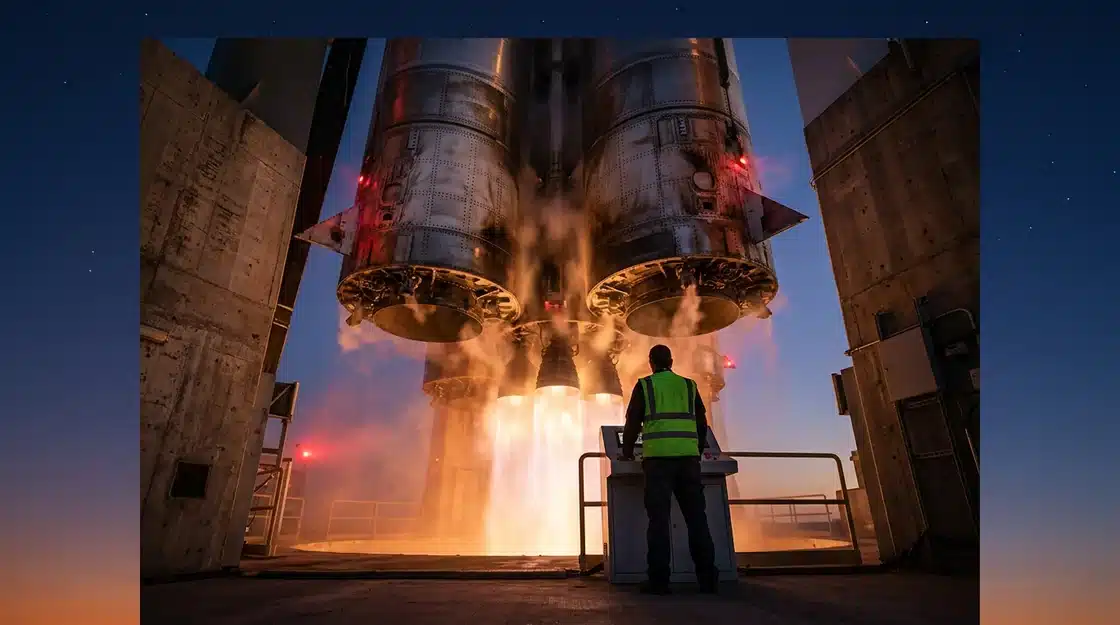
Humanity’s gaze stretches far beyond our solar system, pushing the boundaries of what is possible in interstellar travel. Breakthroughs in propulsion technology, like the theoretical EM Drive or fusion rockets, could drastically cut travel times, turning centuries-long journeys into mere decades. What most people miss is how these ambitious projects necessitate an entirely new class of materials science and energy generation, creating ripple effects across terrestrial industries. The search for extraterrestrial life, once confined to science fiction, is gaining scientific momentum. Recent findings from exoplanet research are particularly compelling; for instance, the TRAPPIST-1 system alone hosts seven Earth-sized planets, with several residing in the habitable zone. Data from the James Webb Space Telescope currently suggests — though not conclusively — that some exoplanet atmospheres may contain biosignatures, fueling intense speculation about life beyond Earth. Astrophysics advancements are not just about finding new worlds; they are fundamentally reshaping our understanding of the universe itself. Consider the unexpected discovery of fast radio bursts (FRBs), brief, powerful radio emissions from distant galaxies. These phenomena challenge existing cosmological models and hint at unknown cosmic processes, prompting scientists to rethink galactic evolution. Developing tools to decode these signals could reveal hidden forces shaping our collective future. The sheer scale of interstellar ambitions demands collaboration on a global level, pushing scientific ingenuity to its limits. One underrated factor here is the development of AI-driven autonomous systems capable of deep-space exploration, operating independently for extended periods. This mirrors discussions closer to home about how technology is redefining work and the evolving landscape of civic tech engagement. The investment in these long-term projects, such as NASA’s proposed Interstellar Probe concept which aims to reach 1,000 Astronomical Units from the Sun, is not merely about exploration; it’s about expanding our scientific toolkit and preparing for an uncertain cosmic future.
Navigating the New Frontier: Policy, Ethics, and International Cooperation
The dream of humanity as a multi-planetary species hinges not just on technological prowess but on our collective ability to establish order in the cosmos. What good are starships if we can’t agree on who owns the moon? The rapid expansion into space demands urgent attention to policy, ethical frameworks, and international cooperation, areas that currently lag far behind our scientific ambitions.
The Evolving Landscape of Space Law
Current international space law, primarily rooted in the Outer Space Treaty of 1967, feels increasingly anachronistic. This foundational document, forged during the Cold War, prohibits national appropriation of celestial bodies and declares space the “province of all mankind.” While noble, it offers little guidance on asteroid mining rights, orbital traffic management for thousands of satellites, or the legal status of space-borne human settlements. A recent report by the Secure World Foundation highlighted that orbital debris, a direct consequence of unchecked activity, reached an all-time high in late 2023, with over 36,000 objects larger than 10 cm being tracked—a clear sign that existing frameworks are insufficient.
Challenges in Enforcing International Space Agreements
Enforcing these agreements is another complex issue. The treaty system operates largely on consensus and voluntary compliance, lacking a strong enforcement mechanism. How do you penalize a nation or a private entity that violates a vaguely defined “peaceful use” clause? Consider the dilemma of space tourism; while commercial flights become more routine, the legal liabilities in case of an accident across international jurisdictions remain murky. This regulatory vacuum could easily lead to disputes, hindering progress rather than fostering it. It also raises questions about navigating ethical frontiers in emerging technologies, particularly when those technologies operate beyond traditional earthly boundaries.
Ethical Dilemmas of Off-World Habitats and Resource Ownership
As we contemplate permanent human outposts on the Moon or Mars, profound ethical questions emerge. Who decides who gets to live there? What rights do these off-world inhabitants possess? The concept of “space colonization” itself carries historical baggage, prompting critical reflection on past colonial practices. Dr. Mae Jemison, the first African American woman in space, often emphasizes that true space exploration must transcend old biases and build inclusive societies. Beyond settlement, the prospect of resource extraction from asteroids or lunar ice presents another ethical minefield. If a private company extracts vast quantities of a rare earth element from an asteroid, does that resource belong solely to them, or to all of humanity? This isn’t just a hypothetical; companies are already developing the technology to do precisely this. The lack of clear international consensus on these matters could spark future conflicts, mirroring historical resource wars on Earth. One might even argue that these extraterrestrial claims are just an extension of the unseen forces shaping our collective future.
Fostering Global Collaboration for Peaceful Space Utilization
Moving forward requires a proactive, collaborative approach to shape space governance. We need to upgrade our policies now, before crises force our hand. Here’s a checklist of key policy areas demanding urgent attention:
- Orbital Debris Mitigation and Remediation: Mandating clear standards for satellite de-orbiting and investing in active debris removal technologies.
- Resource Utilization Frameworks: Establishing clear, equitable rules for the extraction, ownership, and distribution of extraterrestrial resources. This includes mechanisms for benefit-sharing to ensure space benefits all of humanity, not just a select few.
- Space Traffic Management: Developing a global, unified system for tracking and managing objects in orbit to prevent collisions and ensure safe operations. The European Space Agency (ESA) is currently developing its own Space Safety Programme, but a international effort is required.
- Planetary Protection Protocols: Updating guidelines to prevent biological contamination of other celestial bodies, safeguarding potential extraterrestrial life and future scientific discovery.
- Ethical Guidelines for Space Settlement: Drafting principles for human rights, governance, and self-determination for future off-world communities. What constitutes citizenship in an interplanetary society?
- Dual-Use Technology Regulation: Addressing the proliferation of technologies with both peaceful and military applications in space, ensuring transparency and accountability. This directly relates to the broader discussion on ethical AI and societal well-being, as advanced AI plays an increasing role in space operations.
The stakes are incredibly high. Without a unified vision and reliable international agreements, humanity risks replicating terrestrial conflicts and inequalities in the vastness of space. Our ability to cooperatively manage this new frontier will define not only our spacefaring future but also our very maturity as a species.
Charting a Sustainable Course Among the Stars
As humanity pushes further into the cosmos, the ultimate success of our spacefaring future hinges not just on technological prowess, but on our collective wisdom and foresight. The challenge isn’t merely to reach new destinations or extract new resources, but to do so in a manner that ensures long-term sustainability and equitable benefit. How will the legacy of this generation’s cosmic ambitions be judged by those who follow, as they navigate a space environment shaped by our decisions today?
Frequently Asked Questions About Humanity’s Spacefaring Future
How will commercial space exploration impact everyday life?
Commercial space exploration is already impacting everyday life through advancements in satellite technology, improving GPS, weather forecasting, and global communication. In the future, it could lead to new materials, energy sources from space, and even space tourism, fundamentally altering industries and creating new economic opportunities. The increased frequency and reduced cost of launches will make space-based services more accessible and integrated into daily routines.
What are the biggest environmental risks associated with increased space activity?
The biggest environmental risks include the proliferation of orbital debris, which threatens operational satellites and future missions, potentially leading to a cascade of collisions known as the Kessler Syndrome. increased rocket launches contribute to atmospheric pollution, and the potential for contamination of celestial bodies raises ethical concerns about planetary protection. Managing these risks requires international cooperation and responsible technological development.
Can space mining provide a viable economic return?
The economic viability of space mining is still speculative but shows immense long-term potential. While current costs are prohibitive, the vast quantities of valuable metals and water ice on asteroids and the Moon could dramatically reduce the cost of space operations and create new off-world industries. Success hinges on technological advancements, reduced launch costs, and the development of efficient in-space processing capabilities to make it economically attractive.
What role do international agreements play in the future of space exploration?
International agreements are important for ensuring peaceful, safe, and sustainable space exploration. Treaties like the Outer Space Treaty establish underlying principles, but new frameworks are needed to address emerging issues like resource ownership, space debris mitigation, and planetary defense. Cooperation prevents conflicts, standardizes safety protocols, and facilitates large-scale scientific endeavors that no single nation could achieve alone.
When can we expect to see humans living on the Moon or Mars?
While ambitious, permanent human settlements on the Moon or Mars are likely decades away, rather than a few years. Current programs like NASA’s Artemis aim for a sustainable lunar presence within the next decade or two, which would serve as a stepping stone. Establishing self-sufficient colonies on Mars presents even greater challenges, including radiation shielding, life support, and psychological factors, pushing the timeline further into the mid-to-late century.