5G Evolution 2026: US Infrastructure, Speed, and Future Connectivity

The Dawn of a New Era: Understanding 5G Evolution 2026 in the US
The digital landscape is in a constant state of flux, and at the heart of this transformation lies the relentless advancement of wireless technology. As we peer into the near future, specifically towards 2026, the 5G evolution 2026 in the United States promises to be nothing short of revolutionary. This isn’t just about faster internet; it’s about fundamentally reshaping how we live, work, and interact with the world around us. With significant strides in infrastructure development and projected network speeds that are a staggering 15% faster than current capabilities, 2026 is poised to be a pivotal year for connectivity in America.
The journey of 5G has been marked by rapid deployment and continuous innovation. From its initial rollout, promising enhanced mobile broadband and ultra-low latency, the technology has been steadily maturing. By 2026, we anticipate seeing the full fruition of these early promises, coupled with new capabilities that will unlock unprecedented applications and services. This article will delve deep into what the 5G evolution 2026 entails for the US, exploring the critical infrastructure upgrades, the tangible benefits of increased speed, and the broader societal impact.
Understanding the nuances of this evolution is crucial for businesses, policymakers, and consumers alike. The implications stretch across every sector, from healthcare and manufacturing to entertainment and transportation. The goal is to provide a comprehensive overview, equipping you with the knowledge to navigate and leverage the opportunities presented by this next phase of wireless connectivity. Let’s embark on this journey to explore the future of 5G.
The Current State of 5G in the US: A Foundation for Growth
Before we project into 2026, it’s essential to understand the current landscape of 5G deployment in the US. Over the past few years, major carriers like Verizon, AT&T, and T-Mobile have invested billions in building out their 5G networks. This has involved deploying a mix of low-band, mid-band, and high-band (mmWave) spectrums, each offering distinct characteristics in terms of coverage, capacity, and speed.
Low-band 5G provides broad coverage, similar to 4G LTE, making it accessible to a wide geographic area. Mid-band 5G, often referred to as the ‘sweet spot,’ offers a balance of coverage and speed, significantly enhancing user experience in urban and suburban areas. High-band mmWave delivers extremely fast speeds and low latency but has a limited range and struggles with penetration, making it ideal for dense urban environments and specific venues.
While significant progress has been made, the current 5G experience can vary widely depending on location and carrier. Many users primarily experience 5G through low-band deployments, which offer incremental speed improvements over 4G. However, the continuous expansion of mid-band spectrum and the strategic deployment of mmWave are steadily improving the overall performance and reach of 5G across the nation. This ongoing build-out forms the critical foundation upon which the 5G evolution 2026 will be built.
Furthermore, the focus has also been on enhancing network reliability and reducing latency, which are key pillars of 5G’s transformative potential. These initial phases have been crucial in identifying deployment challenges, optimizing network architectures, and preparing for the more advanced capabilities that are just around the corner. The lessons learned and the infrastructure laid down today will directly influence the pace and effectiveness of the advancements we expect by 2026.
Key Drivers of 5G Evolution 2026: What’s Propelling the Change?
Several critical factors are driving the anticipated 5G evolution 2026. These drivers are multifaceted, encompassing technological advancements, economic incentives, and evolving consumer and industrial demands.
Technological Maturation and 5G Advanced
One of the primary drivers is the ongoing maturation of 5G standards. The 3GPP (3rd Generation Partnership Project), the global standardization body for mobile telecommunications, continues to release new specifications that enhance 5G’s capabilities. Releases 17 and 18, often referred to as ‘5G Advanced,’ will introduce significant improvements in network efficiency, capacity, and intelligence. These advancements will enable more sophisticated network slicing, enhanced massive MIMO (Multiple-Input Multiple-Output) techniques, and more efficient use of spectrum, all contributing to the projected 15% speed increase and overall performance boost.
Infrastructure Investment and Fiber Backhaul
The backbone of any robust wireless network is its wired infrastructure. Extensive investment in fiber optic backhaul is crucial for supporting the high bandwidth and low latency demands of advanced 5G. By 2026, we expect to see a significant expansion of fiber optic networks across the US, reaching more cell towers and small cells. This dense fiber infrastructure is essential to prevent bottlenecks and ensure that the wireless segment of the network can deliver its full potential. Government initiatives and private sector investments are converging to accelerate this critical build-out.
Edge Computing Integration
The synergy between 5G and edge computing is another powerful driver. Edge computing brings data processing closer to the source of data generation, reducing latency and enabling real-time applications. As 5G networks become more pervasive, edge computing nodes will become integral parts of the infrastructure, facilitating applications like autonomous vehicles, industrial automation, and advanced augmented reality. This integration will not only enhance performance but also unlock new business models and services.
Demand for Enhanced Connectivity
The ever-increasing demand for data-intensive applications, high-definition streaming, immersive gaming, and the proliferation of IoT devices continues to fuel the need for faster and more reliable networks. Consumers and enterprises alike are pushing the boundaries of current connectivity, creating a natural impetus for the 5G evolution 2026. The pandemic further accelerated this demand, highlighting the critical role of robust connectivity for remote work, education, and healthcare.
The Promise of 15% Faster Network Speeds: What Does it Mean?
The projection of 15% faster network speeds by 2026 is a significant milestone that will have tangible impacts across various user experiences and industry applications. While percentages can sometimes feel abstract, let’s break down what this speed increase truly signifies.
Enhanced Mobile Broadband Experience
For the average consumer, a 15% speed boost translates to quicker downloads, smoother streaming of 4K/8K content, and more responsive mobile gaming. Large files that currently take minutes to download will be completed in seconds. Video calls will experience fewer drops and higher clarity. This improvement will make mobile connectivity an even more viable alternative to fixed-line broadband for many households, especially in underserved areas.
Real-Time Applications and Immersive Experiences
Beyond raw speed, the underlying improvements in latency and network reliability that accompany these speed increases are crucial. This will enable a new generation of real-time applications. Think about augmented reality (AR) and virtual reality (VR) experiences becoming truly immersive and interactive, without the lag that currently plagues many applications. Cloud gaming will become indistinguishable from local console gaming. These advancements are critical for the mainstream adoption of metaverse-like environments and other bandwidth-hungry, latency-sensitive applications.
Industrial and Enterprise Impact
For industries, the 15% speed increase, combined with lower latency, will be transformative. In manufacturing, it facilitates more precise control of robotics and automation, enabling real-time data analytics for predictive maintenance and quality control. In healthcare, it supports remote surgery, high-definition telemedicine, and the rapid transfer of large medical imaging files. Logistics and transportation will benefit from real-time tracking, optimized route planning, and the foundational support for autonomous vehicle communication. This isn’t just about faster downloads; it’s about enabling entirely new operational paradigms.
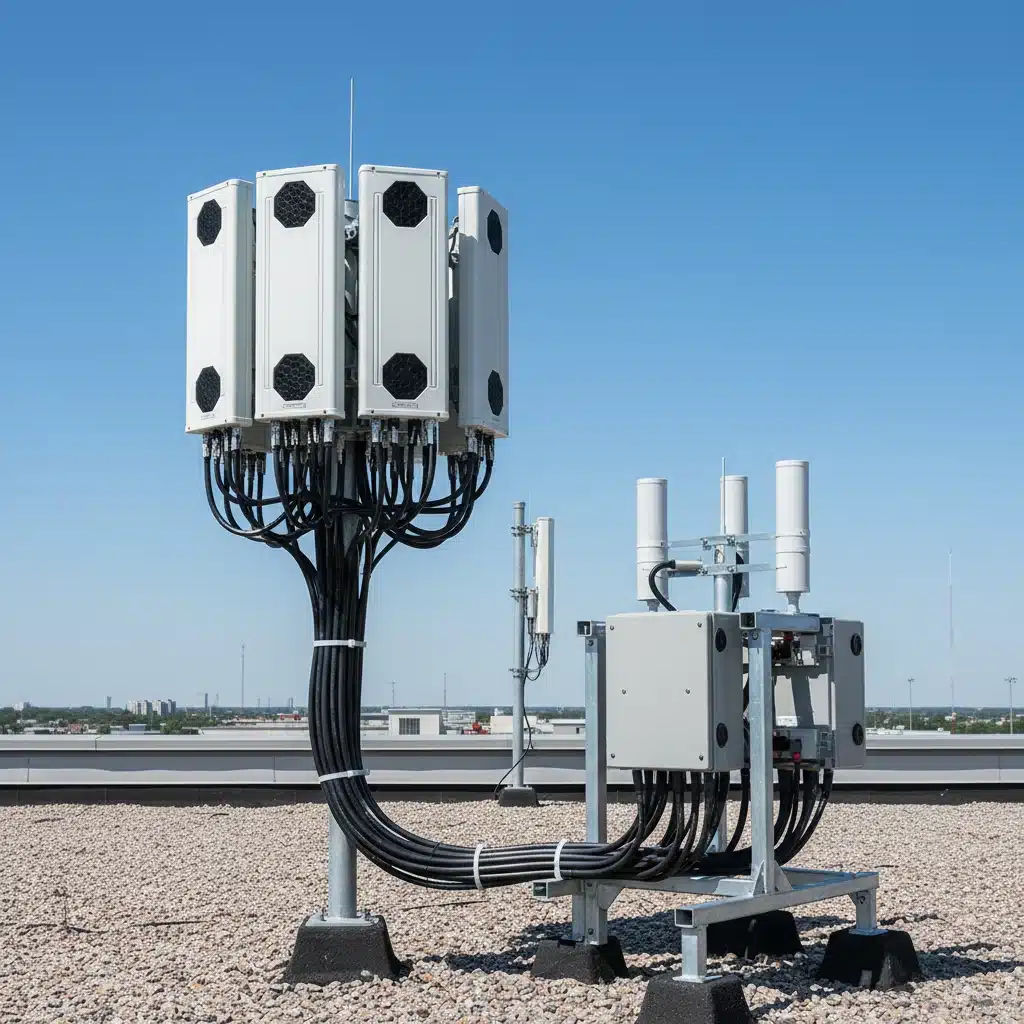
Infrastructure Updates: Paving the Way for Advanced 5G
Achieving the projected speed increases and broader capabilities of the 5G evolution 2026 hinges critically on ongoing and future infrastructure developments. The US is witnessing a multi-pronged approach to strengthening its wireless backbone.
Densification of Small Cells
One of the most visible aspects of 5G infrastructure expansion is the densification of small cells. These miniature base stations are crucial for extending coverage in urban canyons, improving capacity in high-traffic areas, and effectively utilizing mmWave spectrum. By 2026, we expect to see a significantly higher density of small cells deployed across cities and even extending into suburban and rural areas, ensuring consistent high-speed connectivity where it’s needed most.
Open RAN and Network Virtualization
The adoption of Open Radio Access Networks (Open RAN) and network virtualization technologies will play a pivotal role. Open RAN decouples hardware and software, allowing for greater vendor diversity, increased innovation, and potentially lower deployment costs. Network virtualization, through technologies like Software-Defined Networking (SDN) and Network Function Virtualization (NFV), makes networks more flexible, programmable, and efficient. These architectural shifts are fundamental to building the agile, scalable, and intelligent networks required for advanced 5G services.
Satellite-to-Cellular Integration
While still in its nascent stages, the integration of satellite-to-cellular communication holds immense promise for extending 5G coverage to the most remote and underserved areas of the US. By 2026, we might see initial deployments or widespread trials of direct satellite connectivity to standard 5G smartphones, providing basic connectivity in areas where traditional terrestrial infrastructure is economically unfeasible. This would be a game-changer for digital inclusion and emergency services.
Spectrum Allocation and Optimization
Continued efforts in spectrum allocation and optimization are vital. Governments and regulators are working to free up more mid-band spectrum, which is critical for balancing speed and coverage. Furthermore, advanced spectrum sharing techniques and dynamic spectrum sharing (DSS) will become more sophisticated, allowing for more efficient use of existing frequency bands by both 4G and 5G technologies, maximizing the available resources for the 5G evolution 2026.
Impact on Industries: A Transformative Shift
The 5G evolution 2026 will not merely enhance existing processes; it will catalyze fundamental transformations across numerous industries, fostering innovation and creating new economic opportunities.
Manufacturing and Industry 4.0
In manufacturing, 5G will be the backbone of Industry 4.0, enabling fully automated, intelligent factories. Wireless robots, real-time analytics from IoT sensors, digital twins, and predictive maintenance will become standard. The low latency and high reliability of advanced 5G will ensure critical operations run smoothly, leading to increased efficiency, reduced downtime, and higher quality products.
Healthcare and Telemedicine
Healthcare stands to be revolutionized. High-bandwidth 5G will enable sophisticated telemedicine, allowing specialists to consult with patients remotely, even conducting remote diagnostics with high-resolution imaging. Wearable health monitors will transmit real-time data to healthcare providers, facilitating proactive care. Remote-assisted surgery, where expert surgeons guide local practitioners, will become more feasible, extending specialized care to underserved regions.
Transportation and Logistics
The vision of smart cities and autonomous vehicles heavily relies on advanced 5G. Vehicle-to-everything (V2X) communication, powered by 5G, will allow vehicles to communicate with each other, infrastructure, and pedestrians, significantly improving safety and traffic flow. In logistics, real-time tracking of goods, automated drone deliveries, and smart warehousing will optimize supply chains, making them more resilient and efficient.
Entertainment and Media
The entertainment industry will continue its evolution with 5G. Immersive experiences like live VR concerts, interactive sports broadcasts, and cloud-based gaming will become commonplace. Content creation will also benefit, with faster upload speeds for high-resolution media and seamless remote collaboration for production teams. The 5G evolution 2026 will usher in a new era of personalized and interactive content consumption.

Challenges and Considerations for 5G Evolution 2026
While the future of 5G looks promising, several challenges need to be addressed to fully realize the potential of the 5G evolution 2026.
Rural Coverage and Digital Divide
One persistent challenge is ensuring equitable access to advanced 5G, particularly in rural and remote areas. The cost of deploying infrastructure in sparsely populated regions can be prohibitive for carriers. Bridging the digital divide will require continued government incentives, public-private partnerships, and innovative deployment strategies, including the potential of satellite integration.
Security and Privacy Concerns
As networks become more complex and interconnected, cybersecurity risks also increase. The proliferation of IoT devices and edge computing nodes creates more potential entry points for cyber threats. Robust security protocols, end-to-end encryption, and continuous monitoring will be crucial to protect critical infrastructure and user data. Privacy concerns also need careful consideration, especially with the increased collection and processing of data.
Regulatory and Policy Landscape
The regulatory environment plays a significant role in the pace and direction of 5G deployment. Streamlining permitting processes for infrastructure deployment, ensuring fair spectrum allocation, and fostering competition are essential. Policymakers will need to remain agile to adapt to rapidly evolving technological landscapes and address new challenges as they arise.
Energy Consumption
The increased density of network infrastructure and the processing demands of advanced 5G services can lead to higher energy consumption. Developing energy-efficient hardware, optimizing network operations, and exploring renewable energy sources for cell sites will be critical to ensure the sustainability of the 5G evolution 2026.
Preparing for the Future: What You Can Do
As the 5G evolution 2026 approaches, both individuals and organizations can take steps to prepare and capitalize on the upcoming changes.
- Upgrade Devices: Ensure your smartphone and other connected devices are 5G-compatible to take full advantage of the new speeds and features.
- Explore 5G Plans: Stay informed about different carrier plans and their 5G coverage in your area.
- Educate Yourself: Understand the capabilities of 5G to discover new ways it can enhance your daily life, from entertainment to remote work.
For Businesses:
- Assess Needs: Evaluate how advanced 5G can improve your operations, from supply chain management to customer engagement.
- Invest in Infrastructure: Consider upgrading internal networks and devices to be 5G-ready, potentially integrating private 5G networks for critical operations.
- Innovate: Explore new business models and services that can be enabled by ultra-fast, low-latency connectivity. Partner with technology providers to pilot new solutions.
- Cybersecurity Focus: Strengthen your cybersecurity posture to protect against new threats emerging from a more connected environment.
Conclusion: A Connected Future with 5G Evolution 2026
The 5G evolution 2026 in the US is not merely an incremental upgrade; it represents a significant leap forward in our connected future. With projected 15% faster network speeds, robust infrastructure developments, and the integration of cutting-edge technologies like edge computing and AI, 5G is set to unlock unprecedented levels of efficiency, innovation, and user experience. From transforming industries and driving economic growth to enhancing daily life and bridging digital divides, the impact will be profound and far-reaching.
While challenges remain, the concerted efforts of industry leaders, policymakers, and innovators are paving the way for a more connected, intelligent, and responsive society. By understanding the trajectory of this evolution and actively preparing for its arrival, we can all contribute to and benefit from the incredible potential that the next phase of 5G promises. The future of connectivity is here, and it’s faster, smarter, and more integrated than ever before.