Future of Work: Automation’s Impact on US Jobs by 2030
The landscape of work is perpetually evolving, but rarely has it faced such a profound and rapid transformation as the one currently underway, driven by the relentless march of automation. Recent reports and analyses paint a compelling picture: by 2030, a significant portion of jobs in America, potentially up to 20%, could be directly impacted by automation. This isn’t merely a technological shift; it’s a societal earthquake that demands immediate attention, strategic planning, and adaptive measures from individuals, businesses, and policymakers alike. The conversation around automation impact jobs is no longer theoretical; it’s a present reality shaping our future.
Understanding the nuances of this transformation is crucial. When we talk about automation impact jobs, we’re not necessarily predicting mass unemployment across the board. Instead, we’re envisioning a redefinition of roles, a reallocation of tasks, and an increased demand for new skills. Some jobs will be augmented, others will be eliminated, and entirely new categories of employment will emerge. The key lies in proactively preparing for these changes, fostering a culture of continuous learning, and ensuring that the benefits of technological advancement are broadly shared.
This article delves deep into the anticipated effects of automation on the American workforce, exploring which sectors are most vulnerable, what new opportunities will arise, and what steps can be taken to navigate this era of unprecedented change. We will examine the economic implications, the social challenges, and the innovative solutions that can help us harness the power of automation for a more prosperous and equitable future.
The Shifting Sands: What 20% of Jobs Impacted Really Means
When headlines proclaim that 20% of jobs could be impacted by automation by 2030, it’s easy to conjure images of widespread job losses. However, the reality is far more complex and nuanced. The term ‘impacted’ is broad, encompassing a spectrum of changes from complete displacement to significant augmentation. For many roles, automation will not eliminate the job entirely but will instead take over repetitive, dangerous, or mundane tasks, freeing human workers to focus on more creative, strategic, and interpersonal aspects of their work. This is where the true potential of automation impact jobs lies: not in replacement, but in enhancement and evolution.
Job Displacement vs. Job Transformation
It’s important to distinguish between job displacement and job transformation. Displacement occurs when a machine or algorithm can perform a task or an entire job function more efficiently and cost-effectively than a human. This is most likely in roles characterized by highly repetitive, predictable tasks that require little human judgment or creativity. Examples often cited include certain manufacturing roles, data entry, and some administrative support functions.
Job transformation, on the other hand, is a more common outcome. Here, automation tools become collaborators, assisting human workers rather than replacing them. Consider a financial analyst who uses AI to sift through vast datasets and identify trends, allowing them to spend more time on strategic analysis and client interaction. Or a healthcare professional who leverages diagnostic AI to improve accuracy and speed, dedicating more time to patient care and empathy. In these scenarios, the nature of the job changes, often becoming more complex, engaging, and value-driven. This shift highlights a crucial aspect of automation impact jobs – the emphasis on higher-order skills.
Which Sectors Are Most Vulnerable and Why?
Several sectors are anticipated to experience a more pronounced automation impact jobs by 2030 due to the nature of their work. Manufacturing, transportation, and retail are frequently cited as high-risk areas. In manufacturing, robotics have long been integrated into production lines, and this trend is accelerating with advanced AI and machine learning capabilities. Autonomous vehicles are set to revolutionize the transportation industry, affecting truck drivers, taxi drivers, and delivery personnel. In retail, self-checkout kiosks, automated inventory management, and robotic warehouse systems are already commonplace, reducing the need for human intervention in many logistical and transactional tasks.
Administrative and office support roles are also susceptible, as software automation can handle tasks like scheduling, data processing, and customer inquiries. Even sectors like finance and law, traditionally considered resistant to automation, are seeing AI-powered tools streamline research, compliance, and document review processes. The vulnerability isn’t necessarily about the industry itself, but rather the prevalence of automatable tasks within its job functions. Understanding this distinction is key to formulating effective responses to the automation impact jobs.
The Silver Lining: New Opportunities and Evolving Roles
While the prospect of job displacement can be unsettling, it’s equally important to recognize the immense opportunities that automation presents. Every technological revolution has historically led to the creation of new industries, new companies, and entirely new job categories. The rise of the internet, for instance, created millions of jobs that didn’t exist a few decades prior. Automation is no different; it will be a powerful engine for innovation and economic growth, generating new demands for specialized skills and services.
Emergence of New Job Categories
The most direct consequence of automation impact jobs is the birth of new roles. We can expect a significant increase in demand for professionals who can design, build, maintain, and manage automation systems. This includes AI engineers, robotics technicians, data scientists, cybersecurity specialists, and automation ethicists. Beyond these technical roles, there will be a growing need for individuals who can work effectively alongside AI, leveraging its capabilities while providing the uniquely human touch that machines cannot replicate. Roles in human-AI collaboration, user experience design for automated systems, and specialized training for an automated workforce will become increasingly vital.
Furthermore, as repetitive tasks are automated, there will be a greater emphasis on jobs requiring creativity, critical thinking, complex problem-solving, emotional intelligence, and interpersonal communication. These are inherently human skills that are difficult, if not impossible, for current AI to replicate. Fields like education, healthcare, arts, and strategic consulting are likely to see increased demand for human expertise, albeit with new tools and approaches facilitated by automation. The future of automation impact jobs is not just about technology, but about human ingenuity and adaptability.
Augmentation: Humans and AI Working Together
Perhaps the most promising aspect of automation is its potential for augmentation. Instead of viewing AI and robots as replacements, we can see them as powerful tools that extend human capabilities. Imagine a doctor using AI to analyze medical images with unprecedented accuracy, allowing them to diagnose diseases earlier and more effectively. Or a teacher using AI to personalize learning paths for each student, freeing them to focus on mentoring and emotional support. This synergy, where humans and machines complement each other’s strengths, promises to boost productivity, enhance decision-making, and create more fulfilling work experiences. The narrative around automation impact jobs needs to shift towards this collaborative paradigm.
This augmentation will also lead to an increased demand for skills that bridge the gap between human and machine. Professionals who can translate complex AI outputs into actionable insights, manage human-robot teams, or design interfaces that facilitate seamless collaboration will be highly sought after. The future workforce will be one where digital literacy is not just about using computers, but about understanding and interacting with intelligent systems.

Preparing for 2030: Strategies for Individuals and Businesses
Given the significant projected automation impact jobs by 2030, proactive preparation is not just advisable; it’s imperative. Both individuals and businesses have crucial roles to play in ensuring a smooth transition and capitalizing on the opportunities presented by this technological wave.
For Individuals: The Imperative of Lifelong Learning
The most critical strategy for individuals is a commitment to lifelong learning and skill development. The skills that are valuable today may not be sufficient tomorrow. Focusing on ‘future-proof’ skills will be key. These include:
- Digital Literacy and Technical Skills: Understanding how to interact with and leverage automated systems, data analytics, coding basics, and cybersecurity awareness will be foundational.
- Soft Skills/Human Skills: Creativity, critical thinking, complex problem-solving, emotional intelligence, adaptability, collaboration, and communication will become even more valuable as machines handle routine tasks. These are the skills that differentiate humans from AI.
- Reskilling and Upskilling: Actively seeking out opportunities to learn new skills (reskilling) or enhance existing ones (upskilling) is vital. This could involve online courses, vocational training, apprenticeships, or employer-sponsored programs.
- Entrepreneurial Mindset: The ability to identify new needs, innovate, and create one’s own opportunities will be a significant advantage in a rapidly changing market.
Individuals must take ownership of their career development, continuously assessing market demands and aligning their skill sets accordingly. The concept of a single, linear career path is becoming obsolete; instead, individuals should prepare for a dynamic career journey characterized by continuous adaptation and learning to mitigate the negative aspects of automation impact jobs.
For Businesses: Investing in People and Innovation
Businesses, too, have a responsibility and a self-interest in preparing their workforce for automation. A forward-thinking approach involves:
- Workforce Planning and Assessment: Regularly evaluating which roles are most susceptible to automation and which new skills will be needed. This involves a clear understanding of the current and future capabilities of AI and robotics.
- Investment in Training and Development: Companies should invest significantly in reskilling and upskilling their existing employees. This is often more cost-effective and ethically sound than simply laying off workers and hiring new ones. Creating internal training academies, partnering with educational institutions, and offering tuition reimbursement are examples of such initiatives.
- Fostering a Culture of Continuous Learning: Encouraging employees to embrace new technologies and learn new skills, making learning an integral part of the work experience.
- Ethical Implementation of Automation: Businesses must consider the social and ethical implications of automation, ensuring that its deployment is fair, transparent, and minimizes negative impacts on employees and communities. This includes transparent communication about changes and providing support for affected workers.
- Innovation and New Business Models: Rather than just automating existing processes, businesses should explore how automation can enable entirely new products, services, and business models, creating new avenues for growth and employment.
The long-term success of businesses in an automated future will largely depend on their ability to adapt their workforce strategies and embrace the transformative potential of automation impact jobs responsibly.
Government and Policy: Steering the Transition
The scale of the projected automation impact jobs by 2030 necessitates a robust response from governments and policymakers. Their role is crucial in creating an environment that supports adaptation, mitigates disruption, and ensures that the benefits of automation are shared across society.
Education Reform and Public-Private Partnerships
Education systems need to be reformed to prepare future generations for an automated world. This means emphasizing STEM education, digital literacy, and critical thinking from an early age. Vocational training programs must be updated to reflect the skills demanded by emerging industries. Governments can foster public-private partnerships to bridge the skills gap, collaborating with businesses to design training programs that meet specific industry needs. Funding for adult education and reskilling initiatives will also be essential.
Social Safety Nets and Worker Transition Programs
As some job displacement is inevitable, governments must strengthen social safety nets to support workers in transition. This could include expanded unemployment benefits, wage insurance programs, and universal basic income (UBI) pilot programs to provide a financial cushion during periods of retraining or job searching. Robust worker transition programs, offering career counseling, job placement services, and financial aid for retraining, will be critical to help displaced workers find new opportunities and navigate the challenges of automation impact jobs.
Investing in Infrastructure and Research
Governments can also play a role by investing in the infrastructure necessary for an automated economy, such as high-speed internet access across all regions, and by funding research and development in AI and robotics to maintain a competitive edge. Policies that encourage responsible innovation, address ethical concerns, and promote equitable access to technology will be vital.
Challenges and Ethical Considerations
While the potential benefits of automation are vast, it also presents significant challenges and ethical dilemmas that must be addressed carefully. The discussion around automation impact jobs is incomplete without acknowledging these complexities.
Widening Inequality
One of the primary concerns is the potential for automation to exacerbate economic inequality. If the benefits of automation accrue primarily to a small segment of society (e.g., highly skilled tech workers and capital owners), while a larger segment faces job displacement and stagnant wages, societal divisions could deepen. Policies aimed at wealth redistribution, progressive taxation, and ensuring broad access to education and training are necessary to counter this trend.
The Future of Work-Life Balance and Human Connection
Automation could fundamentally alter the nature of work, potentially leading to questions about work-life balance and the role of human connection in the workplace. While automation can eliminate tedious tasks, it could also lead to increased pressure for higher productivity in remaining human roles. Moreover, an over-reliance on automated systems might diminish opportunities for social interaction and community building in certain work environments. Finding a balance that leverages automation for efficiency without sacrificing human well-being and connection will be a critical challenge in the context of automation impact jobs.
Ethical AI and Bias
The development and deployment of AI raise important ethical questions, particularly concerning bias. If AI systems are trained on biased data, they can perpetuate and even amplify existing societal inequalities. Ensuring fairness, transparency, and accountability in AI development is paramount. This requires diverse teams building AI, rigorous testing for bias, and clear regulatory frameworks. Addressing these ethical considerations is not just a technical challenge but a societal imperative when discussing the automation impact jobs.
Case Studies and Real-World Examples
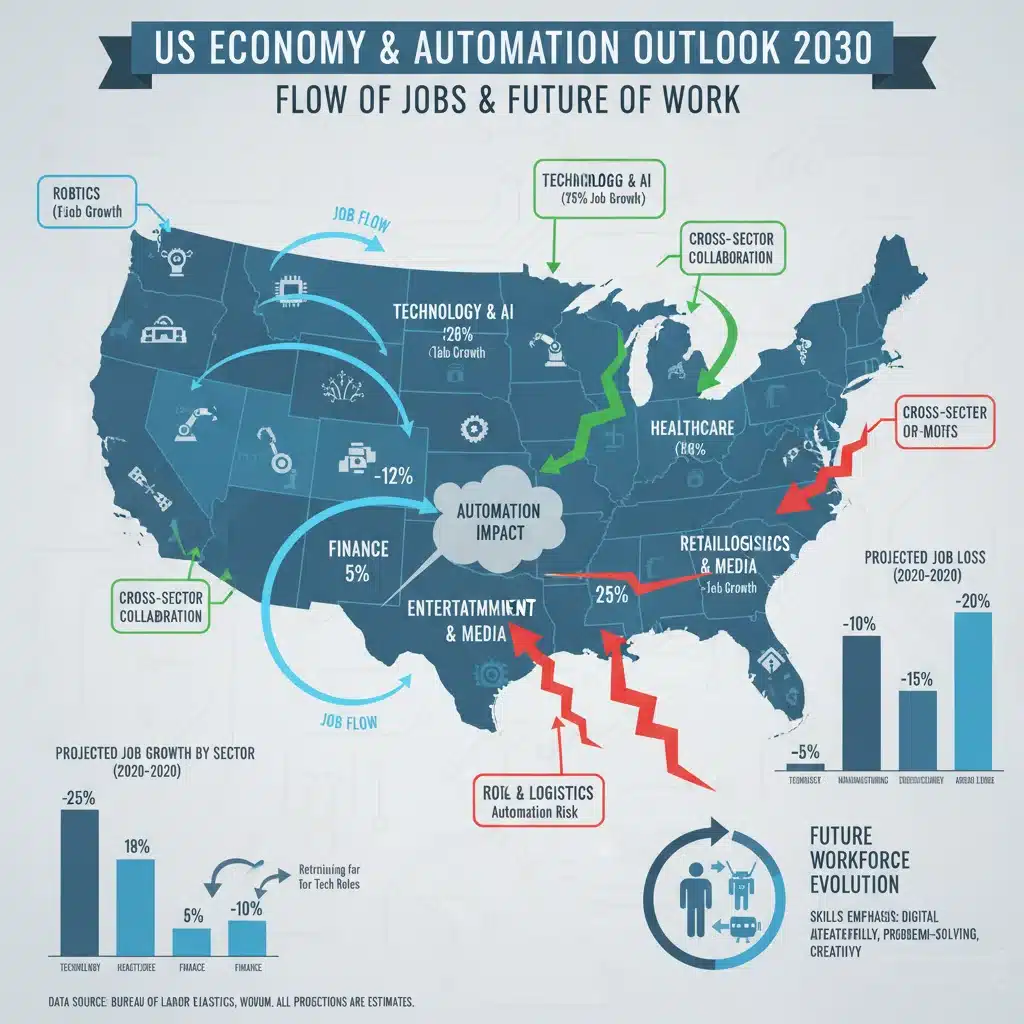
To better understand the practical implications of automation impact jobs, let’s look at some real-world examples and emerging trends across different sectors.
Manufacturing: From Assembly Lines to Smart Factories
The manufacturing sector has been at the forefront of automation for decades. Early automation involved simple robots performing repetitive tasks. Today, we are seeing the rise of ‘smart factories’ where AI-powered systems optimize production, predict maintenance needs, and manage supply chains. While some assembly line jobs have been displaced, new roles have emerged for robot programmers, data analysts who interpret factory performance, and technicians who maintain complex automated machinery. Companies like Siemens and Bosch are investing heavily in these intelligent manufacturing systems, transforming their workforces through extensive retraining programs.
Healthcare: AI-Assisted Diagnostics and Personalized Medicine
In healthcare, AI is not replacing doctors but augmenting their capabilities. AI algorithms can analyze medical images (X-rays, MRIs) with high accuracy, often identifying anomalies that might be missed by the human eye. This assists radiologists and pathologists, improving diagnostic speed and precision. Robotic surgery systems enhance a surgeon’s dexterity and precision. Furthermore, AI is driving personalized medicine by analyzing vast amounts of patient data to tailor treatments. This creates demand for medical professionals with strong data literacy and the ability to collaborate with AI tools, shifting the focus of automation impact jobs towards advanced clinical support.
Retail: E-commerce Automation and Customer Experience
The retail sector has seen a dual impact. On one hand, e-commerce automation (warehousing, logistics, customer service chatbots) has reduced the need for certain manual roles. On the other hand, it has created new opportunities in e-commerce management, digital marketing, and data analytics for customer behavior. In physical stores, automation through self-checkout and inventory robots allows human staff to focus on higher-value tasks like customer service, product expertise, and creating engaging in-store experiences. The overall automation impact jobs in retail is a complex dance between efficiency gains and the need for human touchpoints.
Navigating the Future: A Call to Action
The impending automation impact jobs by 2030 is not a distant threat but a near-term reality that requires immediate and concerted action. The future of work will undoubtedly be different, but it doesn’t have to be bleak. By embracing a proactive and collaborative approach, we can shape this transformation to benefit all members of society.
For individuals, this means cultivating a mindset of continuous learning, focusing on uniquely human skills, and being agile in career planning. For businesses, it entails investing in their human capital, fostering innovation, and implementing automation ethically. For governments, it requires forward-thinking policies in education, social safety nets, and infrastructure development.
The conversation around automation impact jobs should shift from fear to opportunity. By working together – individuals, businesses, educators, and policymakers – we can navigate this technological revolution successfully, creating a future where automation serves humanity, enhancing productivity, fostering creativity, and ultimately leading to a more prosperous and fulfilling society for all.
The next decade will be defined by how well we adapt to these changes. The 20% impact figure serves not as a prophecy of doom, but as a powerful catalyst for action. Let us seize this opportunity to redefine work, empower our workforce, and build a resilient economy for generations to come.