Augmented Reality in Retail 2026: 4 Solutions for US Brands
Augmented Reality in Retail 2026: 4 Practical Solutions for US Brands to Enhance Customer Experience
The retail landscape is in a perpetual state of evolution, driven by technological advancements and shifting consumer expectations. As we approach 2026, the imperative for US brands to innovate and differentiate becomes ever more critical. One technology poised to redefine the retail experience is Augmented Reality (AR). Far from being a mere gimmick, AR offers tangible, practical solutions that can significantly enhance customer engagement, streamline operations, and ultimately boost sales. This article delves into four crucial AR retail solutions that US brands should prioritize to thrive in the competitive market of 2026 and beyond.
The rise of e-commerce has made convenience a cornerstone of the modern shopping journey. However, it has also highlighted a significant gap: the inability to physically interact with products. Augmented Reality bridges this gap by overlaying digital information onto the real world, allowing customers to visualize products, try on items, and explore details in an immersive and interactive manner, whether in-store or from the comfort of their homes. For US brands, embracing these AR retail solutions is not just about keeping up with trends; it’s about setting new standards for customer experience and operational efficiency.
The Shifting Sands of Retail: Why AR is Now Essential
Before diving into specific solutions, it’s vital to understand the fundamental shifts making AR indispensable for US retail brands. Consumer behavior has been irrevocably altered by the digital age. Shoppers are more informed, more demanding, and expect personalized, seamless experiences across all channels. They crave convenience, speed, and the ability to make confident purchasing decisions. Traditional retail models, while still relevant, often fall short in delivering these enhanced experiences.
Furthermore, the competitive pressure from direct-to-consumer (DTC) brands and global e-commerce giants necessitates a strategic response. US brands need tools that can not only attract attention but also build lasting relationships with their customer base. Augmented Reality provides a powerful mechanism to achieve this, offering unique interactive elements that can transform mundane shopping tasks into engaging adventures. By integrating AR retail solutions, brands can create memorable moments that resonate with modern consumers, fostering loyalty and driving repeat business.
The technological infrastructure is also maturing. The proliferation of powerful smartphones, coupled with advancements in AR development kits (like Apple’s ARKit and Google’s ARCore), has made AR more accessible and affordable than ever before. This means that implementing sophisticated AR experiences is no longer the exclusive domain of tech giants; even mid-sized US brands can now leverage these tools to their advantage. The time to invest in AR retail solutions is now, as early adopters will undoubtedly reap the greatest rewards.
1. Virtual Try-On Experiences: Redefining Personalization
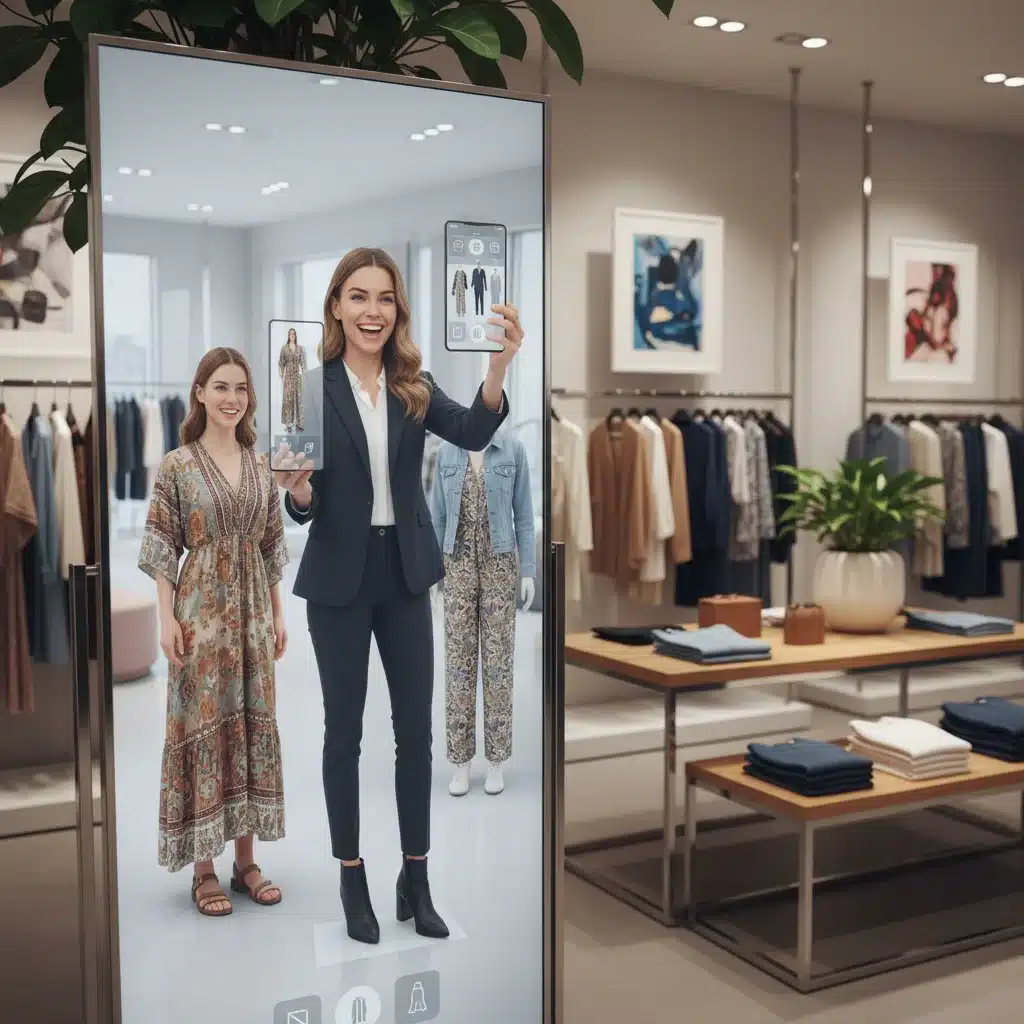
One of the most impactful AR retail solutions is the virtual try-on experience. This technology allows customers to digitally try on products such as clothing, accessories, makeup, and eyewear using their smartphone cameras or in-store smart mirrors. The benefits are manifold, addressing key pain points for both consumers and retailers.
For Consumers:
- Reduced Uncertainty: Customers can see how an item looks on them without the hassle of physical changing rooms or the guesswork of online shopping. This significantly boosts confidence in their purchase decisions.
- Enhanced Personalization: AR enables a highly personalized shopping journey, allowing individuals to experiment with various styles, colors, and fits in real-time, tailored to their unique appearance.
- Convenience: Whether at home or in-store, virtual try-on saves time and effort, making the shopping process more enjoyable and efficient.
- Fun and Engagement: The novelty and interactivity of AR try-on transform shopping into an entertaining experience, encouraging exploration and discovery.
For US Brands:
- Lower Return Rates: By providing a more accurate representation of how products look, virtual try-on can drastically reduce the number of returns, a significant cost for online retailers.
- Increased Conversion Rates: Confident buyers are more likely to complete a purchase. The ability to ‘try before you buy’ virtually removes a major barrier to conversion.
- Improved Customer Satisfaction: A seamless and enjoyable shopping experience leads to higher customer satisfaction and positive brand perception.
- Data Collection: AR interactions can provide valuable insights into customer preferences, popular styles, and engagement patterns, informing future product development and marketing strategies.
- Competitive Differentiation: Offering cutting-edge virtual try-on experiences sets a brand apart from competitors, positioning it as innovative and customer-centric.
Leading US beauty brands like Sephora and L’Oréal have already demonstrated the power of virtual try-on for makeup, allowing customers to experiment with different shades and products. Similarly, eyewear companies are enabling users to virtually try on frames. By 2026, this technology will become a standard expectation, not a luxury, for US apparel, jewelry, and accessory retailers. Investing in robust virtual try-on AR retail solutions is a strategic move that promises substantial ROI.
2. In-Home Product Visualization: Bringing Showrooms to the Customer
For categories like furniture, home décor, appliances, and even large electronics, the decision-making process often involves visualizing how a product will fit and look within a customer’s own space. This is where in-home product visualization, another powerful AR retail solution, truly shines. This technology allows customers to use their smartphone or tablet to virtually place 3D models of products into their real-world environment, scaled accurately.
How it Works and Its Impact:
Imagine a customer considering a new sofa. Instead of relying on measurements and imagination, they can simply point their device’s camera at their living room, and a realistic 3D model of the sofa appears in their space. They can walk around it, change colors, and even see how it interacts with existing furniture. This capability addresses a critical pain point in purchasing large, high-value items online, where returns are costly and inconvenient for both parties.
IKEA Place was an early pioneer in this space, demonstrating the immense potential of AR for furniture retail. Since then, many other US home goods brands have followed suit, recognizing the competitive advantage. By 2026, this functionality will be a baseline offering for any US brand selling products where spatial visualization is key. It transforms the online shopping experience from a static catalog browse into an interactive design session.
Key Benefits for US Brands:
- Reduced Buyer’s Remorse: Customers are much more confident in their purchases when they can visualize the product in their own environment, leading to fewer returns due to size, fit, or aesthetic mismatch.
- Increased Sales of High-Value Items: The ability to ‘try out’ expensive items virtually removes a significant barrier to purchase, encouraging higher-ticket sales.
- Enhanced Brand Trust: Providing tools that empower customers to make better decisions builds trust and positions the brand as customer-centric and innovative.
- Broader Reach: Brands can effectively create a virtual showroom accessible to anyone, anywhere, expanding their market reach beyond physical store locations.
- Faster Decision Making: The immediate visual feedback provided by AR accelerates the purchasing cycle.
Implementing robust in-home product visualization requires high-quality 3D models of products, but the investment pays dividends in customer satisfaction and reduced operational costs associated with returns. This is a non-negotiable AR retail solution for US brands in the home and lifestyle sectors.
3. Interactive In-Store Navigation and Product Information: The Smart Store
While online shopping offers unparalleled convenience, physical stores still hold immense value for many consumers who desire tactile interaction, immediate gratification, and a social experience. Augmented Reality can significantly enhance the in-store experience, transforming traditional retail spaces into smart, interactive environments. This category of AR retail solutions focuses on improving navigation, providing rich product information, and offering personalized recommendations within the physical store.
Transforming the Brick-and-Mortar:
Imagine a customer walking into a large department store. Instead of searching for an item or asking an associate, they can open an AR app on their phone. The app would overlay digital directions onto the real-world view, guiding them directly to the product they’re looking for. Once at the product, pointing their camera at it could reveal a wealth of information: customer reviews, detailed specifications, alternative colors/sizes, pairing suggestions, and even videos demonstrating its use.
This not only makes shopping more efficient but also enriches the experience. It empowers customers with information at their fingertips, reducing frustration and allowing them to make more informed decisions independently. For US brands, this means a more engaged customer base and potentially reduced pressure on sales associates for basic information retrieval, allowing them to focus on more complex customer service needs.
Key Features and Benefits:
- Wayfinding and Navigation: AR-powered indoor navigation helps customers quickly locate products, departments, or amenities within large stores.
- Augmented Product Displays: Pointing a device at a product can trigger overlays of additional information, 3D animations, pricing details, or customer testimonials.
- Personalized Offers: Based on a customer’s loyalty program data or browsing history, AR can display personalized discounts or recommendations as they move through the store.
- Interactive Storytelling: Brands can use AR to tell the story behind a product, its origins, or its manufacturing process, adding depth and emotional connection.
- Enhanced Staff Support: Associates can also use AR tools to quickly access inventory levels, product details, or customer profiles to provide better service.
Many US retailers are already experimenting with elements of smart store technology, but by 2026, seamless AR integration will be a hallmark of leading physical retail spaces. These AR retail solutions blend the best of digital convenience with the tangible benefits of in-person shopping, creating a truly omni-channel experience.

4. Gamified Shopping Experiences and Loyalty Programs: Engaging the Next Generation
The younger demographic, particularly Gen Z and Alpha, has grown up with digital interactivity and gamification as integral parts of their daily lives. For US brands looking to capture and retain these crucial consumer segments, incorporating gamified elements into shopping experiences via AR is a highly effective strategy. This type of AR retail solution transforms shopping into an entertaining, rewarding activity, fostering deeper engagement and brand loyalty.
Making Shopping Fun and Rewarding:
Gamification in AR can take many forms. Imagine an in-store treasure hunt where customers use an AR app to find hidden virtual objects that unlock discounts or loyalty points. Or an online experience where completing a virtual challenge (e.g., designing a virtual outfit) earns them exclusive access to new collections. These interactive elements make the purchasing journey more memorable and enjoyable, moving beyond a simple transactional exchange.
Pokemon Go demonstrated the mass appeal of AR gamification, and retailers are now adapting these principles to their own ecosystems. By 2026, US brands will leverage sophisticated AR games and interactive challenges to drive traffic, increase dwell time (both online and in-store), and cultivate a sense of community around their products.
Specific Applications and Benefits:
- AR Scavenger Hunts: Encouraging customers to explore physical or virtual spaces to find AR markers that reveal clues, discounts, or virtual collectibles.
- Interactive Product Launches: Using AR to introduce new products with immersive stories, challenges, or virtual try-on events that reward participation.
- Loyalty Program Integration: Earning loyalty points or unlocking tiers through AR games and interactions, making the program more dynamic and engaging.
- User-Generated Content: Encouraging customers to create and share AR-enhanced content (e.g., trying on virtual accessories and posting to social media), amplifying brand reach.
- Personalized Rewards: Offering AR-triggered rewards based on purchase history or in-app activity, enhancing the feeling of being valued.
The integration of gamified AR retail solutions into loyalty programs can revitalize traditional schemes, making them more appealing and effective. It’s about creating an emotional connection with the brand through shared experiences and a sense of achievement, which is invaluable for long-term customer retention.
Implementing AR: Best Practices for US Brands by 2026
While the potential of AR retail solutions is immense, successful implementation requires strategic planning and adherence to best practices. US brands looking to integrate AR by 2026 should consider the following:
- Focus on User Experience: AR applications must be intuitive, fast, and reliable. A clunky or slow experience will deter users. Prioritize seamless interaction and clear instructions.
- High-Quality 3D Models: The realism of AR experiences hinges on the quality of 3D product models. Invest in detailed, accurately scaled models to ensure a convincing visualization.
- Integration with Existing Systems: AR solutions should integrate smoothly with e-commerce platforms, inventory management systems, and CRM tools to provide a unified customer journey.
- Clear Value Proposition: Each AR feature should address a specific customer pain point or enhance a particular aspect of the shopping experience. Avoid AR for AR’s sake.
- Mobile-First Approach: Given the widespread use of smartphones, most AR experiences will be accessed via mobile devices. Optimize for mobile performance and accessibility.
- Data Privacy and Security: As AR collects data on user interactions and environments, ensure robust privacy policies and secure data handling practices.
- Pilot Programs and Iteration: Start with smaller pilot programs, gather feedback, and iterate on the AR experience. Continuous improvement is key.
- Educate and Promote: Inform customers about the availability and benefits of your AR features through marketing campaigns, in-store signage, and clear instructions within the app.
The investment in these AR retail solutions is not just a technological upgrade; it’s a strategic investment in the future of customer engagement and brand longevity. By carefully planning and executing their AR strategy, US brands can unlock significant competitive advantages.
The Future is Augmented: Preparing for 2026 and Beyond
The trajectory of retail is clear: increasingly digital, personalized, and experiential. Augmented Reality stands at the forefront of this transformation, offering a suite of practical tools that can redefine how US brands interact with their customers. From virtual try-on that minimizes returns and boosts confidence, to in-home visualization that brings showrooms to living rooms, to smart in-store navigation that empowers shoppers, and gamified experiences that foster loyalty, the applications are diverse and impactful.
By 2026, the brands that have successfully integrated these AR retail solutions will be the ones leading the market. They will be characterized by higher customer satisfaction, stronger brand loyalty, lower operational costs, and ultimately, greater market share. The time for US brands to explore, experiment, and strategically implement augmented reality is now. Embracing AR is not just about adopting a new technology; it’s about embracing a new philosophy of customer-centric, immersive retail that will shape the industry for decades to come.
The journey into augmented retail is exciting and full of potential. For US brands ready to innovate, the rewards of investing in these transformative AR retail solutions will be substantial, ensuring their relevance and success in the dynamic retail landscape of 2026 and beyond.