AI Revolutionizing US Job Market: Future of Work Insights
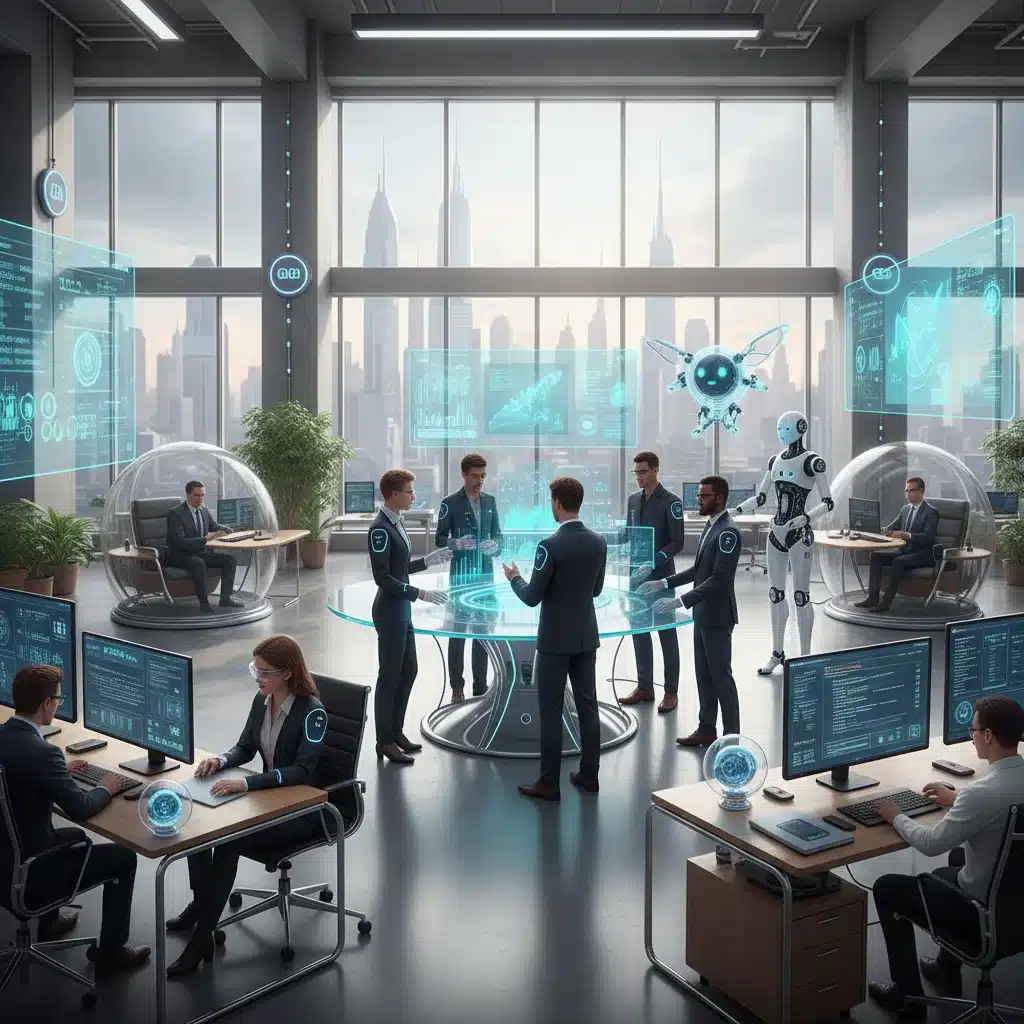
The United States job market stands at the precipice of an unprecedented transformation, largely propelled by the relentless march of Artificial Intelligence (AI). What was once the realm of science fiction is now a tangible reality, with AI-powered tools permeating every facet of industry, from manufacturing and healthcare to finance and creative arts. This isn’t merely an incremental change; it’s a fundamental reshaping of how work is done, what skills are valued, and where economic opportunities will emerge over the next decade. Understanding this profound shift in the AI US Job Market is crucial for individuals, businesses, and policymakers alike to navigate the future successfully.
For decades, technological advancements have consistently altered the employment landscape. However, AI’s impact is distinct due to its ability to automate not just repetitive physical tasks, but also complex cognitive functions. This means a broader range of jobs, including those traditionally considered intellectual, are now subject to automation or augmentation. The impending decade promises a dynamic interplay between human ingenuity and machine efficiency, creating both challenges and unparalleled opportunities for those prepared to adapt.
The AI Tsunami: Understanding Its Immediate Impact on the AI US Job Market
The immediate effects of AI on the AI US Job Market are already palpable. Certain sectors are experiencing rapid shifts, with some jobs seeing increased demand and others facing significant disruption. Automation, powered by AI, is driving efficiency and productivity, but it also necessitates a re-evaluation of human roles.
Automation and Job Displacement: A Nuanced Perspective
One of the most frequently discussed, and often feared, aspects of AI is its potential for job displacement. While it’s true that AI can perform many routine and data-intensive tasks more efficiently than humans, the narrative isn’t as simple as machines replacing people en masse. Instead, AI often augments human capabilities, taking over the mundane while freeing up human workers to focus on more complex, creative, and strategic endeavors.
Consider the manufacturing sector, where robotic process automation (RPA) and AI-driven systems are optimizing production lines. While some manual assembly jobs may decrease, there’s a surge in demand for technicians who can program, maintain, and troubleshoot these sophisticated machines. Similarly, in customer service, AI-powered chatbots handle basic inquiries, allowing human agents to address more intricate problems requiring empathy and critical thinking.
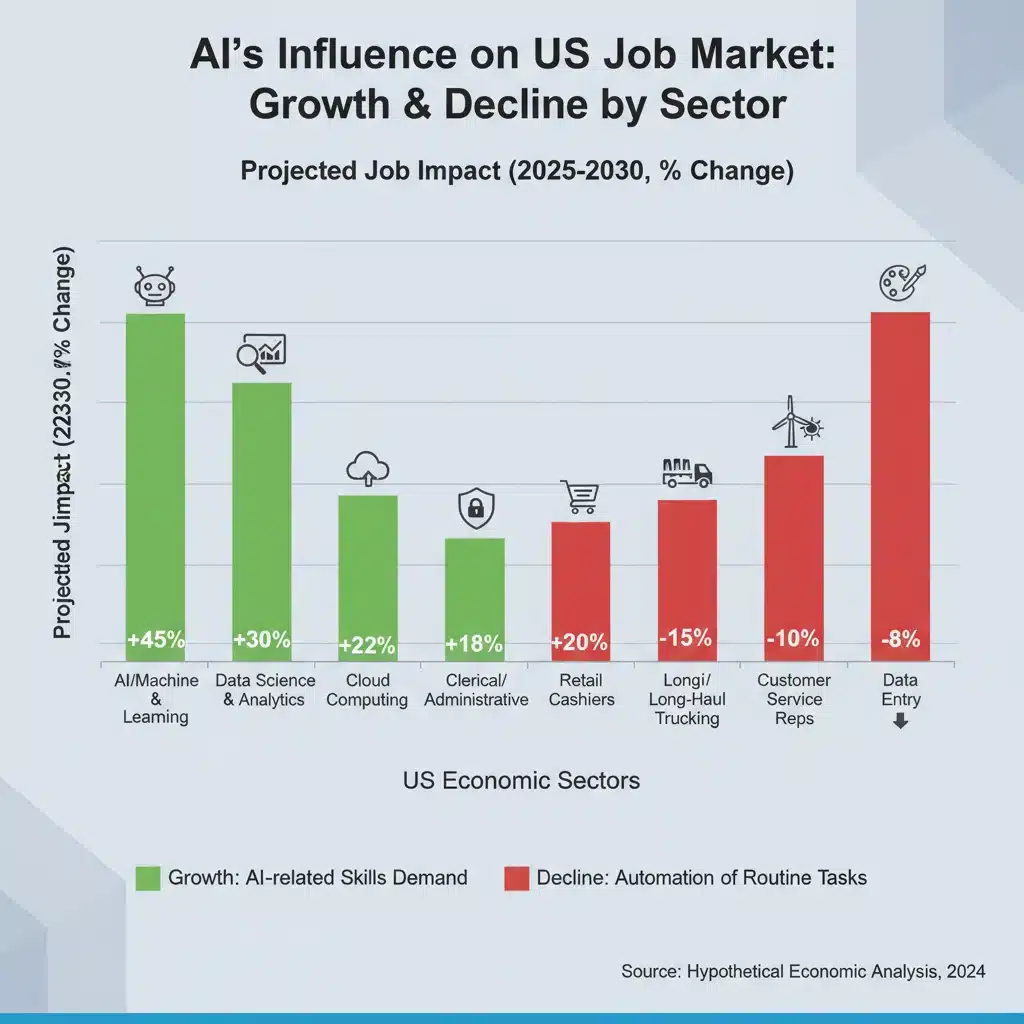
However, industries heavily reliant on repetitive data entry, basic administrative tasks, or predictable physical labor are likely to see the most significant direct impact. This includes areas like transportation (self-driving vehicles), certain aspects of accounting, and entry-level legal research. The key is not just whether a job can be automated, but whether its core functions can be augmented or redesigned to leverage AI’s strengths while emphasizing human unique attributes.
Emergence of New Roles and Industries
Crucially, AI doesn’t just destroy jobs; it creates them. The rise of AI has sparked entirely new industries and demands for specialized roles that didn’t exist a decade ago. Data scientists, AI engineers, machine learning specialists, prompt engineers, AI ethics officers, and robot maintenance technicians are now in high demand. These roles are foundational to developing, deploying, and managing AI systems effectively.
Beyond these direct AI-centric roles, there’s a ripple effect across the economy. As AI enhances productivity, it can stimulate growth in other areas, leading to new service demands, product innovations, and entrepreneurial opportunities. For example, the development of AI in healthcare is creating a need for professionals who can interpret AI diagnostics, develop AI-powered medical devices, and ensure ethical deployment of these technologies.
The AI US Job Market is thus characterized by a dynamic equilibrium, where displacement in one area is often counterbalanced by creation in another, albeit with a significant shift in the required skill sets.
Reshaping Skill Demands: What the Future Workforce Needs
The most profound long-term impact of AI on the AI US Job Market will be the fundamental redefinition of valuable skills. The traditional emphasis on rote learning and specialized technical knowledge is giving way to a premium on uniquely human capabilities that AI cannot easily replicate.
The Rise of Human-Centric Skills
As AI handles more analytical and routine tasks, skills such as creativity, critical thinking, complex problem-solving, emotional intelligence, collaboration, and ethical reasoning are becoming paramount. These ‘soft skills,’ often undervalued in the past, are now essential for navigating complex situations, fostering innovation, and building meaningful human connections that AI cannot replicate.
- Creativity and Innovation: AI can generate ideas, but it lacks true originality and the ability to connect disparate concepts in novel ways that drive groundbreaking innovation. Humans will be the architects of new ideas and solutions.
- Critical Thinking and Complex Problem-Solving: While AI can process vast amounts of data, humans are needed to define problems, interpret results, question assumptions, and make nuanced judgments in ambiguous situations.
- Emotional Intelligence and Empathy: In roles requiring direct human interaction, such as healthcare, education, and customer relations, the ability to understand and respond to human emotions remains irreplaceable.
- Collaboration and Communication: Working effectively in diverse teams, often alongside AI tools, requires strong interpersonal and communication skills to convey complex ideas, negotiate, and build consensus.
- Ethical Reasoning and Judgment: As AI systems become more powerful, the need for human oversight to ensure fairness, transparency, and ethical use of technology becomes critical.
Digital Literacy and AI Fluency
Alongside human-centric skills, a foundational understanding of AI and digital tools will be non-negotiable across nearly all professions. This doesn’t mean everyone needs to be an AI developer, but rather that a general literacy in how AI works, its capabilities, and its limitations will be essential. This includes:
- Data Literacy: The ability to understand, interpret, and work with data will be crucial, as AI systems are inherently data-driven.
- AI Tool Proficiency: Familiarity with AI-powered software, from generative AI models to analytical platforms, will be expected.
- Understanding AI Ethics: Awareness of the societal implications, biases, and ethical challenges posed by AI.
- Continuous Learning Mindset: The rapid pace of technological change means that learning cannot be a one-time event but an ongoing process throughout one’s career.
Sector-Specific Transformations in the AI US Job Market
While AI’s influence is pervasive, its impact will manifest differently across various sectors of the AI US Job Market.
Healthcare: Precision and Personalization
AI is revolutionizing healthcare through enhanced diagnostics, personalized treatment plans, drug discovery, and administrative efficiency. Radiologists, for example, might find AI assisting in identifying anomalies in scans, allowing them to focus on complex cases. New roles will emerge in bioinformatics, AI-driven medical device development, and ethical AI oversight in clinical settings.
Finance: Automation and Advanced Analytics
In finance, AI is automating tasks like fraud detection, algorithmic trading, and risk assessment. This frees up financial analysts to focus on strategic insights, client relationship management, and complex financial modeling. The demand for quantitative analysts with strong AI and machine learning skills will soar.
Education: Personalized Learning and Administrative Support
AI can personalize learning experiences, automate grading, and provide administrative support, allowing educators to dedicate more time to mentorship, curriculum development, and fostering critical thinking. Roles for educational technologists, AI curriculum designers, and human-AI collaboration specialists in learning environments will grow.
Retail and E-commerce: Customer Experience and Supply Chain Optimization
AI enhances customer personalization, optimizes supply chains, and automates warehousing. While some jobs in logistics might shift, there will be increased demand for professionals in AI-driven marketing, customer experience design, and data analytics for consumer behavior.
Creative Industries: Augmentation and New Mediums
Even creative fields are not immune. AI can assist with content generation, design iteration, and media production. This won’t replace human creativity but augment it, opening new avenues for artists, writers, and designers to leverage AI as a tool for expression and efficiency. Prompt engineers for generative AI, AI-assisted graphic designers, and ethical AI content creators are becoming new roles.
Preparing for the Future: Strategies for Individuals and Organizations
Successfully navigating the evolving AI US Job Market requires proactive strategies from both individuals and organizations.
For Individuals: Embracing Lifelong Learning and Adaptability
The most critical strategy for individuals is to adopt a mindset of continuous learning and adaptability. This involves:
- Upskilling and Reskilling: Actively seeking out opportunities to learn new technical skills related to AI (e.g., data analytics, machine learning basics) and strengthening human-centric skills (e.g., critical thinking, emotional intelligence). Online courses, bootcamps, and professional certifications will be vital.
- Developing AI Fluency: Understanding how AI tools work, their applications, and their limitations, even if not directly developing them.
- Networking and Collaboration: Building strong professional networks to share knowledge, discover opportunities, and collaborate on interdisciplinary projects.
- Embracing Change: Viewing technological advancements not as threats, but as opportunities to evolve one’s career path and add new value.
For Businesses: Investing in People and Technology
Organizations must realize that their greatest asset in the age of AI is their workforce. Strategies include:
- Workforce Planning and Transformation: Proactively identifying which roles will be impacted by AI, both positively and negatively, and developing strategies for upskilling, reskilling, and redeploying employees.
- Investing in Training and Development: Creating robust internal training programs and partnering with educational institutions to ensure employees have the necessary skills for AI-driven roles.
- Fostering a Culture of Experimentation: Encouraging employees to experiment with AI tools, learn from failures, and innovate.
- Ethical AI Deployment: Establishing clear ethical guidelines for AI use, ensuring fairness, transparency, and accountability.
- Designing Human-AI Collaboration: Structuring workflows and roles to maximize the synergy between human and AI capabilities.

Policy and Societal Implications: Ensuring an Equitable Transition
The transformation of the AI US Job Market is not just an economic or individual challenge; it has significant societal implications that require thoughtful policy responses.
Government’s Role in Workforce Development
Governments have a crucial role to play in facilitating a smooth and equitable transition. This includes:
- Investing in Education and Training Infrastructure: Funding for STEM education, vocational training programs, and lifelong learning initiatives that focus on AI-relevant skills.
- Developing Flexible Social Safety Nets: Exploring new models of social support, such as universal basic income or expanded unemployment benefits, to cushion the impact of job displacement.
- Promoting Public-Private Partnerships: Collaborating with industries to identify future skill needs and develop targeted training programs.
- Regulating AI Ethically: Establishing frameworks for the responsible development and deployment of AI to mitigate risks like bias, privacy invasion, and job market instability.
Addressing Inequality and Digital Divide
Without careful intervention, AI could exacerbate existing inequalities. Access to quality education, digital infrastructure, and opportunities for upskilling is not uniform across all demographics and regions. Policies must aim to bridge this digital divide, ensuring that all segments of society can participate in and benefit from the AI-powered economy.
This includes targeted programs for underserved communities, affordable access to broadband internet, and initiatives to make AI education accessible and inclusive.
The Long-Term Outlook: A Symbiotic Future
Looking further into the future, the AI US Job Market is likely to evolve towards a symbiotic relationship between humans and AI. Rather than a zero-sum game, the most successful enterprises and individuals will be those who master the art of human-AI collaboration. AI will handle the data processing, pattern recognition, and repetitive tasks, while humans will focus on creativity, strategic thinking, emotional intelligence, and ethical decision-making.
This doesn’t mean an end to human labor, but rather a profound redefinition of its nature. The jobs of tomorrow will demand a blend of technical acumen and uniquely human attributes. The emphasis will shift from ‘doing’ tasks to ‘thinking,’ ‘creating,’ and ‘connecting.’ The economic value will increasingly reside in human judgment, innovation, and the ability to interact effectively with complex AI systems.
New Economic Models
The widespread adoption of AI could also pave the way for new economic models. Increased productivity from AI might lead to shorter workweeks, a greater focus on leisure and personal development, and a re-evaluation of how wealth is distributed in an increasingly automated society. Discussions around concepts like universal basic income (UBI) will likely gain more traction as the productivity gains from AI become more pronounced.
The Evolving Role of Education
Education systems will need to undergo a radical transformation to prepare future generations for this AI-driven world. This means moving beyond memorization to foster critical thinking, creativity, problem-solving, and digital literacy from an early age. The emphasis will be on teaching students how to learn, unlearn, and relearn, equipping them with the adaptability necessary for a rapidly changing employment landscape.
Conclusion: Embracing the AI Revolution Responsibilities
The future of work in the US, shaped by AI, is not a distant fantasy but an unfolding reality. The AI US Job Market will be characterized by continuous change, demanding agility, a commitment to lifelong learning, and a focus on uniquely human skills. While there will undoubtedly be challenges, including job displacement in certain sectors, the opportunities for innovation, productivity gains, and the creation of entirely new roles are immense.
For individuals, the imperative is clear: invest in your human capital, cultivate adaptability, and embrace AI as a powerful tool. For businesses, it means prioritizing workforce development, fostering a culture of innovation, and strategically integrating AI to augment human capabilities. For policymakers, the task is to create an equitable framework that supports education, provides social safety nets, and ensures the ethical deployment of AI for the benefit of all citizens.
The next decade will be a crucible for the US economy and its workforce. By proactively understanding and responding to the forces shaping the AI US Job Market, we can harness the transformative power of AI to build a more prosperous, innovative, and human-centric future.