Space-Based Internet: Bridging the Digital Divide for 10 Million US Households by 2029
Space-Based Internet: Bridging the Digital Divide for 10 Million US Households by 2029
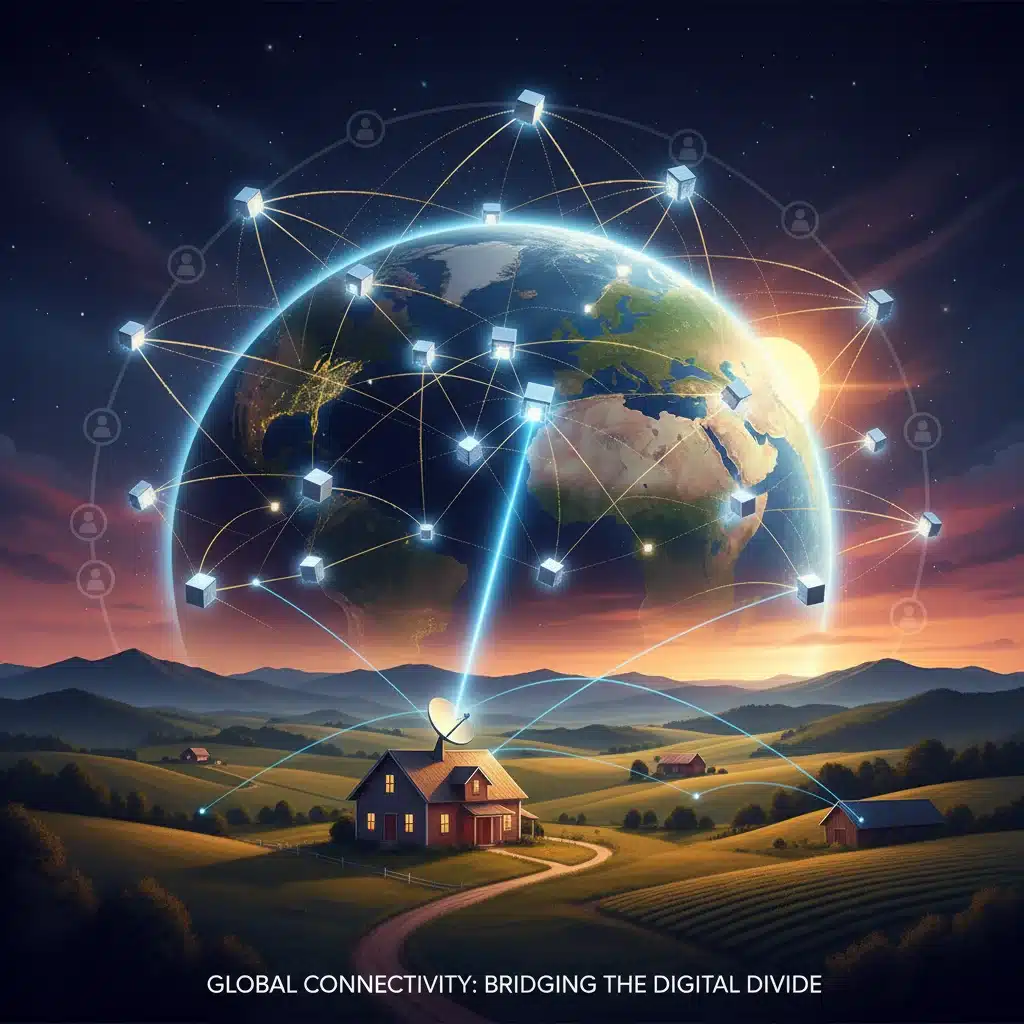
The dawn of the 21st century promised an era of unparalleled connectivity, yet a significant portion of the global population, including millions in the United States, remains disconnected from reliable, high-speed internet. This chasm, famously known as the digital divide, restricts access to education, healthcare, economic opportunities, and vital information. However, a revolutionary solution is rapidly emerging from above: space-based internet. Satellite constellations are not just a futuristic concept; they are actively deployed and expanding, with ambitious goals to connect an estimated 10 million underserved US households by 2029.
For decades, satellite internet was often associated with slow speeds, high latency, and exorbitant costs, primarily serving niche markets or those with no other options. The technology relied on geostationary satellites orbiting at approximately 36,000 kilometers above the Earth, leading to significant signal delays. Today, the landscape has dramatically shifted. A new generation of satellite internet systems, primarily utilizing Low Earth Orbit (LEO) constellations, is redefining what’s possible, offering speeds comparable to traditional broadband and significantly reduced latency. This article will delve into the intricacies of this technological marvel, explore its potential to close the digital divide, and examine the challenges and opportunities that lie ahead in achieving the ambitious goal of connecting 10 million US households.
The Evolution of Satellite Internet: From GEO to LEO
To truly appreciate the impact of modern space-based internet, it’s essential to understand its evolution. The first generation of commercial satellite internet relied on Geostationary Earth Orbit (GEO) satellites. These satellites orbit at an altitude where their orbital period matches the Earth’s rotation, making them appear stationary from the ground. While this allowed for continuous coverage from a single satellite, the vast distance created inherent limitations.
Geostationary (GEO) Satellites: The Early Pioneers
GEO satellites, positioned at around 36,000 km, require powerful signals to reach Earth, leading to larger, more expensive dishes and slower data rates. More critically, the immense distance causes significant signal latency, often 500-700 milliseconds round trip. This delay, while tolerable for basic browsing, made real-time applications like video conferencing, online gaming, and VoIP calls frustratingly slow. Despite these drawbacks, GEO satellites were often the only option for remote areas lacking terrestrial infrastructure, providing essential, albeit limited, connectivity.
Low Earth Orbit (LEO) Constellations: The Game Changer
The true revolution in space-based internet began with the advent of LEO constellations. Unlike their GEO counterparts, LEO satellites orbit much closer to Earth, typically between 500 and 2,000 km. This significantly reduced distance has several profound advantages:
- Lower Latency: The most significant improvement is the drastic reduction in latency. With LEO satellites, round-trip latency can be as low as 20-40 milliseconds, comparable to or even better than some terrestrial broadband connections. This makes real-time applications viable and greatly enhances the user experience.
- Higher Speeds: Being closer to Earth allows LEO satellites to deliver higher bandwidth and faster speeds with less power. This translates to quicker downloads, smoother streaming, and more robust connectivity.
- Global Coverage: While a single LEO satellite covers a smaller footprint than a GEO satellite, a constellation of thousands of LEO satellites working in concert can provide near-global coverage, including polar regions often missed by GEO systems.
- Reduced Cost and Size of Ground Equipment: The closer proximity also means that user terminals (dishes) can be smaller, less complex, and more affordable to manufacture and install.
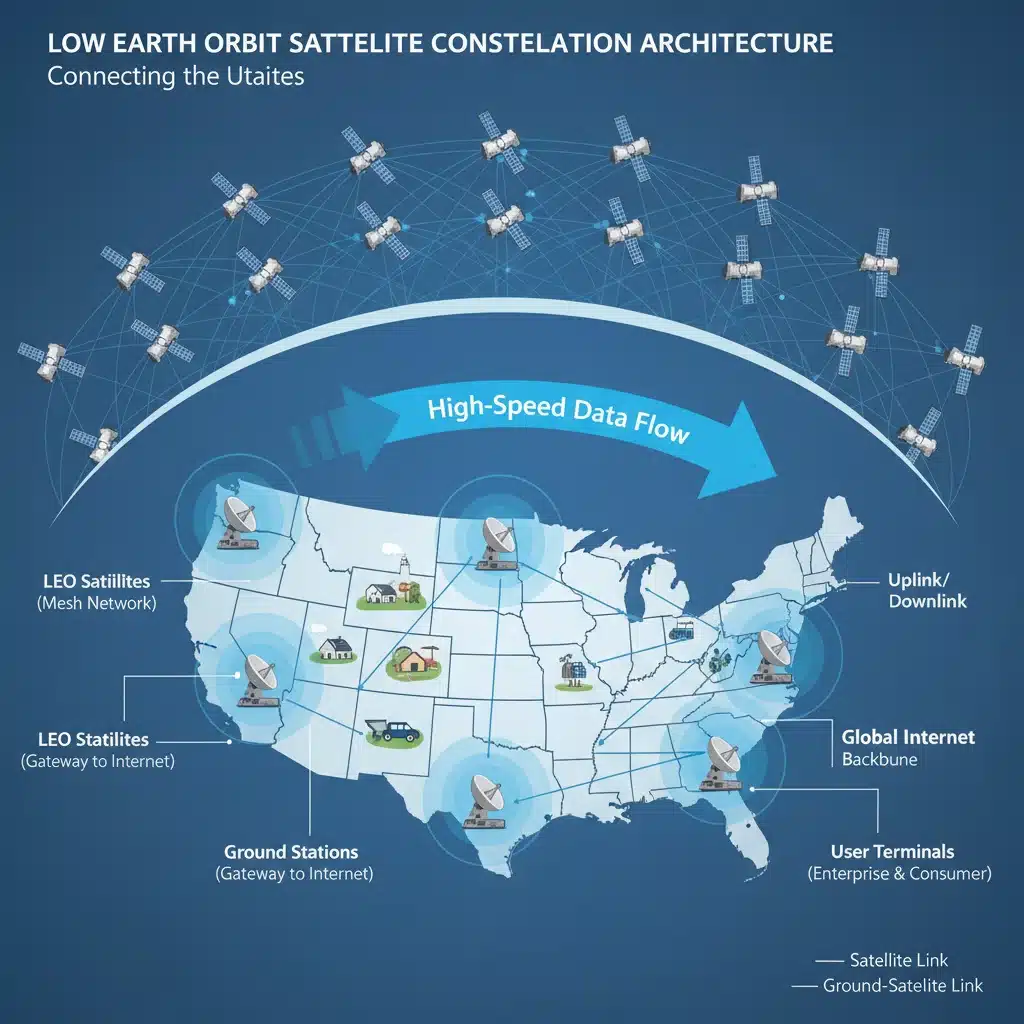
Companies like SpaceX’s Starlink, Amazon’s Project Kuiper, and OneWeb are at the forefront of deploying these massive LEO constellations, launching thousands of satellites into orbit. Each satellite acts as a node in a vast space-based network, beaming internet access directly to user terminals on the ground. This distributed architecture and the sheer number of satellites ensure continuous coverage and high capacity, even as individual satellites move across the sky.
The Digital Divide in the US: A Persistent Challenge
Despite being one of the most technologically advanced nations, the United States still grapples with a significant digital divide. Millions of Americans, predominantly in rural and remote areas, lack access to adequate broadband internet. According to various reports, including those from the FCC, tens of millions of people do not have access to broadband speeds of 25 Mbps download and 3 Mbps upload, which is considered the minimum for modern internet usage.
Who is Affected?
The digital divide disproportionately affects:
- Rural Communities: The high cost of deploying fiber optic cables and other terrestrial infrastructure to sparsely populated areas makes it economically unfeasible for many internet service providers (ISPs).
- Low-Income Households: Even where broadband is available, the cost can be prohibitive for families with limited financial resources.
- Tribal Lands: Many Native American communities face some of the deepest connectivity challenges due to geographical isolation and historical underinvestment.
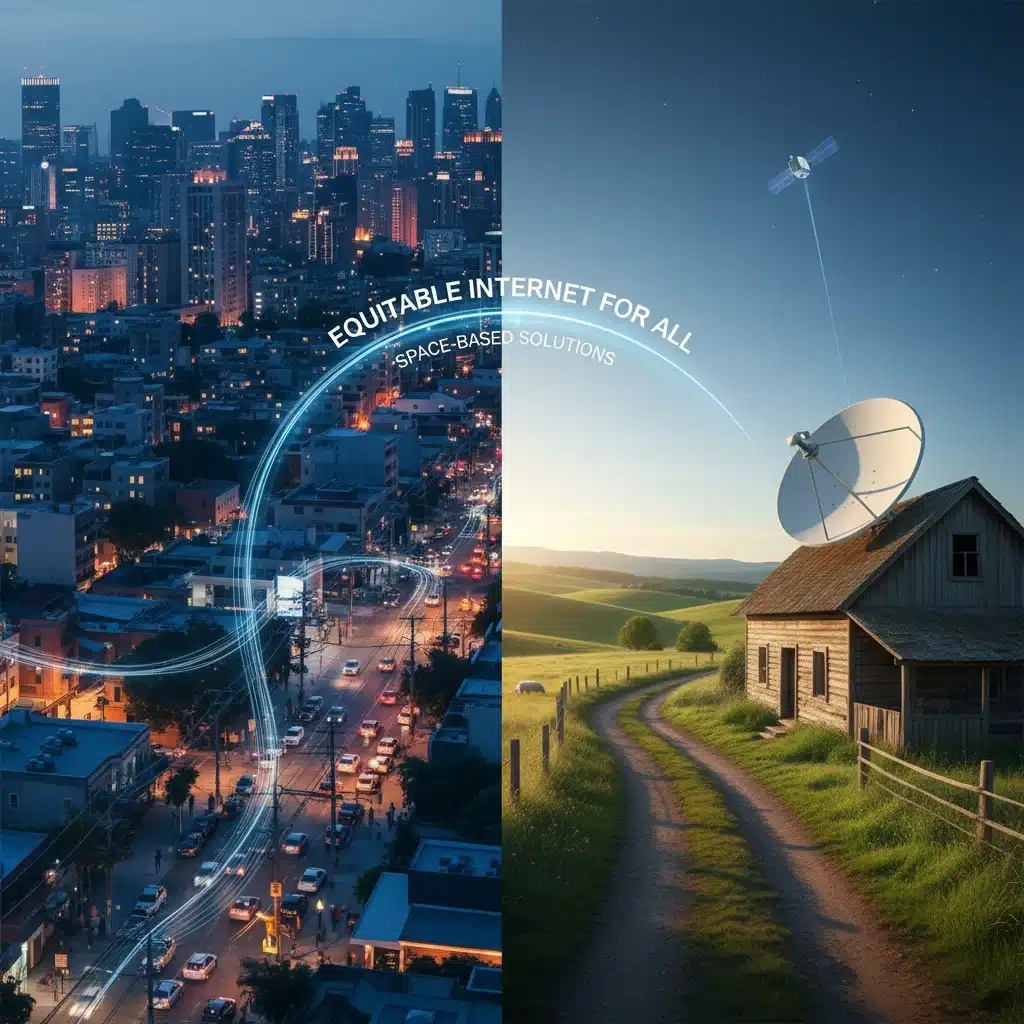
The consequences of this divide are far-reaching. Children in unserved areas struggle with remote learning, adults face barriers to telehealth and remote work, and businesses are hindered from competing in the digital economy. The lack of reliable internet exacerbates existing inequalities and limits opportunities for growth and development within these communities. This is where space-based internet steps in as a vital, often sole, solution.
Connecting 10 Million Households: The 2029 Vision
The ambitious goal of connecting 10 million underserved US households by 2029 with space-based internet is not merely a projection but a testament to the rapid advancements and aggressive deployment strategies of satellite internet providers. This target represents a significant portion of the currently unserved or underserved population, promising to transform lives and economies across the nation.
Key Players and Their Contributions
Several major players are driving this expansion:
- Starlink (SpaceX): Perhaps the most well-known, Starlink has already launched thousands of LEO satellites and boasts a rapidly growing subscriber base. Its service offers high speeds and low latency, making it a viable alternative to traditional broadband in many areas. Starlink’s aggressive launch schedule and expanding coverage are central to achieving the 2029 goal.
- Project Kuiper (Amazon): Amazon’s entry into the LEO satellite market, Project Kuiper, is still in its early stages of deployment but has secured significant funding and regulatory approvals. With Amazon’s vast resources and logistical capabilities, Kuiper is expected to become a major competitor, further expanding the reach and capacity of space-based internet.
- OneWeb: While initially focusing on business-to-business and government clients, OneWeb is also building out its LEO constellation and exploring partnerships to expand consumer access, particularly in challenging geographies.
- Viasat and HughesNet (GEO providers): These established GEO satellite internet providers are also adapting, offering improved services and sometimes hybrid solutions, though their primary focus remains different from the LEO players.
The combined efforts and escalating competition among these providers are accelerating the deployment of satellites and the development of more efficient ground infrastructure. This competitive environment is crucial for driving down costs and improving service quality, making space-based internet accessible to a broader demographic.
Technological Innovations Fueling the Expansion
The rapid growth and increasing viability of space-based internet are underpinned by several critical technological innovations:
Mass Production of Satellites
The ability to mass-produce small, relatively inexpensive satellites has been a game-changer. Companies like SpaceX have developed highly automated manufacturing processes, allowing them to build hundreds of satellites per month. This industrial scale is essential for deploying the thousands of satellites required for a robust LEO constellation.
Reusable Rockets
The development of reusable rocket technology, pioneered by SpaceX, has dramatically reduced the cost of launching satellites into orbit. This cost reduction is a primary enabler for the economic viability of deploying and replenishing large LEO constellations. Without reusable rockets, the sheer expense of launching thousands of satellites would be prohibitive.
Advanced Antenna Technology
User terminals for LEO satellite internet, such as Starlink’s ‘Dishy McFlatface,’ are highly sophisticated phased array antennas. These electronically steerable antennas can track multiple satellites simultaneously as they move across the sky, seamlessly handing off connections from one satellite to another without interruption. This advanced technology ensures a stable and continuous connection.
Inter-Satellite Links (ISLs)
Many LEO constellations, including Starlink and Project Kuiper, are incorporating inter-satellite laser links. These links allow satellites to communicate directly with each other in space, reducing the need for ground stations and further lowering latency by routing data through space rather than bouncing it to Earth and back up. This creates a true mesh network in orbit, enhancing global coverage and efficiency.
Ground Station Networks
While ISLs reduce reliance on ground stations, a robust network of ground stations is still essential for connecting the satellite constellation to the terrestrial internet backbone. Companies are investing heavily in building out these ground station networks, strategically placed to optimize data flow and minimize latency for users.
Addressing Challenges and Ensuring Equity
While the promise of space-based internet is immense, several challenges must be addressed to ensure its equitable and sustainable deployment.
Cost and Affordability
The initial cost of hardware (the user terminal) and the monthly subscription fees can still be a barrier for low-income households. Government subsidies and programs, similar to the Affordable Connectivity Program (ACP), will be crucial in making space-based internet accessible to those who need it most. Providers are also exploring more affordable hardware options and tiered service plans.
Regulatory Landscape
Navigating the complex regulatory landscape, both nationally and internationally, is a continuous challenge. Licensing, spectrum allocation, and orbital debris mitigation all require careful coordination among governments and private entities. The FCC plays a critical role in facilitating the deployment of these services in the US.
Orbital Debris and Space Sustainability
The proliferation of thousands of satellites raises concerns about orbital debris and the long-term sustainability of space. Satellite operators are implementing measures to mitigate this risk, such as designing satellites to deorbit safely at the end of their lifespan and incorporating collision avoidance systems. International cooperation is vital to establish and enforce responsible space practices.
Competition with Terrestrial Solutions
As space-based internet improves, it will increasingly compete with traditional terrestrial broadband solutions like fiber and fixed wireless. While it’s unlikely to fully replace these services in densely populated areas, it offers a compelling alternative for hard-to-reach locations, pushing all providers to innovate and expand their offerings. The goal is not to replace, but to complement and fill the gaps where terrestrial infrastructure is impractical.
The Economic and Social Impact
Bridging the digital divide with space-based internet will have profound economic and social impacts on the United States.
Economic Empowerment
Access to reliable internet enables remote work opportunities, allowing individuals to participate in the global economy regardless of their physical location. It fosters entrepreneurship in rural areas, enabling small businesses to reach wider markets and utilize cloud-based services. Farmers can leverage precision agriculture technologies, improving efficiency and yields. This influx of connectivity can revitalize local economies.
Enhanced Education and Healthcare
For students, high-speed internet means access to online learning resources, virtual classrooms, and educational software, leveling the playing field with their urban counterparts. In healthcare, telehealth services become a reality, allowing patients in remote areas to consult with specialists, receive diagnoses, and manage chronic conditions without extensive travel. This improves health outcomes and reduces healthcare disparities.
Improved Public Safety and Emergency Response
Reliable communication infrastructure is critical for public safety. Space-based internet can provide resilient connectivity during natural disasters when terrestrial networks may be damaged. It can also support emergency services in remote locations, improving response times and coordination.
Social Inclusion and Quality of Life
Beyond practical applications, internet access fosters social inclusion. It connects families and friends, provides access to entertainment, and allows individuals to stay informed and engaged with current events. For many, internet access is no longer a luxury but a fundamental necessity for participating fully in modern society.
The Future Outlook: Beyond 2029
The goal of connecting 10 million US households by 2029 is ambitious but achievable. Looking beyond this milestone, the future of space-based internet holds even greater promise.
Global Connectivity and Underserved Regions Worldwide
The technology developed for the US market will undoubtedly be deployed globally, bringing internet access to billions in developing nations and remote regions worldwide. This global connectivity has the potential to accelerate economic development, improve education, and enhance communication on an unprecedented scale.
Integration with 5G and IoT
Space-based internet is not just for individual homes. It will play a crucial role in enabling ubiquitous 5G coverage, especially in rural areas where terrestrial 5G infrastructure is sparse. It will also be vital for the Internet of Things (IoT), connecting sensors and devices in agriculture, logistics, environmental monitoring, and smart cities, even in the most remote locations.
Advanced Satellite Technology
Future iterations of LEO satellites will likely feature even more advanced capabilities, including greater bandwidth, more sophisticated beamforming techniques, and enhanced on-board processing. This continuous innovation will further improve performance and reduce costs.
Lunar and Martian Connectivity
While currently focused on Earth, the underlying technology of space-based internet will eventually be extended to support lunar and Martian missions, providing communication infrastructure for future space exploration and colonization efforts. The networks we build today are foundational for tomorrow’s extraterrestrial endeavors.
Conclusion
The dream of universal internet access is rapidly becoming a reality, largely thanks to the transformative power of space-based internet. The deployment of LEO satellite constellations represents a monumental leap forward in bridging the digital divide, especially for the millions of US households that have long been left behind. With ambitious targets to connect 10 million Americans by 2029, and ongoing technological advancements, satellite internet is no longer a last resort but a powerful, competitive solution.
While challenges related to cost, regulation, and space sustainability remain, the collective efforts of innovators, policymakers, and communities are paving the way for a future where high-speed internet is a fundamental right, not a privilege. As we look to the horizon, the stars are not just a distant spectacle; they are becoming the very fabric of our interconnected world, bringing opportunity and progress to every corner of the globe.